Secret History
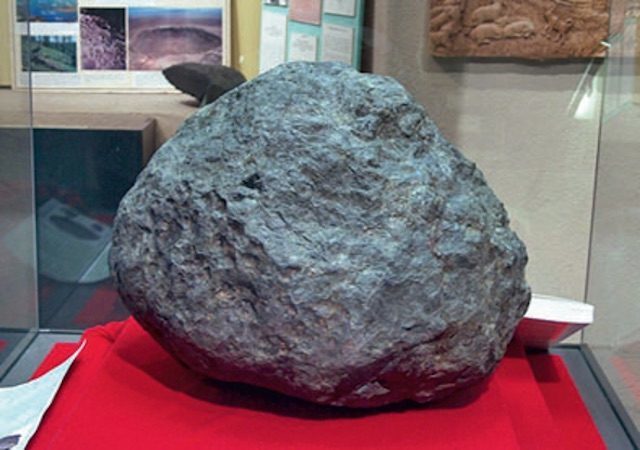
Ensisheim
The oldest recorded meteorite, the Ensisheim struck earth on November 7, 1492, in Ensisheim, France. A 330-pound stone dropped from the sky into a wheat field, witnessed only by a young boy. German King Maximilian even stopped by Ensisheim to see the stone on his way to battle the French army. Maximilian decided it was a gift from heaven and considered it a sign that he would emerge victorious in his upcoming battle, which he did. Today, the largest portion stands on display in Ensisheim's Regency Palace.
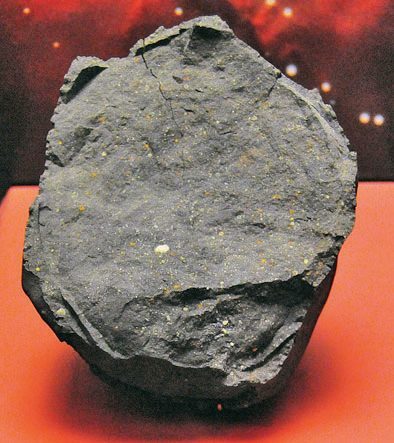
Murchison
On September 28, 1969, a meteor exploded over the town of Murchison in Australia. The explosion left smoke rings in the air and left 700 kg of meteorite debris scattered across 33-sq-km area. Remarkably, the cosmic rocks contained molecules such as amino acids, which are essential to life. This was the first time organic chemicals had been found in a meteorite.
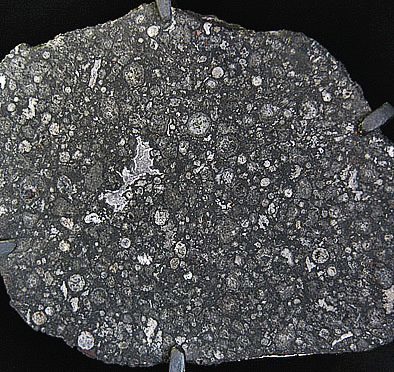
Allende
On February 8, 1969, a fireball plummeted to the ground in Chihuahua, Mexico. The meteorite exploded, producing thousands of fragments over an area of 320 sq km. Scientists found bits of calcium and aluminum embedded in the meteorite. NASA scientists thought these bits of metal were some of the first pieces of solid matter formed in the earliest times of our solar system.
Chicxulub Crater, Mexico
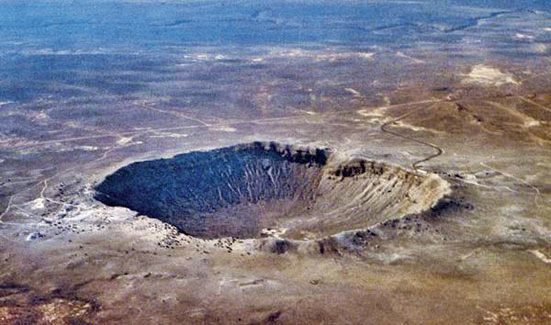
This is the one of the largest meteor strikes in Earth's history, and might have killed off the dinosaurs. The impact happened roughly 65 million years ago, when an asteroid the size of a small city crashed onto earth with the destructive power of 100 teratonnes of TNT. The vast crater was buried beneath the Yucatán peninsula in Mexico near the village of Chicxulub.
Orgueil
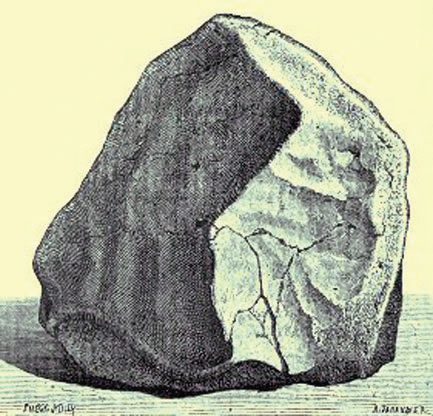
This meteor crashed in southern France as a fireball on May 14, 1864. The most famous studies were carried out by Richard Hoover, a NASA scientist, who claimed the Orgueil meteorite included fossilised, alien micro-organisms. He observed that structures within the meteorite seemed to resemble primitive, single-celled organisms on earth.
Sources: Sciencing.com, Howstuffworks.com
Reader Comments
[Link]
The layout of the impact area suggests that the body fell at a shallow angle, and was moving at typical meteorite entry speeds of 40,000 to 60,000 km/h. Its total mass was more than 3,500 tonnes. The shallow angle presented the body with more air resistance than it would have encountered at a steeper angle, and it broke up in the air into at least four pieces before impact. The biggest piece struck with an explosion roughly equivalent to the atom bomb that levelled Hiroshima.And recent dating suggest that it wasn't that long ago either...relatively:
Dating the impact event[edit]Fission-track analysis of glass fragments by Storzer (1965) suggested the Wabar impact took place thousands of years ago, but delicate glass filigree, and the fact that the craters have been filled-in considerably since Philby's 1932 visit, suggests their origin is much more recent. Thermoluminescence dating by Prescott et al. (2004)[9] suggest the impact site is less than 250 years old. This is consistent with Arab reports of a fireball passing over Riyadh, variously reported as occurring in 1863 or 1891 and heading southeast, reported in Philby's book "Empty Quarter" (1933).So, again I take issue with the title of the " five biggest meteor crashes of all time ". These two events that I mentioned occurred to me just from memory and I would be surprised if there are not many more events like that which would also push some of the top 5 events down the ladder. It appears to be sloppily researched or perhaps it was to calm people down to think that nothing really major is going to hit anytime soon. And perhaps they are right, though the dramatic increase over the last few years casts doubt on such optimism.
PS: I forgot to mention that this was also an iron meteorite.
Philby had heard of Bedouin legends of an area called Al Hadida ("place of iron" in Arabic) with ruins of ancient habitations, and also an area where a piece of iron the size of a camel had been found, and so organized an expedition to visit the site. After a month's journey through wastes so harsh that even some of the camels died, on 2 February 1932 Philby arrived at a patch of ground about a half a square kilometre in size, littered with chunks of white sandstone, black glass, and chunks of iron meteorite.


and [Link]