
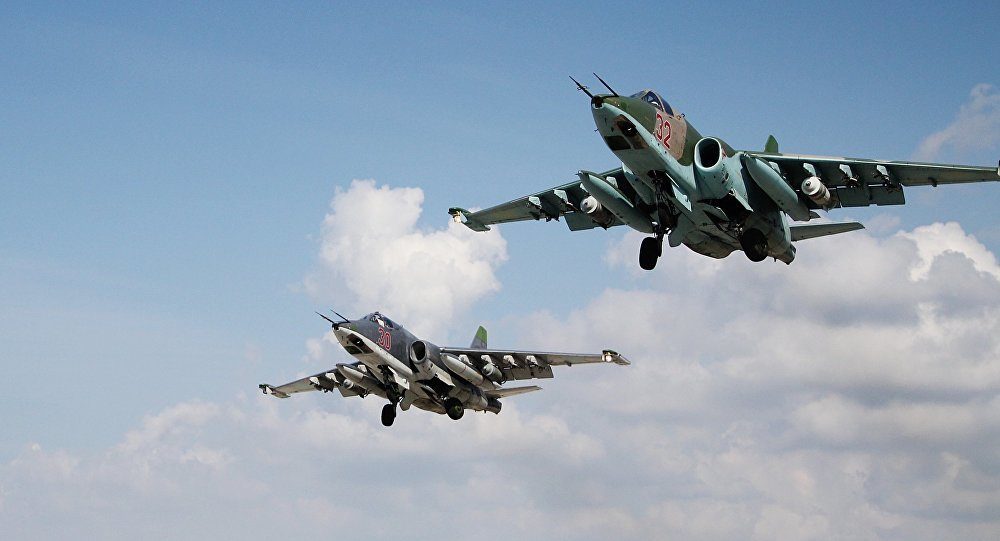
© Sputnik/ Dmitriy Vinogradov
The goal is to significantly strengthen the fire impact on terrorist positions, the newspaper said, referring to an interaction between a Ka-52 and a Su-25 as a combination of intelligence capabilities and high strike power.
"It is designed to compensate for the lack of Syrian artillery strike capabilities, as well as to provide effective support to government forces advancing on Palmyra," Izvestia said.
Vladimir Popov, deputy chief of the Russian magazine Aviapanorama, told Sputnik that interaction between the Ka-52 and the Su-25 is one of the tactics that can be used to improve the efficiency of helicopter and aircraft strike systems.
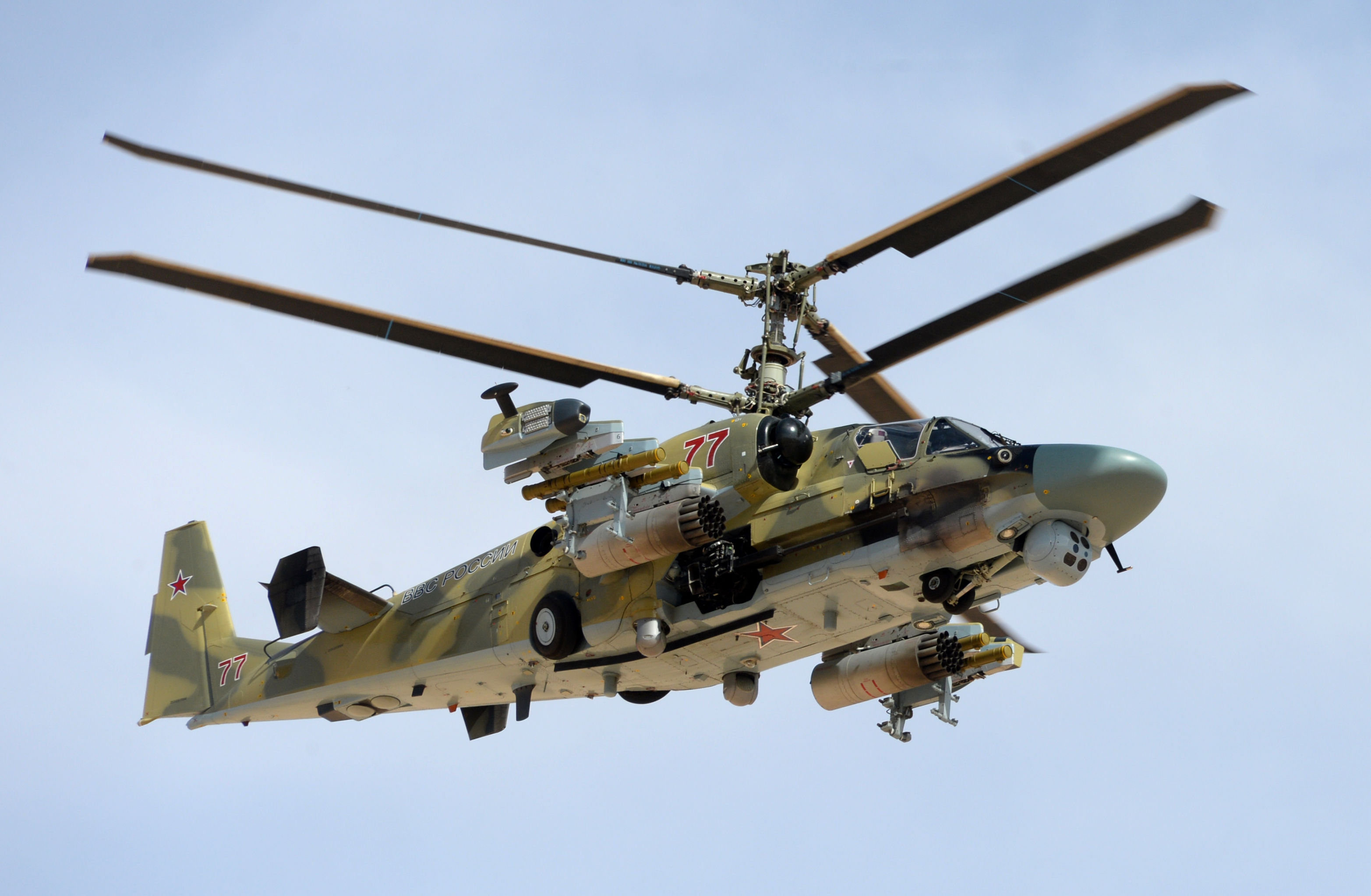
© Sputnik/ Mikhail Voskresenskiy
According to him, the super precise fire impact on Daesh positions in Palmyra will play an important role in saving the rest of the historic monuments in this ancient city.
"It is impossible to use carpet bombing in such historically important locations, which must be preserved rather than destroyed at any cost. At the same time, it is necessary to liberate the city as quickly as possible, so it is very important to work with surgical precision when conducting pin-point strikes," Popov said, stressing the importance of permanently adjusting the fire.
On Wednesday, a military source told Sputnik that the Syrian government's forces had pushed Daesh terrorists back some 20 kilometers (12.5 miles) from the T-4 airbase near the city of Palmyra.
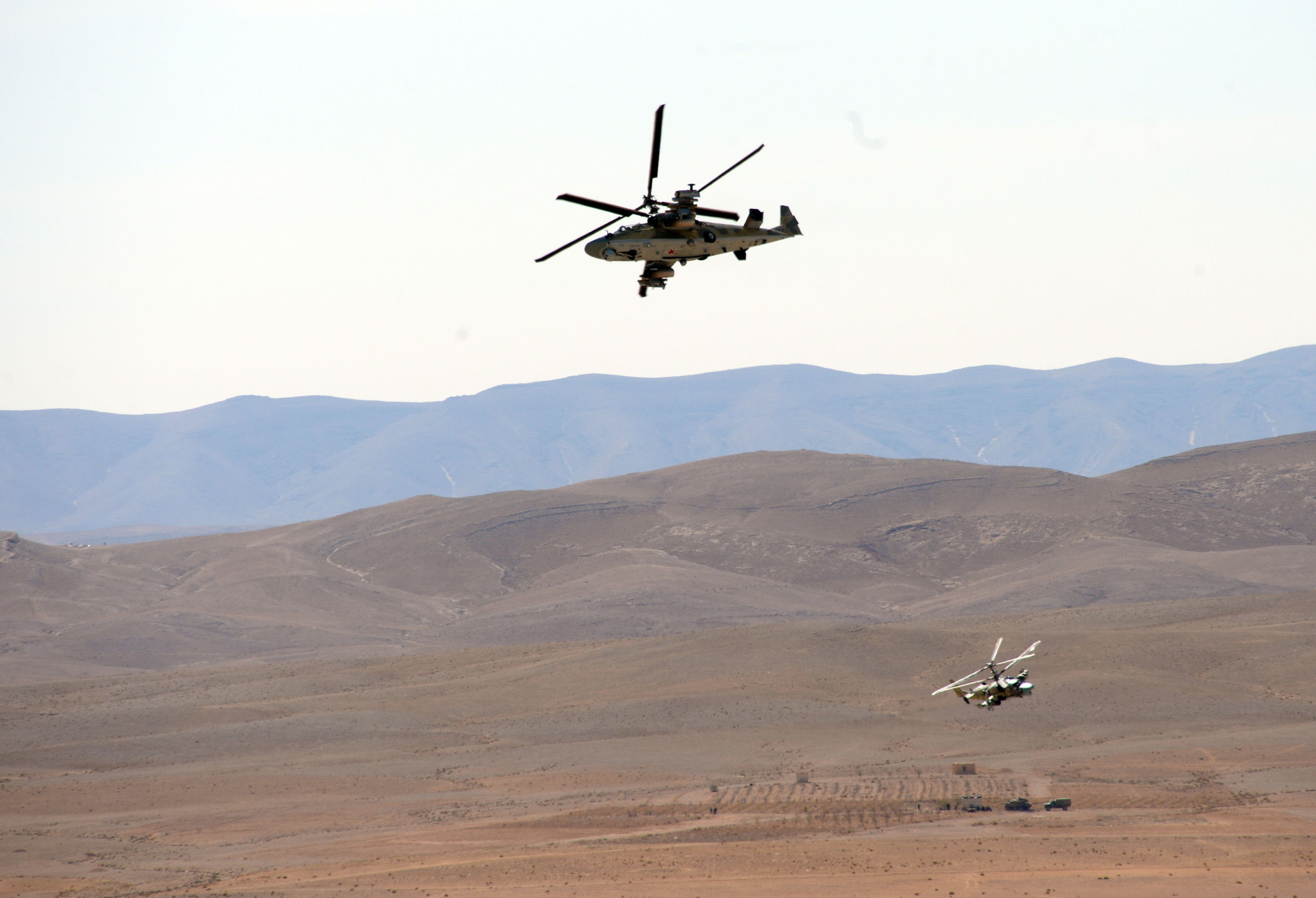
© Sputnik/ Mikhail VoskresenskiyRussian Ka-52 attack helicopters in Syria.
In December 2016, Syrian government forces had to abandon Palmyra after Daesh stormed the city. The terrorists then moved approximately 90 kilometers toward the city of Homs, taking key heights and several villages near Palmyra.
They attempted to storm the T-4 airbase as well, which is the main obstacle on their way to Homs, but were stopped by the government's forces.
Commenting on the Daesh offensive on Palmyra, Russian President Vladimir Putin said the situation there was a result of the discordant actions of different players in Syria.



Reader Comments
to our Newsletter