RTThu, 24 Nov 2016 16:08 UTC
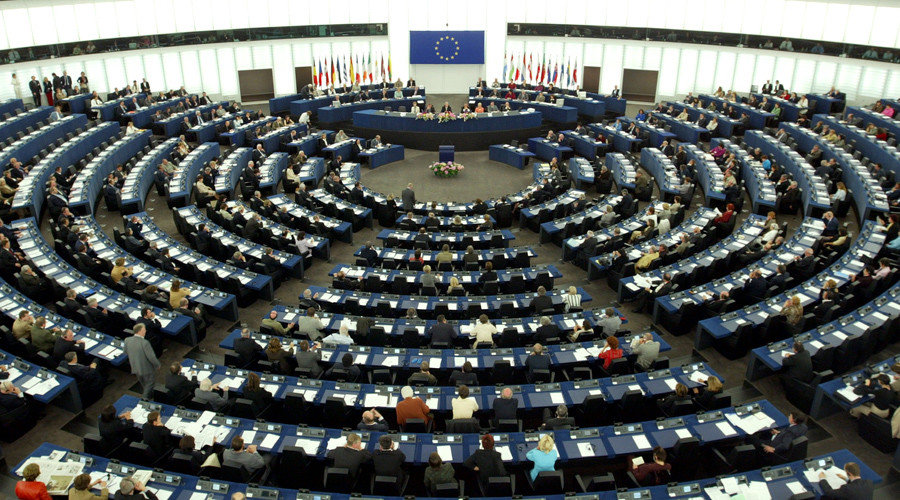
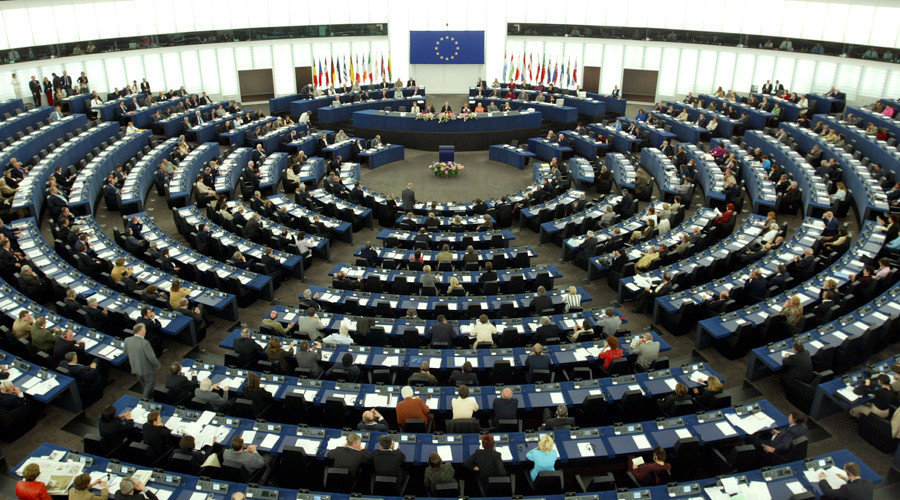
© ReutersGeneral view of the European Parliament in Strasbourg
If an EU resolution against the Russian media is implemented, Moscow will take retaliatory measures, Russia's Foreign Ministry has stated.
"We hope that the resolution will not entail practical steps on curbing the work of the Russian media," the Foreign Ministry's spokesperson Maria Zakharova told journalists at a briefing.
"There is hope that such steps will not follow, because the adoption of such a document caused massive uproar, for one, in the EU itself.
"If this document is applied and implemented to curb the activities of the Russian media on EU member states' territories, then we will of course take measures in response," Zakharova added.
On Wednesday, the European Parliament voted on a non-legislative resolution which urges the EU to "respond to information warfare by Russia," with RT and Sputnik news agency branded the most dangerous "tools" of "hostile propaganda."
The document shows "political degradation" regarding the "idea of democracy" in the West,
Russian President Vladimir Putin responded, adding that while "everyone tries to lecture" Russia on democracy, Europe wants to implement a policy of restrictions.Zakharova branded the document as "paranoia" and part of "the ongoing demonization of Russia," adding that it is filled with "made-up messages, myths," and reflects "the ideology which has been cultivated towards Russia recently."
"We have repeatedly declared that no anti-European propaganda is carried out from the Russian side. Russia is keen for the EU to be a united, stable, and predictable partner, with which we could develop equal and mutually beneficial cooperation," she said.
Comment: RT has further comment:
Ahead of the vote, the issue was debated at a plenary sitting, with a report "calling for stronger counter measures" having been presented the lawmakers, according to the European Parliament. The report, written by a Polish member of the European Conservatives and Reformists (ECR) group, Anna Fotyga, said that Russia aims to "incite fear and divide Europe" along with terrorist organizations, such as Islamic State (IS, formerly ISIS/ISIL).
[..]
RT was cited as one of the alleged propaganda "tools". It said that Moscow has an influence on media markets and societies in the EU and other countries. Fotyga told the European Parliament, "surely the citizens of the United States of America are also the target of Russian propaganda with the use of many tools such as Russia Today [RT]."
"It comes to being ridiculous when the same report includes a threat coming from ISIL and from Russia, it demonstrates that people have lost their mind and sense of reality," French MEP Jean-Luc Schaffhaueser told RT, adding that the situation is now at a point where he doesn't know "whether to cry or to laugh".
The EU "desperately needs an enemy, be it Russia or any other," that it can blame for any of its own failures, the MEP said. "No one [in the parliament] wants to admit that EU ideology has led to the current situation, the bloc's economic, social and political fiasco," Schaffhaueser added.
"We are lucky that there is Russian media and other media that stand against [the EU's] official propaganda. In Europe, its institutions and parliament, they refuse to see the obvious, to see the truth. And I am saying that we are lucky because it's European democracy that is at stake," he said.
During the debate, Spanish MEP Javier Couso Permuy denounced the report as an "insult to the intelligence of Europeans."
"This report is insane. It fosters hysteria against Russia and neo-McCarthyism in Europe. It's a caricature of Russia," Permuy said. "This is a dangerous report. It's headed at confrontation and it's an assault on freedom of information. To put terrorist groups like Daesh, which disseminates live videos of torture and murders, on the same footing as a member state of the Security Council and other multilateral organisations which we have a grievance with, is an insult to the intelligence of Europeans."
In the meantime British right-wing UKIP party MEP James Carver noted the report is "worryingly reminiscent of the Cold War."
"Diplomacy and deterrence are delicate mechanisms," Carver said. "Escalation can spiral out of control and lead us to places that I trust nobody in this chamber wishes to go. You have to stop your neo-colonialism and your justification for more European Union and remember the hard learned lessons of the Cold War."
And
here:
[RT's editor-in-chief Margarita Simonyan] said freedom of speech apparently became an "unnecessary luxury" in the European Union once alternative voices such as RT and Sputnik gained popularity.
"Don't they realize that by taking such small steps, related to unwillingness to listen to another opinion, states turn into blind dictatorships and start wars, which no one needs," she added.
Simonyan also slammed Reporters Without Borders (Reporters Sans Frontieres, or RSF), which she said was selective about journalists it chooses to protect.
"Reporters Without Borders is no longer pretending to protect journalists from all over the world and has finally proved it protects reporters only of its own little world," she said. Earlier in the day, Sputnik's head of the German service, Christoph Dreyer, addressed RSF, a non-governmental organization that is supposed to stand for press freedom, regarding the adopted EU resolution designed to "respond to information warfare by Russia."
[...]
The EU resolution was adopted in Strasbourg with 304 MEPs supporting it, 179 voting against and 208 abstaining. It was drawn up by a Polish member of the European Conservatives and Reformists (ECR) group, Anna Fotyga, and is based on a report dubbed 'EU strategic communication to counteract propaganda against it by third parties'.




Comment: RT has further comment: And here: