
© Getty
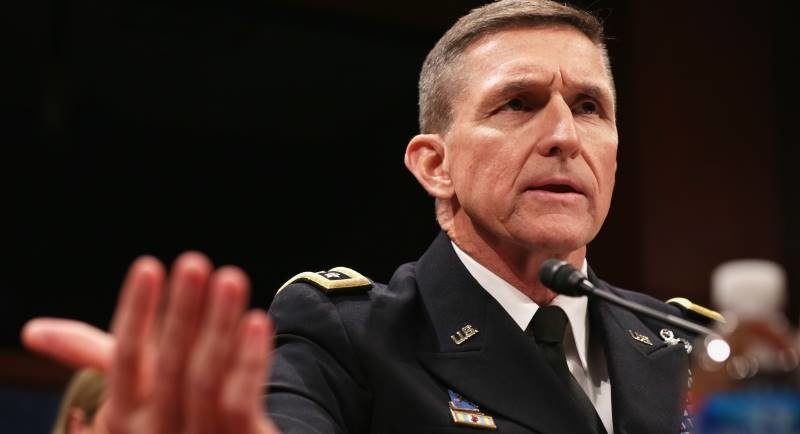
While there was no word whether Flynn had accepted the offer, Reuters quoted a senior Trump official as saying, "When the president of the United States asks you to serve, there is only one answer."
Flynn served two turbulent years as President Barack Obama's Defense Intelligence Agency director before being pushed out in 2014 and becoming a leading critic of Obama foreign policies.
Flynn is particularly critical of Obama's approach to battling the Islamic State group, arguing that the United States is less safe from terrorism today than it was before the September 11, 2001 terrorist attacks.
He made a fiery speech at the Republican National Convention laying out his view that the threat posed by IS requires a more aggressive U.S. military, as well as his belief that Washington should work more closely with Russia.
Trump picked up those themes and repeated them often during his campaign.
Flynn is a champion of other foreign policy themes Trump pushed during the campaign, including renegotiating the Iran nuclear deal.
Flynn's military experience might have made him seem like a natural choice to lead the Pentagon. But without a waiver from Congress, he is not eligible to be secretary of defense because U.S. law prevents the public appointment of military officers for seven years after they leave service.
Flynn, a lieutenant general who turns 58 in December, retired from the Army in 2014. As Trump's national security adviser he would not require Senate confirmation.
Flynn built a reputation in the Army as an astute intelligence professional and a straight talker.
Trump's early moves on national security are being closely watched by U.S allies and adversaries alike. He's said to be considering a range of officials to lead the State Department and Pentagon.
The president-elect held his first face-to-face meeting with a world leader since winning the presidential election on November 17, huddling privately with Japanese Prime Minister Shinzo Abe.
Abe is believed to have sought reassurance about Trump's commitment to defending Japan amid stepped up North Korean nuclear activity. Trump said during the campaign that a wealthy but officially pacifist nation like Japan should develop its own nuclear weapons and defend itself.
Trump made no comment after the meeting, but Abe said he concluded from the meeting that the president-elect is "a leader in whom I can have great confidence."
Ron Dermer, Israel's ambassador to the United States, also visited the Trump Tower in Manhattan and called the president-elect "a true friend of Israel."
"We look forward to working with the Trump administration, with all the members of the Trump administration, including Steve Bannon, in making the U.S.-Israel alliance stronger than ever," Dermer said.
Dermer was pointedly referring to a senior Trump adviser who has been strongly criticized for his anti-Semitic and bigoted views. The Israeli ambassador declined to comment directly on those charges.
Also on foreign policy matters, Trump consulted with former Secretary of State Henry Kissinger about China, Russia, and Iran, and sat down with South Carolina Governor Nikki Haley, who is reported to be a contender to lead the State Department.
Aides said Trump also planned to meet with 2012 Republican presidential nominee Mitt Romney over the weekend to mend fences after Romney blasted Trump as a "con man" and a "fraud" during the campaign and urged Republicans not to vote for him.
Trump had responded in kind by calling Romney a "loser." Now, Reuters and MSNBC are reporting that Romney may be yet another candidate to be secretary of state.


Comment: Leaving his views on the Iran deal to the side, Flynn has at least one thing going for him. He was head of the DIA when the infamous 2012 report about the future rise of ISIS was produced. Flynn is a realist when it comes to groups like ISIS - he thinks they are evil and they should be destroyed, not covertly supported or used as a proxy force to destroy countries like Syria. In his August 2015 interview (video, transcript) with al-Jazeera he called the U.S.'s decision to ignore the DIA's intelligence "willful": From the bottom to the top of the military, personnel are disgusted and demoralized by the fact that special forces are training the next generation of jihadis. (See: US Special Forces hate Syrian mission: "Nobody believes in it, everyone on the ground knows they are jihadis") That would never have changed under Clinton. With Trump as president, there's at least a fighting chance it will.