
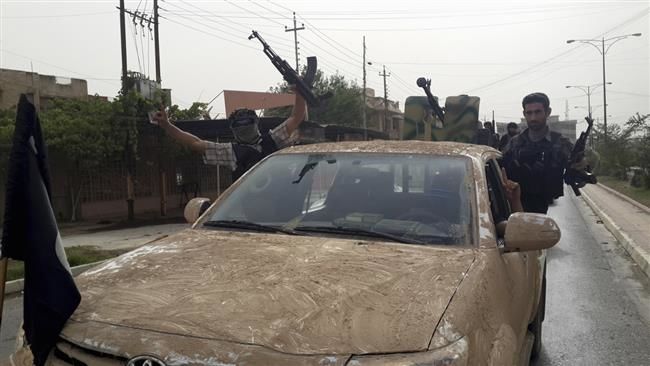
ISIL terrorists in Iraq
According to the report by the Financial Action Task Force-set up by G7 countries to tackle money laundering- dirty money gained through importing cars from the UK and other countries, is sent to terrorist groups. According to The Independent, the report has also shed light on a case study provided by UK authorities in which "people pose as police or bank staff in a scam where they are informed their account(s) have been compromised in some way".
The victims are cajoled into "transferring money into accounts controlled by the suspects or to withdraw the cash. A courier from the criminal network is dispatched to the victim's home address and picks up the cash." The cash in then funneled to groups in Syria and Iraq.
'Smoke and mirrors'
A London-based political commentator believes that the money laundering scheme could be a sort of smoke screen to divert attention from the major sources funding the terrorists.
"The whole issue surrounding the supporting and financing of terrorist groups is deliberately surrounded by, in my faith, a veil of smoke and mirrors. It's quite hard to work out what's really going on. My observation on this report is that I think many groups are much more directly funded or have been much more directly funded over the last three or four years," Jim Brann, from Stop the War Coalition told Press TV's UK Desk on Monday.'Very complicated system'
Brann believes the mechanism is too complicated for the terrorist as they already have access to easy money provided by their supporters.
"So you would wonder why they would need a very complicated system of shipping second-hand used cars from England to Africa then make money that way whereas we know that states have backed groups in Syria... But generally I would say states do back the groups rather that small disorganized individual efforts," he noted.Oil factor
"We know that they [terrorists] have access to oil money that is made in Iraq itself. Then you wonder if they have access to oil money which is in the territory that they control? You then wonder why they would bother to have a complicated arrangement in the other side of the continent?" the commentator added.Back in July, social media reports revealed that the black market of cheap oil extracted from ISIL-controlled fields in Iraq has earned the terrorist group millions of dollars. According to some reports on social media websites, a member of the UK parliament is allegedly involved in trading ISIL-controlled oilfields in Iraq. Reports say Nadhim Zahawi, the Conservative MP for Stratford-upon-Avon, has been buying crude at a low price and transporting it to Israel and European markets through Turkey and the Mediterranean Sea. The MP's lawyer dismissed the allegations as "entirely false."
"There is no truth to these allegations," the lawyer said.The allegations against Zahawi come against the backdrop of reports that ISIL terrorists sell oil through certain regional countries including Turkey and Iraq's Kurdistan region. Last year, in a briefing to the European Parliament Foreign Affairs Committee, the EU Ambassador to Iraq, Jana Hybas-kova announced that some European countries have purchased crude from ISIL. The ISIL terrorist group has captured parts of northern Iraq and neighboring Syria and has carried out heinous crimes such as public decapitations and crucifixions against all ethnic and religious groups in both nations.

Reader Comments
to our Newsletter