

© LABAT Jean Michel / Sunset / Rex FeaturesAccording to the researchers' analysis, Lascaux's management history is a catalogue of errors
The Lascaux cave in south-west France houses invaluable animal paintings that are between 16,000 and 17,000 years old, making them among the oldest examples of cave art ever found. Now conservationists must deal with the twin threats of the Fusarium solani fungus and the new bacterial populations.
The latest invasion came to light when a team of Spanish and French microbiologists analysed 11 swabs from the cave walls, comparing the profile of species found in Lascaux with those in undisturbed caves in Spain. Almost all the bacteria and protozoa found in Lascaux were associated with human activity.
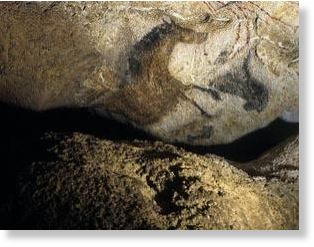
© LABAT Jean Michel / Sunset / Rex FeaturesThe prehistoric cave paintings at Lascaux are under attack from a cocktail of damaging bacteria
The team conclude that a benzalkonium chloride spray applied between 2001 and 2004 to kill the fungus is to blame, as it allowed bacteria brought in by human visitors to thrive (Naturwissenschaften, DOI: link). "It produced a drastic change in the cave biodiversity," says Saiz-Jimenez.
According to the researchers' analysis, Lascaux's management history is a catalogue of errors. The team think the bacteria started to arrive in 1940, when the caves were discovered and opened to the public. Over 1800 people visited each day, and their breath would have permanently altered the atmosphere and microbiology of the site. New air conditioning systems and lighting only added to the problem, and the caves were closed to the public in 1963. Arrival of the fungus in 2001 and subsequent antifungal spraying accelerated the destruction of the environment that had kept the paintings largely unharmed for 16,000 years.
There is hope for the paintings, however. Saiz-Jimenez and his colleagues have been testing conservation techniques in Spanish caves that avoid fungicides, relying instead on meticulous control of the cave microclimate. They are also examining whether hydrogen peroxide can destroy the organic matter that the fungi and bacteria feed on.


Reader Comments
to our Newsletter