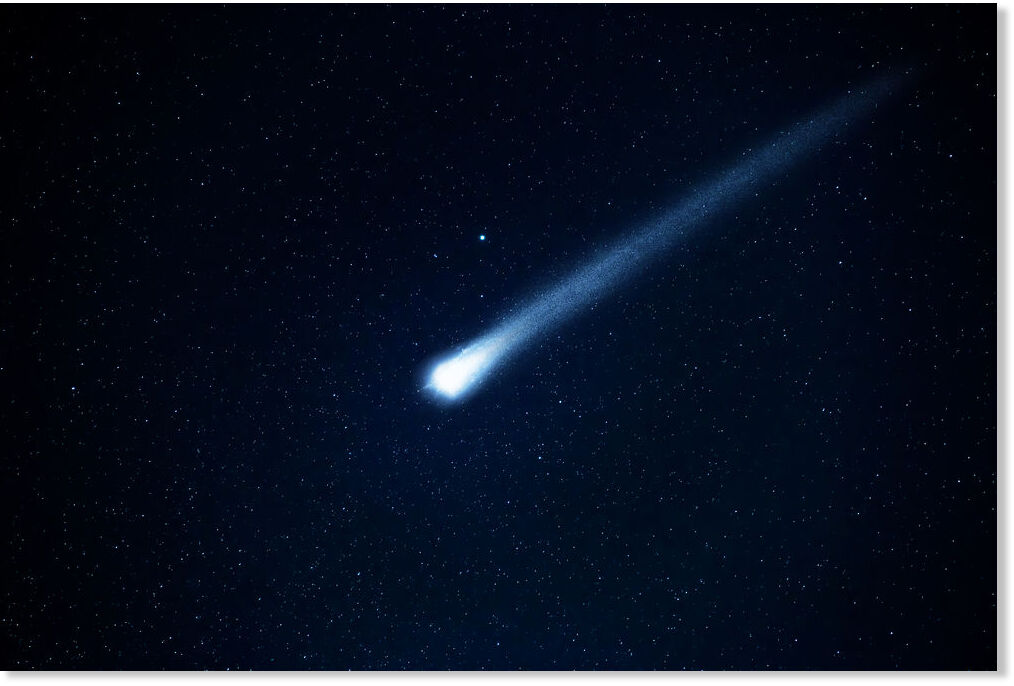
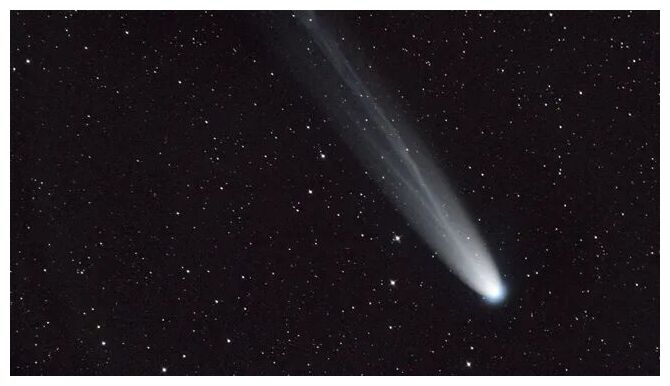
Comet C/2026 A1 (MAPS) could shine brightly in the evenings after April 4, but only if it survives a very close encounter with the sun.
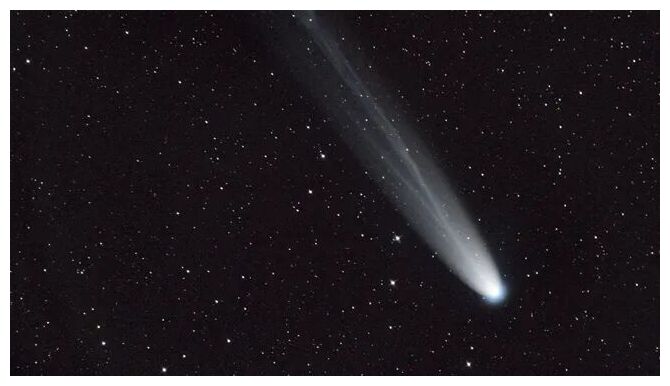
© James Yu via Getty ImagesComet C/2026 A1 (MAPS) will get closest to the sun on April 4.
A rare "sungrazer" comet is about to pass very close to our star and could
become visible in daylight — or it could completely disintegrate before our eyes. Either way, there could be something special to see in the night sky, with a large tail potentially visible late this week.
Comet C/2026 A1 (MAPS) was discovered Jan. 13 by French astronomers at the AMACS1 Observatory in Chile. Although the comet was initially thought to have a nucleus measuring around 1.5 miles (2.4 kilometers) wide, astronomers later
reduced the estimate to under 0.25 miles (0.4 km) based on
James Webb Space Telescope observations taken in February.
C/2026 A1 (MAPS) belongs to a special family of comets called Kreutz "sungrazers," so called because they get very close to the sun, lighting up brightly but often breaking into smaller pieces. There are around 3,500 members of the Kreutz family, all of which are thought to be fragments of a single giant comet that got too close to the sun about 1,700 years ago, according to Live Science's sister site
Space.com.