
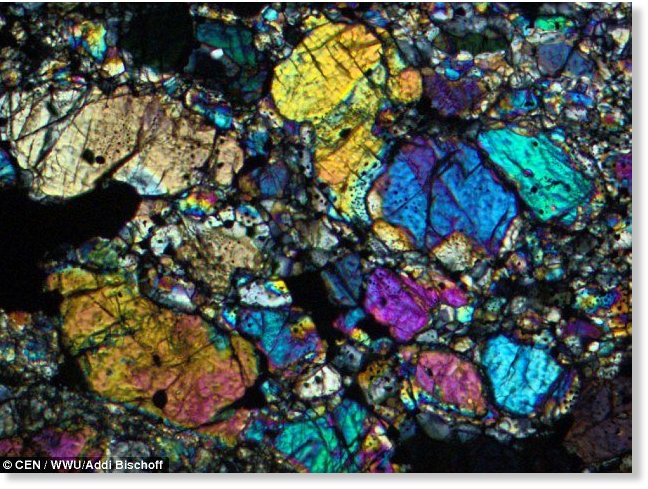
Experts from Munster said they are 'delighted' to recover several fragments identified as being of the 'LL Chondritenklasse' (LL chondrite) class of meteorite - mostly stone with very little metal inside. This image shows how the meteorite looks under the polarising microscope
Experts from Munster said they are 'delighted' to recover several fragments identified as being of the 'LL Chondritenklasse' (LL chondrite) class of meteorite - mostly stone with very little metal inside.
The latest fragments, which struck the earth in the municipality of Stubenberg in Bavaria, are already being studied excitedly by experts, who anticipate more fragments will still turn up.
The fireball was spotted over Bavaria on 6 March.
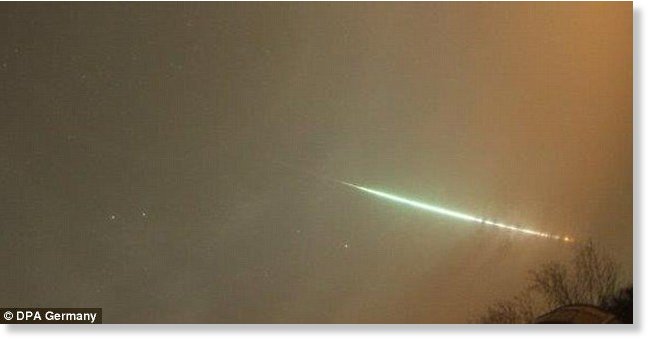
The fireball was spotted over Bavaria on 6 March (pictured)
'By analysing images of the entry, we were able to locate the impact point and find fragments on the ground, in total weighing 40g.


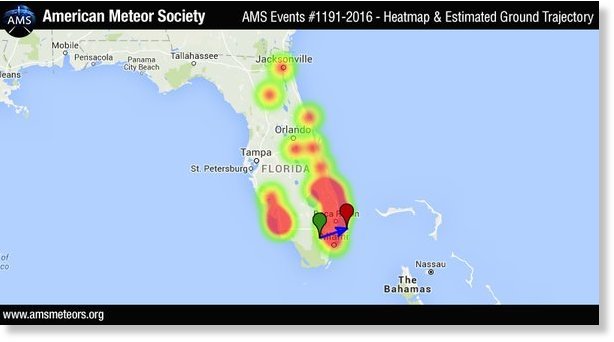








Comment: Whoever at NASA made these statements clearly hasn't checked their own data. February and March are typically among the lowest months for fireball numbers.
It's looking like the overall trend will be way up this year, with much more to come in the typically more active second-half of the year.
For spectacular footage of just some of the hundreds of meteor fireballs that lit up the night sky the world over last month, check out our latest instalment of the SOTT Earth Changes Summary video:
SOTT Earth Changes Summary - February 2016: Extreme Weather, Planetary Upheaval, Meteor Fireballs
See also:
NASA space data supports citizens' observations: Meteor fireballs are increasing dramatically