
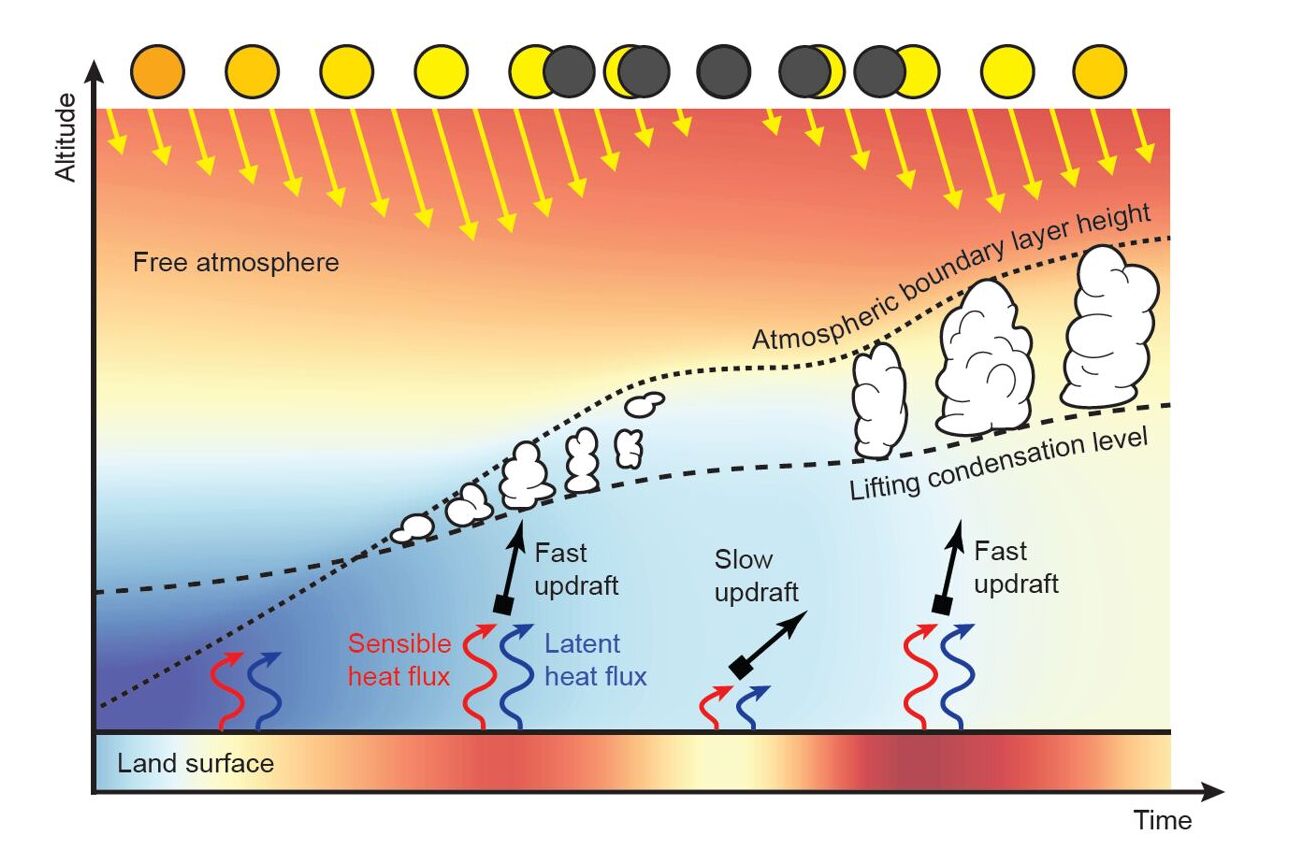
© Delft University of TechnologyThe removal of sunlight can lead to cooling of the ground. The rising air, responsible for forming cumulus clouds, is slowed down so that cumulus clouds disappear. When the solar eclipse is over, the ground warms up again and new cumulus clouds often form.
Although the effects of solar eclipses have been studied for centuries, it was never known exactly how strongly clouds react. " From Earth you can count the clouds and see them disappear, but that only gives anecdotal evidence ", explains PhD student Victor Trees. " Clouds change constantly even without solar eclipse. "
Measure solar eclipses from space
Satellites in a geostationary orbit around the Earth can continuously measure many clouds at the same time, in large areas including impassable terrain. In the case of a solar eclipse, the measurements were previously not reliable. The algorithms of the satellites did not take into account the decrease in sunlight during solar eclipses. This resulted in large dark spots in the cloud maps of the earth.
We have now managed to restore the satellite measurements during solar eclipses by accurately calculating the percentage of the sun darkened for each location and time on Earth. " By far the majority of the solar eclipse consists of a partial eclipse, in which it is usually still full of light outside ", says Trees. The satellites still receive enough reflected sunlight there to reliably measure the clouds after the correction for the eclipse.

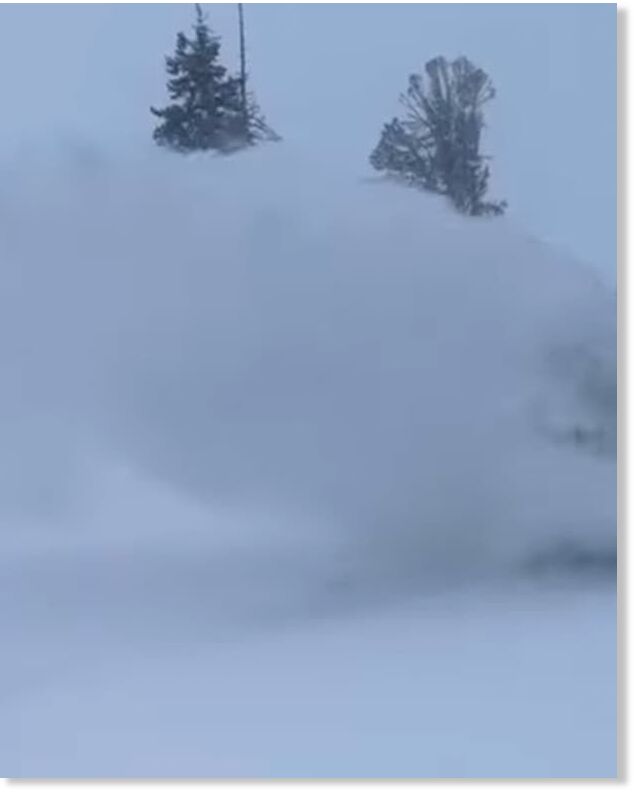




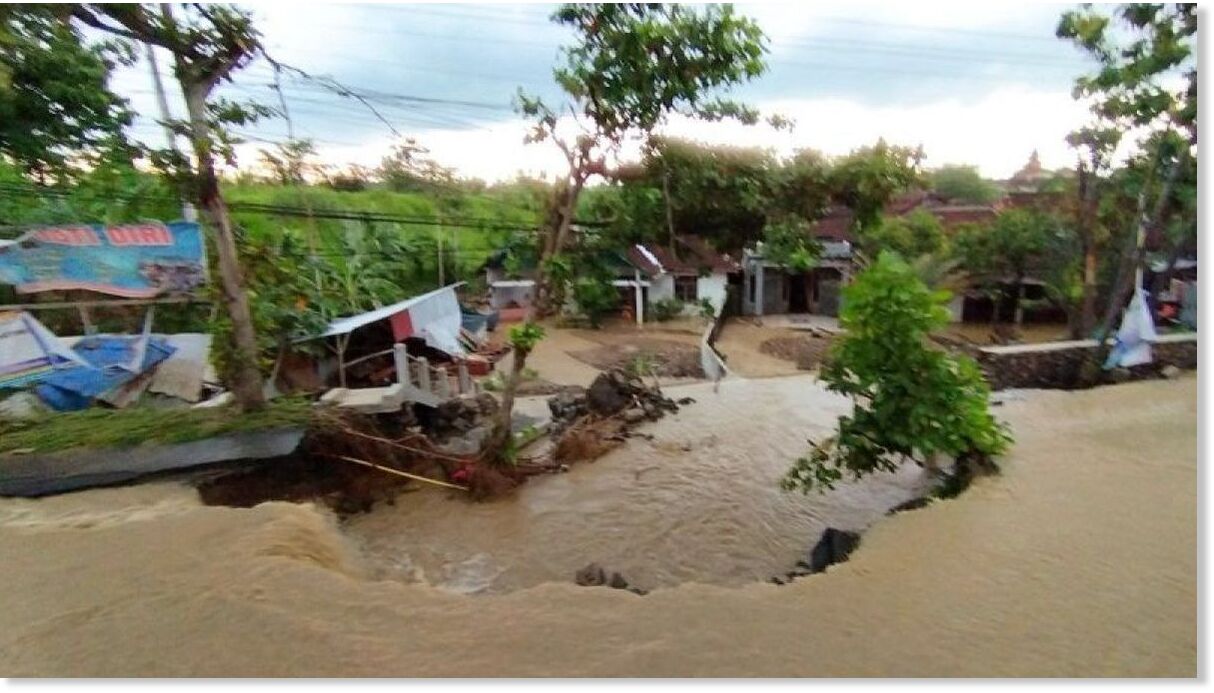
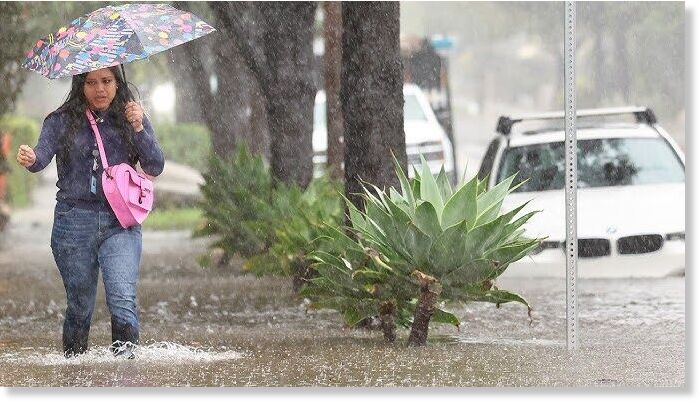








Comment: Videos of the severe hailstorm and aftermath: