Storms
S


Arrow Down

Australia: Despair and relief in the wake of Cyclone Yasi

Cyclone Yasi 1
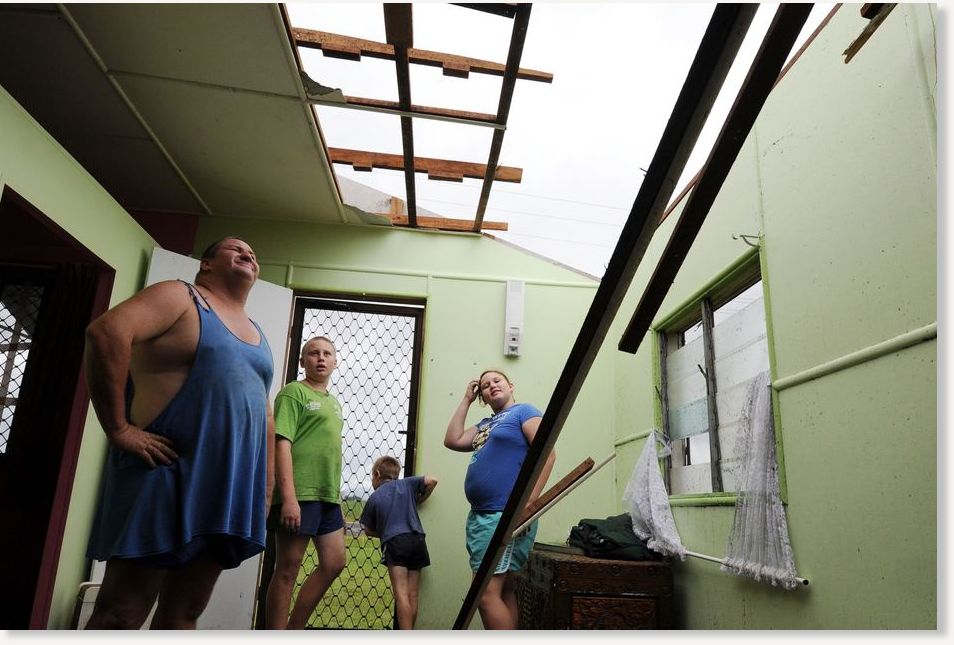
© AFP: Torsten BlackwoodScott Torrens (left) and his children look to where their roof once was in Mourilyan, south of Innisfail
Emergency crews are cutting their way into storm-shattered communities in north Queensland to assess the extent of the damage after category five Cyclone Yasi roared ashore overnight.

The towns of Tully, Mission Beach, Cardwell, Silkwood and Innisfail bore the brunt of the monster storm's 285kph winds but there are no reports of deaths or serious injuries.

Buildings were destroyed, roofs were ripped off houses, and trees were shredded as the monster storm slammed ashore about midnight. More than 180,000 homes remain without power.

The cyclone is continuing to weaken but there is now heavy rain and damaging wind gusts in excess of 90kph, which are expected to extend to the Northern Territory border including Longreach and Mount Isa overnight.

Comment: The cyclone remains active over land and is making its way further into the rural townships of northern Queensland. Have a look at the current satellite image.

Cyclone Yasi 5
© BOM


Bizarro Earth

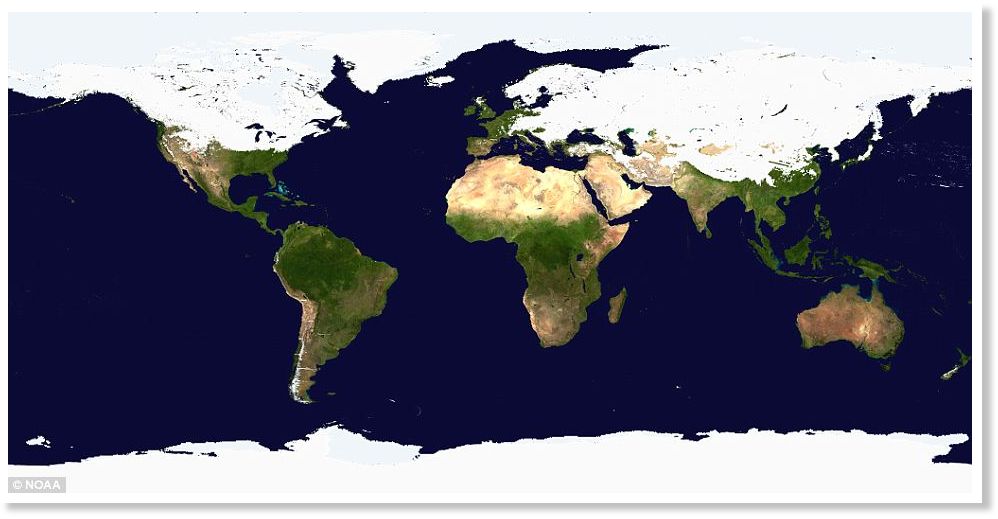
Best of the Web: World of two halves! Map shows most of Northern Hemisphere is covered in snow and ice

It looks like a graphic from a Discovery Channel programme about a distant ice age. But this astonishing picture shows the world as it is today - with half the Northern Hemisphere covered with snow and ice.

The image was released by the National Oceanic And Atmospheric Association (NOAA) on the day half of North America suffered in the grip of a severe winter storm.

The map was created using multiple satellites from government agencies and the US Air Force.
Image
© NOAAA new satellite map from the government agency NOAA shows the size of the snow cover on regions going from the West coast of Canada to the East of China.
Stretching from the west coast of Canada to the eastern shores of China, the white stuff has rarely been shown covering this much ground.

Igloo

Historic Winter Storm Moves Across the U.S.

Ice Storm
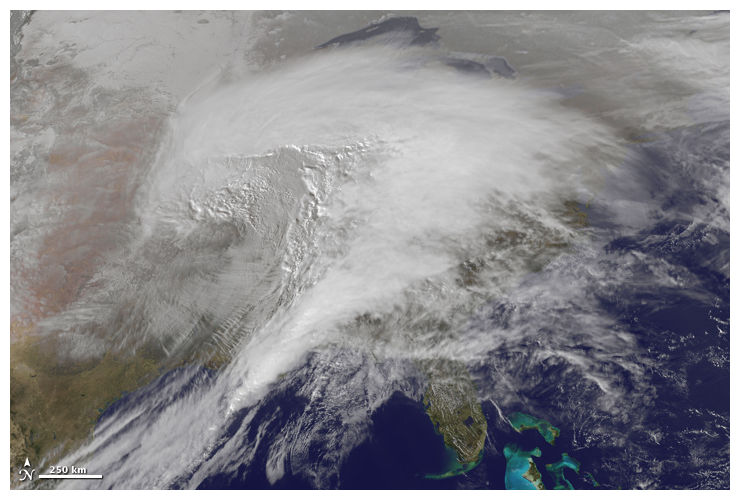
© Jesse Allen / GOES Project Science Office
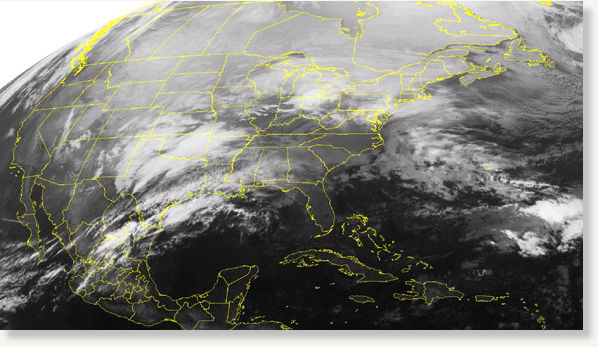
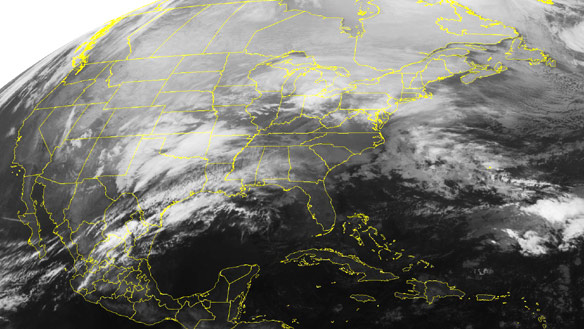
In a winter marked by several crippling storms, the storm of February 1 - 2, 2011, stands out. Heavy snow, ice, freezing rain, and frigid wind battered about two thirds of the United States, making it "a winter storm of historic proportions," said the National Weather Service. This animation - made with images from the NOAA-NASA GOES 13 satellite - shows the giant storm developing and moving across the country between January 31 and February 2.

This image, a still taken from the animation, shows the storm at 4:31 p.m. Eastern Time on February 1. In the image, the storm measures about 2,000 kilometers (1,240 miles) from west to east. The storm formed when cold Arctic air pushed south from Canada while moist air streamed north from the Gulf of the Mexico. The animation shows clouds building over New Mexico and Texas early in the day. As the system develops and moves northeast, the storm grows and becomes more organized. By the end of February 1, the storm was a sprawling comma that extended from the Midwest to New England.

By 9:00 a.m. Eastern Time on February 2, the National Weather Service reported that 21 states from New Mexico to New Hampshire had received at least 5 inches (13 centimeters) of snow. Wisconsin, Illinois, Missouri, and Oklahoma declared states of emergency. According to news reports, one in three Americans were affected by the storm.

Snowman

US: Midwest buckles under major winter storm

Chicago - Residents across the country began digging out of snow and ice Wednesday after a record-setting storm crippled cities and forecasters warned there was more bad weather on the way.

Snow continued to fall in Chicago on Wednesday after the city recorded 20.2 inches making it the third-largest snowfall on record. The area struggled to recover from a crippling blizzard that shut down roads and train service and left hundreds of motorists stranded.


At an early morning briefing, city officials urged residents to stay home as plows try to clear roads of giant drifts from winds that gusted overnight to 70 mph. The city shut down Lake Shore Drive for the first time in years as an untold number of motorists were stranded overnight after multiple car accidents on the iconic roadway.

The National Weather Service said snow will fall before the storm moves away and winds of 20 to 30 mph will continue through much of the day. A storm brewing in the south at the end of the week will move up the East Coast bring rain and snow across the Northeast.

Cloud Lightning

Floods in Brazil Are a Result of Short-Term Planning

Image
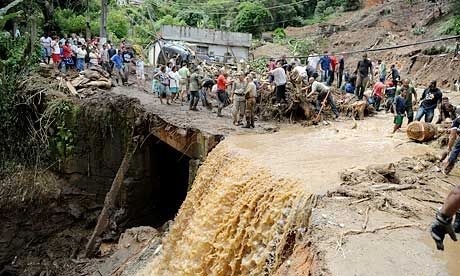
© V. Almeida/AFP/Getty ImagesRescue workers searching for victims after heavy rains in January 2011 caused mudslides in Teresópolis, Rio de Janeiro state, Brazil.
Urban planning has never been part of Brazil's political agenda, so when heavy rains come cities are not able to cope

As I write, more than two weeks after the floods began in the mountainous region of Rio de Janeiro state, many communities remain isolated due to landslides on the main access roads.

More than 800 people died and thousands of people have been displaced in the state, according to official figures. One of the worst affected towns is Santa Rita. Dozens of families still depend on helicopters to deliver food, water, and emergency healthcare. In the town of Teresópolis, people are starting to clear debris in the streets by hand, with shovels and brushes. And in Nova Friburgo, families watch, and cry, as their homes are demolished.

In the neighbouring state of São Paulo, the richest in the country, 25 people died because of the heavy rains. In Santa Catarina state, in the south, five people lost their lives and 17,000 had to flee their homes.

The January rains in Brazil are becoming more severe and floods are becoming a routine. But while specialists say it's too early to confirm the heavy rains are caused by climate change, the fact is that Brazilian cities have never been ready for them.

Cloud Lightning

No let-up in rains, floods in Caraga

Image
© Unknown
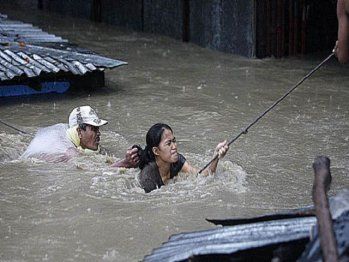
Manila, Philippines - Floods due to non-stop rains still affect parts of the Caraga region in Mindanao, as another low pressure area threatens other areas of Mindanao with flash floods and landslides.

Science and Technology Undersecretary Graciano Yumul, OIC of the Philippine Atmospheric Geophysical and Astronomical Services Administration (Pagasa), said that rain bands are still affecting parts of northeast Mindanao, Bohol, northern Cebu, and the southern parts of Leyte and Samar.

The rain bands are still expected to bring moderate to heavy rains in the area, with the weather station in Hinatuan, Surigao del Norte, recording more than 180 mm of rain in 24 hours, Yumul said.

Meanwhile, Yumul said the low pressure area east of General Santos City is predicted to proceed to the Palawan area, instead of going towards Southern Luzon or the National Capital Region.

He said numerical models indicated the LPA will be in the northern part of the island by Thursday, and will go out of the Philippine Area of Responsibility (PAR) by Friday.

Igloo

US cities paralysed by snow and ice

Image
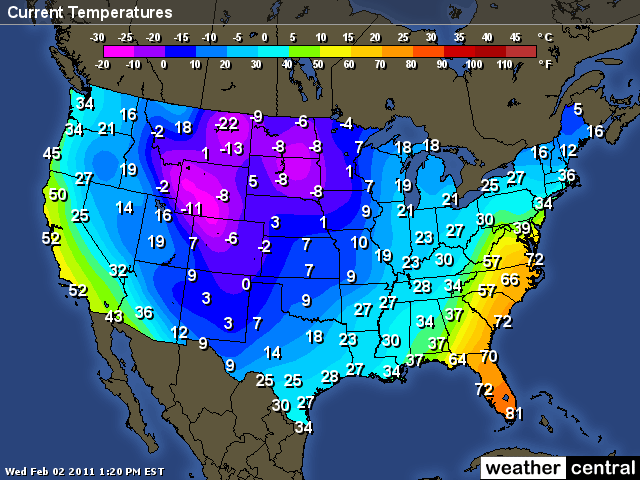
© Weather CentralUS temperatures as of 1:20PM EST.
A massive storm billed as the worst in decades has left vast areas of the United States paralyzed by snow and ice.

Hundreds of motorists were stranded and airports and schools were forced to close.

Chicago received up to 17in of snow, with more still possible, and up to 18in fell on Missouri.

More than a foot dropped on northern Indiana and south-east Kansas, while Oklahoma saw similar snowfall. In the north east, parts of northern New York had a foot of snow, while New York City was covered in ice.

In Chicago, the city shut down Lake Shore Drive for the first time in years, and hundreds of motorists were stranded for 12 hours after multiple car accidents on the road.

Raymond Orozco, chief of staff to Chicago mayor Richard Daley, said efforts to rescue motorists were "severely hampered" by snow drifts, high winds and white-out conditions.

Igloo

Chicago Blizzard of 2011

Image
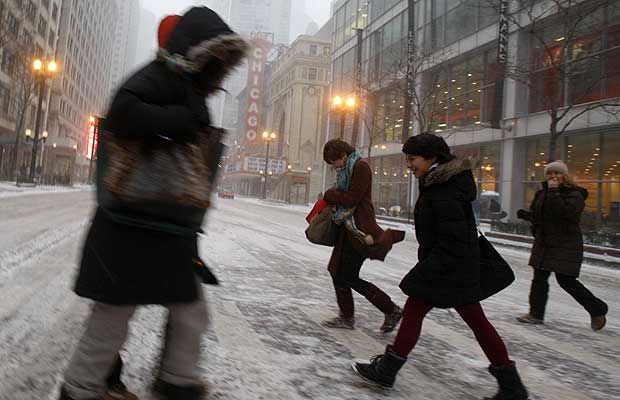
© John Gress, ReutersPedestrians cross State Street in Chicago February 1, 2011. A colossal winter storm stretching from New Mexico to Maine hit the middle of the United States on Tuesday with blizzards and freezing rain, and experts said the worst is still to come as it moves northeast.
We were warned. And Mother Nature did not disappoint.

The great blizzard of 2011 roared into Chicago with mighty force at around 3 p.m. and continues to pound the area.

The deluge of snow and wind knocked out power to tens of thousands of customers, blew out windows and delayed many commuters. Some are still trying to make their way home.

"Main city streets downtown leading to the expressways are now JAMMED," said reporter Dick Johnson, who braved the conditions en-route to a live report. "Seems not enough took the endless warnings and storm start time seriously."

Bizarro Earth

How Cyclone Yasi Compares Around the World

Yasi_1
© News.com AustraliaDate/Time: 2011:02:02 13:29:18
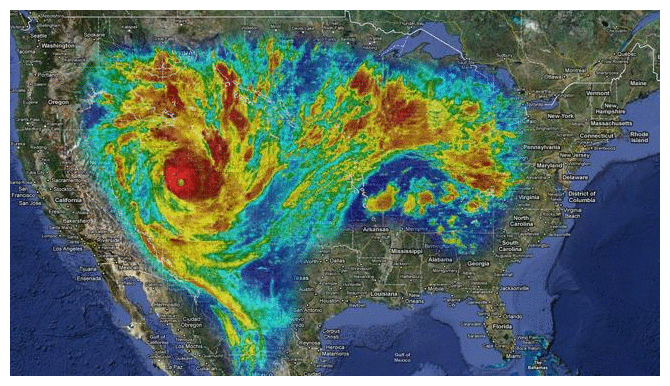
IF you're struggling to grasp the magnitude of Tropical Cyclone Yasi, consider this: it is so large it would almost cover the United States, most of Asia and large parts of Europe.

Most of the coverage about the scale of Yasi has tried to compare it with storms of the past - it's bigger than Larry, more powerful than Tracy.

But just as powerful is this comparison, showing this storm is continental in size. The main bloc of the cyclone is 500km wide, while its associated activity, shown above in a colour-coding to match intensity, stretches over 2000km.

The storm's scale of destruction is as shocking as it is inevitable. In the map above, the United States from Pennsylvania in the east to Nevada in the west, from Georgia in the south to Canada in the north and well into Mexico would be battered with 300km/h winds and up to one metre of rain.

The economic impact would be felt around the world.

Igloo

Canada: Blizzard Warning Issued for Southwestern Ontario

Image
© Weather Underground/Associated PressThis U.S. National Oceanic and Atmospheric Administration satellite image taken Tuesday at 12:45 a.m. ET shows a storm system over Texas and the central U.S. The front is expected to hit southwestern Ontario Tuesday evening with heavy snow and high winds
Environment Canada has upgraded a warning about a snowstorm expected to hit Ontario late Tuesday, saying there will be blizzard conditions in certain areas of southwestern Ontario.

"This major winter storm is quite large in size and will have a major impact on travel, especially tonight and on Wednesday," Environment Canada said in a warning issued Tuesday.

It will be "the strongest storm of the season" for urbanized areas like Toronto that are outside the Ontario snowbelt.

The weather agency had upgraded a winter storm watch in southern Ontario, stretching from Windsor to Kingston, to a winter storm warning.

Environment Canada added the blizzard warning for London, St. Catharines, Sarnia and Hamilton just after 3:30 p.m. ET on Tuesday.

A warning is typically issued between six and 24 hours before the start of severe weather.

By the time the storm finishes Wednesday, large swaths of southern Ontario could have snowfall accumulations of between 20 and 30 centimetres, the agency predicted.

Heavy snow is expected to hit southwestern Ontario on Tuesday evening and the Toronto area around midnight. It is then predicted to move into eastern Ontario on Wednesday morning.

The snow will be accompanied by gusting winds of 50 to 70 km/h at their strongest, Environment Canada said. The high in Toronto is forecast to be - 5 C on Wednesday, and the low will dip to - 9 C.

Plenty of people in Toronto were dashing out to stores on Tuesday to stock up on storm supplies.

Fraser Perkin was doing a brisk trade in salt and shovels at the Home Hardware location he manages at Highway 7 and Woodbine Avenue in Markham, Ont., Tuesday afternoon.