Storms
S


Cloud Lightning

270,000 UK homes lose electricity amid St Jude storm

Image
© AFPCollapsed crane of the roof of the Cabinet office in London from high winds on October 28, 2013.
Travel chaos prevented thousands from reaching work across Britain on Monday and 270,000 homes were without electricity as the St Jude storm unleashed winds of almost 100 mph across swathes of the country.

A 17-year-old girl died after a tree fell onto the static caravan where she was sleeping in Hever, southeast England, and a man in his 50s died when a tree fell on his car in Watford, north of London, police said.

The rough conditions at sea forced rescuers to suspend the search for a 14-year-old boy who was washed out to sea from a beach in East Sussex on England's south coast on Sunday.

More than 450 people were stranded for several hours on two ferries outside the port of Dover after it was closed to sea traffic, as huge waves lashed the coastline on both sides of the Channel.

At least 100 trees fell across railway lines in the south east, Network Rail said.

Cloud Precipitation

Britain awaits worst storm in five years

St. Jude storm
© Craig Shepheard/Demotix/CorbisFlooding in St Albans last week: the Met Office is predicting that 20-40mm of rain could fall overnight.
The worst storm in five years is forecast to hit England and Wales on Sunday night, bringing heavy rain, high winds and the threat of flooding and travel chaos.

Winds of more than 80mph could leave a trail of destruction across large parts of the UK, knocking down trees and causing major structural damage and power cuts.

The storm, named after St Jude - the patron saint of lost causes whose feast day is on Monday - will develop over the Atlantic and is expected to hit the south-west late on Sunday, before moving north-east across England and southern Wales.

David Cameron said he had spoken to the organisations responsible for public safety during the storm. The prime minister wrote on Twitter: "I've just chaired a call with various government departments and agencies to hear about all the plans to ensure people are protected from tonight's storm."

The weather system is expected to have moved out over the North Sea by Monday lunchtime, leaving strong breezes in its wake.

With the Met Office predicting that 20-40mm of rain could fall within six to nine hours overnight, insurance companies are advising households to protect themselves and their property.


Comment: The headline and article from The Guardian sounds a little alarmist. If 20-40 mm of rain within a six to nine hour period is a cause for flooding and major upset, then it is more a sign of a failing infrastructure than of a severe storm.
Or comparison, in Japan the other day 850 mm of rain fell within 24 hours:
Japan's shocking, deadly deluge from Typhoon Wipha: 33 inches of rain in 24 hours


Cloud Precipitation

Hurricane Raymond strengthens off Mexico's Pacific coast

Hurricane Raymond picked up strength Monday as it churned off a region of Mexico's Pacific coast still recovering from a devastating storm last month. In just a few hours, Raymond went from a tropical storm to a Category Three hurricane on the five-point Saffir-Simpson scale, the Miami-based National Hurricane Center (NHC), which tracks hurricanes in the hemisphere, reported at 0900 GMT.
Image
© AFPView of a flooded street in Acapulco, Guerrero state, Mexico, Sept 26, 2013
Raymond packed maximum sustained winds of 195 kph, with higher gusts. Hurricane force winds extend up to 30 kilometers out from the storm's center, while tropical force winds extend up to 110 kilometers. "Some additional strengthening is possible during the next day or so," the NHC warned.

Raymond however stalled some 265 kilometers west-southwest of the resort town of Acapulco after steadily moving for hours towards the mainland, the NHC said.

Cloud Precipitation

Large, rare tornado strikes Greek Island - impressive video captures rare event near Rhodes

An eerie sight greeted residents of Rhodes, Greece, early Thursday morning when a tornado formed just off the coast of the island of Rhodes. An impressive video was captured of this rare event near Rhodes. A large rotating column of air is seen in this video and note the multiple, smaller funnel clouds.


Fortunately, only minimal damage was reported, according to Severe Weather Europe and, judging by the video, the worst of the weather remained off shore. A potent cold front slicing eastward spawned severe thunderstorms Thursday that impacted islands in the Aegean sea as well as parts of western Turkey.

The island of Rhodes, located in the southern Aegean Sea, does experience thunderstorms from time to time, but tornadoes are not all that common. YouTube user sandblast basshead captured this video of wind-whipped rain and structural damage.

Cloud Lightning

Typhoon Wipha makes landfall: Mudslides kill 14 in Japan; 50 missing

Heavy rain in Tokyo
© Yoshikazu Tsuno/AFP/Getty ImagesJapanese businessmen walk against strong wind and rain as Typhoon Wipha reached Tokyo on Wednesday.
A typhoon caused deadly mudslides that buried people and destroyed homes on a Japanese island Wednesday before sweeping up the Pacific coast, grounding hundreds of flights and disrupting Tokyo's transportation during the morning rush. At least 14 deaths were reported and more than 50 people were missing.

Hardest hit was Izu Oshima island about 120 kilometers (75 miles) south of Tokyo. Rescuers found 13 bodies, most of them buried by mudslides, police and town officials said. Dozens of homes were destroyed, and more than 50 people are missing. "We have no idea how bad the extent of damage could be," town official Hinani Uematsu said.

One woman from Tokyo died after falling into a river and being washed 10 kilometers (6 miles) downriver to Yokohama, police said. Two sixth-grade boys and another person were missing on Japan's main island, Honshu, the Fire and Disaster Management Agency said.

More than 350 homes have been damaged or destroyed, including 283 on Izu Oshima, it said.

Comment: Had the rain fallen as snow it would have been 8 meters of snow in a 24 hour period, instead 80 cm of rain fell.


Cloud Lightning

'Once in a decade' Typhoon Wipha threatens Japan; precautions at Fukushima nuclear plant

A once-in-a-decade typhoon threatened Japan on Tuesday, disrupting travel and shipping and forcing precautions to be taken at the wrecked Fukushima nuclear power plant. Typhoon Wipha is moving across the Pacific straight towards the capital, Tokyo, and is expected to make landfall during the morning rush hour on Wednesday, bringing hurricane-force winds to the metropolitan area of 30 million people.

The center of the storm was 860 km (535 miles) southwest of Tokyo at 0800 GMT, the Japan Meteorological Agency said on its website. It was moving north-northeast at 35 kph (22 mph). The storm had weakened as it headed north over the sea but was still packing sustained winds of about 140 kph (87 mph) with gusts as high as 194 kph (120 mph), the agency said.
Image
Typhoon Nari knocked down trees and damaged hundreds of houses in central Vietnam early on Tuesday, forcing the evacuation of tens of thousands of people, state media said.

Cloud Lightning

Strong typhoon Wipha heads for Japan and crippled Fukushima nuclear plant

Typhoon  Danas
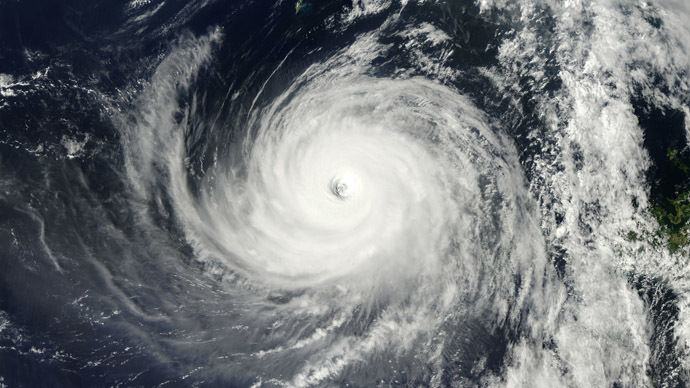
© AFP/NASANASA Terra satellite image shows a Typhoon off Japan.
A powerful typhoon is bearing down on Japan - and its path is set to go through the crippled Fukushima nuclear power plant. It's less than 24 hours until the storm is due to hit. The storm has been branded a "once in a decade event".

The country's weather agency has issued warnings of torrential rain and strong winds ahead of the coming typhoon, Wipha.

450 flights have been canceled across Japan in measures against the coming typhoon. The combined cancelations will affect 60,850 passengers, Japan Airlines Co said.

East Japan Railway Co said it had canceled 31 bullet trains going north and west from Tokyo, Reuters reported.

The typhoon is moving towards the country at a speed of 35 kilometers per hour, and is currently to the south of the country in the Pacific ocean.

Near its center, the speed of the typhoon can exceed 144 kilometers per hour.

"Wipha will remain a strong and expansive extra-tropical system as it tracks along the eastern coast of Japan," the US-based Joint Typhoon Warning Center reported on its website.

The exact track of Wipha is crucial: if its center passes just west of Tokyo, a large storm surge would affect the city of more than 35 million people and potentially bring major flooding.

Cloud Precipitation

Typhoon Nari kills five, causes major damage in Vietnam

Typhoon Nari in Vietnam
© Unknown
Typhoon Nari slammed into central Vietnam early Tuesday killing five people, ripping roofs of homes and damaging roads, state media reported. The storm, which claimed 13 lives in the Philippines over the weekend, tore through the communist country's central region -- from the tourist town of Hue to Quang Ngai to the south, Vietnam Television reported.

Trees were uprooted and thousands of houses had their roofs ripped off while many roads became impassable due to torrential rain, footage showed.

Schools were closed Tuesday in Danang city, which bore the brunt of the typhoon when it hit packing winds of up to 133 kilometers (82 miles) an hour, state media said.

Before Nari hit, Vietnam evacuated more than 120,000 people to makeshift shelters in public buildings away from vulnerable coastal areas, according to the country's disaster authorities.

Vietnamese weather forecasters said the typhoon had crossed the border to Laos by midday Tuesday.

Nari is the 11th tropical storm to hit Vietnam so far this year.

Last month Typhoon Wutip left a trail of destruction in the communist state, damaging nearly 200,000 houses and killing several people.

Forty people have been killed in flooding in Vietnam since early September, according to official figures.

Cloud Lightning

800,000 evacuated as powerful cyclone Phailin hits India

Gopalpur beach
© APHigh tide waves approach the Bay of Bengal coast near Gopalpur beach in Ganjam district, Bhubaneswar on Saturday (inset) A live tracker of cyclone phailin taken from WunderMap.
A powerful cyclone whose spinning arms engulfed much of the Bay of Bengal weakened Sunday morning as it crashed into India's eastern coast, flooding homes and roads throughout the region and disrupting electricity and communications.

The authorities evacuated about 800,000 people, one of the largest such evacuations in India's history. The storm's maximum sustained winds, which were approximately 124 miles per hour when the storm made landfall about 9 p.m. Saturday, had dropped to less than half that strength nine hours later.

At least five people were killed in the coastal city of Gopalpur because of heavy rain and high winds before the storm made landfall, officials said. The storm was expected to drop up to 10 inches of rain over the next two days in some areas.

Cloud Lightning

Five dead, millions without power as typhoon Nari hits Philippines

Path of cyclone Nari
© Accuweather.com
Typhoon Nari pummelled the northern Philippines early Saturday, ripping roofs off buildings, killing five people and leaving more than two million people without electricity, officials said.

Nari hit the country's east coast around midnight (1600 GMT Friday), toppling trees and pylons and dumping heavy rain as it cut a westward swathe through the farming regions of the main island of Luzon, they said.

"One of the dead was a police officer awaiting deployment for rescue duties. He was buried in a mudslide," National Disaster Risk Reduction and Management Council spokesman Rey Balido told a news conference in Manila.

Three people were crushed to death by falling trees while another person was electrocuted by a loose power line, Balido added.

The damage blacked out 37 towns and cities across central Luzon, according to a tally by the civil defence office in the region.

Road and utility crews were out clearing roads and restoring power, but it could take up to two days before electricity is restored and major highways are reopened to traffic, Nigel Lontoc, a disaster official for the region, told AFP by telephone.

A total of 2.1 million people live in the areas now without electricity, according to official population figures. Balido said four people were listed as missing, including a fisherman on the country's east coast who had been sleeping in his boat when the cyclone made landfall.

"Big waves swept the boat out to sea," he added.