Storms
S


Bizarro Earth

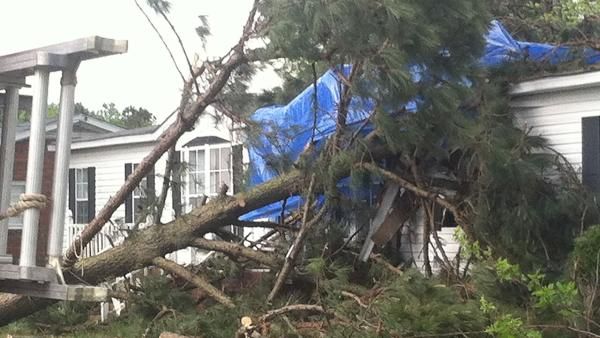
Eastern North Carolina tornadoes confirmed

Image
© WTVD/Amber Roberts, WCTI-TV
The National Weather Service is confirming multiple tornado touchdowns in eastern North Carolina, and an emergency management director reports more than a dozen people were taken to the hospital as a result.

Meteorologists said Saturday that while its survey is continuing, they have confirmed EF-2 tornadoes touched down in Pitt and Beaufort counties on Friday. A final assessment is expected late Saturday.

Specifically, the meteorologists said a low-end EF-2 struck near Chicod in Pitt County. A moderate EF-2 hit near Chocowinity and a high-end EF-2 struck Whichards Beach.

On the enhanced Fujita scale, an EF-2 has winds of between 111 mph and 135 mph for a 3-second gust.

Cloud Lightning

North Carolina tornadoes injure 15 people, damage hundreds of homes

North Carolina tornado damage
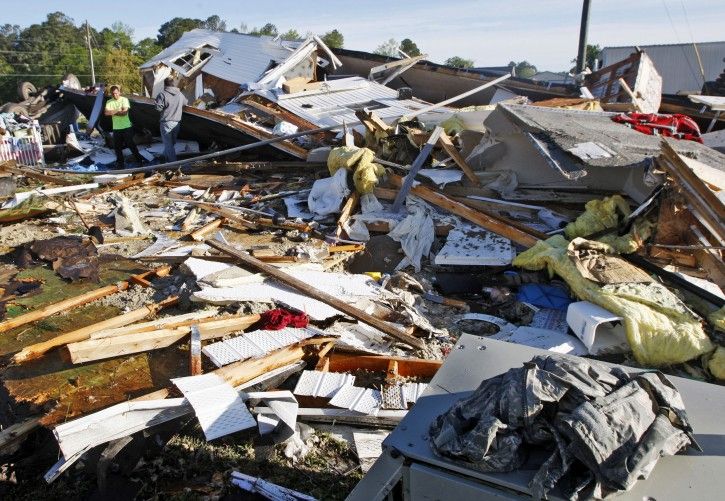
© AP Photo/The Daily Reflector, Aileen DevlinPeople stand among the remains of a mobile home Saturday, April 26, 2014, that was destroyed when a tornado touched down along Black Jack-Simpson Road in Greenville, N.C. on Friday, April 25, 2014.
At least 15 people were transported to the hospital on Friday evening after a tornado struck in Beaufort County, N.C., an emergency management official said Saturday.

There were also an undetermined number of "walking wounded" who went to the hospital, Beaufort County Emergency Coordinator John Pack told AccuWeather.com.

"The good news is that nobody died. That's remarkable in itself," Pack said.

The National Weather Service at Newport/Morehead City, N.C. reports that an EF-3 tornado was confirmed along Whichards Beach in Friday night's storm.

The tornado was an EF-0 when it touched down near Chocowinity but grew in strength to an EF-3 with an estimated wind speed of 150 mph by the time it reached Whichards Beach, the weather service said.


Cloud Lightning

Storms bring tornado threat across US Plains this weekend

Midwest tornado threat
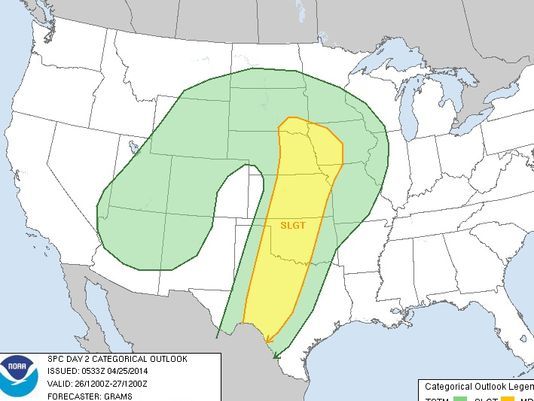
© Storm Prediction CenterThe area in yellow is at greatest risk of severe weather on Saturday. The green area could also see thunderstorms, which are not expected to be severe.
A strong storm system, with high winds and torrential rain, is taking shape in the south central United States this weekend and threatens to produce tornadoes, which have been relatively uncommon so far this year, forecasters said on Friday.

The storm is expected to develop in north central Texas on Saturday and move through Oklahoma, Kansas, Missouri, Arkansas and possibly Nebraska by Sunday afternoon, according to the National Weather Service.

Cloud Grey

Sandstorm turns day into night in China

China sandstorm
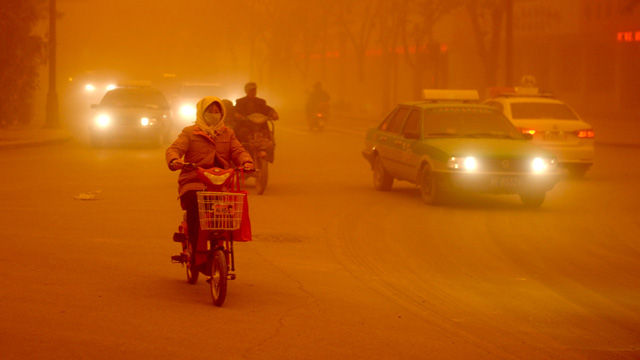
© XinhuaA street in Dunhuang is shrouded in floating dust during the storm, April 23.
A dense sandstorm turned day into night in Jiuquan in northwestern China's Gansu province on Wednesday afternoon, with visibility dropping to as low as 50 meters. Local authorities have since issued the highest dust storm warning for the area, reports the state-run China News Service.

A local resident told the news agency that it was as dark as evening by 3pm, with fierce wind and dust battering the city. Another local internet user said it was pitch dark in Dunhuang, a county-level city in Jiuquan, by around 2pm on the same day. The sky turned reddish-orange around half an hour later, the internet user said.

Cloud Grey

U.S. tornado activity at 60-year low

Tornado
© cnsnews.com
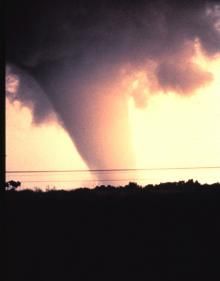
Tornado activity in 2014 so far is at its lowest level since 1953, according to the National Weather Service's (NWS) Storm Prediction Center (SPC). "2014 has likely established a new low in tornado activity through the 21st of April," according to SPC warning coordination meteorologist Greg Carbin.

Carbin also pointed out that the time gap between the worst tornadoes is also the fourth largest since 1953. "At 152 days on April 18, 2014, the span between EF-3 or stronger tornadoes is the 4th longest span... in the last 60 years," Carbin noted. The longest gap was 249 days in 2004.

The NWS defines an EF-3 (Enhanced Fujita scale) tornado as one with winds between 158 and 207 mph capable of causing "severe damage," including blowing off roofs, overturning trains, and uprooting trees.

Between 2001 and 2010, 563 Americans were killed by tornadoes, which occur 1,200 times a year on average.

Although Texas experienced the highest number of twisters per year (142 on average) between 1981 and 2010, compared to less than five in 15 Northwest and Western states, Alabama had the nation's highest annual number of tornado fatalities (6 per year), the NWS reported.

The deadliest tornado day in U.S. history was March 18, 1925 when 695 people were killed by twisters in Missouri, Illinois and Indiana.

Igloo

UN issues new 15 year climate tipping point - but UN issued tipping points in 1982 and another 10-year tipping point in 1989!

Image
© Space.com
According to the Boston Globe, the United Nations has issued a new climate "tipping point" by which the world must act to avoid dangerous global warming.

The Boston Globe noted on April 16, 2014: "The world now has a rough deadline for action on climate change. Nations need to take aggressive action in the next 15 years to cut carbon emissions, in order to forestall the worst effects of global warming, says the Intergovernmental Panel on Climate Change."

Once again, the world is being warned of an ecological or climate "tipping point" by the UN.

As early as 1982, the UN was issuing a two decade tipping point. UN official Mostafa Tolba, executive director of the UN Environment Program (UNEP), warned on May 11, 1982, the "world faces an ecological disaster as final as nuclear war within a couple of decades unless governments act now." According to Tolba in 1982, lack of action would bring "by the turn of the century, an environmental catastrophe which will witness devastation as complete, as irreversible as any nuclear holocaust."

Question

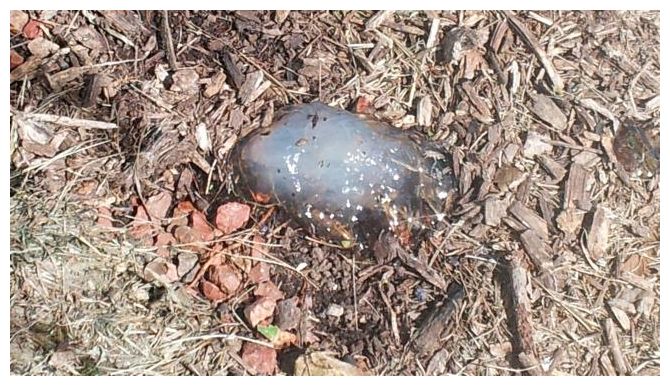
Is this a jellyfishnado? Possible jellyfish remains found after Smithfield "mini tornado"

Jelly Mystery_1
© Peter BurgessThis mysterious blob of slime is believed to be a jellyfish left in the wake of a "mini tornado", which struck Smithfield on Saturday.
Mysterious blobs of slime have been found in a park on a quiet, suburban Cairns street and even experts are baffled.

The blobs resemble jellyfish but a scientist couldn't confirm their identity from photos taken by a shocked Smithfield man.

On Saturday, Peter Burgess was sitting on his back veranda watching the rain when conditions intensified and what he described as a "mini tornado" struck.

"Suddenly it was extremely windy to the point where I was frightened and ran inside," he said.

"It was exactly what I'd experienced in Sydney (in December 2005) and what was reported after ex-tropical cyclone Oswald, which created mini tornadoes sporadically down the coast.

"There were incredibly strong winds and a noise like a jet engine."

Cloud Lightning

Ita remnants cause flooding, cuts power in New Zealand

Flooding New Zeland Ita
© RNZ / Lisa ThompsonTamaki Drive in Auckland was closed because of flooding.
Thousands of people were without power throughout New Zealand's Northland and Auckland regions as a band of wild wet weather moves down the country on Thursday, Xinhua news agency reported.

The Fire Service has been inundated with calls, starting in Northland earlier on Thursday morning then moving to Auckland's North Shore and West Auckland as well as the central city.

It said high winds are causing the most damage, with many reports of trees down across roads and power lines.

Cloud Lightning

Cyclone Ita hits East coast of Australia: worst-hit areas could go weeks without power

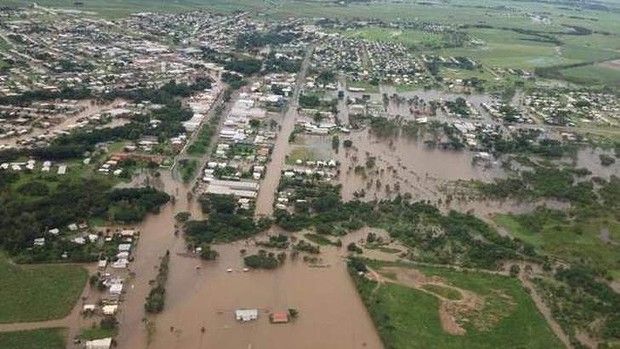
Ingham flooded after cyclone Ita
© TwitterIngham flooded after Cyclone Ita.
More than 6000 homes and businesses remain without power in the far north as Cyclone Ita begins to move away from the Queensland coast.

Ergon Energy has restored power to about 20,000 properties since noon on Sunday, although Premier Campbell Newman said the worst-hit areas could go weeks without electricity.

On Monday morning, Energy Minister Mark McArdle said vegetation damage and issues with access had made it difficult to restore power to parts of Kuranda and the Cairns northern beaches.

There were also 736 properties in Townsville that were waiting to be re-connected and 1100 customers offline in the Mackay, Whitsunday and Proserpine regions.

Gusts of 100km/h are forecast between Sarina, near Mackay, and Yeppoon, northeast of Rockhampton on Monday.

But the Bureau of Meteorology said the gales should start easing as Ita weakened to a tropical low and moved away from the coast.

Attention

Extreme weather in U.S. has driven ten-fold increase in power outages over the last two decades

A new report from Climate Central has found that major power outages have increased ten times over since the early 1980s - and extreme weather is by far the biggest culprit.

The analysis defined a "major power outage" as a loss of electrical power for at least 50,000 people for at least an hour, or where the power supply interruption reached at least 300 megawatts, or where demand exceeded supply by at least 100 megawatts. It found the big upswing in such events occurred in the 2000s. Weather drove 80 percent of all outages between 2003 and 2012, and only three years in that time period saw non-weather related events account for more than 10 percent of all outages.