Animals
S


Attention

US: Scores of Protected Golden Eagles Dying After Colliding with Wind Turbines

California's attempts to switch to green energy have inadvertently put the survival of the state's golden eagles at risk.

Scores of the protected birds have been dying each year after colliding with the blades of about 5,000 wind turbines.

Now the drive for renewable power sources, such as wind and the sun, being promoted by President Obama and state Governor Jerry Brown has raised fears that the number of newborn golden eagles may not be able to keep pace with the number of turbine fatalities.
Image
© AlamyNot eagle friendly: Scores of Golden Eagles have been dying each year after colliding with the blades of about 5,000 wind turbines

Bizarro Earth

US: Earthworm Plague Sweeps Cincinnati, Ohio

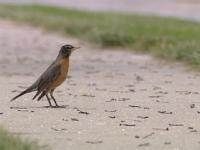
dead earthworms + bird
© WLWT
People across the Tri-State awoke to an unusual sight Thursday - thousands of earthworms lying dead on sidewalks and porches.

WLWT was first alerted to the issue by Rick in West Chester.

"This appears to have started sometime yesterday afternoon, as I do not remember seeing them yesterday morning," Rick wrote.

Shortly after Rick's email, WLWT reporter Brian Hamrick began taking photos from his home in Florence, where thousands of worms coated the sidewalks of his neighborhood.

After one post on FB, more than 90 people said they had seen the same thing, from Fairfield, to Mount Airy, Pleasant Ridge, Independence and Sardinia. We even got confirmation from our sister TV station in Louisville that they had a few hundred dead worms on their sidewalk.

Bacon

US: Officials Plan to Exterminate San Diego County's Wild Pigs

Image
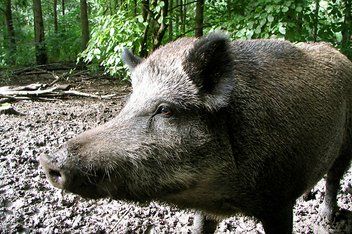
A study found that the rooting behavior of feral pigs in California reduces the number and size of oak tree seedlings.
When it comes to controlling the spread of feral pigs in San Diego County, the public hunting effort isn't doing the job.

That has led federal agencies to launch an ambitious program that will use cage traps, corral traps, federal hunters with guns and dogs and even shooting from helicopters to exterminate the area's population of wild swine. Officials see the pigs as a threat to fragile ecosystems and public health and safety. Environmentalists worry about the damage wild pigs will do to the county's sensitive habitat, much of it rebounding from Southern California's catastrophic wildfires of the last decade.

The U.S. Forest Service estimates there are 200 to 300 feral pigs in San Diego County. There's also a small sounder of pigs near the Riverside County border that likely was there prior to the release of pigs in late 2006 on the Capitan Grande Indian Reservation behind El Capitan Reservoir in the San Diego River bed. Hunters who spend a lot of time in the backcountry say the population is three to four times that now and it will be useless to try and eradicate them.

Still, the Forest Service and the Bureau of Land Management are developing a plan to eliminate as many feral pigs as possible, as soon as possible.

Info

Kazakhstan: Mysterious Mass Deaths of Endangered Antelopes Reported

Image
© Unknown
Some 440 endangered saiga antelopes have been found dead in Kazakhstan in May this year; in Spring 2010 over 12,000 saigas died under similar, mysterious circumstances. A bacterial infection is thought to be the immediate cause of death, though underlying factors are not understood. Both incidents primarily affected females and their calves.

The saiga almost went extinct in the 20th century but recovered briefly. The World Wildlife Fund estimates there were over a million in the wild in the early 1990s, but they now number around 50,000 and are on the IUCN's critically endangered species list.

Bizarro Earth

Hundreds of Rare Saiga Antelope Die in Kazakhstan (Again)

Saiga antelope at Zoo Keulen in Germany.
© Frank Wouters via FlickrSaiga antelope at Zoo Keulen in Germany.

One year after a mysterious epidemic wiped out 12,000 critically endangered saiga antelope (Saiga tatarica) in Kazakhstan, the ailment has struck there again, this time killing more than 400 animals.

Kazakhstan Today reports that 442 saiga antelope - including 360 does and 82 calves - were found dead in May. Like a year ago, they fell victim to pasteurellosis, an infection that afflicts the lungs.

But what caused the infection? West Kazakhstan regional governor Baktykozha Izmukhambetov told a cabinet meeting on May 31 that "some sort of poisoning from the flora, which is to say from the grass, is taking place." (Translation via Eurasianet.org)

Bizarro Earth

44-foot long sperm whale washes up on English beach

Image
© Unknown
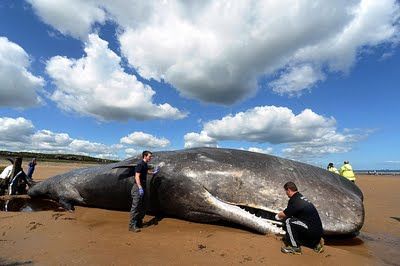
Efforts were under way today to remove the body of a massive whale which died after being stranded on Redcar beach.

Work began after a post-mortem examination was carried out in a bid to establish what killed the gentle giant.

The 44-foot long male sperm whale was found washed up on the beach close to Green Lane by an early morning walker yesterday.

Extensive efforts were made to save the massive mammal but it later died.

Sheeple

Saudi Arabia: Mystery Disease Kills 300 Sheep Within an Hour

A Saudi farmer who went into his barn to take his 300 sheep on their daily pasturing was shocked when he found them all dead, a newspaper in the Gulf Kingdom said on Saturday.

The farm said he checked the sheep an hour earlier and they were all alive in their barn at his far in the western town of Qunfudha.

The unnamed farmer had owned the sheep for years and they were his sole source of living for his family of 16.

Binoculars

US: 1,600-plus Florida Beachgoers Stung by Jellyfish, County Officials Say

jellyfish
A swarm of purplish, stinging jellyfish is washed up on Cocoa Beach, Florida, on Saturday.
More than 1,600 people within a 10-mile stretch of central Florida's Atlantic beaches have been stung in the past week by a distinctive species of jellyfish not indigenous to North America, a rescue official said Tuesday.

Brevard County Ocean Rescue officials said they began flying warning flags at beaches from Cocoa Beach to Cape Canaveral last Tuesday, indicating either a medium or high hazard, along with another flag indicating dangerous marine life.

"From last Wednesday to Friday, we got about 600 reports. Saturday to (Tuesday), we got another thousand," Chief Jeff Scabarozi said.

Arrow Down

Australia: Plague of Ravenous Mice Eat Farmer John Gregory's Pigs

Image
© Sunday MailSaving his bacon: John Gregory covers his pigs in engine oil to protect them from mice.
When South Australian farmer John Gregory entered his piggery he could not believe what he saw - mice attacking his pigs.

Since he first saw them dining out on his prized stock he has been at his wit's end about how to get rid of them.

Now, as a desperate last resort, he is covering his pigs at a farm property in Wynarka, 130km east of Adelaide, in engine oil to protect them from the mice, with the rodents apparently turned off by the taste.

"The mouse problem got really bad in April," Mr Gregory said.

"We went away in the school holidays and when we came back we drove up the driveway and it looked like the ground was moving - there were hundreds of thousands of them."

Mr Gregory, 50, said he put engine oil on his 15 pigs to protect them from the sun about once a month.

Magnify

Indonesia: Weather Blamed for Caterpillar Plague

Image
© JG Photo/Safir MakkiA boy eyeing a caterpillar in Tanjung Duren, West Jakarta, where thousands of the prickly insects have infested pine trees.
Unpredictable weather coupled with a decline in natural predators is responsible for a recent plague of caterpillars in parts of the country.

Though the phenomenon is centered largely in Probolinggo, East Java, smaller reported outbreaks in Central Java, West Java, Bali and, most recently, Jakarta have prompted fears of a widespread infestation.

But Aunu Rauf, an entomologist at the Bogor Institute of Agricultural (IPB), says there is no connection between the outbreaks in Probolinggo and those in the other areas.

"There are at least 120,000 types of caterpillars in the world, so those found in Bekasi [West Java] and Probolinggo would be different from each other," he told the Jakarta Globe on Wednesday.

"I'm sure the ones in Tanjung Duren [West Jakarta], where people have claimed to have been 'attacked' by caterpillars, are also a different type."

Since March, millions of hairy caterpillars have cropped up in at least five subdistricts in Probolinggo, invading fields and homes. They have also caused itchy rashes among residents.