Animals
S


Binoculars

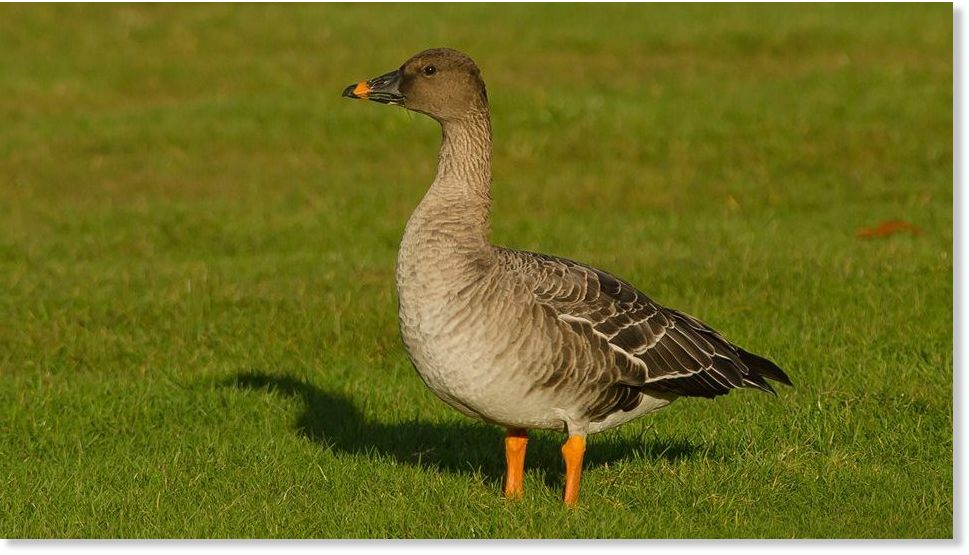
Rare Bean goose from the tundra turns up in Sariska, India

Image
© Ronnie DentremontBean Goose
After a gap of almost 66 years, Bean Goose was spotted at Sariska wildlife sanctuary between February 1 to 11. Last time this rare bird was seen in Bikaner in the year 1948.

Bean geese are found in the arctic tundra region but migrate from there during winters. Out of three, two species, bar-headed goose and grey leg goose have visited Sariska in the past. They have been often spotted at Mansarovar lake and Kankwadi lake. But Bean Goose has come after long time and now Sarsika holds the record of hosting all three species.

Comment: See also: Bean goose from Eurasia takes a wrong turn and winds up on the Oregon Coast

Rare goose from northern Asia turns up in Suffolk, UK


Fish

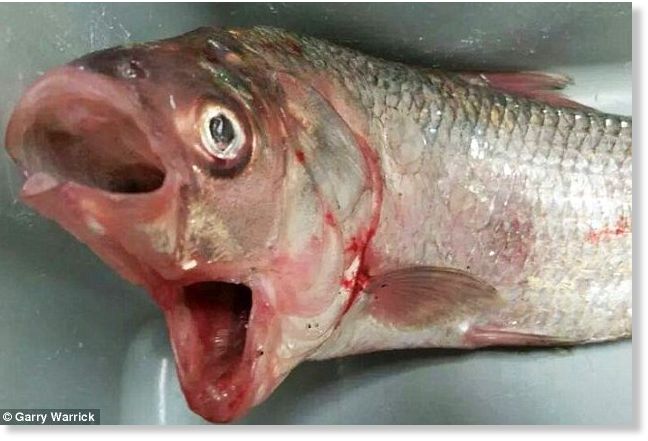
Fish with 2 mouths caught in Australian lake

Image
The South Australian fisherman uncovered the double mouthed bream on Monday
A string of rare and freakish fish have been emerging from Australian seas of late.

In the wake of the discovery of Goblin shark in New South Wales and prehistoric frill shark in Victoria, another rare and unusual fish has been uncovered in South Australia.

On Monday afternoon, a Riverland fisherman was taken aback when he netted a bony bream with two mouths.

Info

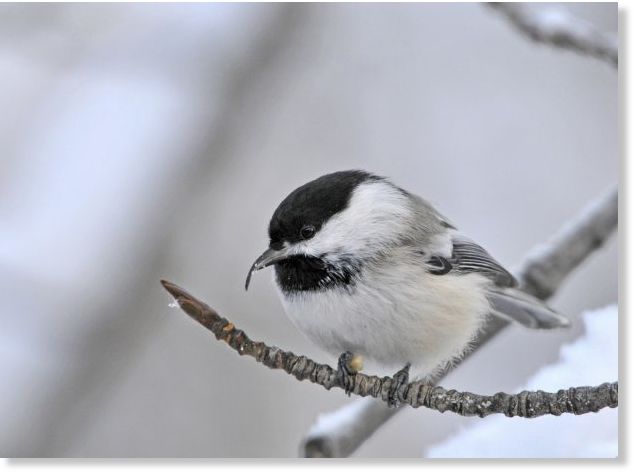
Chemical contaminants suspect in mystery of Alaska chickadee and other bird beak deformities

Image
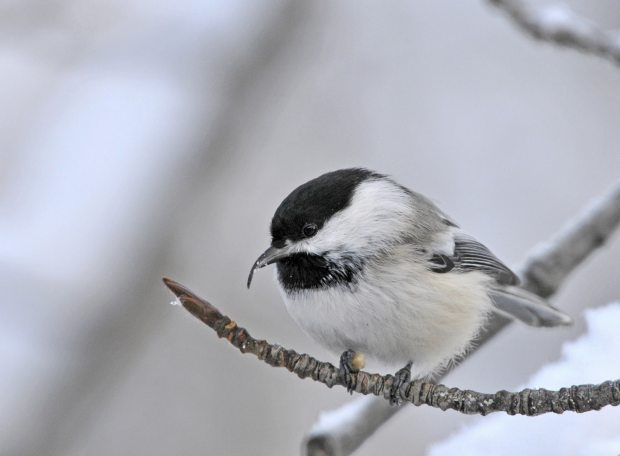
© John Schoen A black-capped chickadee with a deformed beak in the Hillside area of Anchorage, 2010. About 7 percent of Alaska black-capped chickadees have the beak deformity, which is spreading to other birds such as ravens and crows, and to other parts of the world, including Great Britain.
When black-capped chickadees and some other birds in the Anchorage area began turning up in the late 1990s with elongated, weirdly curved or twisted beaks, biologists and bird lovers began to worry.

The deformities range from slight to gross and can have severe consequences for the birds if they are unable to use their beaks to pick up food or groom feathers so their bodies retain heat.

"People, a lot of times when they first see them, think the bird is carrying a twig in its beak," said Colleen Handel, a U.S. Geological Survey biologist who has devoted several years to studying the problem.

The tiny black-capped chickadees are the most afflicted, with 7 percent of Alaska adults developing deformed beaks. The deformities are also showing up in other birds, including ravens and crows, though not as frequently, Handel said.

Now the beak-deformity outbreak has spread north to Fairbanks, south to the Puget Sound region and -- for an unknown reason -- across the globe to Great Britain, where it is showing up among starlings, tits and other species, Handel said.

Comment: See this earlier report from 5 years ago - Birds with Deformed Beaks Appearing in Alaska, Northwest, and Canada at Record-Breaking Rate


Question

Weird animal behaviour: Residents claim hippo killed and 'ate' 3 goats in Kenya

Image
Hippo charging
Residents have called on the Kenya Wildlife Service to remove a hippo that has been terrorizing them. They said it killed and ate three goats on Sunday (Hippos are herbivourous and can not eat meat). Francis Ndwiga, who works at a firm in Gachuriri village, said the hippo ate the goats and dragged one to River Thiba. He said he woke up when he heard the goats bleating. Assistant chief David Njagi said residents are living in fear.

Comment: See also : Strange animal behaviour: Hippo cannibalism caught on camera in South Africa


Attention

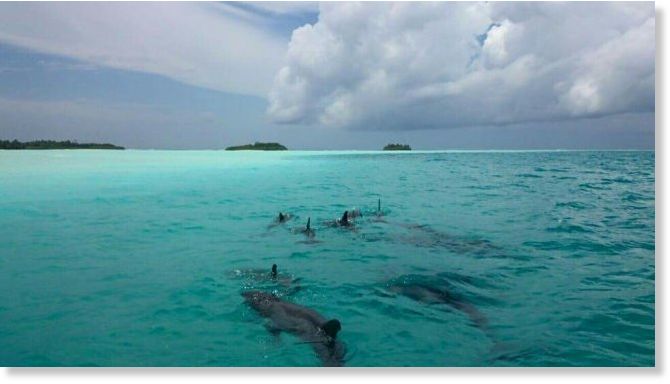
12 dolphins trapped in Maldives lagoon die, 22 others freed

Image
The pod of dolphins trapped in Nadella island's lagoon.
22 out of the pod of dolphins trapped inside Nadella Island's lagoon have been freed and released into the ocean but 12 had died, the island's council said on Saturday.

Faisal Najeeb, the island council's chair said that 38 dolphins had accidentally wandered in to the island's - located in Gaafu Dhaalu atoll - lagoon. He added that there were about four dolphins left to free.

"We caught the dolphins on a net and released them into the ocean" Najeeb said "12 of them died in this process".

"Catching them with nets was the only option we had" he continued.

Attention

Rare beaked whale found dead near Byron Bay, Australia

Image
Rare beaked whale washes up dead
A rare whale has been found washed up on the state's far north coast.

The Gray's Beaked whale was discovered on Seven Mile Beach, south of Byron Bay.

Lawrence Orel, from the National Parks and Wildlife Service, said whales which beach themselves are usually sick.

He said scientists will be keen to examine the skeleton.

"The beaked whales are quite rare," Mr Orel said.

Attention

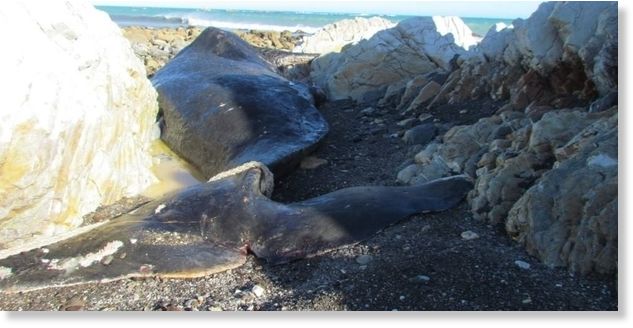
Dead sperm whale found near Glenburn, New Zealand

Image
The 14m sperm whale carcass found on a South Wairarapa beach at Glenburn near Honeycomb Rock.
Workers from Ngati Kahungunu ki Wairarapa iwi yesterday recovered the bones and teeth of a 14m-long sperm whale found dead on a South Wairarapa coastal beach.

Iwi authority chief executive PJ Devonshire said the carcass of the whale - an adult male weighing about 48 tonnes - was discovered washed up and lying between rocks on a beach south of Glenburn near Honeycomb Rock a week ago Saturday.

A Department of Conservation ranger believed the animal had died of old age.

He said the DoC Honeycomb walkway extended along the stretch of coast where the whale was found and a group from the iwi had travelled to the location on Tuesday, securing and blessing the carcass in a ceremony during which the whale was also named Te Pani o te Moana - orphan of the ocean.

Attention

Red tide of algae kills 200 tons of lobsters off South Africa coast

Image
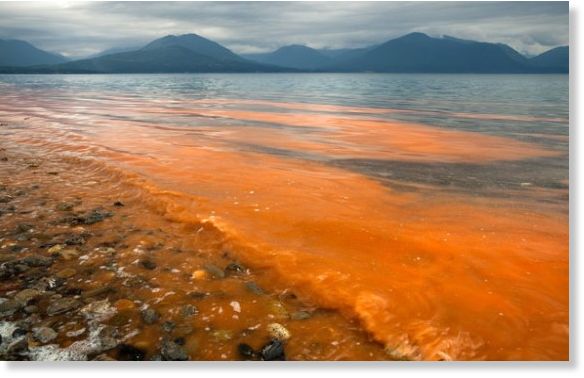
Red tide
Harmful algae off the coast of South Africa has killed more than 200 metric tons of West Coast Rock Lobster, according to the Department of Agriculture, Forestry and Fisheries.

The algae, known as red tide for the color it creates in the water, killed 80 tons of the crustacean on Wednesday at Eland Bay, north of Cape Town, the department said in an e-mailed statement. The total loss is equivalent to more than 10 percent of the allowable catch this season.

The bloom was detected on Feb. 3 off South Africa's west coast and killed about 30 tons of lobsters on Feb. 9 and another 70 tons on Tuesday, the department said.

Fish

Peculiar fish found dead on North Devon coast, UK

Image
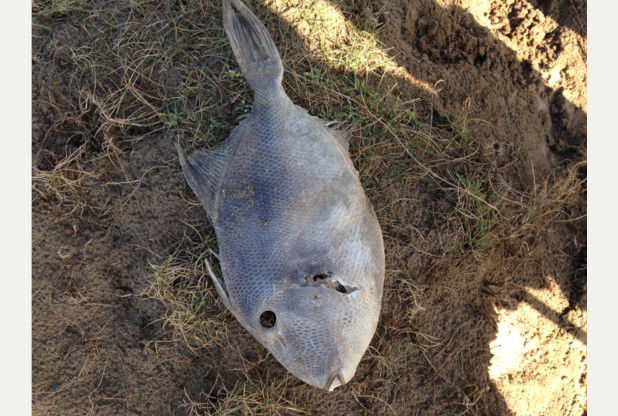
Peculiar fish found dead
A strange fish has washed up on the North Devon coast.

It was discovered yesterday at Northam Burrows by Nick Porter, who was walking his dogs when he spotted what he believes is a Parrot Fish.

He said: "Interestingly, the carcass was not apparently decaying as you would expect a fish to do.

"The skin was hard and leathery."

Comment: This is the second such record from Devon recently, see also: Weird fish with 'rodent-like teeth' found dead on Woolacombe beach, UK


Black Cat

Bobcat kills 3 pets before capture in El Dorado Hills, California

Image
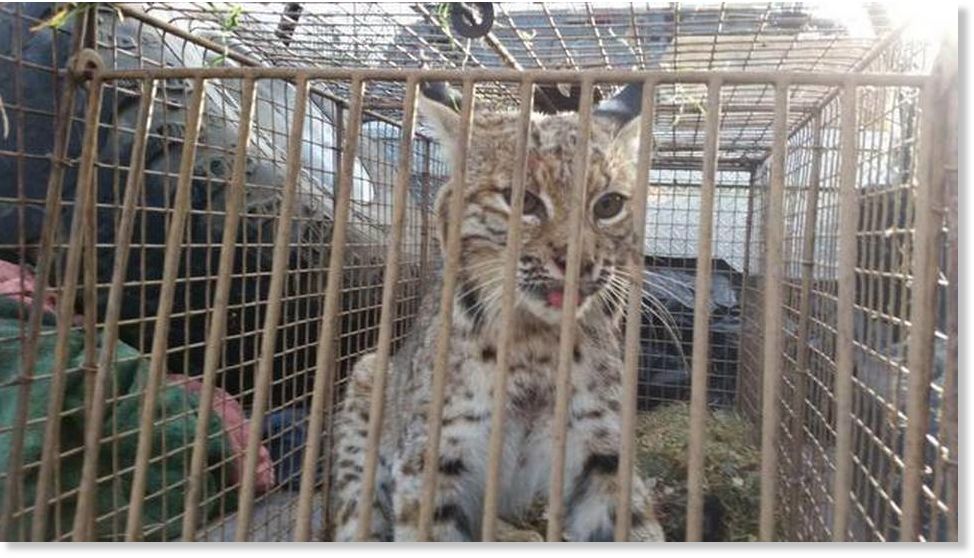
Captured bobcat.
It was stalking around town, on the hunt for prey in a secluded El Dorado Hills neighborhood overrun with trees and brush. It's the kind of environment that makes it easy for a predator on the top of the food chain to hide out.

A 50-pound bobcat did some serious damage to the community, killing 3 pets in 2 days.

"Killed one of their cats, attacked another one of their cats and tried to eat it but the cat got away. Killed another neighbor's cat, then he called us," Jeffery Duke of Duke's Wildlife Control & Removal told FOX40.


Comment: See also: Bobcat attacks and kills family dog in Ahwatukee, Arizona

Bobcat attacks woman sitting on a bench in Solvang, California

Bobcat attacks dog in Chelmsford, Massachusetts

Bobcat attacks hiker's dogs near Squamish, Canada