Animals
S


Binoculars

Wrong time, wrong place: Second Bullock's Oriole found wintering in Canada when they should be in Mexico

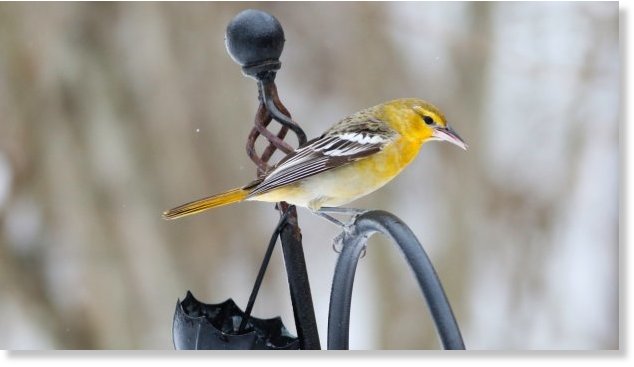
Bullock's oriole in backyard
© Sue King-Gosse Bird enthusiasts from across Nova Scotia have come to the Gosse's backyard to catch a glimpse of the visitor.
An avid birder in Cape Breton is playing host to an unusual visitor this winter. It hails from a much warmer climate — but shows no signs of wanting to leave its new home.

The Bullock's oriole arrived in Sue King-Gosse's backyard in Whitney Pier in mid-December, following a winter storm with strong westerly winds.

At first, King-Gosse thought it was a Baltimore oriole, a bird rare enough in Cape Breton.

But after she posted some photographs on social media, several fellow birders weighed in with their opinion that it is a Bullock's oriole.

The bird's normal habitat is in the western United States, and it usually winters even farther south, in Mexico and Central America.

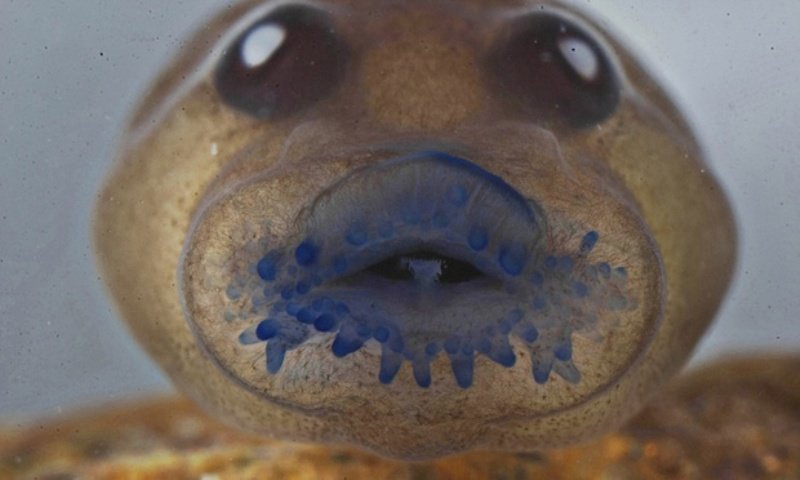
Frog

140 years later, strange tree frog rediscovered in India

A tadpole of a frog named Frankixalus jerdonii
© APA tadpole of a frog named Frankixalus jerdonii, belonging to a newly found genus of frogs, as seen under microscope.
Last sighted in 1870, Jerdon's tree frog was thought to be long gone. But a three-year-old mission beginning in 2007 not only found the amphibian alive and well in India, new research also discovered that it belongs to a completely new genus of tree frog.

Jerdon's tree frog, also known as Frankixalus jerdonii, has a few unique quirks. The first is how the frog feeds its young. According to National Geographic, a female frog starts the process by laying her fertilized eggs in watery tree hollows. It isn't until the eggs hatch into tadpoles that things get weird.

Most tadpoles feed on plant material. However, The Verge reported that a female Jerdon's tree frog will return to her tadpoles and feed her young unfertilized eggs. The biologist who led the expedition, Sathyabhama Das Biju, told National Geographic that "It is very clear that [the tadpoles] are feeding purely on their mother's eggs."

Comment: New study finds frogs going extinct about 10K times faster than historical rate


Info

Venus flytrap and other carnivorous plants can count

Venus flytrap
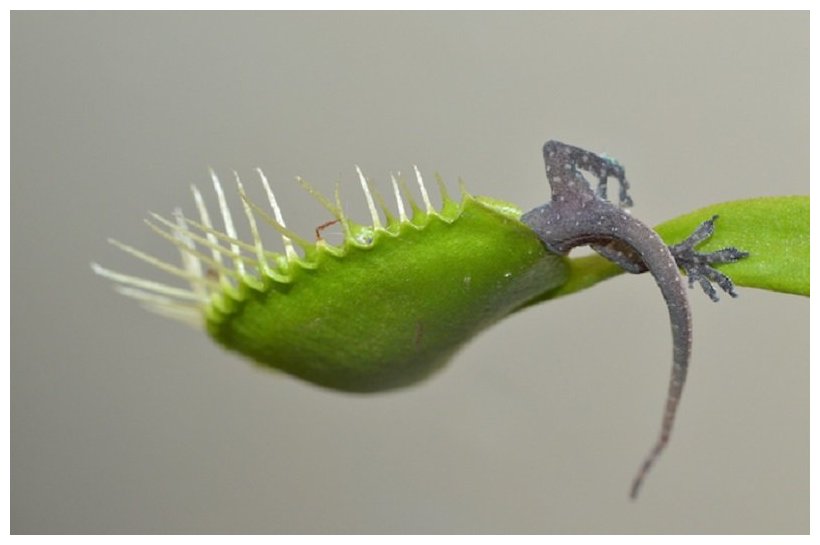
© Hugo A. Quintero/FlickrA Venus flytrap captures a lizard victim.

Venus flytraps and other carnivorous plants have the ability to count, according to a new study.

The discovery adds to the growing body of evidence that certain plants possess many animal-like abilities, even though they do not have brains. In this case, it's now known that meat-eating plants can count up to at least five.

As for why this would be useful, project leader Rainer Hedrich of Universität Würzburg explained: "The carnivorous plant Dionaea muscipula, also known as Venus flytrap, can count how often it has been touched by an insect visiting its capture organ in order to trap and consume the animal prey."

For the study, published in the journal Current Biology, Hedrich and his team used a machine to simulate an insect touching Venus flytraps. The machine emitted electric pulses to fool the plants into thinking an insect had just landed.

Sun

Brown bears ditch hibernation due to unusually mild winter in Pyrenees mountains

brown bear
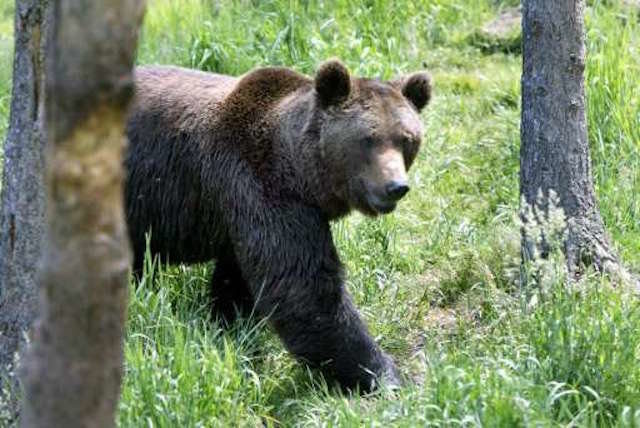
Brown bears normally kick off their hibernation at the end of November and only emerge at the start of April
Several brown bears in the Pyrenees mountains that separate Spain from France have ditched their usual hibernation for food as winter temperatures remain unusually clement, environment and animal experts said Thursday.

Earlier in January, workers at the Alto Pirineo Natural Park on the Spanish side of the mountain range watched open-mouthed as footage from cameras placed in a rocky area showed a bear and her three cubs rummaging for food when they should have been snug in their cave.

"It's not normal to find a sow with three cubs not hibernating in winter," Santiago Palazon, head of the biodiversity and animal protection division of Catalonia's regional government, told AFP.

"They had been outside of their cave for at least one week."

Attention

300 turtles and a bottlenose dolphin found dead on beach in India

Turtles
© Orissadiary.com
The Puri Beach in Odisha turned into a graveyard for around 300 Olive Ridley turtles and a bottlenose dolphin. The marine animals were found dead here on 20 January.

Although turtle carcasses are usually found near Pantha Niwas on the beach during winter, the sheer number of the dead animals spooked locals.

According to news reports, the forest and marine fisheries authorities have seized two trawlers for carrying out unauthorised fishing - despite a ban which was put in place due to the nesting season of the turtles.

Collector of Puri, Arabind Agarwal, told the media that a report had been sought from the concerned agencies. He said:

Comment: See also this recent report: Thousands of carcasses of Olive Ridley turtles wash ashore in Andhra Pradesh, India


Snowflake Cold

Very low temperatures and heavy snowfall in Mongolia; mass death of livestock

Mongolia
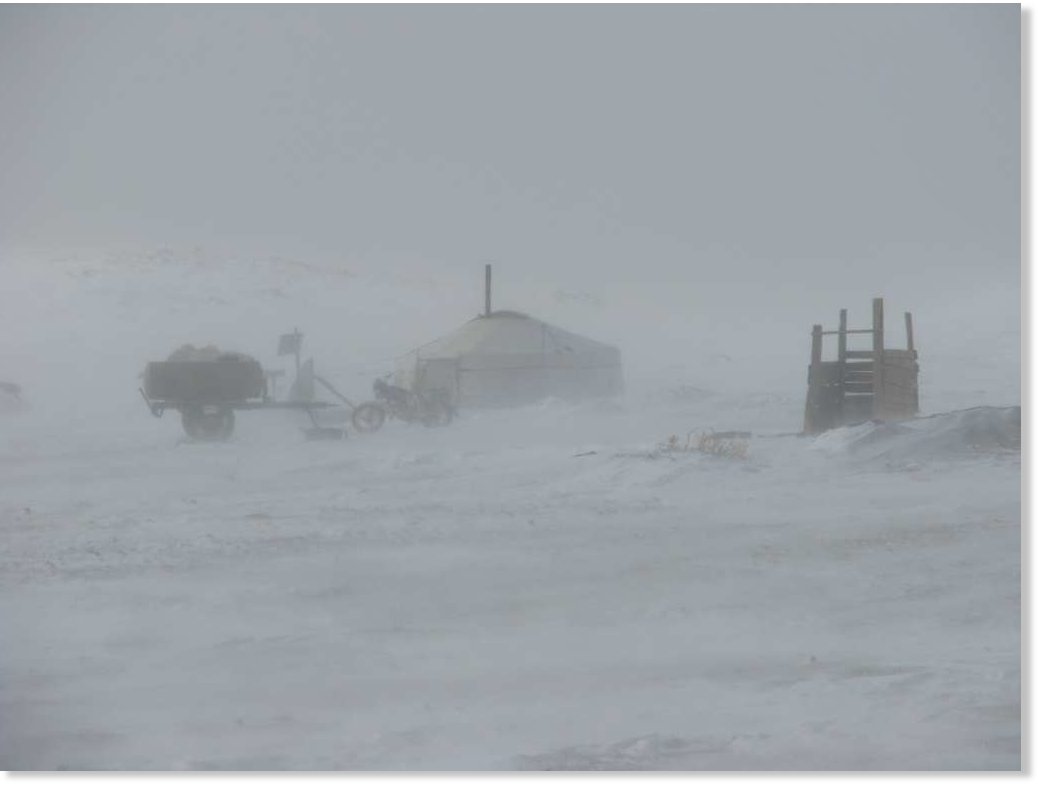
Yurt in snow storm
Frost-cold-winter Mongolia is experiencing very low temperatures and heavy snowfall since early-November 2015, locally named dzud (or jute, mass deaths of livestock in winter). According to the National Emergency Management Authority, snow has covered 90 percent of the total territory with conditions getting more severe, ReliefWeb reports.

Based on the latest assessment report released from the Mongolian government in early-January 2016, 50 districts in 16 provinces are currently categorized as experiencing dzud, while 120 districts in 20 provinces are on the edge of entering dzud condition.

Some local level governments have already declared dzud in their respective districts as part of the early warning and preparedness measures.

The Information and Research Institute of Meteorology, Hydrology and Environment has indicated that based on the weather forecast, continuous snowfall, snowstorms and temperatures are expected to persist on average of below -25 degrees Celsius (-13°F) during daytime and -38 degrees (-36°F) during night in the coming weeks. These will further affect more than 965,000 people, especially vulnerable herders living in the affected districts.

Fish

Giant 7 metre shark seen off Adelaide's coastline, Australia

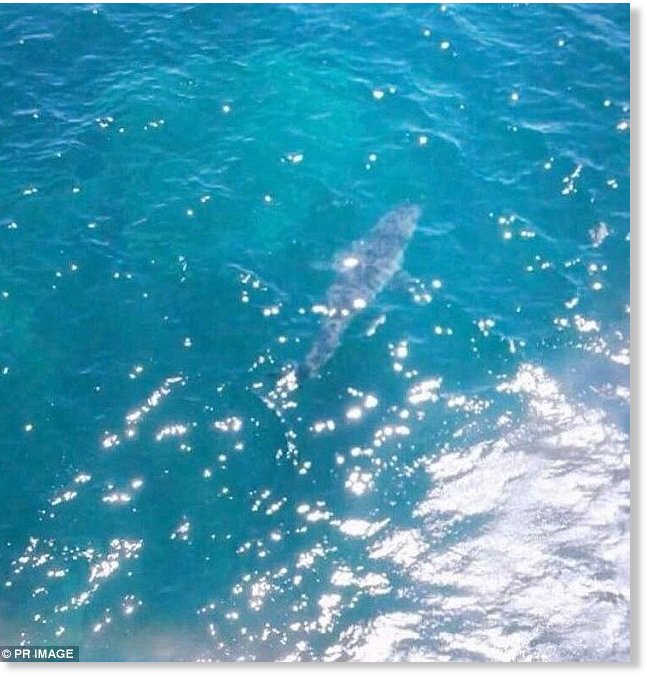
The seven-metre shark was seen near Marino Rocks on Adelaide's coastline
The seven-metre shark was seen near Marino Rocks on Adelaide's coastline on Sunday
A seven-metre great white shark has been spotted off Adelaide's coast by a helicopter patrol.

The shark was seen 100metres offshore at the Marino Rocks on Sunday afternoon, a Shark Alerts South Australia Facebook post says.

Nearby Nippers events were cancelled and swimmers evacuated from the water.

'It's the biggest I've ever seen as a crew member in the Westpac chopper. We put it down as 7m the photo really doesn't do it justice,' an unnamed crew member wrote.

Hearts

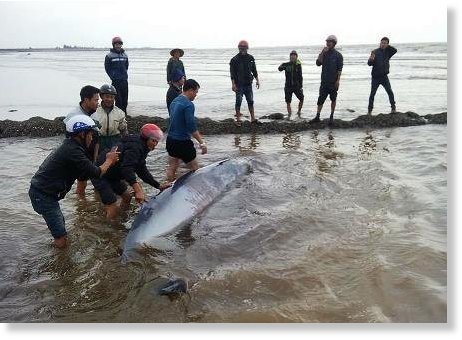
One of the lucky few: Stranded whale rescued in Vietnam

beached whale
© Duc Van/Dan TriSalt workers in Nam Dinh Province rescue a beached whale on January 18, 2016.
Nam Dinh salt workers on Monday successfully rescued a beached whale in the northern province.

At around 9 a.m., the workers found the large whale on the shore. It is about five meters long, weighing around three tons, they said.

Many people gathered, trying to bring the whale back to the sea. Local police also joined them.

The whale was successfully rescued half an hour later.


Binoculars

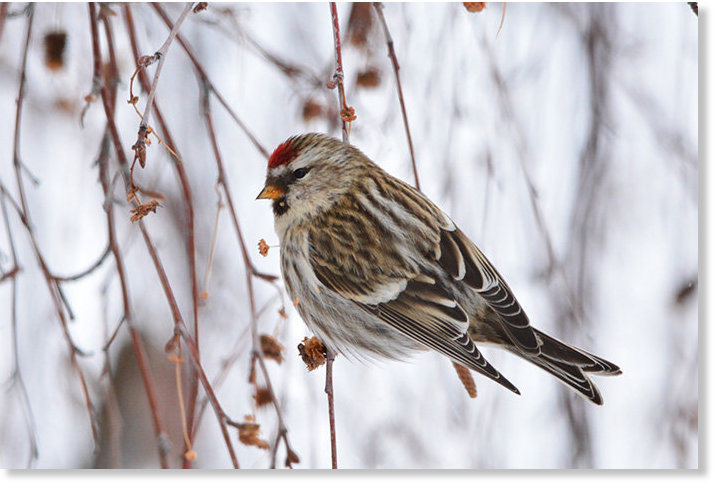
Arctic Redpolls invade the southeast of Idaho

Redpoll
Redpoll
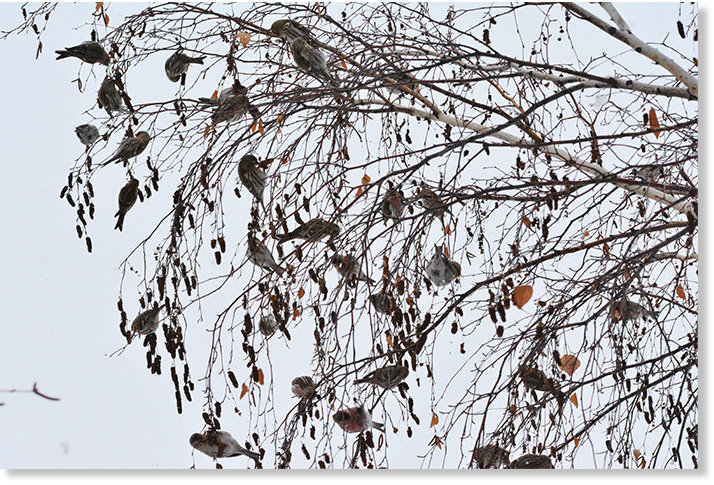
With a group of 20 small birds attacking the seeds on the birch trees at Beaver Dick Park, seeds littered the snow turning it into a tan brown carpet.

"Common Redpolls," I thought as I got out of the truck for a closer look. They moved a little higher in the trees, but did not stop their eating in the bitter cold of a minus 12 degrees.

This winter is the first time I had seen flocks of them since the winter of 2012-2013 when they invaded most birch trees in the Upper Snake River Valley. While following big game migrations from the mountains two weeks ago, I found a small flock on the desert, north of the St. Anthony Sand Dunes. They have also been recorded in Ashton and on the Rexburg and Howe Christmas Bird Counts. In the last few days they have been visiting my backyard to feed on Niger seeds.

 Redpolls
Redpolls

Handcuffs

Rare elephant rage stomps Indian rickshaw

Elephant rage
© IndianExpressOnline / YouTube
Known to be quite placid creatures, elephants rarely lose their cool. But when the red mist of rage does descend, the results can be car-shatteringly spectacular.

As this recently recorded amateur video suggests, never get on the wrong side of an elephant. Not only because they are liable to hold a grudge - but the large mammals can also stomp anything in their way into the ground.