Animals
S


Attention

The Mediterranean's 'friendly shark' killed bather in Israeli waters

Sand shark
Sand shark
A shark that was harmless, that did not attack people, that was 'friendly' in the Mediterranean Sea. Well, this statement can no longer be said with certainty, because this marine animal has attacked a person in the waters of this sea.

It is the sand shark or wolf shark that attacked a 40-year-old diver on a beach in Israel. His name is Barak Tzach who, after returning home from work, decided to go fishing at Olga beach in the city of Hadera. He was the victim of several sharks. This incident happened last April, but it is only now that the type of shark that attacked him has become known and they have been surprised by what happened.

Exactly, scientists from the University of Paris PSL have identified the deadly creatures as sand sharks.

Comment: A report from April: Shark attack horror as diver feared dead after brutal mauling off coast of Israel


Attention

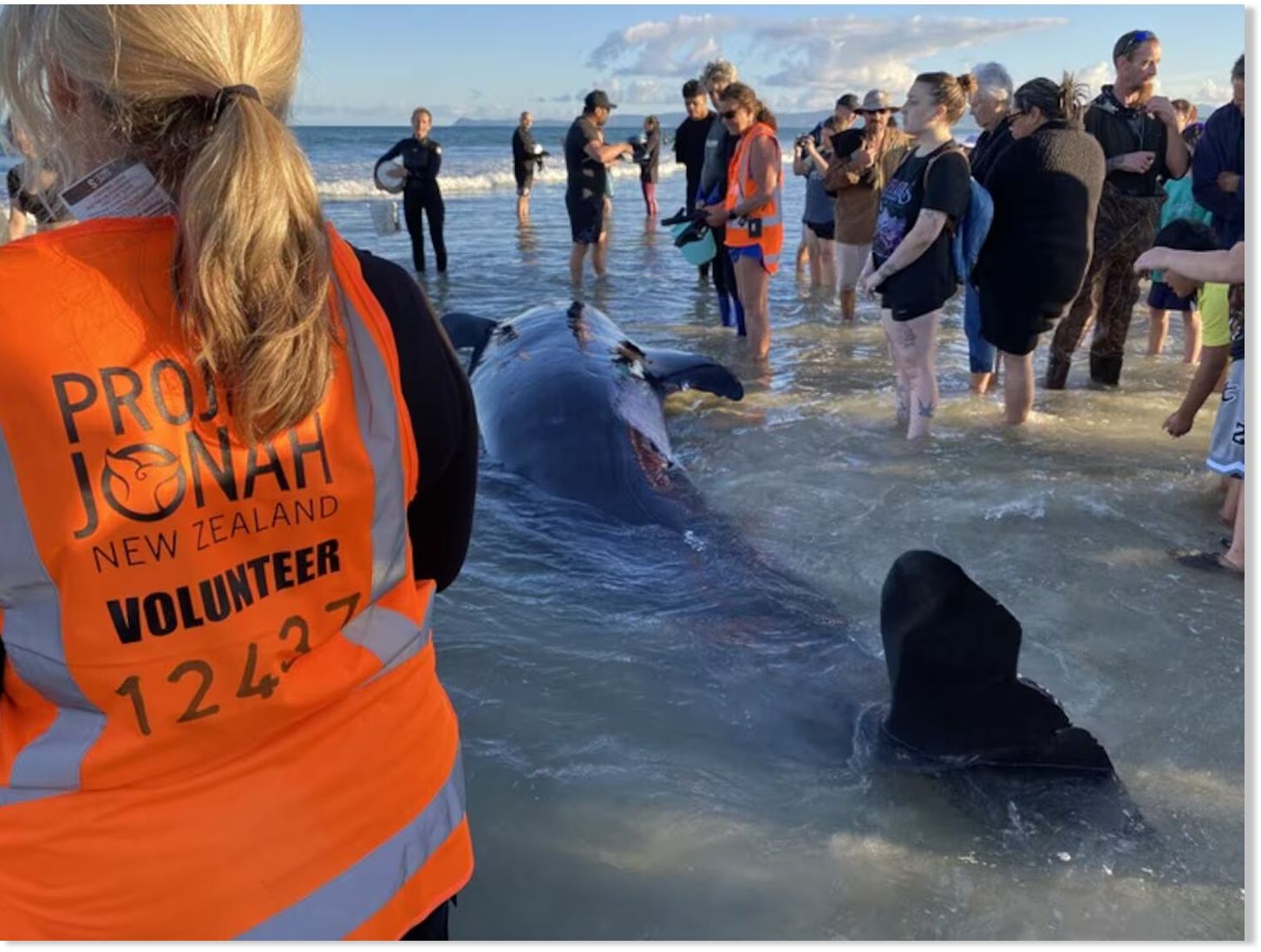
27 pilot whales die after stranding on remote Northland beach in New Zealand

Rescuers and Project Jonah volunteers try to refloat a pod of pilot whales that stranded on Ruakākā Beach.
© Sarah CurtisRescuers and Project Jonah volunteers try to refloat a pod of pilot whales that stranded on Ruakākā Beach.
Twenty-seven pilot whales have died after they became stranded on a remote stretch of Northland coastline on Monday.

They were discovered on Twilight Beach (Paenga Rehia), about 11km south of Cape Rēinga, that is part of the popular Te Paki Coastal Track and the first leg of Te Araroa.

Ngāti Kuri Trust Board executive trustee Sheridan Waitai said walkers had come across the mass stranding.

The alarm was raised with Ngāti Kuri, who live and work in the area, and the Department of Conservation (DoC).

"We are always ready to go because this is the season and this is what happens," Waitai said.

Cow

3 people killed by bull attacks over a week in Uttar Pradesh, India

mmmmm
A 75-year-old farmer was killed and another was seriously injured in separate stray bull attacks in Mainpuri district on Monday night, police said on Tuesday.

Bhagwandas Shakya, a resident of Nagla Pancham Ramnagar village under Kishni police station, was returning home from his agri field when the bull attacked him. Villagers rushed to his aid and drove the animal away. He was taken to Etawah for treatment but succumbed to his injuries on the way.

Kishni SHO Lalit Bhati confirmed the incident. The deceased's grandson, Amit Shakya, said, "The bull brutally attacked my grandfather and he suffered severe injuries on his neck. He was taken to Etawah govt hospital, where he was declared dead on arrival."

On the same evening around 7pm, Baba Yadav, 55, of Saidpur village suffered serious injuries after he was gored by a bull on his way back home from his field. He was taken to Saifai Medical College and is in critical condition.


Info

Ice age animals found in a northern Norway cave: 'Extremely rare' discovery reveals a frozen past

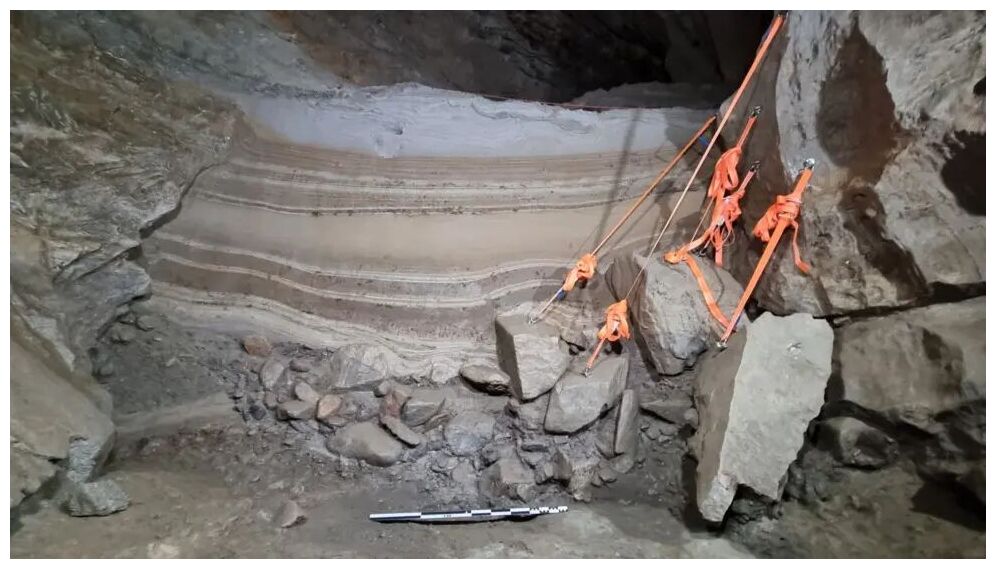
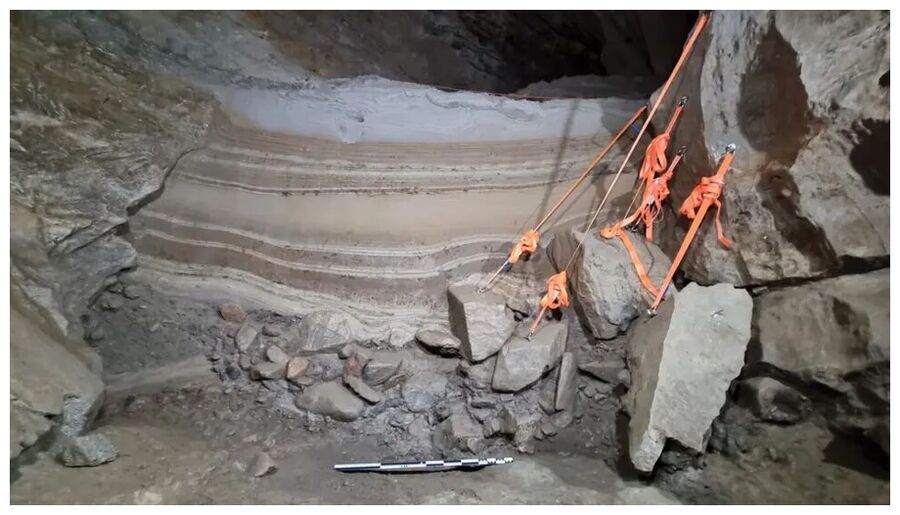
Sediment Profile
© Trond Klungseth Lodoen/Bournemouth University/PA WireThe sediment profile in Arne Qvamgrotta after excavation.
A remarkable discovery in northern Norway has uncovered the remains of 46 species from the last Ice Age — from reindeer and Arctic foxes to whales and seabirds — preserved for 75,000 years inside a mountain cave.

A cave near Kjøpsvik in the municipality of Narvik, northern Norway, has yielded one of the most extraordinary Ice Age fossil finds in Europe. Deep inside the Arne Qvam Cave, scientists uncovered thousands of fragmented bones from animals that once lived there 75,000 years ago — offering a detailed glimpse into a cold, coastal Arctic ecosystem long before the last glaciers reached their maximum.

The research, published in Proceedings of the National Academy of Sciences (PNAS), reveals a rare and rich mix of mammals, birds, and fish, making it the oldest preserved faunal assemblage ever found in the European Arctic.

"Unique, even by global standards"

"This is extremely rare and valuable," says Sanne Boessenkool, professor of evolutionary biology at the University of Oslo and co-author of the study. "Most traces of Ice Age life in Scandinavia were wiped away when glaciers advanced and stripped the land bare. These cave sediments are a remarkable exception."

Altogether, the researchers identified 46 animal taxa: 23 bird species, 13 mammals, 10 kinds of fish, and a handful of marine invertebrates and plant remains. Such a broad range of fauna from one Ice Age deposit has never before been found in Scandinavia.

"It's unique, even by global standards," Boessenkool says.
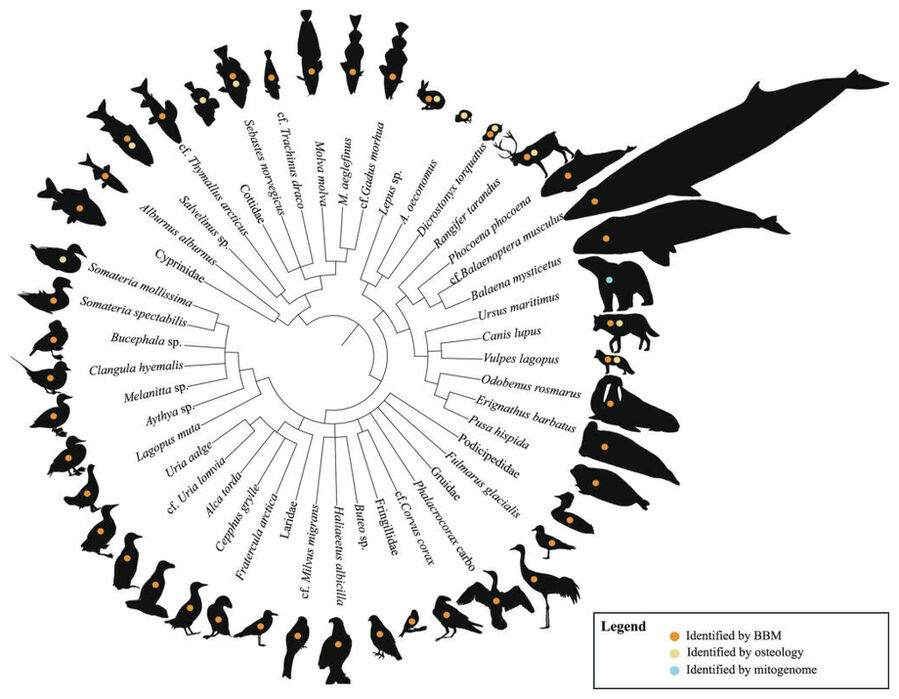
Frozen Remains
© Walker et al. (2025), PNASDiagram showing the variety of animal species identified from bones found in the Arne Qvam Cave, Northern Norway. The chart illustrates relationships among mammals, birds, and fish discovered in the 75,000-year-old deposits. Species were identified using bone analysis and ancient DNA techniques.


Attention

7 injured in attack by rogue monkey in Odisha, India

mmmmm
At least seven people were injured after being attacked by a rouge monkey in Joda area of Odisha's Keonjhar district on Monday, creating panic among residents in the area.

As per information, the rogue monkey went on a rampage, attacking several people and creating widespread fear among locals. At least seven people have sustained injuries in separate incidents over the past two days. While five individuals were injured on Sunday, two more were attacked on Monday.

Locals said the monkey has been entering houses, chasing people, and biting them without provocation. The situation has become so alarming that many villagers are now afraid of moving out of their houses.

After being attacked by the monkey, a victim said the animal has gone berserk and bit him on the waist and abdomen. The monkey attacked him after breaking into his house.

Sources said the Forest Department has been informed about the monkey menace as locals seek swift action to capture the animal to prevent any further attack on people.

Info

Museum's tiny clay figurine reveals ancient origins of the mighty Hyrcanian tiger

Artifacts
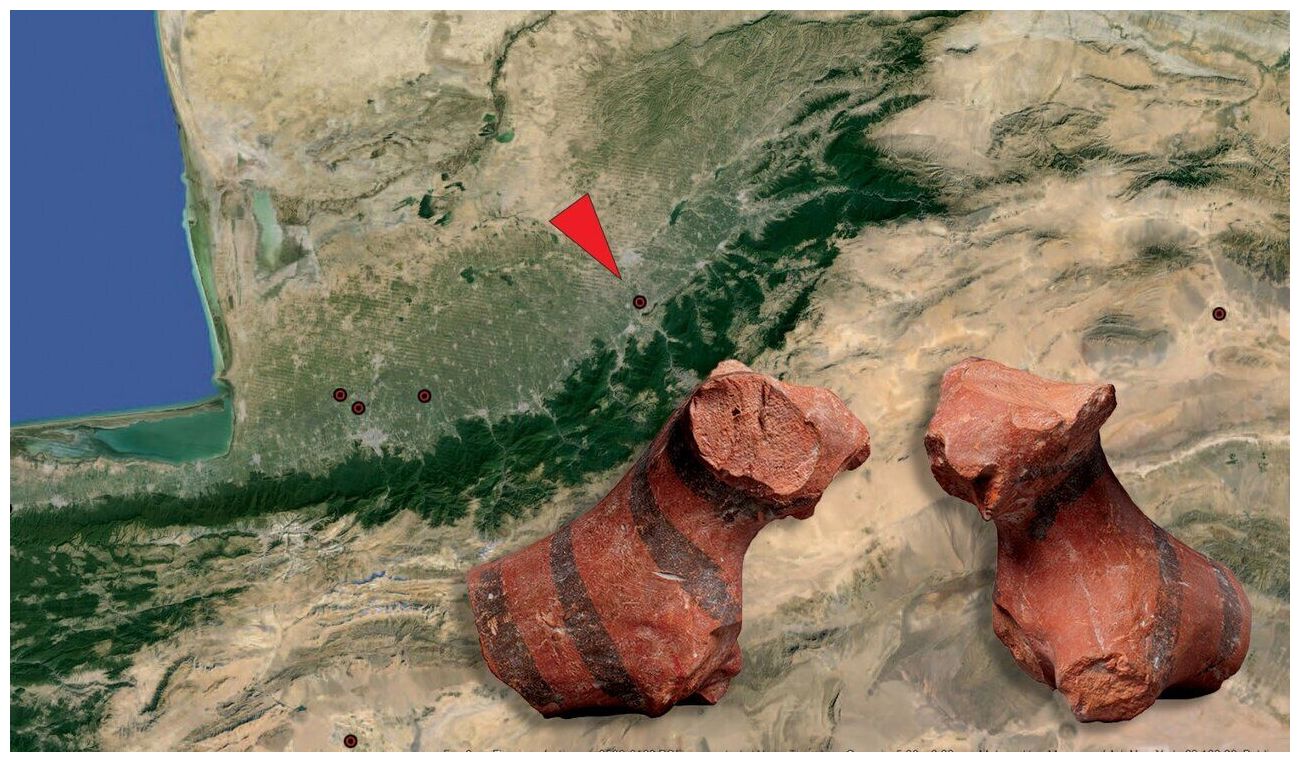
© Tehran TimesTEHRAN - A seemingly unremarkable clay fragment, housed for decades in the Metropolitan Museum of Art’s collections, has been identified as a landmark archaeological discovery. New research confirms the artifact is one of the oldest known depictions of a tiger, reshaping the history of the animal’s role in Iranian art and culture.
Published by Henry P. Colburn in the journal Anthropozoologica, the study focuses on a Chalcolithic-era figurine (c. 3500-3100 BCE) excavated in 1960 at Yarim Tepe, Iran. Crafted from a distinctive "Caspian Black-on-Red Ware" ceramic, the object portrays a striped feline that Colburn identifies as a tiger — pushing back the evidence for tiger imagery in Iran by over four millennia.

"For the Romans, the 'Hyrcanian tiger' symbolized exotic Eastern ferocity, yet we lacked proof that communities within Hyrcania itself — modern Golestan province — represented them this early," said Colburn. "This figurine reveals the deep, local origins of the tiger's symbolic power."

The figurine, acquired by the Met in 1963, measures just over 8 cm and preserves the animal's chest, neck, and partial head. Carefully painted stripes curve along its body — a deliberate feature central to its identification.

Previously, tigers were thought to have entered Iranian iconography through foreign influence. They appear much later, during the Sasanian Empire (c. 224-651 CE), embellishing royal silverware in hunting scenes that displayed the king's dominance over nature. Scholars long believed these images were imports from Central Asia, where tiger depictions have ancient roots.

Question

Dead eels wash up on Kualoa Beach, Hawaii

mmmmm
Recent videos circling on social media have shown an alarming amount of dead sea life washing along the shores of Kualoa Beach in Windward Oahu, particularly eels.

While the videos have sparked concern from residents and locals alike, what caused the fatalities is still a mystery.

"Everything that we do on land affects our oceans," said Anthony Burke, Waikiki Aquarium Lead Coral Biologist. "Let's say you have a slight oil leak in your car and it's causing a little patch in your driveway, you'd think that might not be a big deal, but if that's happening to hundreds of people in the area, the next time the rain falls, all of that oil will be swept out to sea."

Burke said that because the videos primarily show eels, it's safe to assume that the issue is something that affects benthic animals, meaning the bottom area of a body of water.

The Department of Land and Natural Resources became aware of the incident through social media and went out to the beach to investigate. However, no eels were found.


Attention

Bears kill 7 people and injure 108 in Japan since April this year as attacks hit record high

CCTV camera footage of a bear walking inside a supermarket in Numata, Gunma prefecture.
Bears have killed a record seven people in Japan this year, marking the highest number since records began in 2006.

An environment ministry official confirmed this alarming statistic on Thursday, attributing the rise to increasing bear sightings in residential areas.

"This is the largest toll since 2006 when statistics started," the official stated, surpassing the five victims recorded in the 2023-24 fiscal year.

The official spoke on condition of anonymity following confirmation that a man found dead last week in Iwate was killed by a bear.

Including these fatal cases, at least 108 people have been injured since the fiscal year started in April.

This represents a significant increase from 85 injury incidents including three fatal cases the previous fiscal year, though lower than the 219 incidents in 2023/24.

Comment: Related: 3 people mauled to death by bears in the span of 1 week in Japan


Attention

Rare 11-foot oarfish found dead along Oriental Mindoro coastline in the Philippines

mmmmm
Fishermen in Barangay Dalahican, San Jose, Roxas were shocked after finding a massive 11-foot oarfish washed up dead on the shore.

A local fisherman said they saw the deep-sea creature struggling to swim toward the coastline before it eventually stopped moving and died.

The rare sight drew residents to the area, many expressing both awe and fear while witnessing the enormous fish up close.

The Municipal Agriculture Office of Roxas immediately responded, confirming the discovery and conducting an inspection to determine what caused the oarfish's death.


Question

Scientists baffled as 26 killer whales die in mysterious mass stranding in Argentina

Specialists examine the orcas founded stranded in San Sebastián Bay in Argentina's Tierra del Fuego province
© IMMA Project.Specialists examine the orcas founded stranded in San Sebastián Bay in Argentina's Tierra del Fuego province
Scientists have been baffled after 26 orcas, better known as killer whales, washed up dead on a beach in Argentina. The mass stranding, which is only the third such occurrence in recorded history globally, took place in a difficult-to-access area north of the San Sebastian Bay.

A team of marine biologists at the National Scientific and Technical Research Council (CONICET) and the Southern Centre for Scientific Investigation (CADIC) have begun investigating the incident. They were first notified of two ecotype D orcas in the bay before the remaining carcasses were found.

"Once there, the team was able to verify that they were also ecotype D orcas. The total number of stranded individuals now stands at 26," read the statement, as per a report in The Independent.

The type D orcas are easily identifiable by their small postocular spot (or eye patch), rounder heads, and a faint patch behind their dorsal fin. Stranding of type D orcas is rare which has made the incident even more puzzling for scientists.