Animals
S


Attention

Lizards join frogs in rapid decline

The precipitous loss of amphibians in recent years has been blamed on habitat loss, global warming, fungal infections, and pesticides. Globally, all of these factors probably combine for a multiple whammy. Now, research published online April 20 in Proceedings of the National Academy of Sciences U.S.A. reveals a new combo: climate change is causing some species to lose their leaf-layer habitat - and the damage is killing reptiles, too.

Steven Whitfield of Florida International University and colleagues examined 35 years' worth of data from the La Selva Biological Station in Costa Rica. The team found that populations of frogs and common reptiles such as lizards plummeted 75% since 1970. Globally, human activities are closely linked with disappearing frogs and salamanders. One-third of all amphibian species are threatened with extinction, according to a recent estimate, in large part because humans encroach on their habitats and introduce nonnative species. But even in areas without large human influences, such as the patch of protected old-growth rainforest that the researchers studied, many species are disappearing.

Attention

Venomous Brown Widow Spiders Making Themselves Known In Louisiana

A dangerous spider is making itself known to Louisiana residents. The brown widow spider is becoming more common, according to entomologists with the LSU AgCenter.

Generally found in tropical areas, the brown widow spider is closely related to the black widow spider and is poisonous, according to LSU AgCenter entomologist Dr. Dennis Ring.

Experts say the spider ranges in color from gray or tan to dark brown and may reach 1 inch to 1½ inches long. Like its better-known black widow cousin, the brown widow spider has a yellow-to-orange hourglass marking on the underside of its abdomen. It also has black and white marks on the top of the abdomen and often has dark bands on its legs. "Its venom is more toxic than the black widow's," Ring said. "But it doesn't put out as much venom in its bite."

Bomb

Murder as an act of mercy: Kangaroo cull mooted for Canberra

Thousands of kangaroos could be shot by professional shooters in and around Canberra's north after populations have been deemed to be out of control.

A Defence spokeswoman has confirmed Belconnen Naval Transmission station and the Majura Training area have a serious over-population of eastern grey kangaroos.

The 6,500 animals are facing starvation because of the drought and are causing permanent damage to the sites.

Defence has been trialing a project to reduce the fertility of local kangaroos but ecology consultants have said that will not solve the problem.

Bizarro Earth

Warming World Threatens Migratory Birds

BONN, Germany - Disoriented by erratic weather, birds are changing migration habits and routes to adjust to warmer winters, disappearing feeding grounds and shrinking wetlands, a migration expert says.

Heart

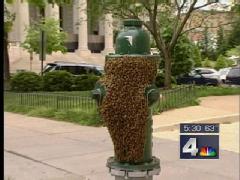
Bees Cause Buzz In Northwest

Bees, swarmed on a fire hydrant in NW Washington, DC, were safely removed and relocated to a friendlier environment.

©NBC 4 Washington DC

Ambulance

Disease strikes Idaho fish hatchery, killing 250,000 rainbows

About 250,000 rainbow trout died in a sudden disease outbreak at a southwestern Idaho fish hatchery, a loss of about 8 percent of Idaho's annual output of catchable-sized trout.

Ambulance

State kills 20,000 more trout to combat parasite

The state Department of Natural Resources destroyed 20,000 hatchery trout today, bringing to at least 156,000 the number of fish the agency has destroyed this year in hopes of curbing the spread of whirling disease, an illness fatal to trout.

Ambulance

Update: Arctic Seal Dies After Swimming to Fla.

An Arctic seal found in a Fort Lauderdale canal - far from its habitat near the North Pole - died Tuesday, a day after it was captured.

X

Red fire ants facing killer virus

Imported red fire ants have plagued farmers, ranchers and others for decades. Now the reviled pests are facing a bug of their own.

Researchers have pinpointed a naturally occurring virus that kills the ants, which arrived in the U.S. in the 1930s and now cause $6 billion in damage annually nationwide, including about $1.2 billion in Texas.

The virus caught the attention of U.S. Department of Agriculture researchers in Florida in 2002. The agency is now seeking commercial partners to develop the virus into a pesticide to control fire ants.

Bad Guys

Bt corn "cleared" in Colony Collapse Disorder

Colony Collapse Disorder (CCD) has caused much concern among beekeepers nationwide and it is not clear to date what is causing the die-off.
Genetically modified crops, specifically Bt corn, have been suggested as a potential cause of CCD. While this possibility has not been ruled out, the weight of evidence based on a multitude of studies argues strongly that the current use of Bt corn is not associated with CCD.