Alberto Barrera
ReutersThu, 17 May 2007 23:01 UTC
An artificial lake in El Salvador brimming with sewage and industrial waste is mystifying scientists by attracting thousands of migratory and sea birds.
Built in 1974 to drive El Salvador's biggest hydroelectric project, the 33,360-acre (13,500- hectare) Cerron Grande reservoir collects some 3,800 metric tons of excrement each year from the sewage pipes, as well as factory run-off and traces of heavy metals like chromium and lead, the government estimates.
The Spanish environmental ministry is braced for a summer season plagued by jellyfish and plans patrols to scour the seas and remove the offending creatures before they reach the shores.
Josep María Gili, a professor at the Spanish High Council for Scientific Research, told La Vanguardia newspaper that the council planned a survey of the jellyfish population - and its growth potential - from the Costa Brava to Cádiz.
"From an environmental point of view, leaving them in the water isn't a bad solution, because they would be food for other animals, but for the population in general, and bathers in particular, they pose a health problem," Mr Gili said. He advised sifting for toxic tentacles in the sand.
WEST SACRAMENTO, Calif. - Two humpback whales that made a 90-mile river journey from San Francisco to the outskirts of Sacramento have injuries that appear to have come from a propeller, marine experts said Wednesday.
An extraordinarily diverse array of marine life has been discovered in the deep, dark waters around Antarctica.
Scientists have found more than 700 new species of marine creatures in seas once thought too hostile to sustain such rich biodiversity.
|
| ©A. Rose
|
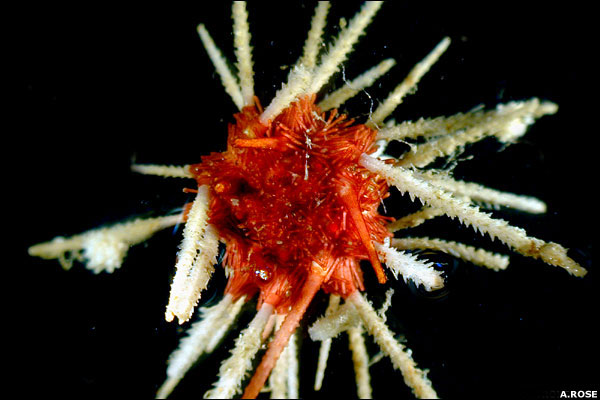
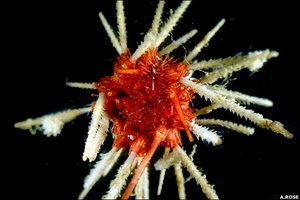
The research, which uncovered creatures such as this Ctenocidaris, formed part of the Andeep (Antarctic benthic deep-sea biodiversity) project. It is the first comprehensive look at marine life in these waters.
|
It's not the return of Humphrey, but like him, two large humpback whales swimming in the Sacramento River near Rio Vista appear to be in trouble.
The mother and calf spent Monday between Rio Vista and a stretch of Cache Slough in the Sacramento-San Joaquin Delta.
RICHMOND, Va. - Agriculture officials are hoping to stop the eastward spread of the emerald ash borer beetle, an invasive, hard-to-control insect that has killed more than 20 million trees in the Midwest and Canada and is heading toward Virginia.
"It's not here yet but it can be transported easily in firewood, so we're asking people to buy firewood at your destination," said Elaine Lidholm, a spokeswoman for the Virginia Department of Agriculture and Consumer Services. "Don't take it with you."
The beetle is indigenous to eastern Russia, northern China, Japan and Korea and was initially found in southeastern Michigan in 2002, likely arriving in ash wood used in packing material. Because the insect has no native predators in North America, the infestation has continued to spread through parts of Michigan, Illinois, Indiana, Ohio and Maryland - areas now under a federal quarantine.
Hundreds of birds from as far south as Miami are falling from the sky or flying head-first into buildings and dying after being exposed to smoke from wildfires blanketing parts of Florida, according to a report.
Veterinarians said the birds have very sensitive lungs and the toxins in the smoke are poison to them, Local 6 reported Monday.
Kenneth R. Weiss
LA TimesMon, 14 May 2007 20:35 UTC
An outbreak of toxic algae is called the worst on record; its cause is unclear. Sea lions and seabirds take a big hit.
The current outbreak of toxic algae off the Los Angeles Harbor is the most virulent on record, scientists say, so overburdening animal rehabilitation centers that some sickened sea lions are temporarily left to fend for themselves on Los Angeles County beaches.
BBCFri, 11 May 2007 19:55 UTC
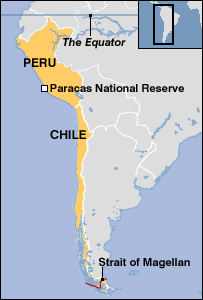
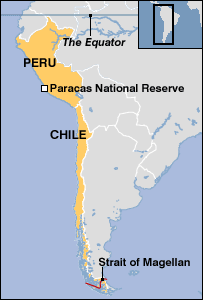
A Magellanic penguin whose natural habitat is the cool climes of southern Chile has strayed thousands of miles from his home, arriving in Peru.
|
| ©BBC
|
Twenty-seven U.S. states have been affected, reporting losses of up to 90 per cent, and the ailment seems to be moving north, Clay said.
New Brunswick has lost about 85 per cent of its bee colonies. Ontario beekeepers have lost about one-third, and Quebec 40 per cent so far.
And nobody is sure why.