Comets


Comet

Cosmic turkey-shoot: Second comet dives into the Sun in one week!

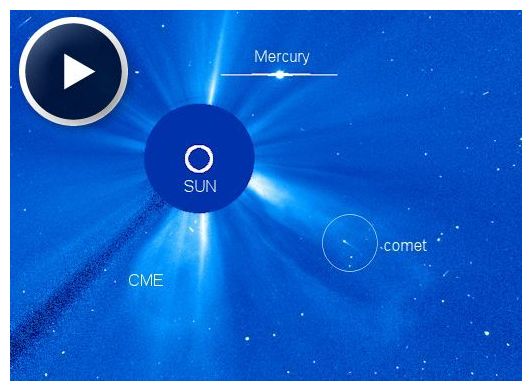
Here we go again. Another comet is diving into the sun, the second one this week. Coronagraphs onboard the Solar and Heliospheric Observatory (SOHO) are monitoring the death plunge:

Sundiving Comet
© SpaceWeatherAnimated Image Here
The icy comet, which probably measures a few 10s of meters wide, is vaporizing furiously and is not expected to survive much longer.

Like the comet that came before it, this one is a member of the Kreutz family. Kreutz sungrazers are fragments from the breakup of a single giant comet many centuries ago. They get their name from 19th century German astronomer Heinrich Kreutz, who studied them in detail.

Because of their common parentage, sungrazers often come in clusters. After today's sungrazer evaporates, it wouldn't be surprising to find yet another in the offing. Stay tuned.

Comet

Largest piece so far of Chelyabinsk meteorite found - scientists

Chelyabinsk meteorite
© Ria NovostiLargest Piece So Far of Chelyabinsk Meteorite Found – Scientists
Russian scientists have confirmed the authenticity of a 3.4-kilogram (7.5-pound) fragment of the Chelyabinsk meteorite - the largest piece found so far from the meteorite that hit the Urals region in February.

An unnamed resident of the Chelyabinsk region in Russia's Urals found the fragment near the village of Timiryazevsky and submitted it for analysis and authentication to Chelyabinsk State University.

"Yes, it is a meteorite. This is the largest [Chelyabinsk] fragment analyzed so far by scientists," Andrei Kocherov, an official from the university, told RIA Novosti.

The lucky owner was given an official certificate confirming the authenticity of the celestial fragment, Kocherov said.

Comet 2

Sundiving Comet

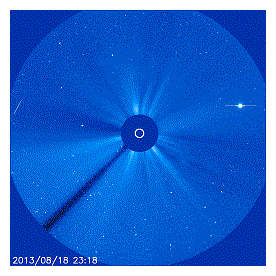
A small comet is diving toward the sun today, and it is visible in SOHO coronagraphs. Click here to see the death plunge in action:

Sundiving Comet
© SpaceWeatherAnimated Image Here
The tadpole-shaped comet vaporizing furiously as it approaches the sun. It is probably too small to survive closest approach, but we won't know for sure until the encounter actually happens later today or tomorrow. Join SOHO for a ringside seat.

The comet appears to be a member of the Kreutz family. Kreutz sungrazers are fragments from the breakup of a single giant comet many centuries ago. They get their name from 19th century German astronomer Heinrich Kreutz, who studied them in detail. Several Kreutz fragments pass by the sun and disintegrate every day. Most, measuring less than a few meters across, are too small to see, but occasionally a bigger fragment like this one attracts attention.

Comet

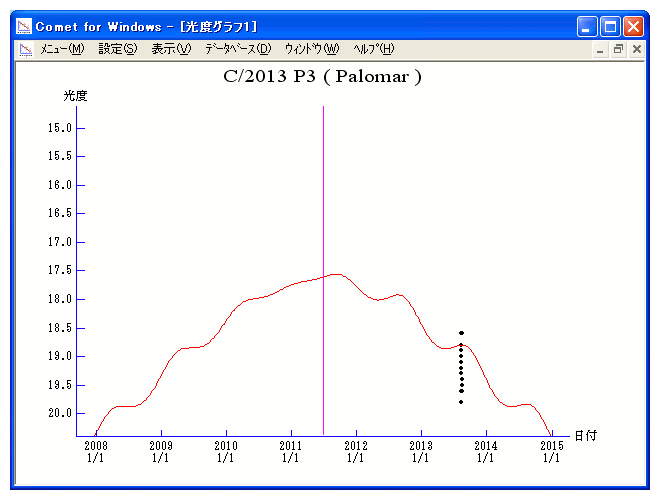
New comet discovered: C/2013 P3 (Palomar)

Discovery Date: August 9, 2013

Magnitude: 18.9 mag

Discoverer: Palomar Transient Factory

C/2013 P3
© Aerith NetMagnitudes Graph
The orbital elements are published on M.P.E.C. 2013-Q02.

Fireball 2

Global dust veil: Dust belt from the overhead cometary explosion in Russia raced around the world in just four days

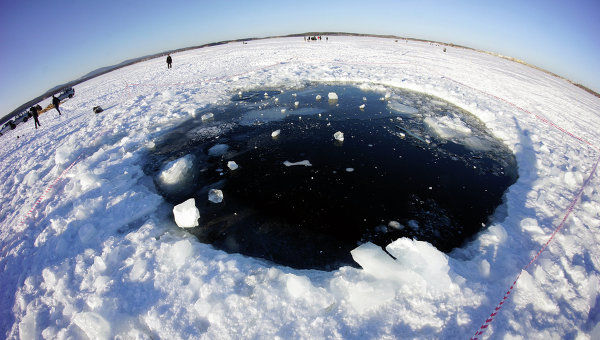
  • The meteor created a 50-foot hole in a frozen lake near town of Chelyabinsk
  • Around 3.5 hours after the explosion, its dust belt moved east at 190 mph
  • In four days, the belt had snaked its way around the entire planet
  • It released 30 times more energy than the atomic bomb in Hiroshima
  • The meteor that exploded over Russia in February caused a thin stratospheric dust belt that travelled around the world in just four days.

    NASA satellites made the unprecedented measurements of the meteor which is thought to have released 30 times more energy than the atomic bomb that destroyed Hiroshima.

    The meteor fireball measuring 18 meters across and weighing 11,000 metric tons, screamed into Earth's atmosphere at 41,600 mph.

    Image
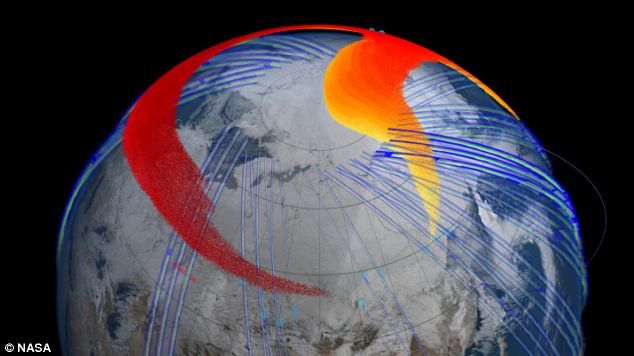
    Satellite data from Nasa has revealed that that four days after the bolide explosion, the faster, higher portion of the plume (red) had snaked its way entirely around the northern hemisphere and back to Chelyabinsk in Russia

    Comment: Are SOTT.net readers beginning to understand why we've been warning for years about comet dust veils covering the planet? Just one bolide can circle the northern hemisphere in 4 days! THOUSANDS of bolides have exploded in recent years...


    Fireball

    Best of the Web: Meteor that crashed in Russia was part of a 656-foot wide asteroid that broke off during its orbit around Earth

    Image
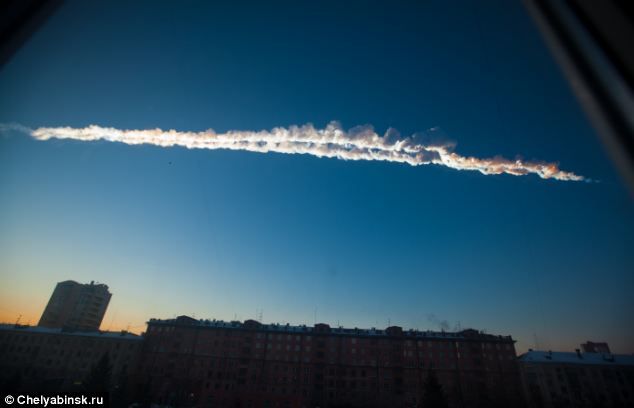
    The meteor fireball, pictured, that crashed into Russia in February was part of a 656-feet wide asteroid called 2011 EO40. Spanish astrophysicists analysed fragments of the meteor and claim it came from the Apollo asteroid that regularly crosses passed Earth as it orbits the sun
    Experts say the meteor weighed 10,000 tonnes and was 55 feet wide

    The rock created a 50-foot hole in a frozen lake near Chelyabinsk

    Scientists have analysed more than 53 tiny fragments of the meteor

    It is thought to have been part of a large Apollo asteroid called 2011 EO40


    The meteor fireball that crashed into Russia in February was part of a 656-foot wide asteroid called 2011 EO40.

    Spanish astrophysicists analysed fragments of the meteor that were scattered across the Russian town of Chelyabinsk, where the meteor landed, and claim it came from the large Apollo asteroid that regularly crosses passed Earth as it orbits the sun.

    They added that the piece may have broken off because of the stress caused by the gravitaional pull of the planets and the sun, or could have been caused by the asteroid hitting into something else during its orbit.


    Comet 2

    New comet discovered: C/2013 P2 (PANSTARRS)

    Cbet nr. 3621, issued on 2013, August 07, announces the discovery of an apparently asteroidal object (discovery magnitude ~19.5) by professional survey F51 Pan-STARRS 1 (Haleakala) on CCD images obtained with 1.8-m Ritchey-Chretien on August 04, 2013 (pre-discovery Pan-STARRS1 observations from July 26 were found later by P. Veres).

    After posting on the Minor Planet Center's NEOCP webpage, this apparently asteroidal object as been found to show cometary features by astrometric observers elsewhere (including our team). The new comet has been designated C/2013 P2 (PANSTARRS).

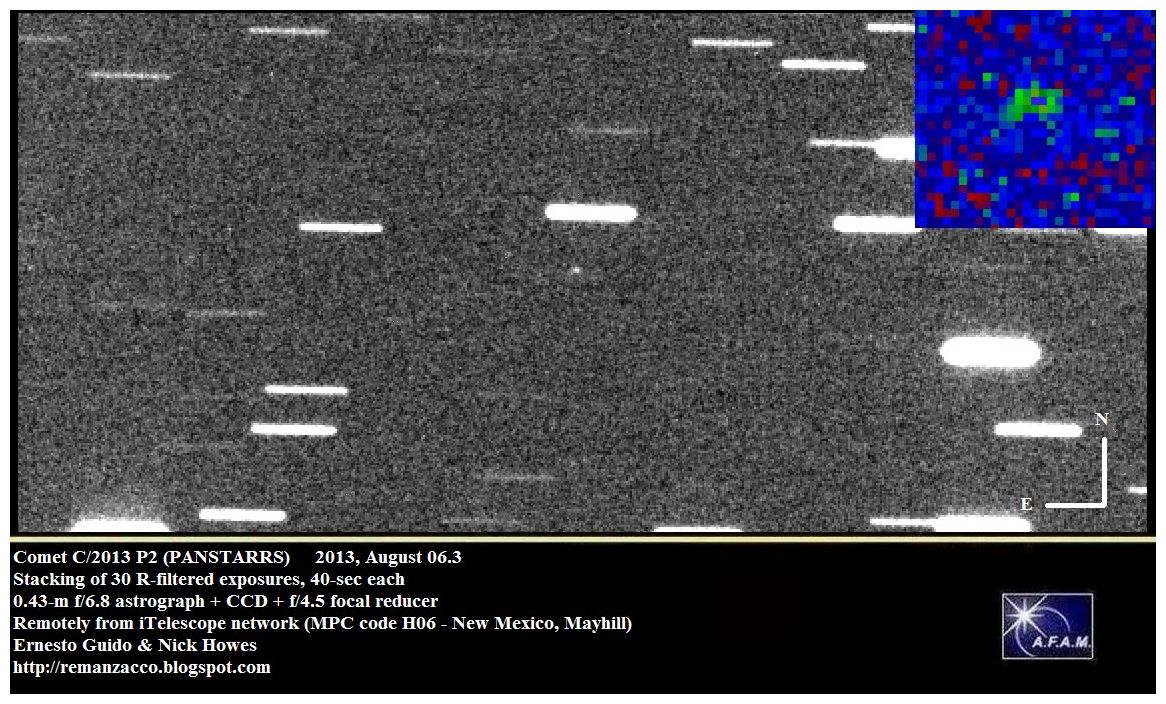
    We performed follow-up measurements of this object, while it was still on the neocp. Stacking of 30 R-filtered exposures, 40-sec each, obtained remotely from iTelescope network (MPC code H06, New Mexico) on 2013, August 06.3, through a 0.43-m f/6.8 astrograph + CCD + f/4.5 focal reducer, shows that this object is a comet: coma about 5" in diameter elongated in PA 120.

    Below you can see our image.
    C/2013 P2
    © Remanzacco Observatory
    M.P.E.C. 2013-P42 assigns the following preliminary parabolic orbital elements to comet C/2013 P2: T 2014 Feb. 17.50; e= 1.0; Peri. = 105.19; q = 2.83; Incl.= 125.54

    Galaxy

    Back from the dead: Jupiter's gravitational pull breathes life into 'graveyard' of comets that burned out millions of years ago

  • Scientists believe that they have discovered a region of formerly dead comets in the asteroid belt lying between Mars and Jupiter
  • It is thought that Jupiter's gravitational pull brings dormant comets closer to the sun, which in turn reignites them and brings them 'back to life'
  • Image
    A number of comets in the asteroid belt between Mars and Jupiter have come back to life after being dormant. The findings contradict the long-standing view that the main asteroid belt was once populated by thousands of comets which ultimately burned out as they aged
    A 'graveyard of comets' has been found by astronomers in the asteroid belt between Mars and Jupiter.

    And, to the surprise of astronomers, a number of comets in this graveyard have come back to life after being dormant for what could have been thousands or even millions of years.

    The findings, by a Colombian team, contradict the long-standing view that the main asteroid belt was once populated by thousands of comets which ultimately burned out as they aged.

    Fireball 3

    'Lazarus' comets may be returning to life in asteroid field

    Colombian scientists have discovered what may be a graveyard of comets in a very strange spot -- and now, some of the interred are coming back to life.

    These so-called "Lazarus" comets, described in the Monthly Notices of the Royal Astronomical Society, may represent a long-lost population of the icy space travelers and may alter scientists' understanding of their origins.

    These chunks of ice and rock, typically a few kilometers across, have long held human imaginations as "falling stars." As a comet travels around the sun, the heat and light vaporize some of the water ice trapped inside, causing the signature tail of glowing gas and dust to form behind it.

    They're thought to have started out near the fringes of the planetary system, with stretched, elliptical orbits that are so extreme that some of comets circle the sun only once in several thousand years. Others have quicker round-trips of a couple centuries or so; these so-called short-period comets are the source of such famous sightings as Halley's Comet.

    Fireball 5

    Spectacular fireball blazes over Eastern Australia, 30 July 2013

    Image
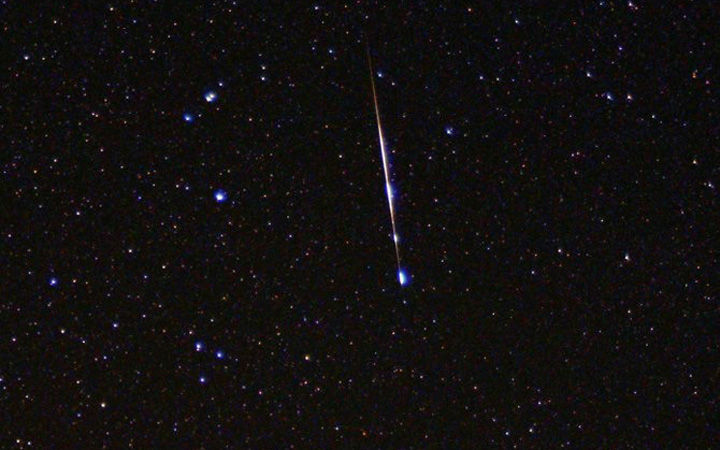
    © Jimmy WestlakeA Delta Aquarid meteor.
    Stargazers were treated to a rare sighting of a meteor fireball in the skies over the Hastings on Tuesday night.

    Port Macquarie resident Jeff Clare phoned the Port News to report what he described as a 'ball of flames' in the night sky sometime between 7pm and 8pm which moved slowly north before arching in shape and disappearing.

    Jeff's story prompted some lively discussion on Facebook, with several residents also reporting having seen the bright, firey light.

    However, according to Mid North Coast Astronomy Group founder and space expert David Reneke, anyone who managed to catch a glimpse of the fireball was extremely lucky.

    "We have just gone through an intense period of meteor shower activity," Mr Reneke explained.

    "We have about eight to 10 of these meteor showers every year, but the one that has just passed, and another coming up this month, are two of the best."

    The Delta Aquarids meteor shower passed over the southern hemisphere on July 28 and 29 and Mr Reneke believes the fireball over Port Macquarie is a remnant of that activity. The next meteor shower, the Perseids, has the space community excited with an estimated 50 to 80 meteor sightings expected every hour during the early hours of the morning between August 10 and 12.