Strange Skies
S


Info

Powerful flare detected from Proxima Centauri

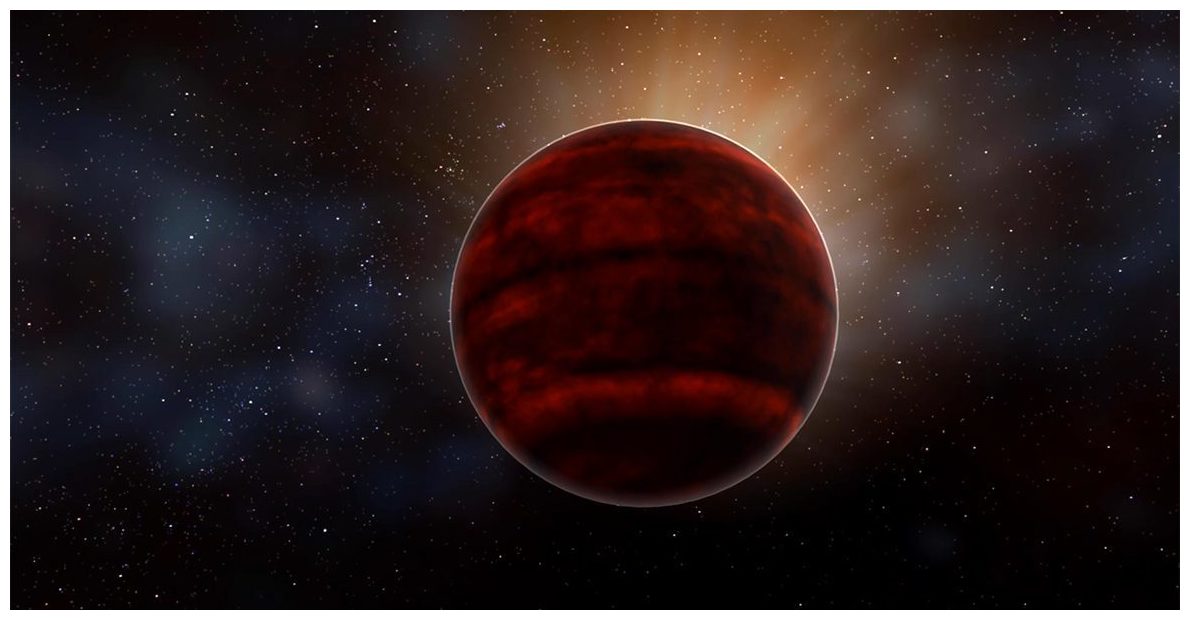
Proxima Centauri
© NRAO/AUI/NSF; D. Berry
At its peak, the newly recognized flare was 10 times brighter than our sun's largest flares, when observed at similar wavelengths. Stellar flares have not been well studied at the millimeter and submillimeter wavelengths detected by ALMA, especially around stars of Proxima Centauri's type, called M dwarfs, which are the most common in our galaxy.

"March 24, 2017, was no ordinary day for Proxima Cen," said Meredith MacGregor, an astronomer at the Carnegie Institution for Science, Department of Terrestrial Magnetism in Washington, D.C., who led the research with fellow Carnegie astronomer Alycia Weinberger. Along with colleagues from the Harvard-Smithsonian Center for Astrophysics, David Wilner and Adam Kowalski, and Steven Cranmer of the University of Colorado Boulder - they discovered the enormous flare when they reanalyzed ALMA observations taken last year.

The flare increased Proxima Centauri's brightness by 1,000 times over 10 seconds. This was preceded by a smaller flare; taken together, the whole event lasted fewer than two minutes of the 10 hours that ALMA observed the star between January and March of last year.

Stellar flares happen when a shift in the star's magnetic field accelerates electrons to speeds approaching that of light. The accelerated electrons interact with the highly charged plasma that makes up most of the star, causing an eruption that produces emission across the entire electromagnetic spectrum.

"It's likely that Proxima b was blasted by high energy radiation during this flare," MacGregor explained, adding that it was already known that Proxima Centauri experienced regular, although smaller, X-ray flares. "Over the billions of years since Proxima b formed, flares like this one could have evaporated any atmosphere or ocean and sterilized the surface, suggesting that habitability may involve more than just being the right distance from the host star to have liquid water."


Ice Cube

Adapt 2030 Ice Age Report: Record sized hail - Sun halos planet wide - Shrimp & fish cold kill (VIDEO)

Hail larger than softballs pummeled an Argentina city Thursday
Huge hail hit Cordoba, Argentina earlier this month
As galactic cosmic rays increase in Earth's atmosphere we are beginning to see record sized hail, intense sun halos across the globe which used to be a rare event. Now winter temperatures are responsible for fisheries collapses of white shrimp in the SE USA and lake fish stocks. This is now affecting terrestrial crops along with aquatic species, its global and we do have a problem that needs to be addressed.


Comment: For related articles see also:


Bulb

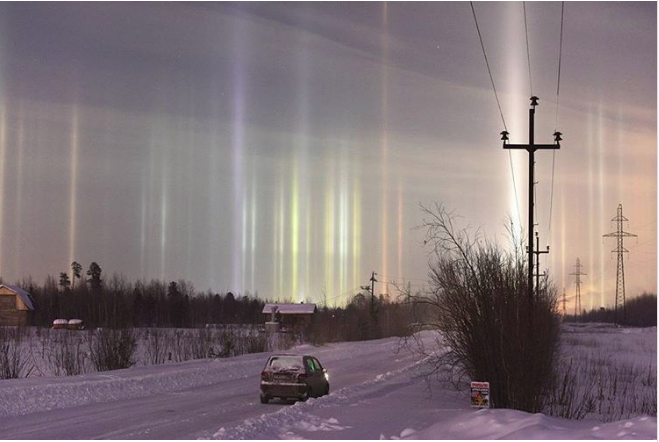
Glitch in the Matrix? Light pillars illuminate St. Petersburg skies (PHOTOS)

Spectacular light pillars illuminate St. Petersburg skies (PHOTOS)
© borozdin/instagram
Russia's St. Petersburg has witnessed an incredible light show by mother nature, which illuminated the sky with bright columns of light, turning the city into a winter wonderland.

Residents of Russia's 'Venice of the north' awoke early on Saturday morning to find the skyline glittering with strange colors. Yellow, red, blue and green laser-looking columns were visible across the city. At first, people thought that they were witnessing the northern lights, but the pattern of the luminescence suggested a different phenomenon.

Comment: More pictures from Instagram on Sputnik:
With frosty weather showing no sign of ceasing in St. Petersburg, residents of Russia's northern capital have shared photos of an eyebrow-raising natural phenomenon.

St. Petersburg residents living in the city's Vyborg and Kalininsky Districts have spotted giant light pillars in the sky, which they first mistook for Northern Lights, according to local media.

This Instagram user published a photo of the light pillars under the northern lights hashtag, saying that the admiration "cannot be expressed in words."

Another user nicknamed "daryabat" also voiced joy about a "very beautiful phenomenon" which she said she first thought was Northern Lights.


Clearly our atmosphere is showing signs of serious change - evidently it's becoming colder:


Cassiopaea

Spotless sun sparks pink auroras in Norway and rare light pillar sighted in Hawaii (VIDEO)

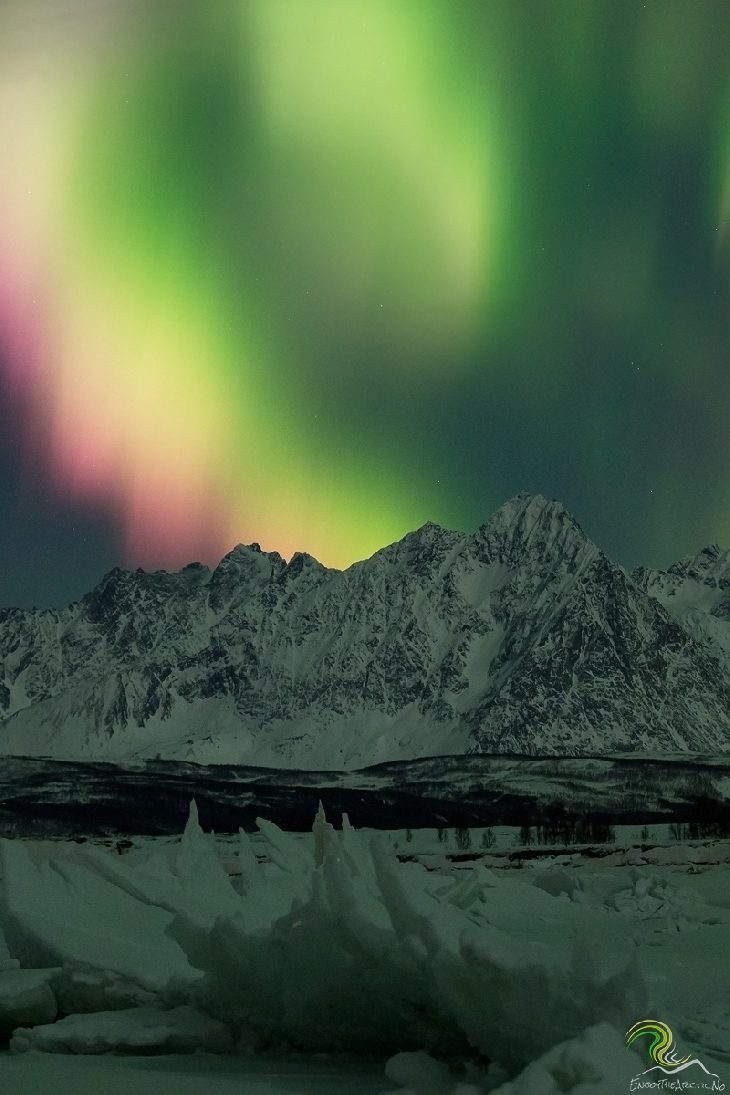
Spotless sun sparks pink auroras


SPOTLESS SUN SPARKS PINK AURORAS


On Feb. 23rd the sun was completely blank (no sunspots) and NOAA classified solar activity as "very low." Nevertheless, this happened:

"Despite the blank sun, we witnessed a beautiful display of auroras," reports photographer Andrei Andritcu from Tromso, Norway. In addition to the usual green, the lights contained a splash of pink.

In auroras, pink is a sign of nitrogen. Ordinary green auroras are caused by energetic particles from space hitting oxygen atoms 100 km to 300 km above Earth's surface. Pink appears when the energetic particles descend lower than usual, striking nitrogen molecules at the 100 km level and below.

Comment: The quieting Sun means Earth's own fields are becoming weaker meaning more particles can move further into our atmosphere, as well as more cosmic rays, so these 'rare' sights are becoming increasingly common, as well as some never seen before phenomena: Check out SOTT radio's: Behind the Headlines: Earth changes in an electric universe: Is climate change really man-made?


Camera

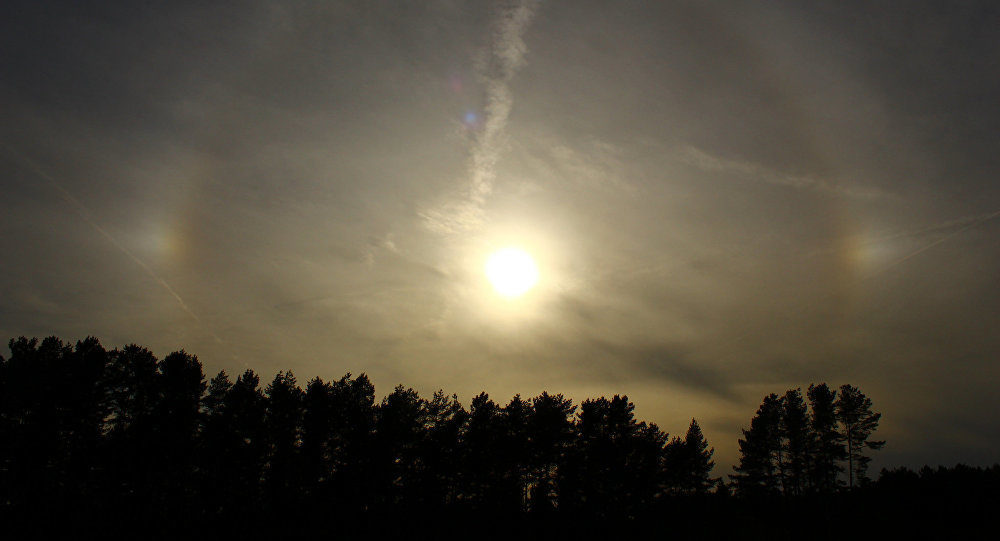
Sun halo seen in St. Petersburg, Russia

Sun dogs over St. Petersburg
© Aivaras Ciurlionis
The two bright spots on either side of the sun are commonly referred to as sun dogs, mock suns or phantom suns, but the scientific name is parhelia. This natural wonder can be observed during especially cold weather, when light refracts from ice crystals floating in the air.

Residents of the northern capital of Russia and its outskirts captured a rare and mind-blowing natural phenomenon, which makes it appear as if our planet has three suns.

Sun

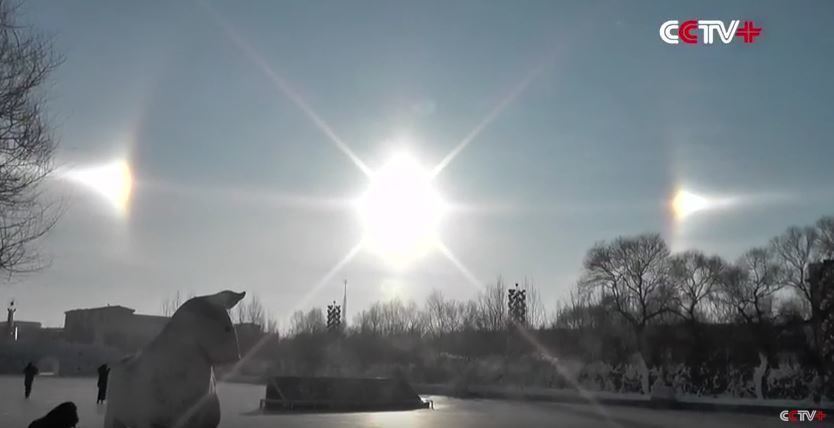
Sun dog solar phenomenon shines over Harbin, China

Sun dog over China
© CCTV+
The rare atmospheric 'sun dog' optical phenomenon, or parhelion, appeared in the sky above the northeast Chinese city of Harbin in Heilongjiang Province earlier this week.

The spectacle, which occurs along with the accumulation of ice crystals in the atmosphere, presents itself as a halo with the sun in the centre and two reflections on either side.

The three suns, which stunned local residents, are created when sunlight is refracted through regular hexagonal ice crystals, and only appear when atmospheric pressure is stable and there is adequate moisture in the air during a cold period of weather.

Blackbox

Mysterious enriched uranium particle detected in skies over Alaska's Aleutian Islands

Uranium particles detected
© Berliner Verlag / Global Look Press
Scientists have found a "highly unusual" particle enriched with uranium in the skies over Alaska's Aleutian Islands. The source of the substance, which is typically used in nuclear fuel and bombs, is still unclear.

The mysterious substance "containing a very small amount of enriched uranium" was found at an altitude of 7km (4.3 miles) above Alaska's Aleutian Islands, according to a report issued by the Journal of Environmental Radioactivity.

It is the first time the group of US scientists has detected enriched uranium-235 in their 20-year study. They were making no special attempt to sample radioactive material, when they came across it during a routine flight to check atmospheric conditions in August 2016.

"During 20 years of aircraft sampling of millions of particles in the global atmosphere, we have rarely encountered a particle with a similarly high content of 238U [uranium-238] and never a particle with enriched 235U [uranium-235]," an abstract from the article says, with the full study to be published in April.

Question

Enriched uranium found floating above Alaska

WB-57
© NASAA NASA WB-57 plane, like the one that located the mystery particle.
On 3 August 2016, 7km above Alaska's Aleutian Islands, a research plane captured something mysterious: An atmospheric aerosol particle enriched with the kind of uranium used in nuclear fuel and bombs.

It's the first time scientists have detected such a particle just floating along in the atmosphere in 20 years of plane-based observations.

Uranium is the heaviest element to occur naturally on Earth's surface in an appreciable amount. Normally it occurs as the slightly radioactive isotope uranium-238, but some amount of uranium-235, the kind humans make bombs and fuel out of, occurs in nature. Uranium-238 is already rare to find floating above the Earth in the atmosphere. But scientists have never before spotted enriched uranium, a sample uranium containing uranium-235, in millions of research plane-captured atmospheric particles.

"One of the main motivations of this paper is to see if somebody who knows more about uranium than any of us would understand the source of the particle," scientist Dan Murphy from NOAA told me. After all, "aerosol particles containing uranium enriched in uranium-235 are definitely not from a natural source," he writes in the paper, published recently in the Journal of Environmental Radioactivity.

Murphy has led flights around the world sampling the atmosphere for aerosols. These tiny particles can come from polution, dust, fires and other sources, and can influence things such as cloud formation and the weather. The researchers spotted the mystery particle on a flight over Alaska using their "Particle Analysis by Laser Mass Spectrometry" instrument. They considered that perhaps the signature came from something weird, but evidence seems to point directly at enriched uranium.

Sun

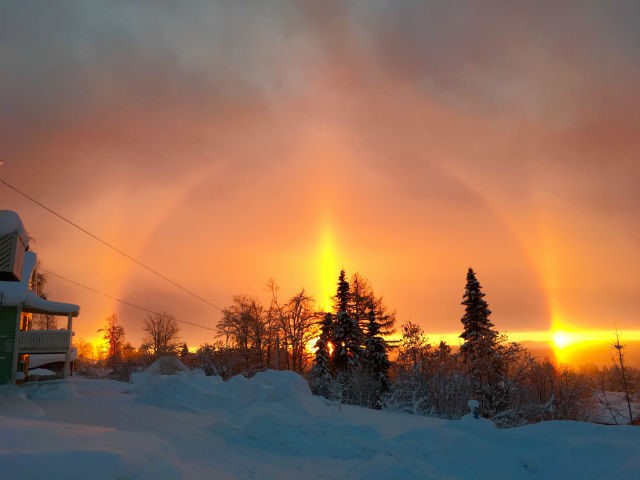
'Truly magical' sun halo spotted over northern Sweden

Sun halo over Sweden
© Marit Aasvang Olsson
There was an incredible light phenomenon in far northern Sweden last week - and one woman was lucky enough to capture it on her phone.

It was like something from a dream.

At least that's how Marit Aasvang Olsson felt after she captured a "sun halo" on her camera phone.

The Norwegian woman, who lives in Malmberget around 100 kilometres north of the Arctic Circle, said she was dropping her daughter off at school last week when she spotted the phenomenon in the sky.

Info

Major study finds mid-latitudes ozone layer not repairing as models predict

Ozone Layer
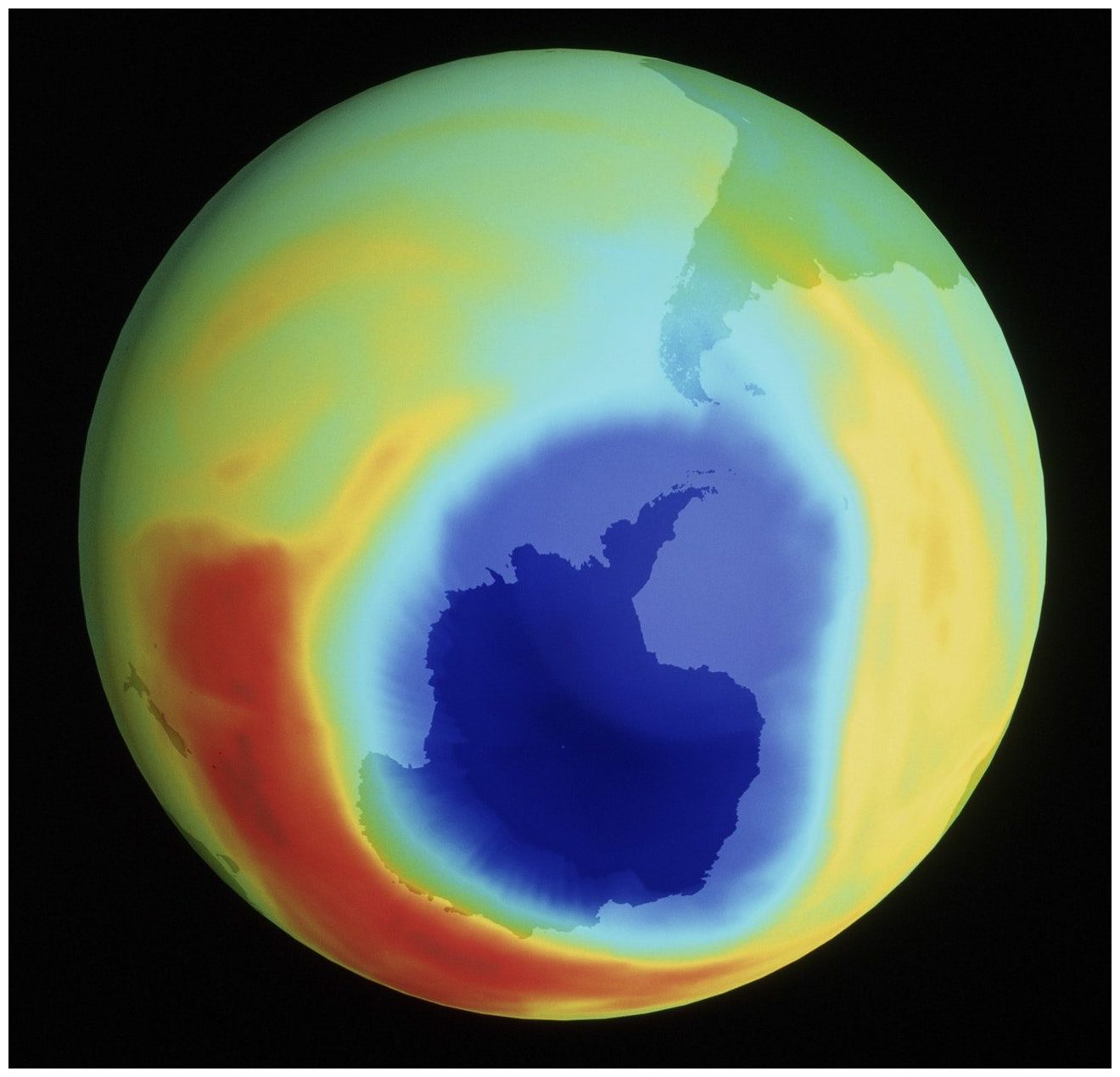
© NASA/Science Photo LibraryA coloured satellite map of atmospheric ozone in the southern hemisphere between mid-August and early October 1998. An ozone "hole" is seen over Antarctica.
Pointing to the recovery of the ozone layer as humanity's one great triumph of environmental remediation may have been premature, a new report warns.

A team led by Joanna Haigh of the Grantham Institute at Imperial College London, UK, has discovered that while ozone density is indeed improving at the poles, it is not doing so at lower latitudes, roughly between 60 degrees north and 60 degrees south.

That encompasses everywhere on the planet between the Shetland Islands off the north coast of Scotland to south of Tierra del Fuego at the foot of South America.

The researchers found that although the decrease in ozone concentration is not as great as that seen at the poles before the banning of ozone-depleting chlorofluorocarbons (CFCs) in 1987, the effects may be worse, because ultraviolet radiation is stronger in the region, and it contains most of the world's population.

Ozone is an inorganic molecule also known as trioxygen, or O3. It is present in low concentrations throughout the Earth's atmosphere, but is found in much larger levels in the stratosphere, about 20 to 30 kilometres above the planet's surface, where it is formed by the interaction of O2 with ultraviolet light from the sun.