Volcanoes
S


Phoenix

Japanese volcano blows its stack

Geologists monitor latest eruptions at Sakurajima, which is sending large amounts of ash into the air

Japan's Sakurajima volcano, which has been regularly recorded blowing its stack since the 10th century, is at it again.

The volcano, located in the south of the country near the city of Kagoshima, is perhaps most famous for a 1914 eruption, which went into the record books as the most powerful of any in 20th century Japan.

The latest flare-up recently led the nation's meteorological agency to issue an ash warning for the Sakurajima volcano, now considered to be "very dangerous." But given what Japan has gone through these last several weeks, this is probably the least of the nation's worries just about now.

Bizarro Earth

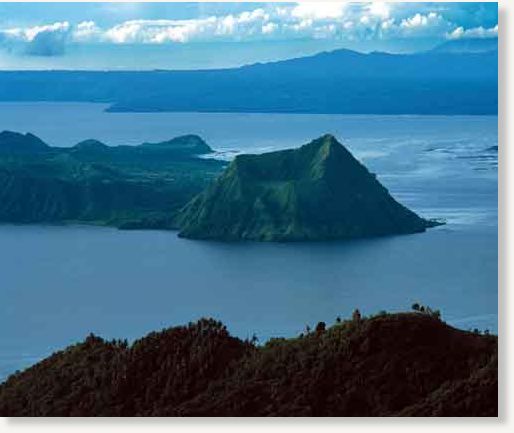
Volcanic quakes recorded at Taal, Bulusan; crater glow at Mayon

Image
© Unknown
Restive Taal Volcano continued to show signs of activity, as state volcanologists recorded at least five volcanic quakes there in the last 24 hours.

The Philippine Institute of Volcanology and Seismology (Phivolcs) on Wednesday said it also observed weak steaming activity at the thermal area of the main crater-lake.

Phivolcs also reiterated its warning against carbon dioxide in the area, saying gas measurements in March amounted to 4,670 tons per day - double the 2,250 tons per day in January.

"The remarkable increase in C02 [Carbon dioxide] concentration indicates anomalous gas release from the magma at depth," it said.

It added Alert Level 1 remains over Taal Volcano, saying no eruption is imminent but the public should strictly observe some safety precautions.

Phivolcs said the main crater should remain strictly off-limits because sudden hazardous steam-driven explosions may occur and high concentrations of toxic gases may accumulate.

Attention

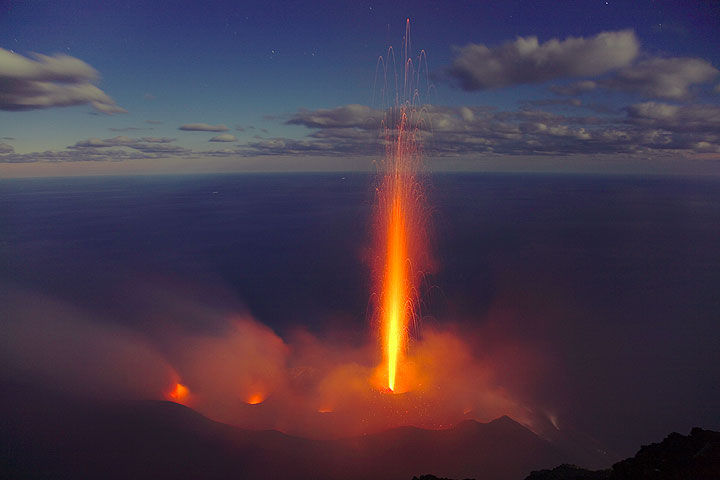
Stromboli: Series of Explosions and Landslides

Stromboli Volcano_01
© Volcano Discovery300 m tall, candle-like eruption from the central crater of Stromboli
Sicily - There has been a concerted series of explosions and landslides on Stromboli. Over the last 24 hours, monitors at the Vesuvian Observatory have picked up fifteen seismic signals associated with mild landslide events, all along the Sciara del Fuoco (Stream of Fire). Most of these events were follow-ons to the explosions and can therefore be attributed to rolling debris.

Comment: Latest recorded seismic activity around Sicily, Italy:

3 shakes and minor landslides, Feb. 18 - Stromboli
5 shakes and minor landslides, Feb. 22 - Stromboli
5 shakes and minor landslides, Feb. 28 - Stromboli
2.6 and 2.7, Mar. 4 - (Sea-quake) Porto Palo di Capo Passero, Ionio Sea
2.6 and 3.7, Mar. 9 - Messina, Sicily
2.1, April 2 - Messina, Sicily

(A 6.1 magnitude one was recorded in Greece on April 1)


Igloo

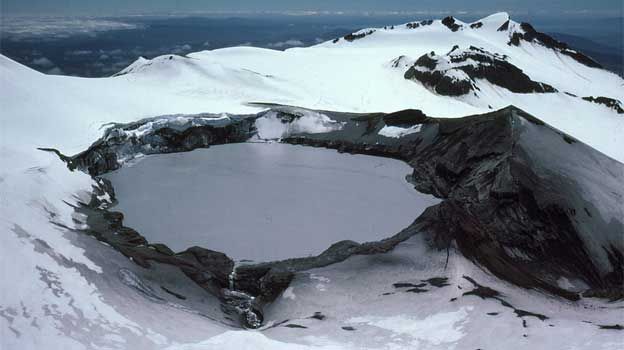
New Zealand: Aviation alert at Mt Ruapehu as first dump of season falls

Image
© UnknownMt. Ruapehu
Aviation authorities have issued alerts to planes flying over Mt Ruapehu due to the volcano's crater lake sustaining a prolonged hot phase.

In addition to the high water temperature, other signs of volcanic unrest have been recorded by vulcanologists including changes in volcanic gas output, seismic activity and crater lake water chemistry.

However, despite the changes in volcanic activity, there were no indications an eruption was on its way, GNS Science volcano surveillance co-ordinator Brad Scott told the New Zealand Herald.

He said the volcanic alert level remained at level one, which meant there were signs of volcanic unrest.

But it is an active volcano and future eruptions may occur with little or no warning.

Megaphone

Philippines: Stay away from Taal, Palace warns tourists and residents

On Saturday, Malacañang appealed to residents and tourists to heed warnings by state volcanologists to keep away from the crater of Taal Volcano in Batangas, due to high carbon dioxide levels there.

Deputy presidential spokeswoman Abigail Valte said tourists and residents should also heed the calls of local officials to evacuate once the need arises.

Cooperate with local officials on the ground (Inn such situations, our first appeal would be to heed the authorities in staying away from the volcano's crater. And those residents living at the foot of the volcano should heed village leaders' call to evacuate if the need arises)," Valte said on government-run dzRB radio.

Info

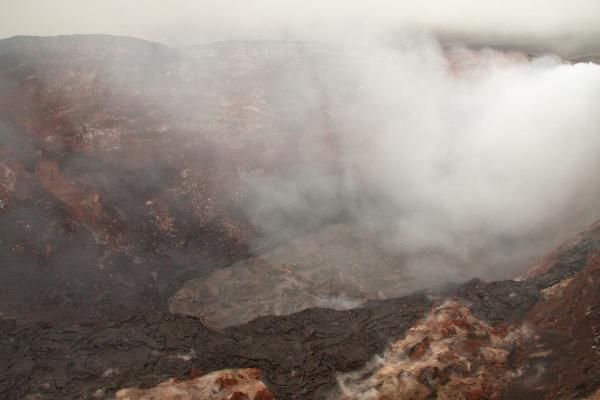
Eruption Creates New Lava Lake in Hawaiian Volcano

Image
© HVO/USGSIt's baaa-aack! Lava has returned to the Pu`u `Ō `ō crater on Mount Kilauea.
Lava has newly erupted inside a volcanic crater that collapsed several weeks ago - and hours before a nearby spectacular fissure eruption - on Mount Kilauea.

The new lava lake is inside the Pu'u 'Ō 'ō crater on the Hawaiian volcano. The fresh lava arrived almost 20 days after the crater floor collapsed on March 5 and almost 16 days after the Kamoamoa fissure eruption to the west on March 9. [In Images: Hawaii's Mount Kilauea Erupts.]

Info

Vog and Ash from Ambrym Volcano, Vanuatu

Image
© NASA Goddard/MODIS Rapid Response Team
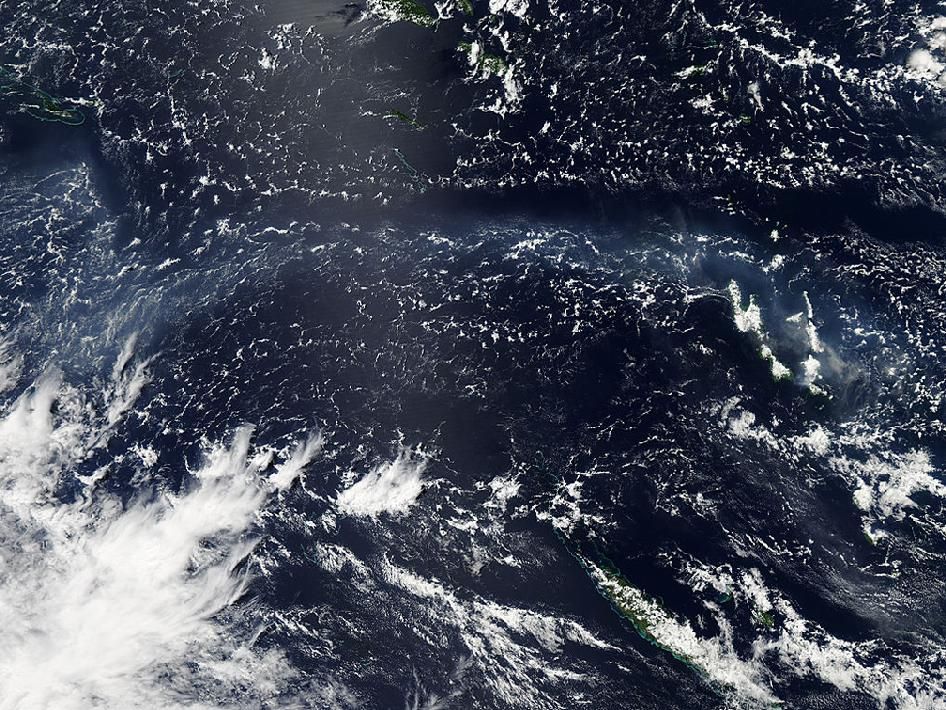
The Ambrym Volcano was billowing vog and ash on March 28, 2011 at 02:55 UTC, when the Moderate Resolution Imaging Spectroradiometer (MODIS) on NASA's Aqua satellite captured this image.

Bizarro Earth

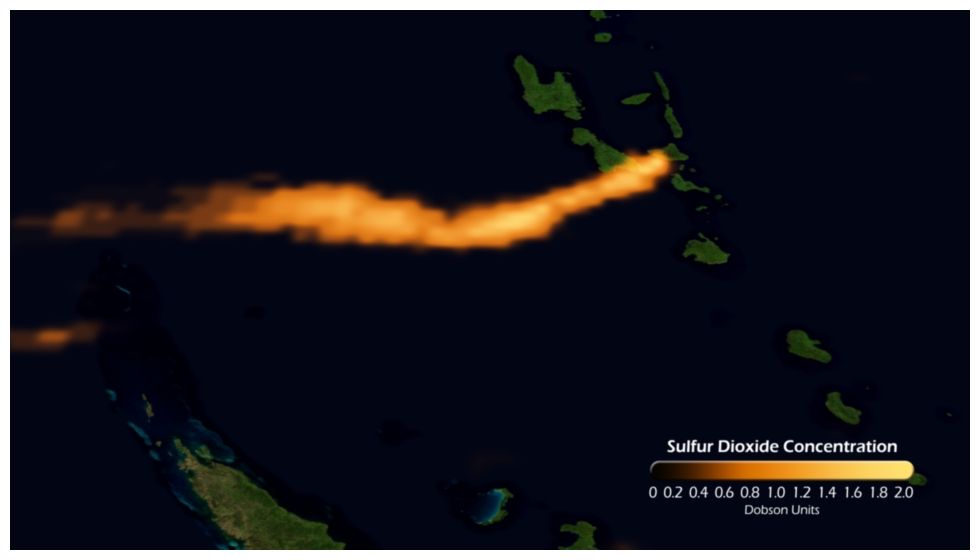
Sulfur Dioxide Plume Erupts from Vanuatu Volcano

Vanuatu Volcano_2
© NOAASulfur Dioxide Plume Erupts from Vanuatu Volcano
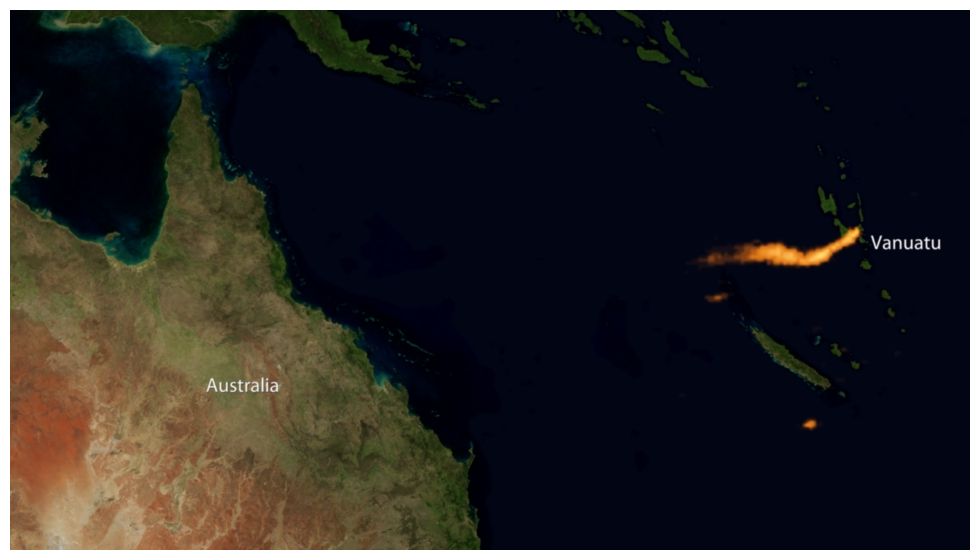
Vanuatu Volcano
© NOAAWide View of Sulfur Dioxide Plume Erupting from Vanuatu Volcano
On the tiny island of Tanna, Vanuatu in the South Pacific is one of the world's most active volcanoes: Mt Yasur. As the NASA Aura satellite orbited overhead today (March 18, 2011), the Ozone Mapping Instrument detected a large sulfur dioxide plume being emitted from the volcano. OMI, though designed primarily for monitoring the ozone layer, is an important tool in monitoring volcanoes. NOAA's Satellite Analysis Branch operates the Washington Volcanic Area Advisory Center (WVAAC) in conjunction with the National Weather Service to issue volcanic ash advisories and alerts.

These advisories are critical for air quality monitoring, but even more so for diverting air traffic in the impacted areas. Volcanic ash, if ingested by jet engines can cause significant damage, and even loss of the aircraft. It is estimated that NOAA's ash monitoring saves the aviation industry between $100 and 200 million per year. The Mt Yasur volcano is situated in the Wellington (New Zealand) VAAC, but NOAA SAB processes and monitors plumes from many volcanoes around the world who's ash might enter the WVAAC airspace.

Attention

6.0 Magnitude Quake Jolts Northern Japan, No Immediate Reports of Damage

An earthquake with a preliminary magnitude of 6.0 jolted parts of northern Japan near a quake-stricken nuclear power plant Wednesday, national broadcaster NHK said.

There were no immediate reports of damage. Numerous aftershocks have been rocking the country following a devastating quake and tsunami on March 11.

Bizarro Earth

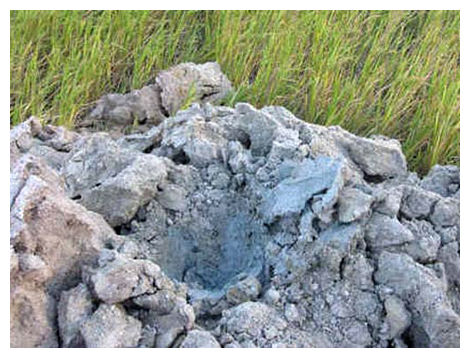
Vietnam: Mud Eruption in Ninh Thuan is Defined as Volcano Mud

Mud Volcano
© VietNamNet Bridge
Dr. Dinh Doan Lam, a senior official from the Institute for Geology of Vietnam, said that mud eruption in Ninh Thuan is not dangerous. Mud volcano or mud dome are used to refer to formations created by geo-excreted liquids and gases, although there are several different processes which may cause such activity. Hot water mixes with mud and surface deposits. Mud volcanoes are associated with subduction zones. Temperatures are much cooler in these processes than at igneous volcanoes.

About 86 percent of the gas released from these structures is methane, with much less carbon dioxide and nitrogen emitted. Ejected materials are often a slurry of fine solids suspended in liquids which may include water, which is frequently acidic or salty, and hydrocarbon fluids.