Health & WellnessS


Headphones

SOTT Focus: The Health & Wellness Show: A conversation with Dr. Jack Kruse

Sott Talk Radio logo
Today we'll be joined by Dr. Jack Kruse. Some of you know him, some of you love him, some of you can't understand anything he writes about on his monster blog, jackkruse.com.

He burst onto the paleo scene years back with his Leptin Prescription and Cold Thermogenesis protocol.

During his day job as a neurosurgeon he gets into people's heads and spines and for his side job he busts your brain open with his encyclopedic knowledge of the workings of the human body, circadian rhythms and quantum biology.

We'll cover diet, workings of the mitochondria, the importance of sunlight, water and oxygen and how to biohack your body and environment for optimal function.

Running Time: 01:38:00

Download: MP3


Info

Woman who can smell Parkinson's triggers new research into links between odor and disease

parkinsons disease smell
Doctors tested Joy's sense of smell by using t-shirts which had been worn by six people with Parkinson's and six without
The widow of a man who suffered with Parkinson's has triggered new research this week into the condition after she discovered she could "smell" the disease.

Joy Milne, 65, told researchers that she had noticed a change in the odor of her late husband, Les, years before he developed symptoms of Parkinson's.

He passed away from the disease, a nervous system disorder whose symptoms include shaking and slowness of movement, earlier this year at the age of 65.

Comment: See also: Your nose knows: The undetectable smell of death triggers fight-or-flight response


Health

Proof that ketogenic diet for cancer can be a real solution

Keto Diet
© Natural Society
Although it is often associated with the high-protein Atkins diet, ketogenic diets are useful for more than just weight control. These are classified by their very low carbohydrate content, low enough to push the body's metabolism into using ketones, which are breakdown products of fats, for energy. One other purpose of the ketogenic diet is as a cancer treatment, often alongside other conventional and/or natural therapies.

The story of Elaine Cantin is an example of this, who began to research and modify the ketogenic diet to suit her own needs after seeing too many loved ones die after chemo and radiation. Eventually, her cancer was gone, but this diet is still hidden from most of the general public in obscurity.

So what other evidence is there to support the ketogenic diet as a cancer treatment? Multiple studies on mice have shown that this diet can dramatically slow and possibly reverse tumor growth, with in vitro research finding that, besides sugar deprivation, ketone bodies have direct antitumor effects.

For example, in one study, mice on low-calorie ketogenic diets had tumors that were 48% lower in weight than controls; those also on the glucose inhibitor known as 2-deoxy-d-glucose saw an 80% reduction in tumor weight compared to controls. [1]

In another, mice on the "KetoCal" diet saw slowed tumor growth, decreased blood vessel growth, and increased survival, with mice on the calorie-restricted version surviving the longest. Tumor density had also been significantly reduced. [1]

In a human study, 297 patients who had undergone resection surgery for glioblastoma were examined for hyperglycaemia (high blood sugar) in relation to survival time. Besides age and higher tumor grade, administration of corticosteroids and the chemo drug Temodar were also associated with lower survival time. [1]


Pills

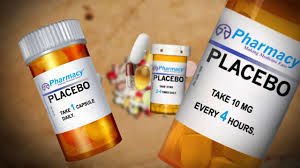
Unintended consequences: Placebo effect growing stronger where medicines are widely advertised, making it difficult to prove a drug's advantage

placebo
By definition, a placebo is an inert substance that has no effect on your body. In medical research, placebos (such as sugar pills) are used as controls against which the effects of drugs are measured.

However, the placebo-effect, in which a patient believes he or she is getting an actual drug and subsequently feels better despite receiving no "active" treatment at all, has become a well-recognized phenomenon.

Researchers have found that placebos can work just as well as potent drugs, and studies into the placebo effect have also shown that many conventional treatments "work" because of the placebo effect and little else.

What's more, recent investigations reveal the placebo effect is growing in potency — but only among Americans! This is an intriguing mystery that as of yet has no solid explanation, and it's having a dramatic impact on the development of new painkillers.

Comment: Kindness holds the power to heal


Cow Skull

Your nose knows: The undetectable smell of death triggers fight-or-flight response

Image
© Erin PerryNew research suggests that we humans, just like animals, perceive and respond to the smell of death as threatening.
When animals die they release an unpleasant smell created in part by putrescine, a chemical compound resulting from the breakdown of fatty acids in the putrefying tissue of dead bodies. New research suggests that we humans, just like animals, perceive and respond to this scent as threatening.

"These are the first results to show that a specific chemical compound (putrescine) can be processed as a threat signal," wrote Dr. Arnaud Wisman, co-author and a psychologist at the University of Kent, and Dr. Ilan Shrira, co-author and a visiting assistant professor of psychology at Arkansas Tech University.
"Thus far, nearly all the evidence for threat chemosignals has come from those that are transmitted by body sweat."

Comment: Odor and the brain: What the nose knows


Info

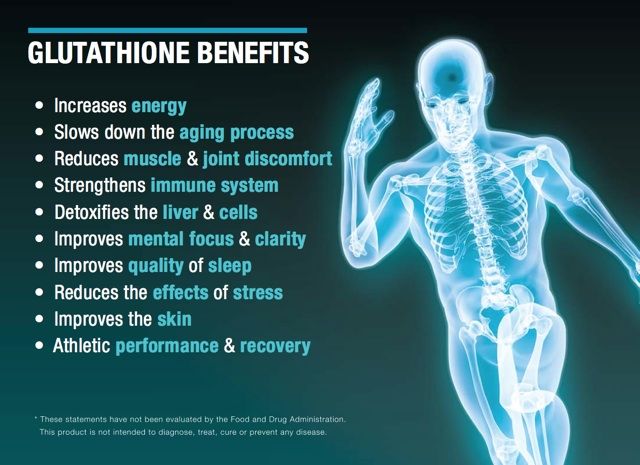
Glutathione: Antioxidant & detoxifier

Image
© maxusateam.com
You can tell what kind of late-night reading I do... it's usually one studies that would bore you to tears. But you see my mission in life is your health! So I read a lot of journals (in between watching cute cat videos on YouTube). Today's article is for anyone who is chronically ill. If you have chronic fatigue syndrome [myalgic encephalitis], fibromyalgia, multiple sclerosis (MS), Lyme disease, Parkinson's, Alzheimer's, depression, psoriasis, lupus or any other complex chronic illness today's article could be a huge game changer for you.

We make glutathione in our liver, all of us do. It's natural to the body, but it's also sold and studied in supplement form. There was a recent article in Molecular Neurobiology entitled "The glutathione system: a new drug target in neuroimmune disorders." Think of your neuroimmune system as your brain and immune cells combined and they take action whenever a bug shows up in your body. You need a highly functional neuroimmune system or infections will take over and keep you chronically ill.

Comment: Essential Glutathione: The Mother of All Antioxidants


Info

Dr. Vinay Prasad explains why most cancer drugs are expensive and ineffective

Image
Big pharma or the pharmaceutical industry is the most powerful monopoly in the US. Recently more people have started to notice that they sell a lot of ridiculously priced second rate products. This adds up to a lot of people with poor health and insane amounts of profits for these companies.

Big Pharma's power reaches beyond the Health Care World and into Politics.

In Washington right now Big Pharma plays a huge role in the power politics there. For example, it is lobbying very successfully for its 'right' to advertise directly to people like you and me. In other developed countries, such tactics aren't allowed because that greatly increases drugs use.

Comment: Cancer, Chemo, and Crony Capitalism


Bullseye

Wasabi's compounds target Pancreatic Cancer stem cells and eliminate them

Image
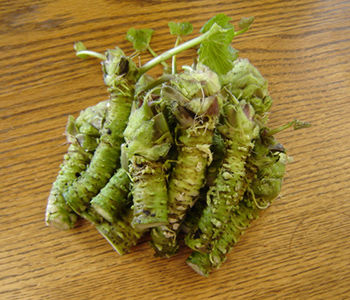
Active ingredients in Wasabi or Japanese radish have demonstrated an ability to eliminate pancreatic cancer stem cells. The study was published in the journal Evidence-Based Complimentary and Alternative Medicine. Interesting journal title, isn't it? These types of studies are done and are recorded, but very few publicize them.

Pancreatic cancer is considered one of the more difficult cancers to treat. It is also one of the more fatal cancers. The American Cancer Society projects this year, 2015, there will be about 48,960 people (24,840 men and 24,120 women) diagnosed with pancreatic cancer. And about 40,560 people (20,710 men and 19,850 women) will die from it. That's well under a 10 percent survival.

Bug

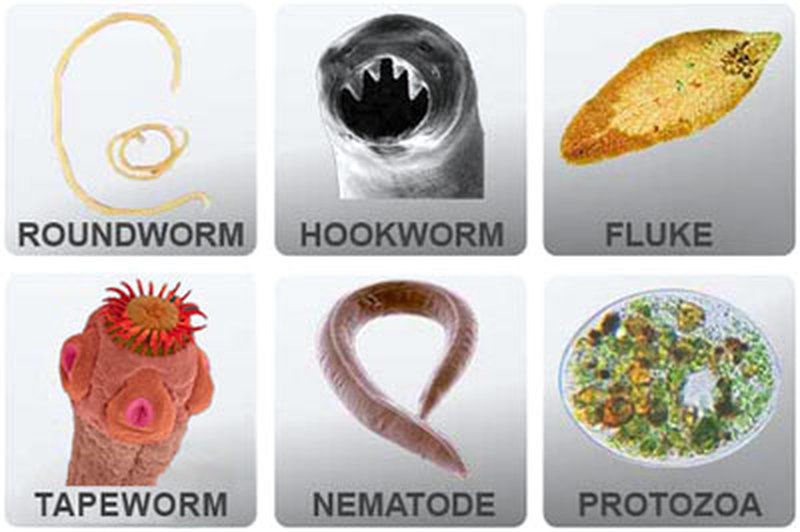
Parasitic microorganisms: Chances are, you've got them

human digestive parasites
© Unknown
You've probably heard horror stories of 3 foot tapeworms that cause serious problems for some people, but did you know that most parasites are very tiny and some can only be seen by microscope?

Did you know that there is actually a very good chance that you could have a yeast or parasite infestation?

The human body is literally crawling with hundreds of strains of yeasts and bacteria. The digestive track alone holds more than three pounds of bacteria. In the right balance, these bacteria are necessary for proper digestion and nutrient absorption. Probiotics, the beneficial bacteria in the gut, are a form of bacteria, though they have a tremendous positive impact on our health.


When these beneficial bacteria in the digestive track get out of balance, problems begin. A large number of factors can facilitate the disruption of this balance of bacteria, including diet, certain medications, stress, contact with infected sources, and others.

Comment: Also check out our forum threads on microbial pathogens:


Arrow Down

Carbon nanotube pollutants found in human lungs

Carbon nanotubes
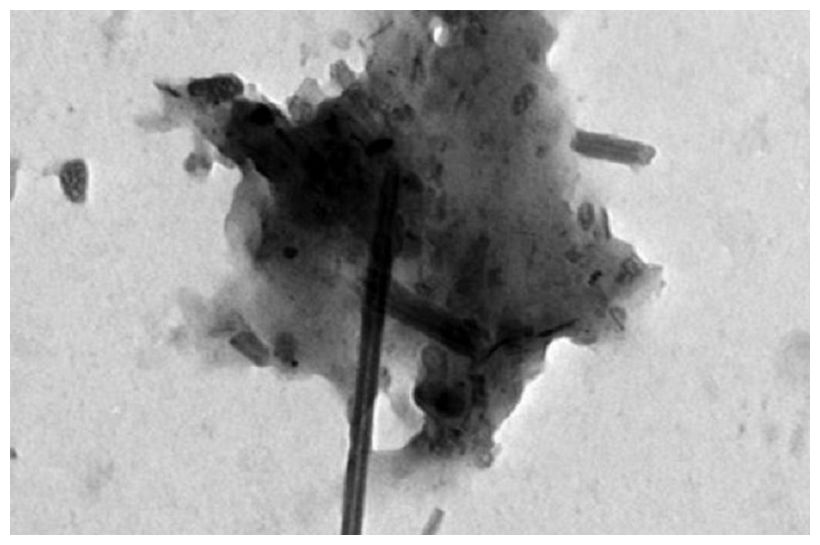
© Fathi Moussa/Paris-Saclay UniversityCarbon nanotubes (the long rods) and nanoparticles (the black clumps) appear in vehicle exhaust taken from the tailpipes of cars in Paris.
Some potentially disturbing news out of France this week: Researchers studying the lungs of young Parisian asthma patients have found evidence that man-made carbon nanotubes are becoming a common air pollutant.

Carbon nanotubes are deliberately manufactured in several industries — their unique physical properties make them useful in electronics and nanotechnology, especially. But they can also be created accidentally, as a byproduct of catalytic converters in automobile engines.

The study — conducted by researchers in Paris and at Rice University in Houston — found that carbon nanotubes from the asthma patients' lungs are similar to nanotube samples taken from the exhaust pipes of Paris vehicles.

It's apparently not just a local problem, either: The samples are also similar to nanotubes found in Houston, in spider webs in India and even in polar ice cores.

No direct linkage is suggested between the nanotubes and asthma, but previous studies have questioned whether carbon nanotubes might act like asbestos, a known carcinogen.

"The concentrations of nanotubes are so low in these samples that it's hard to believe they would cause asthma, but you never know," says chemist Lon Wilson in press materials provided by Rice University. "What surprised me the most was that carbon nanotubes were the major component of the carbonaceous pollution we found in the samples."