Health & WellnessS


Info

Test finds meat in vegetarian products, human DNA in hot dogs

Image
© Brendan McDermid / Reuters
One of the most American foods could also be one of the most human. A food testing authority using cutting-edge genetic testing has found human DNA in some samples of hot dogs, and meat was found in a shocking number of vegetarian substitutes.

Clear Food, a company that genetically tests food products, analyzed 345 hot dogs and sausages from 75 different brands, and found that 14 percent had hygienic issues or had ingredients that were not displayed on the product label.

Two percent of the samples tested positive for human DNA, and a whopping 66 percent of vegetarian hot dogs contained evidence of such contamination.

Bacon

Here we go again: WHO now claims meat causes colon cancer

Image
© Thinkstock
Eating sausages, ham and other processed meats causes colon cancer, and red meat "probably" does too, an arm of the World Health Organization said Monday.

The findings support "recommendations to limit intake of meat," said the International Agency for Research on Cancer (IARC), which compiled a review of more than 800 studies on the link between a meat diet and cancer.

"In view of the large number of people who consume processed meat, the global impact on cancer incidence is of public health importance," IARC official Kurt Straif said in a statement.

For an individual, the risk of getting cancer from eating processed meat was statistically "small", said the agency, but "increases with the amount of meat consumed."

"Each 50-gram (1.8-ounce) portion of processed meat eaten daily increases the risk of colorectal cancer by 18 percent."


Comment: So which is it, does meat consumption actually cause cancer, or is it just a statistical 'risk factor' based on cherry-picking the data to push an agenda?


Comment: Once again the WHO is using biased statistics to try and scare the populace into believing that eating meat is bad for our health. The reality, however, is that meat and animal fats are necessary for optimal functioning, and the more these lies are spread the worse off people will be. Shame on you, WHO!


Syringe

New study indicates early stages of schizophrenia linked to inflammation

Image
Schizophrenia is a severely debilitating mental illness that affects around one in 100 individuals in both the United Kingdom and the United States. "Schizophrenia" is actually an umbrella term for a complex range of different neurological disorders, each with a host of symptoms that can sometimes be difficult to detect during the earlier stages of the affliction. Fortunately, a new study, published in the American Journal of Psychiatry, has revealed that a type of immune cell is more active in the brains of people at risk of schizophrenia. This should aid medical doctors in the early detection of the disorder.

This new study, led by the Medical Research Council (MRC) Clinical Sciences Centre at Imperial College London, used brain scans to track a type of immune cell called microglia, which respond to damage and infection by facilitating inflammation. These cells also initiate and control a neurological process named "synaptic pruning," wherein the connections between brain cells are rearranged to improve the overall electrochemical connections within the brain. Think of it like trimming a house plant: some connections are removed in order to allow others to strengthen.

Comment: This study sheds more light on the links between infectious agents and various diseases as described in Paul Ewald's book, Plague Time: The New Germ Theory of Disease.

Related articles:


Red Flag

More bad news about GMO soy: Mother goats had altered milk & stunted kids

Image
Mother goats fed on 'Roundup-ready' GMO soy produce milk that's much lower in fat, protein and antibodies than non-GMO controls, writes Jonathan Latham, and contains traces of GE DNA. The milk also stunts their kids' growth.

Pregnant goats fed with genetically engineered (GE) soybeans have offspring who grow more slowly and are shorter, according to a new Italian study (Tudisco et al., 2015).

Publishing in the journal of Small Ruminant Research, the researchers were testing the results of supplementing the feed of female goats with Roundup Ready GE soybeans.

Comment: More credible reports of GMO crops causing harm to animals:
As UK officials tout GMO foods as 'safe' compared to organic crops, results of a long-term, peer-reviewed study conducted by a group of scientists led by Dr Judy Carman of the Institute of Health and Environmental Research in Australia has been released - and it proves that GMO are anything but 'safe.'

In this particular study, pigs and cows fed on the rather common diet of GMO corn and soy have suffered digestive and reproductive disorders. This is of particular importance since the human digestive tract is very similar to that of pigs.

In short, this mixture of GMO foods led to a toxic mix in the digestive tract of the animals, leading to a reduced ability for GMO-fed pigs to reproduce. The pigs were studied from conception until slaughter (the first long term study of its kind) and all were all affected adversely.


Health

Does infection cause depression and autoimmune disorders?

medical test
© Katherine Streeter for NPR
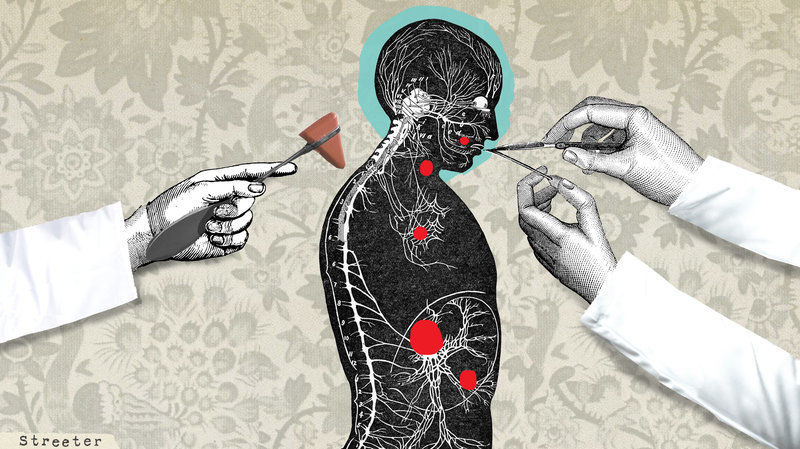
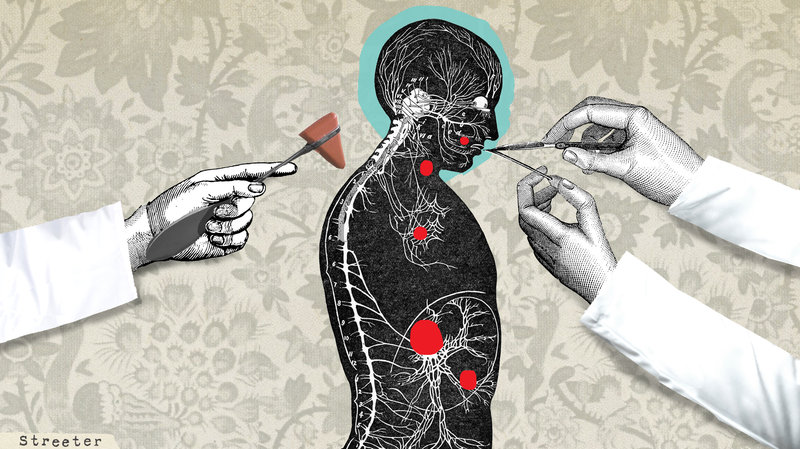
Sometime around 1907, well before the modern randomized clinical trial was routine, American psychiatrist Henry Cotton began removing decaying teeth from his patients in hopes of curing their mental disorders. If that didn't work he moved on to more invasive excisions: tonsils, testicles, ovaries and, in some cases, colons.

Cotton was the newly appointed director of the New Jersey State Hospital for the Insane and was acting on a theory proposed by influential Johns Hopkins psychiatrist Adolph Meyer, under whom Cotton had studied, that psychiatric illness is the result of chronic infection. Meyer's idea was based on observations that patients with high fevers sometimes experience delusions and hallucinations.

Cotton ran with the idea, scalpel in hand.

In 1921 he published a well-received book on the theory called The Defective Delinquent and Insane: the Relation of Focal Infections to Their Causation, Treatment and Prevention. A few years later The New York Times wrote, "eminent physicians and surgeons testified that the New Jersey State Hospital for the Insane was the most progressive institution in the world for the care of the insane, and that the newer method of treating the insane by the removal of focal infection placed the institution in a unique position with respect to hospitals for the mentally ill." Eventually Cotton opened a hugely successful private practice, catering to the infected molars of Trenton, N.J., high society.

Following his death in 1933, interest in Cotton's cures waned. His mortality rates hovered at a troubling 45 percent, and in all likelihood his treatments didn't work. But though his rogue surgeries were dreadfully misguided and disfiguring, a growing body of research suggests that there might be something to his belief that infection - and with it inflammation - is involved in some forms of mental illness.


Comment: Although the mental health field is notoriously behind on new research as is the medical community on auto-immune conditions, there is a growing body of evidence that suggests infection plays a much bigger role in mental and physical health than previously thought.

See:
How Infection Can Lead to Cancer
All types of infections affect the brain and can impair mental capacity
Infection and psychosis in schizophrenia
Chronic fatigue syndrome: a herpes virus infection of the vagus nerve?


Christmas Lights

Are we really getting too little sleep, or too little darkness?

computer light, melatonin productions
© ShutterstockBlue light disrupts melatonin production.
The Centers for Disease Control and Prevention (CDC) state that insufficient sleep is a serious public health concern, because it can lead to many immediate dangers such as car crashes as well as long-term health problems like diabetes. The blame for sleep deprivation is often pinned on our fast-paced, 24/7 lifestyle, made possible by electric lighting at all times of day and night.

But are we really getting too little sleep?

A new study challenges that idea from a unique perspective, and it is getting wide media attention.

Researchers, led by Jerome Siegel at UCLA, followed three small preindustrial societies, two in Africa and one in South America, reasoning that the best way to judge whether sleep habits in the industrialized world are unnatural is to compare them to sleep habits in those few remaining societies on Earth that still live without electricity.

They found that the average period of time people spent trying to sleep was 7-8½ hours each night. Of this, only 5½-7 hours was confirmed as time asleep. This is about the same as, or less than, what is reported by most Americans and Europeans, and is considered too little for optimum health.

So maybe 5½-7 hours of sleep is natural and not the problem the CDC and many other health organizations say it is.

Comment: Our nighttime bodies are being bathed in artificial lighting many orders of magnitude greater than the stars and moonlight of our ancestors. What's worse is that many modern devices emit blue light from light-emitting diodes (LEDs), which are particularly effective at suppressing melatonin while enhancing alertness. This biochemical disruption is playing havoc with our health, making us more vulnerable to depression, premature aging, heart problems and cancer. For more information on the importance of light and dark cycles on our health, see the Health and Wellness Show interview with Dr. Jack Kruse.


Beaker

Researchers have discovered a way to genetically modify organisms without having to follow GMO regulations

Image
It appears that the religion of Scientism is finally experiencing phase 2 of any religion. That phase in which the adherents begin to lose sight of what even the originator or focus of their religion stood for or opposed and now becomes focused on promoting or perpetuating and defending the dogma surrounding it.

The danger and legitimacy of GMOs no longer being in question for those who have latched themselves to the snake oil wagon, some scientists and researchers are no longer interested in determining the safety or usefulness of those organisms but are attempting to develop means of avoiding the regulation of their promotion.

Comment: What a sneaky way to get around the hotly debated topic of GMO labeling, as American's continue to demand labeling laws, scientists, like the ones described above are working diligently to skirt the real concerns over genetically manipulated foods. This sentence says as much: 'Researchers seem to have found a way to avoid even the scant regulations that exist.' Looks like the biotech industry is working on other strategies to bypass regulations if their political shenanigans fail!
  • Your votes don't count
Shockingly, or perhaps not to the individuals who have been observing the biotech charade, house members who voted to keep the public from knowing what is in their food in the latest land-slide win for Big Food supporters of The Safe and Accurate Food Labeling Act of 2015 (known to its critics as the DARK (Deny Americans the Right to Know Act)) were paid three times as much as representatives who voted to give us the right to label or ban GMO foods.


Hotdog

What's really in that hot dog?

Image
© blog.gmpopcorn.com
A landmark study of the contents of American hot dogs revealed that 2% of those tested contained human DNA. As Americans eat an estimated 20 billion hot dogs every year, this means a staggering 4 million of these could be contaminated.

The study, conducted by Clear Food, used next-generation genomic technology to analyze foods at a molecular level, ingredient by ingredient. The aim was to confirm that the foods we eat contain the ingredients on the label. When it came to hot dogs, nearly 15% of those tested contained unlabeled ingredients - and in the case of 2%, that ingredient was human DNA.

Comment: The great American hotdog: What's in it?


Info

Statistics on Emergency room visits due to dietary supplements are misleading

Image
© liveinthenow.com
The media has once again failed to report the whole story or put things into the proper perspective when they reported on a study from the Centers for Disease Control and Prevention (CDC) and the U.S. Food and Drug Administration (FDA). The headlines and superficial reports were completely blown out of proportion. Keep in mind that it is estimated that over-the-counter and prescription drugs are responsible for more than 4 million emergency room (ER) visits annually. In addition, adverse drug reactions are estimated to cause over 100,000 deaths each year. These numbers are sobering and reflect the real issue that the media should focus on. If anything, this new report shows how safe dietary supplements are.

The authors of the study clearly stated that the numbers of ER visits were less than 5% of the numbers that have been previously reported for pharmaceutical products and the severity of the adverse effects are considerably less for dietary supplements. But somehow, this important perspective was lost by the media.

Comment: Additional articles about the safety of vitamins:


Headphones

SOTT Focus: The Health & Wellness Show: Interview with Yarrow Willard, Master Herbalist

Yarow Willard
This week on the SOTT Radio Network's Health and Wellness Show, we're extremely fortunate to have a chance to speak with Yarrow Willard, Cl.H.

Yarrow is a Master Herbalist and the visionary of the Harmonic Arts Botanical Dispensary on Vancouver Island, at www.harmonicarts.ca .

From an early age, he was raised in the ways of natural medicine by herbalist parents. He graduated with a Clinical Herbalist diploma in 2005 and has been continually updating his knowledge base ever since. Yarrow is highly "edu-taining" and shares a wealth of insights into ways to upgrade health and deepen our connection with the natural world. He regularly shares the "Herbal Jedi" life path through events, classes, blogs, his website, youtube channel and other media outlets.

Running Time: 01:51:00

Download: MP3