Health & WellnessS


Bug

New cause for Lyme disease complicates already murky diagnosis

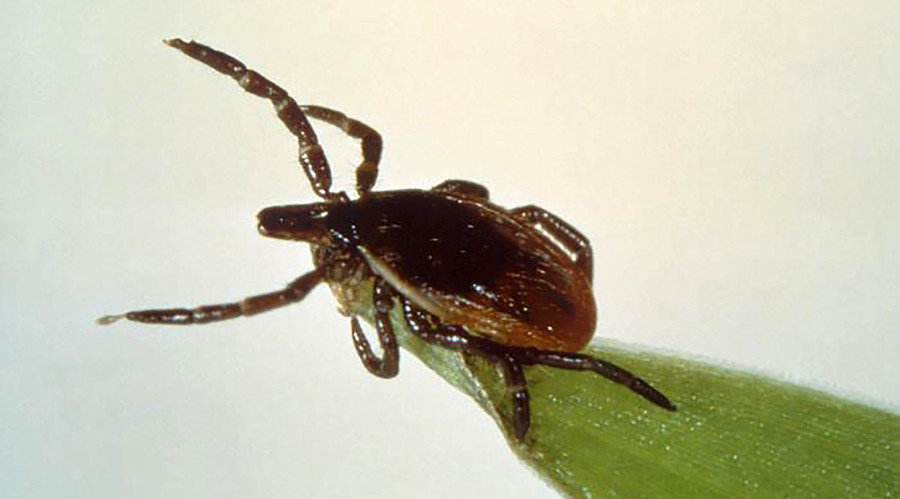
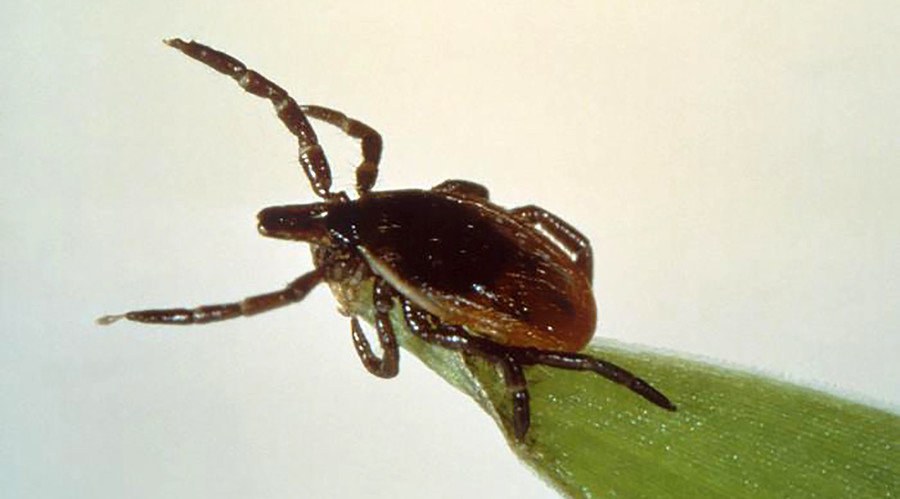
Deer tick
© CDC/ReutersA deer tick, or blacklegged tick, Ixodes scapularis. Scientists have discovered a new bacteria species causing Lyme disease in the U.S. Midwest.
Tick-borne Lyme disease in the U.S. has long been thought to be caused by a single microbe, a spiral-shaped bacterium called Borrelia burgdorferi. Last week this notion was challenged when a team led by scientists at the Mayo Clinic discovered that Lyme could be caused, albeit rarely, by a different bacterial species that may incite more serious symptoms ranging from vomiting to neurological issues. Scientists working in the contentious field of Lyme disagree, however, as to what this information means for public health and if these findings are truly the first of their kind. For years, they say, research has pointed to the notion that the spirochete that causes Lyme disease in the U.S. is more heterogeneous than many have acknowledged.

In the new study, recently published in The Lancet Infectious Diseases, Mayo Clinic pathologist and laboratory doctor Bobbi Pritt and her colleagues tested more than 100,500 clinical specimens, such as blood, cerebrospinal fluid and tissue, collected from U.S. patients with suspected Lyme disease between 2003 and 2014. Using a special molecular biology technique called PCR that can identify genetic differences among bacterial strains, they found that six of the samples—collected from patients between 2012 and 2014 in Wisconsin, Minnesota and North Dakota—contained DNA suggestive of a new species. They isolated some of these live bacteria and analyzed parts of their genetic sequence, confirming that the microbe has, in fact, never been documented before. The researchers propose to name the new species Borrelia mayonii.

Comment: Lyme disease is getting more virulent. People often have several underlying co-infections. There is also very strong evidence which suggests that it can be a congenital and sexually transmitted disease, just like with treponema pallidum, the causative agent of syphilis. Borrelia and treponema are spirochetes - bacteria that resemble a corkscrew in their shape.

For more information, listen to our Health and Wellness Show - A Close Look at Lyme Disease


Attention

Bitter truth: Sugar may be as harmful as stress

sugar stress
© Andrew Burton / Reuters
A group of researchers from Australia and India released a study suggesting that sugar consumption may cause not only diabetes and obesity, but also brain defects comparable to those caused by stress or abuse.

The study published in the Frontiers in Molecular Neuroscience journal focused on whether and how the diet may influence the brain compared to to stress and other psychological loads during infancy.

The scientists paid special attention to the hippocampus, a brain region responsible for long-term memories, stress regulation and behavioral patterns.

Comment: Why sugar is called the 'White death'


Syringe

Highly contagious and potentially deadly infection takes hold in Queensland, Australia

crying baby
© UnknownHighly contagious and potentially deadly infection takes hold in Queensland, Australia.
The Courier Mail reports
there have already been 55 cases of parechovirus in the state this year, 90 per cent of them among children less than three months old. There were 172 cases of parechovirus recorded in Queensland last year.

It can cause mild respiratory or gastrointestinal symptoms in babies but in newborn infants, can lead to serious complications such as hepatitis or encephalitis, and can be fatal.

Infectious diseases expert Dr Theo Sloots said the very young were in the "danger period" to contract parechovirus, which is highly contagious.

The virus broke out in Brisbane in September and Dr Sloots has since tracked it spreading through infants on the Gold Coast, Toowoomba and, last month, in Townsville, Mackay and Bundaberg.

"It's an important issue," he said. "When children get sick they go to the GP who doesn't recognise it as parechovirus. They just think it's an infection. Awareness needs to be raised among GPs."

Cheeseburger

Child health epidemic linked to vaccines and malnutrition

Fertiggerichte,Fast Food, Pizza Burger Chips
© Syda Productions/Shutterstock
We have the perfect storm for creating an environment that will continue to injure and destroy the health of our most precious gifts, our children. We live in America, which is the most highly vaccinated country on the planet. Vaccinations alone are responsible for tremendous health damage.

We are also a country that consumes a highly processed, sugar-laden, vitamin-deficient diet, which adds its own set of health problems. Good nutrition is the cornerstone of a strong immune system capable of maintaining health and naturally fighting disease. The combination of vaccinations and poor diets contribute to our growing health epidemic, creating the perfect storm.

Current Health Epidemic Of Children

In 2013, one out of six children were diagnosed with a learning disability. One out of nine children struggled with asthma. One out of 50 children were seriously disabled with autism. One of 400 children suffered with debilitating diabetes.

Meanwhile, life-threatening autoimmune disorders have also skyrocketed, causing suffering for thousands. These illnesses correspond with growing, aggressive vaccination schedules. [1] [2] [3]

Comment:


No Entry

In a rare show of common sense, Brazilian government ends the use of pesticide linked to microcephaly cases

microcephaly pesticides
On Sunday, the Free Thought Project reported on the recent information released by the Physicians in the Crop-Sprayed Towns (PCST), who revealed that the Brazilian government's assertion that microcephaly was caused by the Zika virus was not substantial. PCST exposed a popular larvacide pyriproxyfen to be the actual suspect.

The chemical, pyriproxyfen, was added to the state of Pernambuco's drinking-water reservoirs in 2014, by the Brazilian Ministry of Health, in an effort to stop the proliferation of the Zika-carrying Aedes aegypti mosquito.

The report by PCST revealed that the pesticide, sold under the commercial name SumiLarv, is manufactured by Sumitomo Chemical, a Japanese subsidiary of Monsanto.
"Pyriproxyfen is a growth inhibitor of mosquito larvae, which alters the development process from larva to pupa to adult, thus generating malformations in developing mosquitoes and killing or disabling them. It acts as an insect juvenile hormone or juvenoid, and has the effect of inhibiting the development of adult insect characteristics (for example, wings and mature external genitalia) and reproductive development. It is an endocrine disruptor and is teratogenic (causes birth defects).

Health

Dark chocolate really is the 'food of the gods'

chocolate
© mygreenrainbow.com
Chocolate comes from the cacao plant, which has the species name Theobroma cacao. "Theobroma" literally means "drink of the gods."

This name was originally inspired by cocoa's history as a luxury beverage consumed by the elites of first Mesoamerica and then Europe. But in recent decades, research has increasingly uncovered another angle to this name: cocoa is one of the most potent superfoods known to humans. It has been linked to such a wide array of health benefits that it staggers the mind.

The cacao plant has been cultivated by humans for at least 4,000 years. Ancient Mesoamericans consumed it as a bitter beverage. After the drink was brought to Europe, the custom developed of adding more sweeteners to the drink. The modern chocolate bar was invented in the 1800s.

Comment: Additional health benefits of chocolate:


Pills

How the American opiate epidemic was started by the Purdue Pharma company

OxyContin
The state of Kentucky may finally get its deliverance. After more than seven years of battling the evasive legal tactics of Purdue Pharma, 2015 may be the year that Kentucky and its attorney general, Jack Conway, are able to move forward with a civil lawsuit alleging that the drugmaker misled doctors and patients about their blockbuster pain pill OxyContin, leading to a vicious addiction epidemic across large swaths of the state.

A pernicious distinction of the first decade of the 21st century was the rise in painkiller abuse, which ultimately led to a catastrophic increase in addicts, fatal overdoses, and blighted communities. But the story of the painkiller epidemic can really be reduced to the story of one powerful, highly addictive drug and its small but ruthlessly enterprising manufacturer.

Beaker

Ingesting estrogen from everyday products

estrogen
© lindalamme.com
It is no secret that our bodies and our environment are swimming in estrogen. Puberty is occurring in children as young as eight and in 2010 babies in China were reported to be developing breasts. In 2011, the United Kingdom's Daily Mail observed that women's bra cup sizes were growing even when the women themselves were not gaining weight and speculated it was estrogen exposure. And frogs and fish are becoming "intersex" and losing their male characteristics from endocrine disrupters in the environment and waterways.

Over 10 years ago, the routine administration of estrogen to women as they approach menopause and afterward (called hormone replacement therapy or HRT) was found to cause a 26 percent increase in the risk of breast cancer, 41 percent increase in the risk of strokes, 29 percent increase in the risk of heart attacks and double the rate of blood clots.

Comment: Endocrine Disruptors Really Do Suck:


Hearts

Health benefits of collagen: Why you're probably not getting enough, and how to get more

gelatin bone broth
For years, the bodybuilding, protein-gorging community has maligned collagen for its inessentiality and lack of input into the muscle-protein synthesis process. From their perspective, it sort of makes sense. Why bother with "low quality" protein like gelatin/collagen when you can pound the whey, eat the meat, and focus on other sources of the essential amino acids directly involved in building muscle?

Except the research is showing that these "nonessential" proteins are actually pretty darn useful.

A while back, I suffered an Achilles injury during of one of my Ultimate Frisbee matches. In my attempt to speed recovery time, I did some research and started supplementing with collagen. The results, in my personal n=1 experiment, were pretty dramatic. Once I added collagen to the mix, my healing kicked into overdrive. As I've dug deeper into this topic to uncover the many benefits dietary collagen can bestow upon us, I'm convinced collagen/gelatin is an essential part of the human diet. And yes, even—or especially—bodybuilders, power lifters, and other athletes concerned with performance, muscles, and optimizing swoleness can benefit from eating more collagen. But why?

Comment: Considering the myriad of health benefits of collagen and bone broth, it's certainly worth integrating into your regular routine in one way or another.


Health

Mainstream science says: High-cholesterol diet, eating eggs do not increase risk of heart attack, not even in persons genetically predisposed

bacon & eggs
A new study from the University of Eastern Finland shows that a relatively high intake of dietary cholesterol, or eating one egg every day, are not associated with an elevated risk of incident coronary heart disease. Furthermore, no association was found among those with the APOE4 phenotype, which affects cholesterol metabolism and is common among the Finnish population. The findings were published in the American Journal of Clinical Nutrition.

In the majority of population, dietary cholesterol affects serum cholesterol levels only a little, and few studies have linked the intake of dietary cholesterol to an elevated risk of cardiovascular diseases. Globally, many nutrition recommendations no longer set limitations to the intake of dietary cholesterol. However, in carriers of the apolipoprotein E type 4 allele -- which significantly impacts cholesterol metabolism -- the effect of dietary cholesterol on serum cholesterol levels is greater. In Finland, the prevalence of the APOE4 allele, which is a hereditary variant, is exceptionally high and approximately one third of the population are carriers. Research data on the association between a high intake of dietary cholesterol and the risk of cardiovascular diseases in this population group hasn't been available until now.

Comment: See also: 10 scientific reasons you should be eating more eggs