Health & WellnessS


Cheesecake

Sugar addiction has similar symptoms as drug addiction

sugar
© inandout.com.cy
Sugar addiction should be treated like drug abuse, new research has revealed.

Scientists have discovered drugs used to treat nicotine addiction could be used to treat sugar addiction.

In the study carried out by Australia's Queensland University (QUT), it compared the effects of sugar to those of cocaine and likened the symptoms of coming off it to going 'cold turkey'.

"Like other drugs of abuse, withdrawal from chronic sucrose exposure can result in an imbalance in dopamine levels and be as difficult as going 'cold turkey' from them." Masroor Shariff

Neuroscientist Professor Selena Bartlett from QUT's Institute of Health and Biomedical Innovation said the study, which has just been published by international research journal PLOS ONE, shows drugs used to treat nicotine addiction could be used to treat sugar addiction in animals.

"The latest World Health Organisation figures tell us 1.9 billion people worldwide are overweight, with 600 million considered obese," she said.

"Excess sugar consumption has been proven to contribute directly to weight gain. It has also been shown to repeatedly elevate dopamine levels which control the brain's reward and pleasure centres in a way that is similar to many drugs of abuse including tobacco, cocaine and morphine.

"After long-term consumption, this leads to the opposite, a reduction in dopamine levels. This leads to higher consumption of sugar to get the same level of reward.

Comment: People don't need a novel treatment strategy for obesity and sugar addiction that will make pharmaceutical companies lots of money. They just need to cut back on the carbs, and eat more fat. See also:


Attention

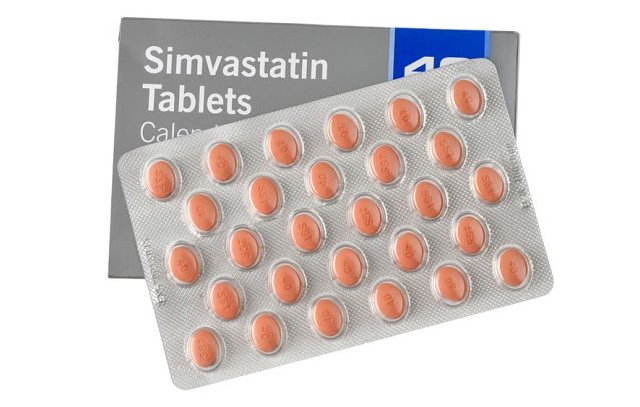
Lowering cholesterol increases the risk of death

statins
Sorry to get distracted from my series on what causes heart disease, yet again. However, I felt the need to blog about this article published in the BMJ on the 12th April 2016.

A group of researchers went back through the data from the Minnesota Coronary Experiment run between 1966 and 1973 in the US - on many thousands of participants. They were, in part stimulated to do this because they had previously looked at the Sydney Diet Heart Study 1966 - 73. In their own words:
'Our recovery and 2013 publication of previously unpublished data from the Sydney Diet Heart Study (SDHS, 1966-73) belatedly showed that replacement of saturated fat with vegetable oil rich in linoleic acid (a polyunsaturated fat) significantly increased the risks of death from coronary heart disease and all causes, despite lowering serum cholesterol. Our recovery of unpublished documents and raw data from another diet-heart trial, the Minnesota Coronary Experiment, provided us with an opportunity to further evaluate this issue.'1
To make this clear. The Sydney Diet Heart Study (SDHS) was set up to show that replacing saturated fat with unsaturated fat would reduce the risk of heart disease The original researchers who set up and ran the SDHS did not fully publish their data at the time (one can only speculate as to why this may be so).

When this current group of researchers finally managed to get hold of the full data from the SHDS, it was found that replacing saturated fat with polyunsaturated fat did lower cholesterol, however:

REPLACEMENT OF SATURATED FAT SIGNIFICANTLY INCREASED THE RISK OF DEATH FROM CORONARY HEART DISEASE AND ALL CAUSES.

I am not normally a great fan of capitalisation, and using bold, but I think this statement needed that treatment.

Info

Magnesium helps control how cells adapt to the rhythms of night and day

magnesium
An essential mineral in our diets has an unexpected role in helping living things remain adapted to the rhythms of night and day, scientists have found.

Magnesium - a nutrient found in many foods - helps control how cells keep their own form of time to cope with the natural environmental cycle of day and night.

The discovery in cells is expected to be linked to whole body clocks which influence daily cycles - or circadian rhythms - of sleeping and waking, hormone release, body temperature and other important bodily functions in people.

The surprising discovery may aid the development of chronotherapy - treatment scheduled according to time of day - in people, and the development of new crop varieties with increased yields or adjustable harvesting seasons.

Experiments in three major types of biological organisms - human cells, algae, and fungi - found in each case that levels of magnesium in cells rise and fall in a daily cycle.

Comment: Magnesium is one of the most essential nutrients for all living organisms. It is critical for metabolic processes, cell growth and reproduction and is involved in hundreds of enzyme processes affecting every aspect of life. It is not only essential for maintaining good health, but also for detoxification and the treatment of numerous diseases. Unfortunately, nearly everyone is deficient but many don't realize it. Anything that makes you tense and tight could potentially be due to magnesium deficiency and many health problems can be tied back to this crucial mineral. Most people with any chronic disease benefit greatly from magnesium supplementation therapy.


Syringe

Robert de Niro says autistic son changed 'overnight' after MMR jab, regrets pulling VAXXED documentary from Tribeca

Robert de Niro
© The Today Show
Robert De Niro defended the controversial anti-vaccine documentary Vaxxed: From Cover-Up To Catastrophe - which he pulled from the Tribeca Film Festival - in an emotional Today Show interview alongside Tribeca co-founder Jane Rosenthal. "I think the movie is something that people should see," the actor said Wednesday. "There's a lot of things that are not said. I, as a parent of a child who has autism, am concerned. And I want to know the truth. I'm not anti-vaccine, but I want safe vaccines."

Vaxxed was originally set to screen Sunday, April 24th at the 15th annual Tribeca Film Festival, but De Niro and company removed the project last month after other filmmakers threatened to leave the fest. "I was shooting a movie. I was in the middle of a lot of stuff," De Niro said of learning about the controversy. "There was a backlash, which I haven't fully explored, and I will. But I didn't want it to start affecting the festival in ways I couldn't see." Rosenthal added, "There weren't sponsors or donors threatening to pull out of the film festival; it was our filmmakers. And we're known for having amazing documentary films."


Comment: See also: Should Robert DeNiro be hailed as a hero in the VAXXED documentary controversy?


Rose

More proof of the superiority of organic foods

dirt
To a world raised on conventional foods and thinking, scientists and consumers alike have been touting the nutritional value and overall healthfulness of organics. And as a new study reveals more insight into the value of organics, those who before avoided the truth are once again forced to as the question: Is organic food really inherently healthier than conventionally grown?

Yes. Here's how.

Higher Omega-3's In Organics

After reviewing over 150 papers on organic vs. non-organic meat and dairy products, a group of 25 scientists published their findings in the British Journal of Nutrition on the very clear differences between the two.

Sun

Don't believe your dermatologist -- sunlight prevents cancer

The widespread use of sunscreens promoted by dermatologists and the Cancer Industry, may lead to a significant decrease in solar-induced previtamin D3 in the skin, now correlated with a higher risk of cancer according to researchers.
sunlight

Why Do Dermatologists Promote Sunscreen?


Quite simply because they like repeat business. Exposure to ultraviolet B radiation in sunlight provides the mechanism for more than 90% of the vitamin D production in most individuals and they know it. Our interaction with the sun is the one thing that may prevent cancer more than anything else.

Comment: Get some sun this summer, just don't let yourself burn.


Info

Inflammation: The good & the bad

inflammation
© precisionnutrition.com
Inflammation is becoming a hot topic of discussion among health care professionals looking at nutritional and other therapies to address chronic diseases. Although a lot of people are talking about it, how much is known about the role that acute and chronic inflammation plays in human health and why can unresolved inflammation pose a threat to good health?

What is Inflammation?

Inflammation is a normal and protective response by your body's immune system to deal with injury, irritation and stress from diet and lifestyle choices or toxic environmental exposure. The ability of the body to produce acute inflammation is a primary component of the immune system and part of innate (cellular) immunity that infants naturally acquire in the womb to protect them after birth.1

Adaptive or "learned" (humoral) immunity is produced after the innate immune has identified a challenge from, for example, a pathogenic virus or bacteria, and the immune system's inflammatory response produces specific antibodies to target and "remember" how to make a quicker, more effective response in the future if challenged again.2

Comment: The Hidden Time Bomb Within You: Inflammation


Evil Rays

The microwave drug: The effects of Electromagnetic Radiation

cartoon people on phones
The 1998 US Army document 'Bioeffects of Selected Nonlethal Weapons' says "investigators are even beginning to describe similarities between microwave irradiation and drugs regarding their effects on biological systems. For example, some suggest that power density and specific absorption rate (SAR) of microwave irradiation may be thought of as analogous to the concentration of the injection solution and the dosage of a drug." [1]

And, as the 'volume' or power density is turned up on microwave transmissions, with increased antenna towers, Wi-Fi, Wi-MAX, mobiles etc., we now receive a microwave dose often millions of times higher than what was studied 20 years ago.

Comment: Electromagnetic radiation is a biohazard! Read more:


Attention

Acetaminophen dulls the brain's response to new information

headache
© pixabay
Would you be willing to give up a part of your brain function every time you need to get rid of a headache? It turns out, acetaminophen tablets create a brain debt, and a life debt at that.

Last year, an eye-opening study discovered that over-the-counter pain relievers like Tylenol (acetaminophen) can blunt emotions like joy. Essentially, they are emotional numb-ers.

Fast forward one year later and another study finds that paracetamol (also acetaminophen) - the world's most widely used pain reliever - dulls the brain's response to new information, the ability to adapt our behavior to our surroundings (a necessary skill for surviving and thriving) and process what's going on around us. As you can imagine, that would not only affect brain function but could also create a negative domino effect in a person's life. Consider how we need to process information in order to solve problems, study, work, choose our friends, a life's mate, a home to settle down in or a career...

Comment: New study shows painkiller acetominophen (Tylenol) kills both positive and negative emotions


Bacon

Flashback Research finds fat guidelines lacked solid scientific evidence

butter
Guidelines warning people to avoid eating fatty foods such as butter and cheese should not have been introduced, new research has found.

Dietary advice issued to tens of millions warned that fat consumption should be strictly limited to cut the risk of heart disease and death. But experts say the recommendations, which have been followed for the past 30 years, were not backed up by scientific evidence and should never have been issued.

The guidelines, introduced in the UK in 1983 and in the US six years earlier, recommended reducing overall dietary fat consumption to 30% of total energy intake and saturated fat to 10%. But researchers say the guidelines "lacked any solid trial evidence".

Experts warned that in characterising saturated fat as the "main dietary villain", public health teams have not paid enough attention to other risks - especially carbohydrates, which are believed to be helping to fuel the obesity crisis.

Comment: The general public has been lied to about the risks of fats for decades. The human body actually functions better on fat than on carbohydrates. This begs the question, why have our health authorities been leading is in the opposite direction for so long?