Health & WellnessS


Take 2

Robert DeNiro to make his own vaccine documentary

Deniro and Weinstein
Robert DeNiro and Harvey Weinstein
Hollywood superstar Robert De Niro dropped a bombshell recently when he revealed that he is working on producing a documentary about the highly controversial topic of vaccines. However, he remained tight-lipped, noting that "when he talks about it, something happens," seemingly implying that some power from above could potentially stifle his planned project.

In an interview with pop culture/entertainment site Vulture from the Cannes Film Festival on Friday, De Niro was asked about the controversy surrounding the planned screening of the documentary film "Vaxxed: From Catastrophe to Coverup" at his Tribeca Film Festival, and subsequent decision to not screen the film.

Comment: There is plenty of material out there for DeNiro and Weinstein:


Shoe

How short bursts of activity can get you fit

Man running for bus
© Monkey Business Images | Shutterstock
If you think you don't have time to exercise, there's good news: Short bouts of activity — as brief as a few minutes each — may still have health benefits, as long as they add up to 30 minutes a day total, recent research suggests.

Traditionally, experts have recommended that people exercise for at least 10 minutes at a time, at a moderate pace. But these recommendations are based on earlier studies that asked people to remember how much time they spent being active each day. Since people have trouble remembering very short activities, it was hard to study whether smaller amounts of exercise could improve your health, said Brad Cardinal, a kinesiology professor at Oregon State University.

But newer technologies, like the accelerometers found in most fitness trackers, allow researchers to more accurately measure people's daily activities. And that's showing that even short bursts of activity, like vacuuming or walking up the stairs, can be good for you.

"The way physical activity is being measured is a little more precise than it used to be," Cardinal told Live Science. "As we start to use this newer technology, we're starting to see the benefits of these shorter bouts of activity."

Comment: It's becoming well known that short, high intensity bouts of exercise are as beneficial, if not more so, than long rounds of aerobics. For more information, see:


Cheeseburger

Why processed foods may promote gut inflammation

Ice cream
© Shutterstock
Certain food additives may interfere with your gut bacteria, causing changes that boost inflammation in the intestines and potentially promote the development of some chronic diseases, a new study suggests.

In the study, researchers looked at ingredients called emulsifiers, which are added to many processed foods, including ice cream and peanut butter, to improve those foods' texture and extend their shelf life.

The researchers used a special piece of lab equipment that's intended to simulate the human gut, including its bacteria, and consists of a series of pumps and glass containers. The scientists added two emulsifiers called carboxymethylcellulose (CMC) and polysorbate-80 (P80), to a simulation of normal gut contents.

Adding the emulsifiers led to a dramatic increase in a marker of gut inflammation, said study co-author Benoit Chassaing, an assistant professor of biomedical science at Georgia State University. Chassaing presented the study here on Saturday (May 21) at Digestive Disease Week, a scientific meeting focused on digestive diseases.

Comment: Having the right balance and amounts of gut bacteria - the microbiome - is essential for physical and mental well-being. For more information, see:


Question

Why is cannabis criminalized if it can kill "incurable" brain cancer?

cannabis kills cancer

Cannabis contains a compound that may kill brain cancers that chemotherapy and radiation can't touch, so why isn't it being used today?


In recent years, we've focused heavily on educating our readers about the still relatively unknown role that cancer stem cells play in cancer, both in terms of conventional cancer treatment failure and the exceptionally promising role that natural interventions play in targeting these highly malignant cells.

It is encouraging to witness a growing awareness that cancer has been completely misunderstood, and that in order to make progress against the global epidemic we will have to go back to the wisdom of the ancients by using foods and spices instead of toxic chemicals and radiation to fight a disease that should be classified more as a survival mechanism unmasked than an inexorably lethal, genetically-driven condition. Even the National Cancer Institute now admits that it had been wrong for decades about "early stage" breast (DCIS) and prostate (HGPIN) "cancers," and that they should be reclassified as indolent or benign lesions of epithelial origin, i.e. not "cancer" at all! Essentially, therefore, millions were overdiagnosed and overtreated for cancers they never had. Even now, despite this admission, the vast majority of conventional doctors have yet to account for, acknowledge, or integrate this radically different definition of cancer and its implications for treatment into their "standard of care."

Comment: A very likely answer to why cannabis is criminalized: Big Pharma seeks to capitalize on pain - reducing compound derived from cannabis
The medicinal properties of cannabidiol (better known as CBD), a compound found in theCannabis sativa L. plant species, are quickly drawing the attention of scientists, plant-medicine lovers, dietary-supplement companies, venture capitalists, professional athletes and Big Pharma - not to mention people living with serious, chronic medical conditions. Insiders predict the burgeoning market will be as profitable as the NFL.

Today, if you run a search on PubMed.gov, a medical research database, you'll find more than 1,500 academic articles on cannabidiol.

Unlike tetrahydrocannabinol (THC), CBD has no euphoric properties whatsoever, and carries no street value. What it does offer, however, are a host of health benefits. According to a 2013 review published in the British Journal of Clinical Pharmacology, CBD has been shown to reduce pain and inflammation and also has anticonvulsant, anti-inflammatory, anti-tumor and antidepressant properties.


Arrow Down

Mandatory vaccinations shot down in Turkish courts

Turkey Vaccinations
The anti-vaccination movement in Turkey has found support in its battle against mandatory immunization programs in courts.

On May 4, the Court of Cassation, or Supreme Court of Appeals, the top administrative court, ruled against mandatory vaccination, saying that the program would lead to violation of individual rights, Daily Sabah reports. Again, on May 11, the same court ruled in favor of parents who did not want their kids to be vaccinated.

In its recent rulings, the Constitutional Court, the highest judicial body, decided that the current immunization program could not continue as it lacked a valid legal framework. On Dec. 24, 2015, the same court said the existing law did not permit authorities to act against parents' wishes. The court also pointed out the overly vague aspect of the law on required vaccinations.

Health

Magnesium's critical role in alleviating mood disorders

help
In February of 2006 the New York Times[1] reported that, "While violent crime has been at historic lows nationwide and in cities like New York, Miami and Los Angeles, it is rising sharply in many other places across the country. And while such crime in the recent past was characterized by battles over gangs and drug turf, the police say the current rise in homicides has been set off by something more bewildering: petty disputes that hardly seem the stuff of fistfights, much less gunfire or stabbings. Suspects tell the police they killed someone who "disrespected" them or a family member, or someone who was "mean mugging" them, which the police loosely translate as giving a dirty look."

"Police Chief Nannette H. Hegerty of Milwaukee calls it "the rage thing," the Times reported, "We're seeing a very angry population, and they don't go to fists anymore, they go right to guns," she said. "When we ask, 'Why did you shoot this guy?' it's, 'He bumped into me,' 'He looked at my girl the wrong way,' "said Police Commissioner Sylvester M. Johnson of Philadelphia. "It's not like they're riding around doing drive-by shootings. It's arguments — stupid arguments over stupid things." While arguments have always made up a large number of homicides, the police say the trigger point now comes faster. In robberies, Milwaukee's Chief Hegerty said, "Even after the person gives up, the guy with the gun shoots him anyway. We didn't have as much of that before."


Comment: American society is exhibiting the signs of full-blown PTSD

There is a deep sickness that has taken hold of American culture due in part to materialism, corporatism, consumerism, war, violence, and the lack of basic human values. But much of what is occurring can be attributed to the takeover of the entire society by destructive forces, i.e. psychopaths, who have infused the culture with their worldview making compassion, understanding, and altruism increasingly rare.


There is an epidemic of magnesium deficiency in America and in populations around the world. This is, in part, what is driving such surges in violence? The two most basic requirements for the normal operation of our brain are a sufficient energy supply and an optimal presence of biochemicals involved in transmitting messages. Magnesium is crucial in both the production of energy and neurotransmitters, not to mention the integrity of the blood brain barrier. It is bedrock science that connects magnesium to neurological disorders.[2]


Comment: Further reading:


Life Preserver

Helpful remedies for leaky gut

Leaky Gut
© health101.net
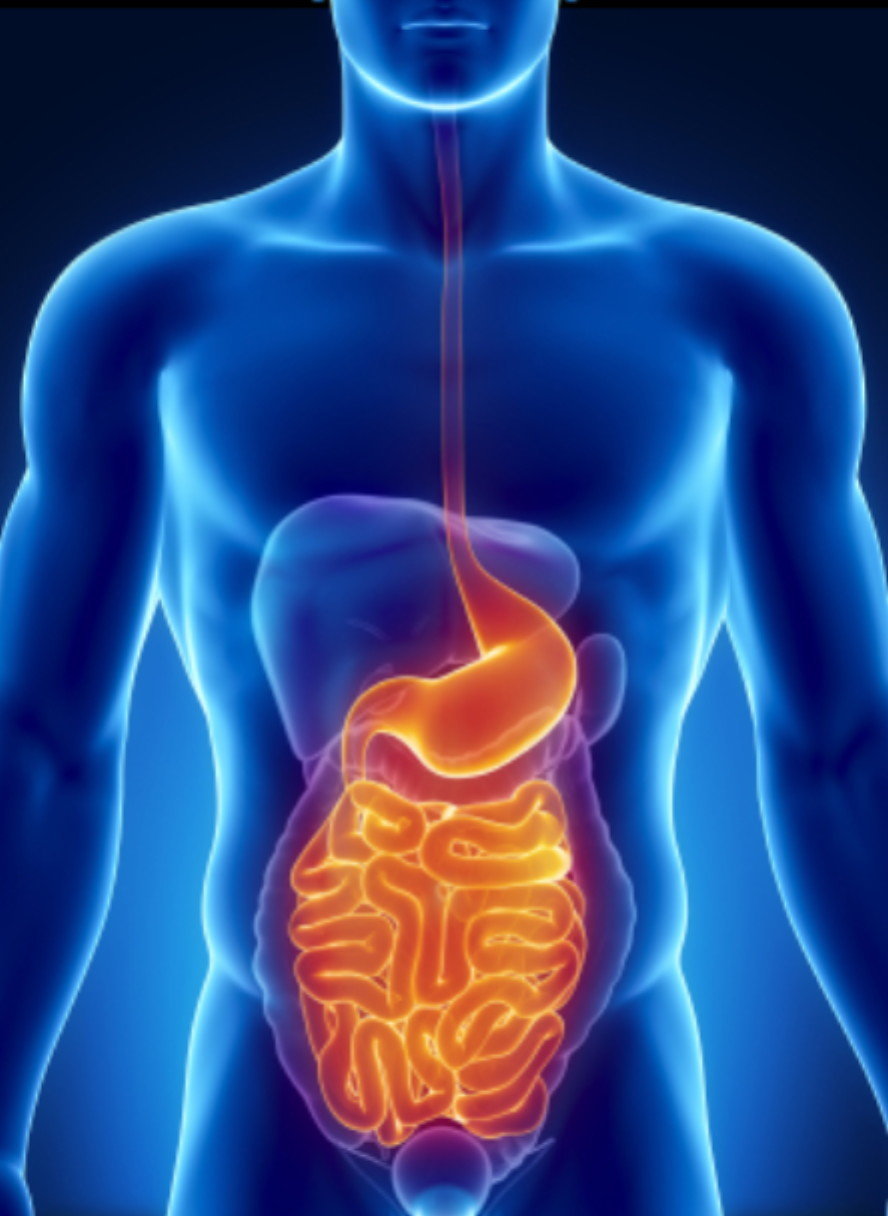
Digestion is a complex process with many moving parts and there are many steps along the way for something to go wrong. One of the more increasingly common disorders is a condition known as "leaky gut." Leaky gut, otherwise known as intestinal hyper-permeability, is when perforations develop and allow undigested food and toxins to pass back into the body. Sound like a problem? It is. Leaky gut can be the starting point for anything from food intolerances to inflammatory bowel disease. If leaky gut is a problem for you, you have options, and here are five to get you started.

Comment: Additional information about leaky gut:
Leaky gut and the connection to autoimmune disease

Leaky gut syndrome is almost always associated with autoimmune disease. In fact, reversing symptoms of autoimmune disease depends on healing the lining of the gastrointestinal tract. Any other treatment is just symptom suppression. An autoimmune disease is defined as one in which the immune system makes antibodies against its own tissues. Diseases in this category include lupus, alopecia areata, rheumatoid arthritis, polymyalgia rheumatica, multiple sclerosis, fibromyalgia, chronic fatigue syndrome, Sjogren's syndrome (dry eyes & dry mouth), vitiligo, thyroiditis, vasculitis, Crohn's disease, ulcerative colitis, urticaria (hives), type 1 diabetes and Raynaud's syndrome. Fortunately doctors are beginning to realize the essential role that the gut plays in these disease. Understanding the leaky gut phenomenon helps us see why allergies and autoimmune diseases develop and how to design therapies to restore intestinal integrity and reverse leaky gut.


Health

British health establishment rows over high fat, low carb recommendations

saturated fat
© BBC
Leading doctors and scientists said popular 'low fat' and 'proven to lower cholesterol' messages have had a disastrous impact on public health.

The National Obesity Forum said it was time to 'bring back the fat' with 'real food', like steak, eggs, butter and full-fat milk.

They were essential for maintaining health and preventing diseases which cost the NHS tens of billions of pounds to treat.

The bombshell report is the first to unite dozens of pieces of research that shatter the myth that 'low fat' is good. The report's authors also called for an urgent overhaul of dietary advice.

Comment: See also:


Dollars

Another study finds link between big pharma money & brand-name prescribing

Big pharma Money
© amenic181/shutterstock
The findings, by researchers at Harvard Medical School, are in line with a similar analysis done by ProPublica in March.

A group of researchers at Harvard Medical School has found that medical industry payments to physicians in Massachusetts are associated with higher rates of prescribing brand-name drugs that treat high cholesterol.

The study's finding, published today in JAMA Internal Medicine, is in line with a ProPublica analysis and story from March, which showed that physicians who receive industry money tend to prescribe higher rates of brand-name drugs 2014 and thus, lower rates of similarly effective, more affordable generic drugs 2014 when compared to peers.


Comment: Additional articles about how Big Pharma rips off Americans:


Cow

Flashback Cowed: New science shows milk is bad for you

Image
© Guyco
Do Americans need so much milk? In 1951, Harvard University nutritionist Mark Hegsted wanted to find out. He had heard all about milk's virtues while growing up on a small Idaho dairy farm, but as he began studying nutrition, he noticed that plenty of people from countries with little dairy were thriving into old age. There was, however, a practical complication that prevented him from experimenting on the general population to understand this paradox: After a person cuts back on calcium, it can take months or years for the change to show up in the body.

So Hegsted went looking for a chronically calcium-deprived population. He found one at the Central Penitentiary of Lima, Peru. Inmates locked up in the grim, 80-year-old stone prison subsisted on a rice-and-beans diet that was extremely low in calcium. They typically drank milk once a week.

Comment: Dairy is not essential, read more about Why Milk Is So Evil: