Health & WellnessS


Magic Wand

Balance your hormones naturally

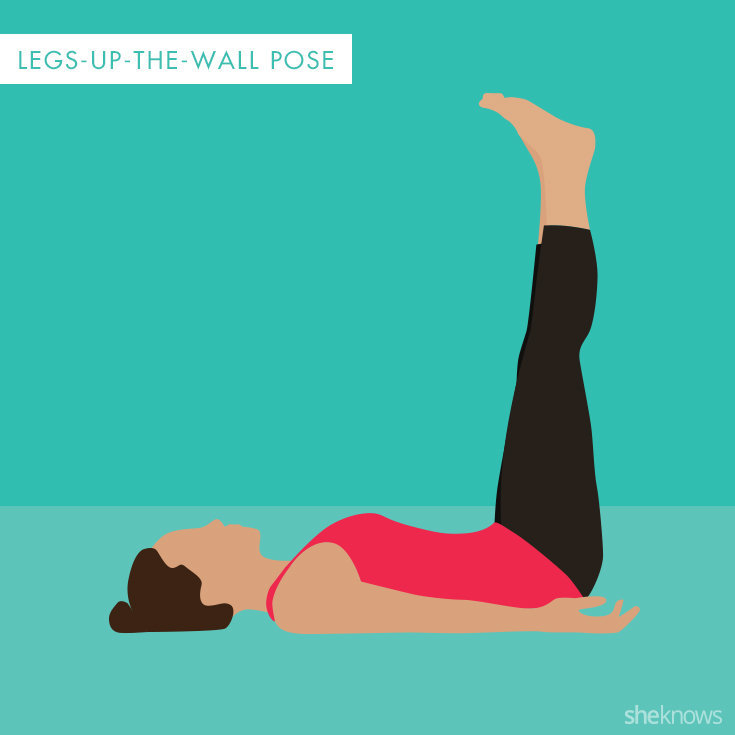
legs up the wall
© sheknows.com
Between my one-on-one clients and my Skype sessions, there is one question that comes up in my office over and over and over again. Even after going through the diet and the supplements, everyone wants to know: "What can I do right now (to help my hormones)?"

Over the course of years (by years, I mean the 13 that I've been in practice—eeeeks where has the time gone?), I've come up with one simple habit that can make all the difference in your hormones.

A Bit of Background Before We Start

When the "h-word" comes up, it's really tempting to put all the attention on the thyroid gland. Some may say the thyroid's a movie star of sorts when it comes to the endocrine system for two reasons:
  1. It's easy to test. By test, I mean that blood tests are routinely used to check thyroid status, even if they're not foolproof.
  2. It's easy to treat. There are meds that are easily prescribed to deal with thyroid concerns even though the meds might not be the answer for you. Even with this sort of "star power," you need to understand that your thyroid is not your endocrine system.
Ahem....did you get that? Your thyroid is NOT your endocrine system.

House

Is home birth actually safer than hospital birth?

home birth
© homebirthaustralia.org
During a February thunderstorm, with her toddler sleeping peacefully down the hall, Jennifer Lang gave birth to her second child. Nico was born just 90 minutes after the first contraction, in the bathtub of Lang's home in Benedict Canyon.

"It's a very convenient place to have a baby," Lang points out, adding that the labor went so quickly that her midwives arrived only about a half an hour before the birth. "Empty the tub and it's all cleaned up."

Nico was born six years ago. In 2014, the most recent year for which we have statistics, over 59,000 Americans chose to have their babies outside the hospital. Of those, 38,094 births occurred at home, the highest number since 1989. Though still only a fraction of the nearly four million births that occur in America each year, out of hospital birth is on the rise.

Health

Naturally occurring clays may provide an answer to rising threat of antibiotic-resistant bacteria

clay
© ASUResearchers unearth a natural clay deposit with antibacterial activity.
The ancient remedy could provide a new weapon against microbes.

Naturally occurring clay from British Columbia may provide an answer to the rising threat of antibiotic-resistant bacteria.

In a recent article in the American Society for Microbiology's mBio journal, University of British Columbia microbiologist Julian Davies and colleague Shekooh Behroozian say that the clay from Kisameet Bay — long used by the Heiltsuk First Nation for healing — showed the ability to kill multi-drug resistant pathogens.

"After 50 years of over-using and misusing antibiotics, ancient medicinals and other natural mineral-based agents may provide new weapons in the battle against multidrug-resistant pathogens," Davies said in a press release.

The clay deposit is situated on Heiltsuk First Nation's traditional territory, about 250 miles north of Vancouver, in a shallow five-acre granite basin. The deposit was formed near the end of the last Ice Age, approximately 10,000 years ago. Native people have used the clay in treating ailments ranging from burns to arthritis.

The scientists suspended the clay in water, where it killed 16 different types of bacteria obtained from Vancouver General Hospital, St. Paul's Hospital, and the University of British Columbia's wastewater treatment pilot plant.

Comment:


Che Guevara

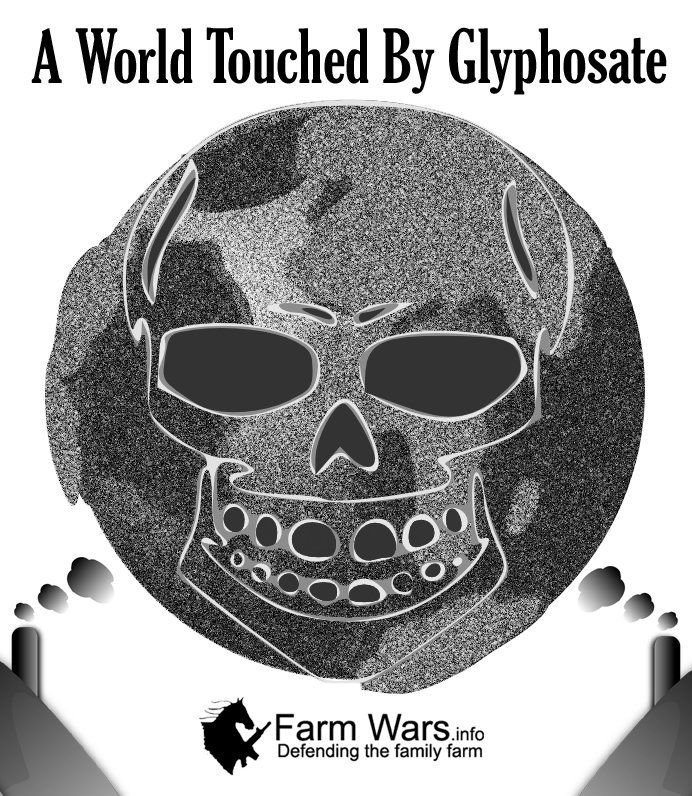
The growing Glyphosate 'revolution' - consumers want answers

Farm Wars
© Farm Wars
They're calling it a glyphosate "revolution." Consumers around the world are waking up to the fact that they're living in a world awash in the weed-killing pesticide known as glyphosate. And they don't like it one bit.

Over the last several years, some scientists have been warning that the long-touted environmental and health safety promises associated with glyphosate, the chief ingredient in Monsanto's branded Roundup, may not be as iron-clad as asserted. Last year's finding by the World Health Organization's cancer research experts that glyphosate "probably" is a human carcinogen sparked a firestorm that only grows more heated by the day. Consumers in the United States, Europe and elsewhere are now demanding that regulators step up and restrict or ban glyphosate herbicides - the most widely used in the world - to protect both human health and the environment.

Glyphosate's current license for use in the EU expires in June, and the European Union recently delayed making a decision on extending the registration due to the controversy.

Comment: Monsanto KNOWs the health risks of glyphosate:

Over the years a large body of independent research has accumulated and now collectively provides a sound scientific rationale to confirm that glyphosate is far more toxic and poses more serious health risks to animals and humans than Monsanto and the US government admit...

As we recently discovered, enormous amounts of research, analysis and hundreds of trials were conducted to learn as much as possible about the compound's bioactivity in mammals and its potential health risks. All of this research data, studies and reports were subsequently sealed as trade secrets upon submission to the EPA. For over thirty years it has sat in the EPA vaults.


Bullseye

Corporate fear mongering: How big food & big pharma have driven 'thinning bone fears' to sell products


If you're worried about thinning bones, or bone fractures, you probably have Big Food and Big Pharma to thank for keeping you up at night.

For decades, these two industries have used scare tactics to convince the general population that they're bones are at risk—and that they, and they alone, have the answers to your thinning bone problems.

But the healthy bone "solutions" peddled by Big Food and Big Pharma have in most cases proven healthier for corporate profits, than for consumers' bones. And some of those "solutions" have actually contributed to thinning bones.

Comment: Another good article by Martha Rosenberg about drugs whose dangerous risks emerged only after Big Pharma made its money
Have you ever noticed how warnings about dangerous prescription drugs always seem to surface after the drug is no longer marketed and its patent has run out? Whether it's an FDA advisory or a trial lawyer solicitation about harm that may have been done to you, the warnings are always belated and useless. If a drug you took four years ago may have given you liver damage, why didn't the FDA tell you then? Why didn't the FDA recall the drug or better yet, not approve it in the first place?

The official answer from the FDA and Big Pharma is that problems with a drug are only seen after millions begin using it, which is why post-marketing surveillance is conducted. In other words - who knew? But in a startling number of cases revealed in court documents Pharma did "know" and clearly misled medical journals, the FDA, doctors and patients, hoping to get its patent's worth before the true risks of a drug surfaced.
In other cases, Pharma and the FDA should have known before rushing a dangerous drug to market and making money at the expense of patients.

It is the business model for new drugs that provokes Big Pharma to bury risks and exaggerate benefits. A new drug under patent has a high price and no competition, and will make millions or even billions every year it is under patent. A settlement for death or injuries down the road is a nuisance and just the cost of doing business. Needless to say, the "forgiveness is cheaper than permission" business plan breeds shameless repeat offenders since the company makes money and no officers go to jail.


Info

Many doctors give vaccines out of fear

doctors vaccination
“Even if they are not fans of vaccines, many doctors give vaccines out of fear. They do not want to question authority or challenge professional organizations and licensing bodies…” — Janet Levatin, MD
I feel sorry for many doctors. I really do. It must be a terrible thing to live and work in fear. Now, don't get me wrong, I'm not talking about the fear of making a mistake and harming your patient, as in the following observation by Danielle Ofri, MD:
Every doctor can tell you of times when she or he was terrified; most can list more episodes than you might wish to hear. This fear of making a mistake and causing harm never goes away, even with decades of experience. ... It may be sublimated at times, it may wax and wane, but the fear of harming your patients never departs; it is inextricably linked to the practice of medicine.1
I can understand that version of fear. That's a good, normal kind of fear, because it demonstrates that you're concerned about the welfare of your patients and want to make sure you do everything right for them. It's a noble fear that guides you to be ever careful and thoughtful.

Comment: Why do most medical doctors blindly recommend vaccinations?
Multiple reasons explain why the vast majority of medically trained physicians support vaccinations. Physicians receive the majority of their training during medical school, which is heavily influenced by pharmaceutical companies and government institutions such as the Centers for Disease Control and Prevention (CDC).

Both pharmaceutical companies and government organizations support a misguided agenda in which vaccinations are promoted as a primary tool to prevent disease. Practitioners are rewarded for high vaccination rates. Doctors are pressured to vaccinate or face negative professional and financial consequences. Medical doctors belong to professional medical organizations which recommend vaccines.

To summarize, physicians exist in a world where vaccinations are considered the primary weapon for disease prevention. The majority come to believe in vaccine safety and effectiveness. It takes great courage, curiosity and independence for physicians to think outside of the box and do their own research on vaccines. For those who dare to think outside of the box, they can face negative professional and financial consequences.


Clock

Are humans wired to sleep twice a day? The two-phase sleep cycle

sleep
Until recently, most of us just assumed that sleep is a nocturnal activity that naturally occurs in one long block. Today, largely thanks to historian and researcher Roger Ekrich, this long held assumption is being revisited. Ekirch published a study that examined hundreds of diaries, court records, and instructional manuals which demonstrated that, prior to the industrial revolution, most humans slept in two shorter blocks rather than one single large one. Based on his research, which found countless references to 'first' and 'second' sleeps, it appears that historically most people went to bed after dinner when the sun went down, slept for approximately 3-4 hours, then woke up for a couple of hours in the middle of the night, and then finally returned to sleep until dawn.

Two factors are believed to have influenced the shift from a multiple to a singular sleep session. The first is electric lighting, the second was the industrial revolution.

The advent of electric lights make it possible to extend the day. Thanks to electric lights, people could host and attend events in the evening and this saw the inclination to retire with the sun become less of a necessity.

Another factor which likely contributed to the shift was the daily structure introduced by the industrial revolution. Before the Industrial revolution more people were self-employed mainly in the farming and craft sectors, and while working hard was a necessity for most, there was a level of flexibility and autonomy that saw peoples' days organized in accordance with what needed to be achieved. In contrast the Industrial Revolution saw a massive surge in people earning their living by working away from the home in manufacturing related jobs that required long, rigid working hours. For most people it became impossible to indulge in a nap when necessary, and so 'a good night's sleep' became increasingly desirable.

Comment: For more information about how modern life effects our sleep and harms our health listen to The Health & Wellness Show: Sleep, Light and Circadian Rhythms


Syringe

Government's position on vaccine safety betrayed by Vaccine Court Stats on injuries and deaths

Vaccine Injuries and death
© www.hrsa.gov
Every day, people in the United States are being injured and killed by vaccines. This is a fact that is not in dispute, as the Department of Justice's quarterly report on vaccine injuries and deaths clearly demonstrates. And yet, the government's official public statement about vaccines is that they are safe and effective, and should be mandated for all people. Any opinion or presentation of facts to contradict their position is vigorously suppressed and censored all in the name of "public health" for the "greater good."

The American public is largely unaware that there is a vaccine court known as the National Vaccine Injury Compensation Program (NVICP). This program was started as a result of a law passed in 1986 that gave pharmaceutical companies total legal immunity from being sued due to injuries and deaths resulting from vaccines. If you or a family member is injured or dies from vaccines, you must now sue the Federal Government in this special vaccine court. Many cases are litigated for years before a settlement is reached.

Comment: The current vaccine reality: Disinformed consent
We are living in the age of disinformed consent. Parents assume their doctors and their public health authorities are providing them with all relevant vaccine information, and nothing could be further from the truth.

Obviously, if vaccines can kill and cause serious and debilitating lifelong damage - which they can, and do - the vaccine administrator must provide that information to the client, in unambiguous fashion, regardless of the estimated size of the risk. It's an ethical mandate that must be fulfilled, but it never is. There is a fundamental reason: medical schools don't teach the history and nature of vaccine damage and death; nor do nursing and pharmacy schools. Yet doctors, nurses, and, these days, pharmacists, are the very ones who administer vaccines, and upon whom we rely for full information. Somewhere there is made a conscious decision to exclude the reality of serious vaccine damage from the curricula.

Most of the many doctors who have witnessed vaccine damage - thankfully, not all - lack the professional integrity to follow up with curiosity, let alone research. This is the most troubling of the array of vaccine contradictions; trained to observe, they nevertheless appear blind to even the possibility of causal relation.


Health

Common garden plant marigold is a healing agent with a wide variety of health benefits

marigold, calendula
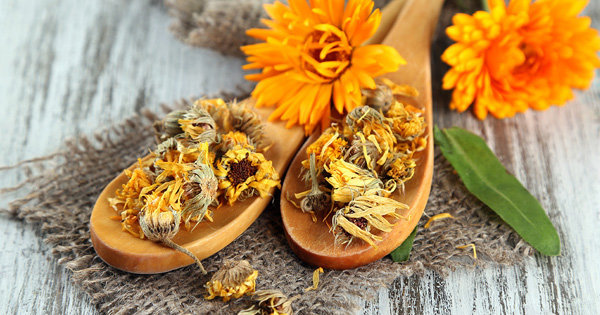
In addition to being a beautiful living decoration, the common garden plant marigold is also a powerful healing agent that boasts a wide variety of health benefits.

That marigold on your windowsill can go in your salad, become a soup, soothe your sore throat or treat your eczema. Although a common garden plant, marigold (Calendula officinalis) has a long history as food and medicine. The Egyptians employed calendula as a rejuvenating herb, while the ancient Greeks utilized the golden petals to garnish and flavor food.

Long used in Europe as a culinary plant, the beautiful orange flower petals are a vibrant addition to a salad and are added to cheese and butter for color. Calendula is a delicious, velvet textured base for broth, soup or rice dishes. Children particularly like the taste, and it's well suited to their health needs. You can even have a sip of calendula wine.

Although not a strong herbal medicine, calendula is a multipurpose standout. It's anti-inflammatory, antispasmodic, antiviral, anti-fungal and anti-bacterial. It heals wounds, increases bile flow, and cleanses the lymph system. In Europe, calendula was known to comfort the heart, soothe agitation, strengthen eyesight and draw evil spirits. Calendula has a long history of use for headaches, jaundice, red eyes, and toothaches.

The most popular medicine use for calendula is in treating irritated membrane conditions. During the Civil War, doctors used calendula leaves were by to treat open wounds on the battlefield. Calendula flower is among the most soothing of herbs for salves. For soothing children's skin, herbalist Aviva Romm, author of Natural Healing for Babies and Children, uses it along with chickweed leaf, plantain leaf, comfrey leaf, and chamomile flower. One study of calendula for wounds showed that it noticeably stimulates physiological regeneration and skin healing.[i]

Comment: For more information on the benefits and applications of medicinal herbs see: The Health & Wellness Show: Medicinal Herbs


Health

12 natural antibiotics our ancestors used to survive infection

Oreganoöl,natürliche antibiotika
Oil of Oregano
As readers of Natural News are well aware, the medical industry, in collusion with Big Pharma, has been over-prescribing antibiotics for years, resulting in new strains of superbugs that are difficult to kill. In point of fact, it's not at all improper to suggest that at some point in the future, our overuse of antibiotics may result in bacteria evolving to the point where nothing on earth can kill it.

Long before today's antibiotics were developed in labs, however, there were foods and herbs that helped us guard against infection and disease on a daily basis. Indeed, many of these natural anti-bacterial defenders are still around today, and are in use by holistic healers around the world.

Our ancestors had solutions for healing, utilizing antibiotics from nature which are still as valid now as they were then.

Comment: More on natural antibiotics: