Health & WellnessS


Attention

Glyphosate disrupts uterine development in rats

rats
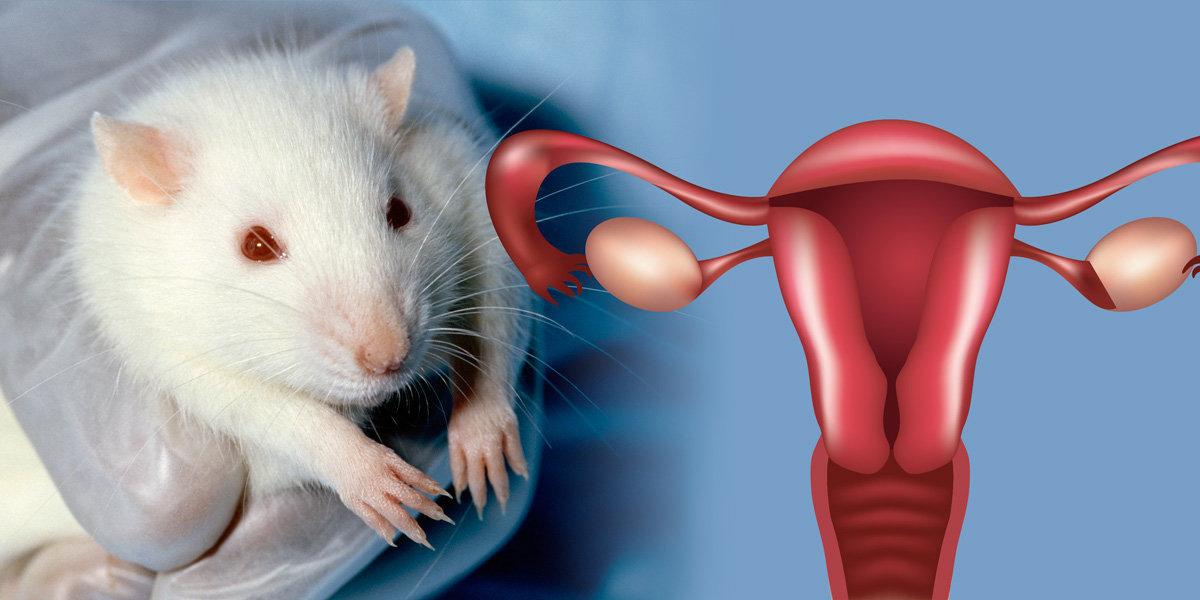
Glyphosate herbicide disrupts the development of the uterus of female rats when they are exposed for 7 days after birth, a new study (abstract below) by Argentine researchers shows.

The glyphosate herbicide caused cell proliferation and structural changes in the rats' uterus. This was in spite of the fact that no signs of chronic or acute toxicity or differences in weight gain were seen in treated pups.

Glyphosate herbicide also disrupted the expression of proteins involved in uterine development.

Comment: Additional information about the negative health impacts of Glyphosate:
Dr. Huber detailed the negative impacts of glyphosate and GM crops on plants, soils, and the environment and animal and human health. He called glyphosate the "most abused chemical in the history of agriculture" and described GM crops as a "failed system."

Huber said glyphosate and GM crops are likely harming human health. He cited significant increases in inflammatory bowel syndrome, Crohn's disease, and certain types of cancers. Other diseases such as food allergies, autism, endometriosis, Alzheimer's, and Parkinson's may also be linked to glyphosate and GM crops, he said.

In conclusion Huber said that our basic responsibility in agriculture is providing safe and nutritious food. Instead, with current GMO-based agricultural practices,
"we are willing to sacrifice our children and jeopardize future generations based on failed promises and flawed science just to benefit the 'bottom line' of a commercial enterprise."


Syringe

Vaccines: Mapping out a handy exemption law guide and your rights

Vaccines
This is a great graphic from my friends at NVIC. I'm honored to know Barbara Loe Fischer and her husband for several years now. My uncle/Godfather, a lawyer and pioneer in the vaccine awareness movement worked with her back in the 80s. My better half (holistic doc) works with her now. How fortunate we are to have NVIC (National Vaccine Information Center).

Comment: See also: Forced to release incriminating documents: CDC concealed link between Thimerosal & Autism for over a decade


Music

Chronic Fatigue Syndrome - treated with herbs & music

herbs & music

Millions suffer from chronic fatigue syndrome and conventional medicine has had little success treating the condition. New research confirms that traditional herbal therapy with music therapy significantly reduces fatigue and other symptoms of CFS.


According to the Centers of Disease Control, at least one million Americans have chronic fatigue syndrome (CFS). But since this disorder is often not diagnosed, we know the actual number is significantly higher.

The typical diagnostic criteria for chronic fatigue syndrome is six months or more of chronic fatigue. But many CFS patients also report a number of other symptoms, which include muscle pain, fevers, sore throats, headaches, sleep problems and others.

Comment: Helpful information for understanding the deeper elements of the mind-body-spirit connection when it comes to fatigue: Mutiny of the soul: Another way of looking at fatigue & depression


Attention

Newly discovered species of bacteria linked to gum disease, cystic fibrosis and antimicrobial resistance

Bdellovibrio bacteria
Parasitic bacteria that are entirely dependent on the other bacteria they infect have been discovered for the first time, in human spit. The tiny cells have gone undetected for decades, but appear to be linked to gum disease, cystic fibrosis and antimicrobial resistance.

We only know of one other strain of bacteria that can infect other bacteria, but this type, called Bdellovibrio, is a free-living cell that hunts down its prey. The newly discovered organism has very few genes and is dependent entirely on its host.

The parasite, which appears to make its host more harmful to humans, evaded our detection until now because it is difficult to grow and study in the laboratory.

"They're ultra-small bacteria, and live on the surface of other bacteria," Jeff McLean of the University of Washington School of Dentistry in Seattle told the annual meeting of the American Society for Microbiology in Boston, Massachusetts, last week.

Unlike any known species

McLean and his colleagues discovered the organisms by searching for bacterial strains in human saliva samples. Analysing the DNA of all the species they managed to grow from these samples, they came across a mystery fragment of genetic material. This piece of RNA had been discovered by other researchers before, but no one could tell what organism it came from.

Health

How acetaminophen may play a role in the autism epidemic

acetaminophen toxicity
In 2005, I was told to consider "out-of-home placement" for my son David. He was four years old and had been diagnosed with "worst-case-scenario for autism" by specialists. He was violent, self-injurious and had a tendency to wander.

The recommendation for out-of-home placement inspired me to schedule a Pharmacology Clinic where a team of child experts would meet with me to discuss behavior meds. In preparation for the Pharmacology Clinic, I was asked to put my son's medical file in chronological order.

In doing so, I noticed a distinct regression after his MMR vaccine. The regression included a loss of language, eye contact and marked the onset of violent behavior. His pediatrician eventually conceded and admitted that vaccines had in fact triggered David's autism.

Acetaminophen and Vaccination

My desire to understand why my son regressed into autism following the MMR vaccine has led me to read more books, journals and articles than I can recall. I've read so much, in fact, it all seems to be blurred together with the exception of one critically important piece of information: the country of Cuba is 99 percent vaccinated and has almost 300 percent less autism than the U.S. Why is this?

The answer is actually quite simple. Cuban children receive fewer vaccines than American children. Cuba manufactures many of the vaccines their children receive and they have higher safety standards than the U.S. They have limited exposure to genetically modified foods (GMOs) and do not allow the sale of acetaminophen over the counter. [1]

Comment: Acetaminophen is certainly NOT a harmless painkiller:


Ambulance

Sweet poison: How fructose is fueling the soaring rates of metabolic dysfunction and obesity

HFCS, fructose, corn syrup
Dr. Robert Lustig's 2009 video "Sugar: The Bitter Truth," has now garnered nearly 6.5 million views on YouTube. The featured video is a follow-up on that original lecture.

In it, he discusses the metabolic influence of sugar and processed foods on obesity and related diseases. He also reviews the importance of diet versus exercise when weight loss is your goal.

Delving into the science behind different types of sugar, Lustig explains the metabolic differences between glucose and fructose, which is at the very heart of the obesity and diabetes problems.

What Do Rising Obesity and Diabetes Rates Suggest?

According to Lustig, 6 million American children were overweight or obese in 2001. Today that number exceeds 23 million.1 This is despite all the anti-obesity campaigns and measures launched since then.

Clearly, nutritional and weight loss recommendations provided to the public over the past 15 years are deeply and fundamentally flawed.

Worldwide, obese people now outnumber the starving by 30 percent. Fifteen years ago, this statistic was the reverse. Today, 5 percent of the global population is also diabetic. According to Lustig, these kinds of statistics suggest that obesity and diabetes are not due to behavior, but rather exposure.

Comment: Fructose is also damaging to the brain, impairs heart function and can shorten your lifespan:


Pills

FDA finally admits the dangers of fluoroquinolone antibiotics

antibiotics
Antibiotics are life savers. But like all drugs, they have side effects, and some may be dangerous and deadly. This is especially true with a class of drugs called fluoroquinolones that include Levaquin, Cipro, and Avelox.

Over 33 million Americans take one or more of these antibiotics each year, and in 2010, Levaquin was the bestselling antibiotic in the country. There's a good chance that you or a family member has taken one of these potentially harmful drugs within the last year.

Serious questions have been raised about the safety of these medications, most notably Levaquin, since their marketing in 1996. Until recently, the FDA did little to warn doctors and consumers of the possible deadly side-effects. By 2010, Levaquin was involved in over 3,400 lawsuits and possibly 5,000 deaths.

Comment: Once again, the FDA is late to the party. The dangers of fluorquinolones are well known.


Alarm Clock

Sitting too much can damage your blood vessels

too much sittting
We work to live and we live to work in today's modern day society. But the once praised and highly sought-after nine-to-five career has come under increasing scrutiny in recent years as research hones in on the significant risks of excessive sitting for adults.

For adults, it is known that sitting for hours causes constricted arteries in your legs, which then impedes blood flow, raises blood pressure, and contributes to the development of heart disease.

Can this also be true for children, who spend the majority of their day sitting at a classroom desk? One study has found that activity levels are thought to decline significantly after 8 years of age, specifically among girls.

Comment: Additional information about the negative effects of sitting too long:


Health

The myth of breastfeeding and saggy breasts

breastfeeding
Your angel suckling your breasts for months on end can result in issues like sore nipples, but saggy breasts is not one of them. Pregnancy seems to be the real culprit. Post pregnancy, enlarged mammary glands shrink, leaving you with an aftermath of saggy breasts and stretch marks. The number of pregnancies and age affect the amount of sagging. Exercise, avoid smoking, and wear supportive bras.

The challenges of being on call for a hungry tummy makes breastfeeding an annoyance sometimes, but for most mothers it still counts as a happy experience. Then, after months of having a baby suckle at the breast, the worry of sagging breasts seems to become a reality. But is age, weight, diet, exercise, or genetics ‒ rather than breastfeeding ‒ the actual cause of your breasts bowing to gravity?

Top Secret

Forced to release incriminating documents: CDC concealed link between Thimerosal & Autism for over a decade

vaccines
A long-held debate between pro- and anti-vaccination groups may finally be put to rest over the association between thimerosal — a preservative composed of 49.5% ethyl mercury used in numerous child and flu vaccines — and neurological disorders, particularly autism.

For nearly a decade, biochemist Brian Hooker, Ph.d., has been petitioning documents from the Centers for Disease Control and Prevention (CDC) under the Freedom of Information Act (FOIA) in relation to the controversial preservative. After more than 100 requests, the documents were eventually released — and clearly showed thimerosal can in fact cause autism and other neurodevelopment disorders. But this isn't the only study that demonstrates the brain and health harming nature of the compound.

Comment: Vaccine industry watchdog obtains CDC documents that show statistically significant risks of Autism associated with Thimerosal