Health & WellnessS


Info

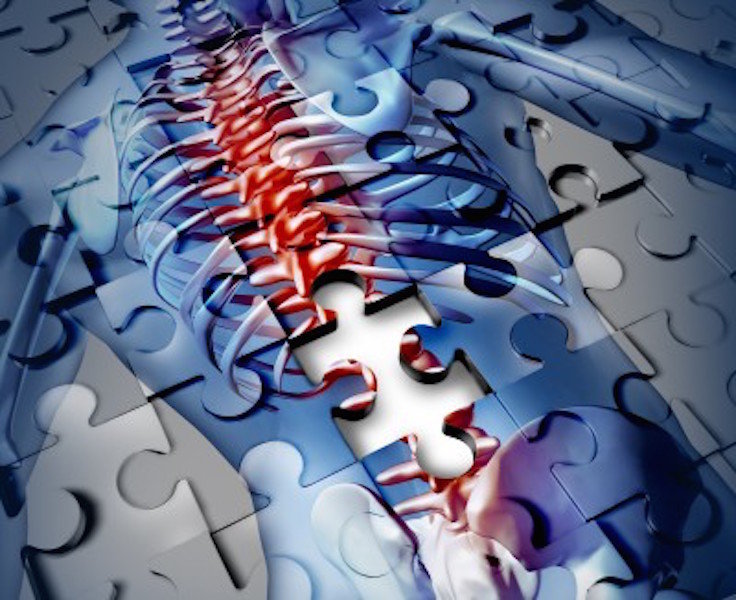
Osteoporosis is scurvy of the bone - not calcium deficiency

bones
"A joyful heart is good medicine, but a broken spirit dries up the bones."~ Proverbs 17:22

It saddens me to see older women diagnosed with "osteopenia" or "osteoporosis" listening to their doctors and taking supplemental calcium and even problematic drugs called bisphosphonates. These are irrational, dogmatic, harmful approaches to the problem of degrading bone as we age. In my time practicing nephrology and internal medicine, I saw numerous patients suffering from vascular disease while taking the recommended doses of calcium. X-rays revealed perfect outlines of calcified blood vessels and calcified heart valves.

Microscope 2

The looming medical apocalypse: Could ancient remedies hold the answer to the antibiotics crisis?

plant medicine
© Damon Casarez for The New York TimesBrazilian pepper tree, which is being studied for antibiotic potential.
One researcher thinks the drugs of the future might come from the past: botanical treatments long overlooked by Western medicine.

On a warm, clear evening in March, with the sun still hanging above the horizon, Cassandra Quave climbed aboard a jalapeño-green 4-by-4 and started to drive across her father's ranch in Arcadia, Fla. Surveying the landscape, most people would have seen a homogenous mat of pasture and weeds punctuated by the occasional tree. Quave saw something quite different: a vast botanical tapestry, rich as a Persian rug. On a wire fence, a Smilax vine dangled menacingly pointed leaves, like a necklace of shark's teeth. Beneath it, tiny wild daisies and mint ornamented the grass with pink tassels and purple cornets. Up above, on the sloping branches of oak trees, whiskery bromeliads, Spanish moss and the gray fronds of resurrection fern tangled in a miniature jungle all their own.

Each of these species intrigued Quave enough to merit a pause, a verbal greeting, a photo. An ethnobotanist based at Emory University in Atlanta, Quave, 38, has an unabashed fondness for all citizens of the kingdom plantae. But on this evening, her attention lingered on certain species more than others: those with the power to heal, with the potential to help prevent a looming medical apocalypse.

Health

Mosquito-borne Mayaro virus detected in Haiti for the first time

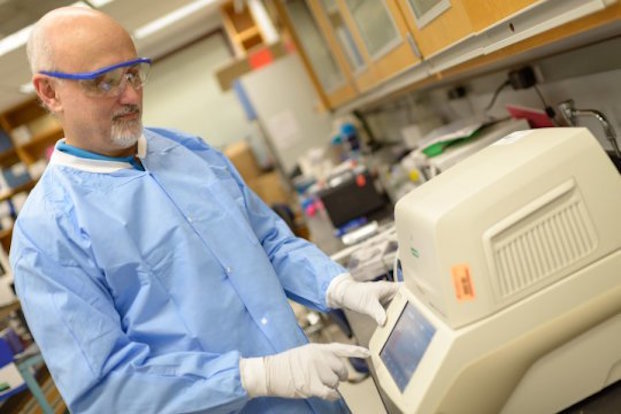
John Lednicky, Ph.D.
© UF HealthJohn Lednicky, Ph.D.
University of Florida researchers have identified a patient in Haiti with a serious mosquito-borne illness that has never before been reported in the Caribbean nation.

Known as "Mayaro virus," it is closely related to chikungunya virus and was first isolated in Trinidad in 1954. Most reported cases, however, have been confined to small outbreaks in the Amazon. Whether this case signals the start of a new outbreak in the Caribbean region is currently unknown.

"While current attention has been focused on the Zika virus, the finding of yet another mosquito-borne virus which may be starting to circulate in the Caribbean is of concern," said Glenn Morris, M.D., M.P.H., director of the UF Emerging Pathogens Institute. "Hopefully we will not see the same massive epidemics that we saw with chikungunya, dengue and now Zika. However, these findings underscore the fact that there are additional viruses 'waiting in the wings' that may pose threats in the future, and for which we need to be watching."

Question

Where are the epidemics, if only half of America is properly vaccinated?

herd immunity
© The Vaccine ReactionWhile herd immunity may not exist, herd mentality most definitely does. Health authorities, media commentators, and schools and their parent–teacher associations waste no opportunity in perpetuating this myth.
In 2014, an outbreak of whooping cough (pertussis) broke out in the San Diego area. Of the 621 individuals who were infected, nearly all of them were completely up to date on all preventive vaccinations. If vaccines are given to protect from disease, how could this happen?

San Diego public health official Dr. Wilma Wooten argued that the cause was related to a decrease in the protection offered by vaccines after the first year. This answer is most revealing, in that it speaks to the actual efficacy of vaccines. It also shows that the concept of herd immunity is largely myth—and completely misunderstood.

The theory of herd immunity states that when a critical mass of the population (usually stipulated at 95%) is vaccinated against a disease, the possibility of outbreaks is eliminated. This is the main argument that is used to shame parents who wish to refuse certain vaccinations for their children: by not vaccinating, they put the health of the "herd" at risk.

However, if vaccines start losing effectiveness after the first year, as Dr. Wooten says, then constant revaccination would be required, since the immunity offered is only temporary for most vaccines. Achieving the required rate of protection is virtually impossible under this paradigm.

Comment: Who's really putting put the health of the "herd" at risk?


Life Preserver

Facts about depression that will blow you away

Adapted from A Mind of Your Own by Kelly Brogan, MD
depression,burnout,stress
A silent tragedy in the history of modern health care is happening right now in America, but no one is talking about it. We have been told a story of depression: that it is caused by a chemical imbalance and cured by a chemical fix—a prescription. More than 30 million of us take antidepressants, including one in seven women (one in four women of reproductive age). Millions more are tempted to try them to end chronic, unyielding distress, irritability, and emotional "offness"—trapped by an exhausting inner agitation they can't shake.

It is time, even according to leaders in the field, to let go of this false narrative and take a fresh look at where science is leading us. The human body interacts in its environment with deep intelligence. Your body creates symptoms for a reason. Depression is a meaningful symptom of a mismatch, biologically, with lifestyle—we eat a poor diet, harbor too much stress, lack sufficient physical movement, deprive ourselves of natural sunlight, expose ourselves to environmental toxicants, and take too many drugs. Inflammation is the language that the body speaks, expressing imbalance, inviting change. We usually suppress these symptoms with medication but that is like turning off the smoke alarm when you have a fire going on.
Let's get the facts straight:

Comment: For more information on how to approach depression as an opportunity, check out Mass nervous breakdown: Millions of Americans on the brink as stress pandemic ravages society


Info

Get your kids good and dirty - many microbes are beneficial

feet dirty
© GETTY ImagesBy preventing babies and children from following their innate impulse to get dirty, we shield them from the microbial exposure that is essential for the development of a healthy immune system
Researchers are discovering how crucial microbes are to our health and to avoiding a range of newly common diseases. So it's time to get dirty, eat better and stop overusing antibiotics

Our friend Julia moved to a small free-range pig and poultry farm when her first child, Jedd, was a preschooler. When her second baby was born, she would strap him on her back every morning so that she could go to the chicken coop to pick up eggs. Jedd would chase and ride the chickens—and sometimes taste their feed and touch the fresh eggs. A couple of times, she even caught him chewing on something he had picked up from the ground.

At first, all of this caused Julia to freak out. But once she realized that Jedd wasn't getting sick from these encounters with the chickens, she relaxed a bit. Her second child, Jacob, soon followed suit and never hesitated to get dirty on the farm. She once found him knee-deep in a cesspool of pig waste. Her early worries that her children were going to contract diseases from all this messiness dissipated, and she was pleased to see that they remained healthy.

Was Julia being an irresponsible parent—or might we all have something to learn from her example?

For most of the past century, we have considered microbes bad news, and for good reason: They cause disease, pandemics and death. Most human communities have experienced the benefits of medical advances like antibiotics, vaccines and sterilization, which have radically reduced the number and severity of infections that we suffer throughout life. Dying from a microbial infection is now a very rare event in the Western world, and, in the U.S., lifespans have increased by some 30 years since 1915—in large part because of success against infectious diseases.

Comment: Probiotics, or the introduction of good bacteria into your body, provide a number of great health benefits:


Attention

American Psychiatric Association lobbies FDA: 'If drugs don't work on kids—let's electroshock them'

electro shock
“While the APA looks to seizure-inducing, brain-disabling, electricity as a form of ‘treatment,’ lobbying the FDA to make ECT available for children, no one in medicine, let alone psychiatry, has a clue how ECT machines ‘work’ or how passing large amounts of electricity into a child’s brain ‘treats’ the subjective mental disorder.”
The American Psychiatric Association (APA) is aggressively lobbying the Food and Drug Administration (FDA) to allow it broader use of Electroshock (ECT) on patients, including children.[1]While most Americans don't realize that electroshock is still used, the fact is more than 100,000 are subjected to electroshock in the U.S. alone—every year.[2] But that's not enough. Now the APA wants the "power" to electroshock children.[3] That's right. Children.

The APA states that "having access to a rapid and effective treatment such as ECT is especially meaningful in children and adolescents...."[4]

Let's take a look at how this "meaningful" and "effective" electroshocking of children plays out in real life. A child is laid out on a bed and put under anesthesia.[5] Then they are administered a muscle relaxant. The use of muscle relaxants prior to being electroshocked is due to the fact that the convulsions from electroshock are so violent, that patients commonly used to break bones due to the convulsions the electricity produced in the body.[6] So let's take a look at the muscle relaxant: The American Academy of Child and Adolescent Psychiatry states in their "Practice Parameters for Use of Electroconvulsive Therapy With Adolescents," that, "Muscle relaxation is achieved with succinylcholine."[7] According to the label for succinylcholine, the drug can cause cardiac arrest, severe, prolonged respiratory muscle paralysis, potentially life-threatening and/or fatal allergic reactions.[8] So the risk starts there. Also note the voltage given in today's ECT is higher than when patients were breaking bones so the muscle relaxant makes it appear less barbaric than earlier electroshock—but its not.[9] Next, electrodes are placed on one side of the head of a child or on both temples; the ECT machine is turned on, sending up to 460 volts and between 550 and 1,000 milliamps of electricity (depending on the machine) through the child's brain. This electricity shocks the brain producing a seizure that lasts about 60 seconds.[10]

Comment: 'Contrary to the APA's unsubstantiated belief that ECT use on children is somehow "meaningful," other words like abuse, torture, trauma, brain damage, and child abuse are more accurate terms'


Alarm Clock

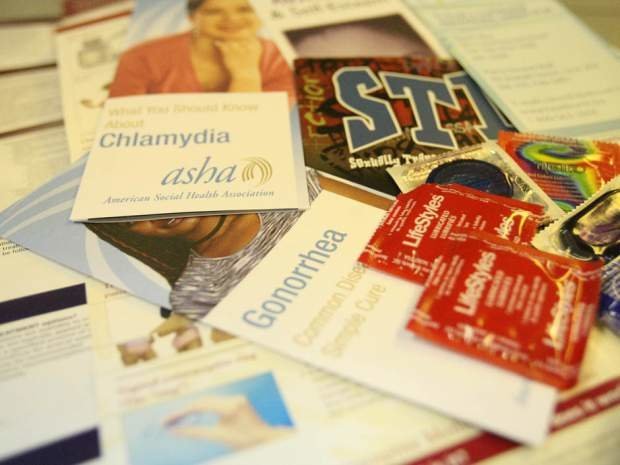
A 'very smart bug': Thanks to misuse of antibiotics, gonorrhea is becoming untreatable

STD's
© Post Media NetworkGuidelines for treating the infections had not been updated in more than a decade
For the tens of millions of people afflicted with gonorrhea infections each year, treatment is becoming much harder as doctors warn of rapidly increasing resistance to antibiotics.

On Tuesday, the United Nations sounded the alarm, updating the decade-old treatment guidelines for gonorrhea, chlamydia, and syphilis and asking doctors to be extra-careful when prescribing medications. The agency believes the 'misuse and overuse' of antibiotics is to blame for the resistance.

Medical officer Teodora Wi called gonorrhea a "very smart bug" that repeatedly adapts to new antibiotics.

Comment: The following article was carried by the Daily mail back in 2013: First cases of 'incurable' antibiotic resistant gonorrhea found in North America as CDC warns of public health nightmare?
The long feared nightmare of U.S. public health officials has come to pass with the news anti-biotic resistant Gonorrhea has been detected in North American patients. A study released today by the Journal of the American Medical Association announced it had found nine patients with a strain of the sexually transmitted disease immune to the last remaining effective oral antibiotic.

This confirms the fears of both the Centers for Disease Control and the World Health Organisation who warned last year that untreatable gonorrhea, the world's second most common STD would soon become a reality.' These are the clinical cases we've been waiting for,' said study leader Vanessa Allen of pUblic Health Ontario. 'This is the translation of the lab information into what the clinical consequence is.'


Magnify

Surprise! FDA finds Monsanto's weed killer in U.S. honey

honey
© YUJI SAKAI VIA GETTY IMAGES
The Food and Drug Administration, under public pressure to start testing samples of U.S. food for the presence of a pesticide that has been linked to cancer, has some early findings that are not so sweet.

In examining honey samples from various locations in the United States, the FDA has found fresh evidence that residues of the weed killer called glyphosate can be pervasive - found even in a food that is not produced with the use of glyphosate. All of the samples the FDA tested in a recent examination contained glyphosate residues, and some of the honey showed residue levels double the limit allowed in the European Union, according to documents obtained through a Freedom of Information Act request. There is no legal tolerance level for glyphosate in honey in the United States.

Glyphosate, which is the key ingredient in Monsanto Co.'s Roundup herbicide, is the most widely used weed killer in the world, and concerns about glyphosate residues in food spiked after the World Health Organization in 2015 said its cancer experts determined glyphosate is a probable human carcinogen. Other international scientists have raised concerns about how heavy use of glyphosate is impacting human health and the environment.

Comment: Glyphosate? It's in everything!


Heart - Black

Maternal mortality rate in Texas soars, now the highest in much of industrialized world

maternal mortality
© Shannon Stapleton / Reuters
The Lone Star state is the most dangerous place to give birth in the US. While the maternal mortality rate has been internationally decreasing, a study published in the journal Obstetrics and Gynecology found the rate in Texas had doubled in two years.

A study from Maryland-based researchers found that Texas not only has the highest maternal mortality rate in the US, but in much of the industrial world. With an estimated 35.8 deaths per 100,000 births in 2014, Texas' rate of mothers dying during or as a result of childbirth is comparable to Mexico (38 per 100,000), Uzbekistan (36 per 100,000) and Egypt (33 per 100,000), according to the World Bank.

In fact, this is the highest rate in Texas since 1976, when it was 20 per 100,000, according to the Texas State Department of Health.

Comment: Giving birth in the U.S. is more expensive than anywhere else in the world, mirroring the cost of U.S. healthcare in general, yet health outcomes are far worse than in any other developed nation proving that the U.S. is truly 'exceptional' in a myriad of abhorrent ways.