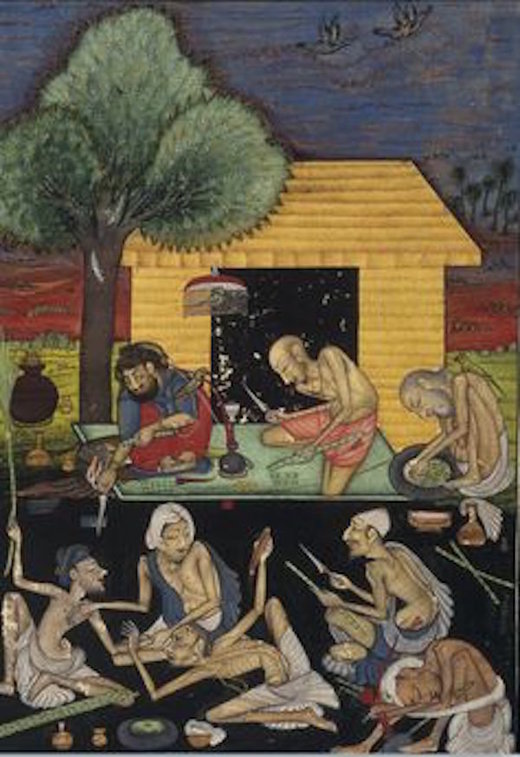
© Wellcome Library, LondonAscetics preparing and smoking opium outside a rural dwelling in India.
Abuse of
opium products obtained from poppy plants dates back
centuries, but today we are witnessing the first instance of widespread abuse of legal, prescribed drugs that, while structurally similar to illicit opioids such as heroin, are used for sound medical practices.
So how did we get here?
We can trace the roots of today's epidemic back to two well-intentioned changes in how we treat pain: early recognition and proactive treatment of pain and the introduction of OxyContin, the first extended release opioid painkiller.
Pain as the fifth vital signFifteen years ago, a
report by the Joint Commission on Accreditation of Healthcare Organizations, a nationally recognized medical society which accredits hospitals, stressed that pain was vastly under treated in the United States. The report recommended that physicians routinely assess pain at every patient visit. It also suggested that opioids could be effectively and more broadly used without fear of addiction. This latter assumption was entirely mistaken, as we now understand. The report was part of a trend in medicine through the 1980s and 1990s toward treating pain more proactively.
The report was heavily publicized, and today it is widely acknowledged that it led to massive - and sometimes inappropriate -
increases in the use of prescription opioid drugs to treat pain.
With more opioids being prescribed by well-meaning doctors, some
were diverted from the legal supply chain - through theft from medicine cabinets or trade on the black market - to the street for illicit use. As more opioids leaked out, more people started to experiment with them for recreational purposes.
This increase in supply certainly explains a large part of the current opioid abuse epidemic, but it doesn't explain all of it.



















Comment: Will the Ebola scaremongering campaign make a comeback?