Health & WellnessS


Magnify

The real cause of the Mumps outbreak

vaccines
A recent article in Scientific American upends the conventional wisdom about what caused the recent spike in mumps in the US. In 2016 there were about 4,000 cases across the US; in 2010, there were about 2,000.

If you followed the mainstream press and a number of opportunistic politicians, the answer was clear: unvaccinated kids were the cause. Parents who didn't vaccinate their kids according to the government's schedule were vilified and derided in the opinion columns of newspapers and magazines, and state politicians like Sen. Richard Pan of California used the hysteria to enact legislation (SB 277) that eliminated parents' right to decide whether and how to vaccinate their children.

Comment: More Vaccine failure: Vaccinated people are spreading the mumps:


Life Preserver

An interview with Bessel van der Kolk: How yoga helps treat PTSD

Bessel van der Kolk
Dr. Bessel van der Kolk is considered one of the world's leading authorities on Post-Traumatic Stress Disorder (PTSD). He has pioneered the use of Yoga as a therapy that is helping these individuals to work through their PTSD and regain a sense of mastery. He discusses mind-body connections in trauma, how Yoga works and precautions for teaching trauma-sensitive Yoga students.

Integral Yoga Magazine (IYM): How did you get interested in Yoga for the treatment of PTSD?

Bessel van der Kolk (BvdK): I began my own practice six years ago. I was looking for a way for people to regulate the core arousal system in the brain and feel safe inside their bodies. My interest came from doing research that discovered how trauma affects the brain. Yoga turned out to be a way to get people to safely feel their physical sensations and to develop a quiet practice of stillness.

Comment: For more on Bessel van der Kolk's work with trauma, you can read The Body Keeps the Score: Brain, Mind, and Body in the Healing of Trauma.


Health

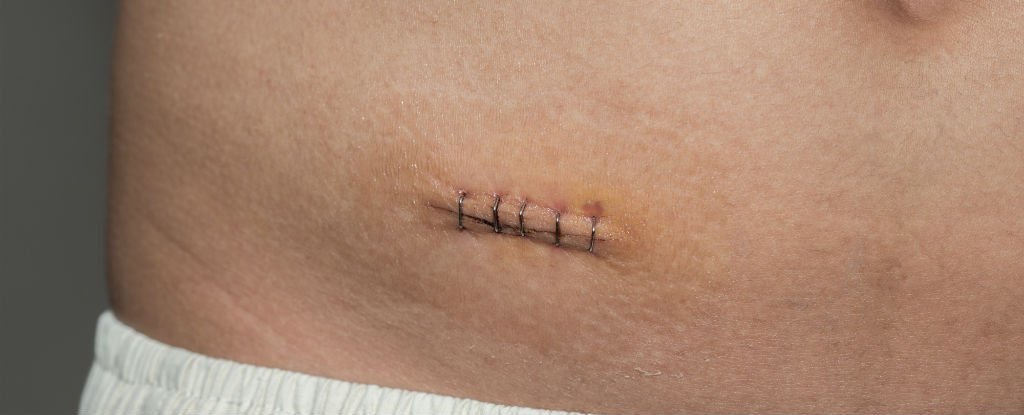
More research that the appendix is not useless after all

appendix scar
© TaraPatta/Shutterstock.com
One of the first things you learn about evolution in school is that the human body has a number of 'vestigial' parts - appendix, wisdom teeth, tailbone - that gradually fell out of use as we adapted to more advanced lifestyles than our primitive ancestors.

But while our wisdom teeth are definitely causing us more pain than good right now, the human appendix could be more than just a ticking time bomb sitting in your abdomen. A new study says it could actually serve an important biological function - and one that humans aren't ready to give up.

Researchers from Midwestern University traced the appearance, disappearance, and reemergence of the appendix in several mammal lineages over the past 11 million years, to figure out how many times it was cut and bought back due to evolutionary pressures.

Comment: More on this humble organ:


Cell Phone

Dopamine behind social media addiction

instagram
© Pixabay
Are you addicted to social media? Does your heart skip a beat when you receive a Tweet? If the answer is yes, then you can blame your brain, or rather, a particular chemical in it called dopamine.

And while the world becomes even more engrossed in social media, so do individuals who display addiction tendencies to certain sites such as Facebook and Twitter, as Mauricio Delgado, associate Professor of psychology at the University of Pittsburgh in the United States, explains.

"Dopamine is more about reinforcement and learning about potential rewards to guide behavior, than the pleasure itself," Dr. Delgado told Sputnik.

"Say someone receives their first 'friend request' on Facebook or something equivalent, this may lead to some initial surprise or pleasure and is an unexpected reward. Thus, it could be tied to some elevated levels of dopamine in regions of the brain that process reward," he said.

Arrow Up

'Weekend Warrior' Workouts Improve Health

Hiking
© Vitalii Nesterchuk | Shutterstock
If going to the gym during the workweek sounds daunting to you, fear not: Working out only on the weekends has health benefits too, a new study suggests.

In the study, researchers examined so-called weekend warriors, who cram a week's worth of exercise into just one or two days.

The researchers found that the weekend warriors in the study who met physical activity guidelines were less likely to die during the nine-year study period, compared with people who didn't get any exercise. Meeting those guidelines meant engaging in a total of at least 150 minutes of moderate-intensity activity or 75 minutes of vigorous activity over one or two days a week.

What's more, even the people who didn't meet physical activity guidelines, but did exercise one or two days a week had a lower risk of early death than people who didn't exercise.

Comment: See also:


Health

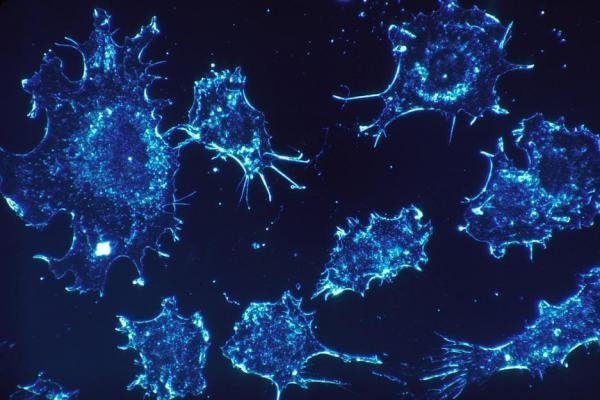
Cancer researchers discover how high-dose vitamin C kills cancer cells

IV vitamin C cancer
© sneeze/PixaBayScientists at the University of Iowa have discovered high-dose vitamin C given intravenously may be effective at killer cancer cells.
Vitamin C has a patchy history as a cancer therapy, but researchers at the University of Iowa believe that is because it has often been used in a way that guarantees failure.

Most vitamin C therapies involve taking the substance orally. However, the UI scientists have shown that giving vitamin C intravenously -- and bypassing normal gut metabolism and excretion pathways -- creates blood levels that are 100 -- 500 times higher than levels seen with oral ingestion. It is this super-high concentration in the blood that is crucial to vitamin C's ability to attack cancer cells.

Comment: Intravenous vitamin C does more than just kill cancer cells. It boosts immunity and can stimulate collagen formation to help the body wall off the tumor. It inhibits hyaluronidase, an enzyme that tumors use to metastasize and invade other organs throughout the body and corrects the almost universal scurvy in cancer patients.


Light Saber

Cleveland clinic doctor goes full anti-vaccine

Dr. Daniel Neides
© CBN
Dr. Daniel Neides says he spent years listening to the CDC and the government over vaccine efficacy. Now, however, he says he is done and many vaccine proponents are outraged.

Health

Alter gene expression and prevent chronic disease with yoga

Yoga
© University of Washington
Yoga is seriously one of the best hobbies you can take up for both your mind and body.

As though yoga needed any more evidence of its positive effects on the body, two recent studies found that its effects are far-reaching and even more impressive on the body than researchers initially thought. Yoga is an ancient practice that first surfaced in India and the surrounding countries that were used in accompaniment with religions such as Hinduism and Buddhism.

Yoga has long been touted as an excellent method of reducing stress and improving mental and physical health for those who continuously practiced it. Physically, it can help improve flexibility, strength, your posture, spine protection, immunity, can lower your blood pressure, and has many other functions.

The studies, which were conducted separately at Harvard University and the University of Calgary, found that yoga has an epigenetic effect, which means that it alters the expression of the genes without changing the genetic code itself. There are a number of other activities that have this same effect on the body, such as diet and sleep, but yoga is one of the many that surprised researchers.

At Harvard University, researchers found that yoga can positively change your cellular metabolic functions and improve things like nutrient absorption and the prevention of chronic diseases. The study involved two different groups, one that practiced mindfulness and yoga training and a control group that didn't practice either. Chris Kilham, advisor to herbal, cosmetic and pharmaceutical companies and a researcher at University of Massachusetts Amherst, said in an in-depth interview with Fox News,

Comment: There are many health benefits associated with yoga. Here are just a few:


Attention

Roundup causes non-alcoholic fatty liver disease at very low doses

Cutting-edge molecular profiling analyses reveal that the popular weedkiller Roundup causes liver damage at doses permitted by regulators.
gmo fatty liver
The weedkiller Roundup causes non-alcoholic fatty liver disease at very low doses permitted by regulators worldwide, a new peer-reviewed study shows. The study is the first ever to show a causative link between consumption of Roundup at a real-world environmentally relevant dose and a serious disease.

The new peer-reviewed study, led by Dr Michael Antoniou at King's College London, used cutting-edge profiling methods to describe the molecular composition of the livers of female rats fed an extremely low dose of Roundup weedkiller, which is based on the chemical glyphosate, over a 2-year period.

The dose of glyphosate from the Roundup administered was thousands of times below what is permitted by regulators worldwide.

The study revealed that these animals suffered from non-alcoholic fatty liver disease (NAFLD).

Dr Antoniou said: "The findings of our study are very worrying as they demonstrate for the first time a causative link between an environmentally relevant level of Roundup consumption over the long-term and a serious disease - namely non-alcoholic fatty liver disease.

Comment: For more information, read GMO corn causes liver, kidney problems in rats: study


Health

Unprecedented number of male soldiers sustain genitourinary injuries as fodder for Middle East wars

US soldier at sunset
© veteranstodaynews.com
Epidemiology of Genitourinary Injuries among Male U.S. Service Members Deployed to Iraq and Afghanistan: Early Findings from the Trauma Outcomes and Urogenital Health Project

Purpose

In this study we report the number, nature and severity of genitourinary injuries among male U.S. service members deployed to Operations Iraqi Freedom and Enduring Freedom.

Materials and Methods

This retrospective cross-sectional study of the Department of Defense Trauma Registry used ICD-9-CM codes to identify service members with genitourinary injuries, and used Abbreviated Injury Scale codes to determine injury severity, genitourinary organs injured and comorbid injuries.

Results

From October 2001 to August 2013, 1,367 male U.S. service members sustained 1 or more genitourinary injuries. The majority of injuries involved the external genitalia (1,000, 73.2%), including the scrotum (760, 55.6%), testes (451, 33.0%), penis (423, 31%) and/or urethra (125, 9.1%). Overall more than a third of service members with genitourinary injury sustained at least 1 severe genitourinary injury (502, 36.7%). Loss of 1 or both testes was documented in 146 men, including 129 (9.4%) unilateral orchiectomies and 17 (1.2%) bilateral orchiectomies. Common comorbid injuries included traumatic brain injury (549, 40.2%), pelvic fracture (341, 25.0%), colorectal injury (297, 21.7%) and lower extremity amputations (387, 28.7%).

Conclusions

An unprecedented number of U.S. service members sustained genitourinary injury while deployed to Operation Iraqi Freedom/Operation Enduring Freedom. Further study is needed to describe the long-term impact of genitourinary injury and determine the potential need for novel treatments to improve sexual, urinary and/or reproductive function among service members with severe genital injury.