Health & WellnessS


Magnify

Re-framing what we give up for our health

"I gave up eating sugar, but I guess that was the sacrifice I had to make to get healthy."

gluten
© Google
I hear a lot of talk about dieting and healthy eating in my day to day life and rarely ever is it instigated by me. I learned a long time ago that unless people want to hear what I have to say, they aren't going to take it to heart. Very rarely do I ever offer unsolicited nutrition advice (anymore).

I hear similar remarks like the one above being thrown around and it's something that's really been weighing on me lately. The idea that we have to give something up in order to be happy or healthy is one I hear a lot. I want to pose a differing view and re-frame our way of looking at how we make the changes we need to be healthy and happy.

Birthday Cake

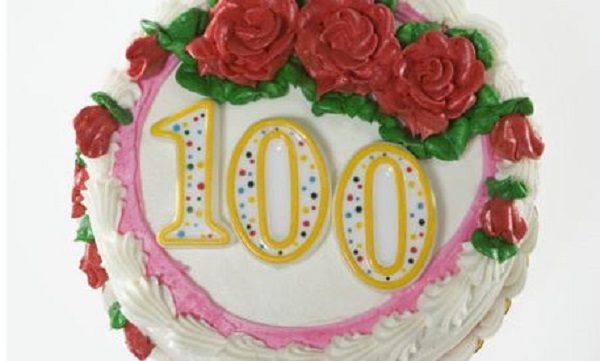
Wanna live past 100?: Clues from centenarians

100 year cake
At a time when half the population in the U.S. is struggling with chronic illness and life expectancy is on the decline, the idea of living to 100 may seem like a pipedream to most. Yet, in many other areas, life expectancy is actually rising, and centenarians are far more commonplace than you might imagine.

In 2015, there were 679 people at or over the age of 100 living in Wales. Sardinia, which boasts the highest number of centenarians anywhere in the world, has 6 centenarians for every 3,000 people. That is literally 10 times more than in the U.S., where the ratio is 1 centenarian per 5,000.1

While you'd think most centenarians — people who have lived a century or longer — would advocate a certain diet, their longevity secrets typically center around social and emotional factors, such as expressing love, nurturing strong family and social ties, and being involved in your community. Centenarians also overwhelmingly cite stress as the most important thing to manage.

Centenarians Age Slower — But Why?

As previously noted by Israeli physician Dr. Nir Barzilai of the Institute for Aging Research at Albert Einstein College of Medicine:2
"The usual recommendations for a healthy life — not smoking, not drinking, plenty of exercise, a well-balanced diet, keeping your weight down — they apply to us average people. But not to them. Centenarians are in a class of their own."
The majority of centenarians do not feel their chronological age; on average, they report feeling 20 years younger. They also tend to have positive attitudes, optimism, a zest for life and a good sense of humor. As cheerfully noted by a centenarian in Sardinia, the secret to living to 100 is to "not die before then."

Comment: Further reading:

Bama, Guangxi, China: The village with the secret to long life
Village Shows 'Good Life' Holds Secret to Long Life


Attention

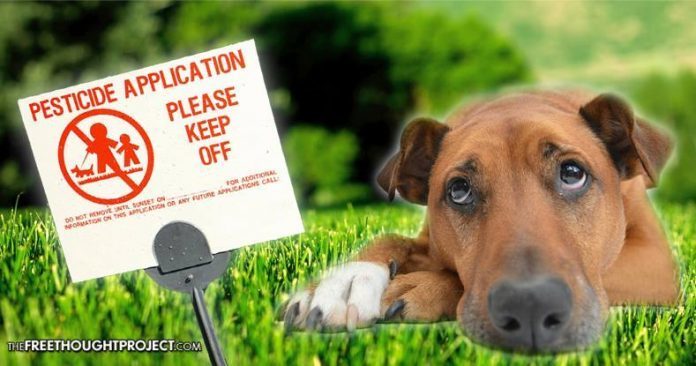
Multiple studies link everyday lawn products to canine cancer

pesticide dog
With summer in full swing, the generally higher temperatures often mean pets will be spending more time outdoors, but it also means that dog owners must be vigilant of the dangers of lawn chemical, as numerous studies over the past few years have shown strong connections between herbicides and lawn chemicals using 2,4-D, and canine cancers.

The World Health Organization's International Agency for Research on Cancer classified 2,4-D as "possibly carcinogenic to humans."
The classification of the weed killer, 2,4-dichlorophenoxyacetic acid, known as 2,4-D, was made by the WHO's International Agency for Research on Cancer (IARC).

The IARC said it reviewed the latest scientific literature and decided to classify 2,4-D as "possibly carcinogenic to humans."
Recent studies have found that lawn chemicals travel to untreated neighboring yards, and inside homes, with chemicals even being found in the urine of dogs whose owners had never chemically treated their lawns.

Newspaper

Unprecedented lawsuit launched against water fluoridation

tap water
The practice water fluoridation in the United States has been under growing scrutiny for years by a public that has become conscious of the fact adding toxic chemicals which are proven to be harmful to human health and children's development to public water is medication without consent.

Never-the-less, the effort to stop fluoridation of municipal water supplies has been an uphill battle against entrenched financial interests and against dated ideas about health. While each year we hear news of cities heeding the concerns of their citizens and stopping fluoridation, without a major victory at the national level, people will be fighting this for years to come, all the while consuming toxic chemicals in the one thing we cannot live without, water.

The Fluoride Action Network (FAN) is reporting on a major development to cut the head off of this snake, and an unprecedented lawsuit is now holding promise for a national reversal of municipal water fluoridation.

Based on neurotoxicity studies, the "EPA has been served with a petition that includes more than 2,500 pages of scientific documentation detailing the risks of water fluoridation to human health."

Comment: More on this industrial waste product being in dumped into the water supply in the name of health:


Bizarro Earth

Monsanto and Big Agriculture colonizing Africa: The criminalization of traditional seed exchanges

Monsanto Africa
Of the many concerns surrounding the dominance of agrichemicals companies and GMO foods, the most frightening dimension is that corporate manufactured seed is wiping out global biodiversity in food crops and creating a punitive legal framework for our total dependence on these companies for food.

Monsanto, Syngenta and other majors in agribusiness are presently colonizing Africa with the help of international aid programs which force nations into agreements requiring dependence on patented seeds, thereby prohibiting traditional seed exchanges.

Reporting on the situation in Tanzania, Ebe Daems of Mondiaal Nieuws informs us of recent legislation which puts local farmers under the threat of heavy fines of up to €205,300 and even prison terms of up to 12 years for violating the intellectual property rights of agrichemicals companies if individuals sell or trade in non-patented seed.
If you buy seeds from Syngenta or Monsanto under the new legislation, they will retain the intellectual property rights. If you save seeds from your first harvest, you can use them only on your own piece of land for non-commercial purposes. You're not allowed to share them with your neighbors or with your sister-in-law in a different village, and you cannot sell them for sure. But that's the entire foundation of the seed system in Africa, ~Michael Farrelly of TOAM, an organic farming movement in Tanzania.

Light Saber

Fred A. Kummerow, an early opponent of trans fats, dies at 102

Professor Kummerow
© NYTIn 1953, Professor Kummerow, at the time a professor of food technology at the University of Illinois, Urbana-Champaign, set up his lab in the animal sciences building on campus.
Fred A. Kummerow, a German-born biochemist and lifelong contrarian whose nearly 50 years of advocacy led to a federal government ban on the use of trans-fatty acids in processed foods, a ruling that could prevent tens of thousands of premature deaths a year, died on Wednesday at his home in Urbana, Ill. He was 102.

His family announced his death. He had been a longtime professor at the University of Illinois, Urbana-Champaign.

Artificial trans fats — derived from the hydrogen-treated oils used to give margarine its easy-to-spread texture and prolong the shelf life of crackers, cookies, icing and hundreds of other staples in the American diet — were ruled unsafe by the Food and Drug Administration partly in response to a lawsuit that Professor Kummerow filed against the agency in 2013, two months shy of his 99th birthday. The ban, announced in 2015, goes into effect in 2018.

He had been one of the first scientists to suggest a link between processed foods and heart disease. In the 1950s, while studying lipids at the university, he analyzed diseased arteries from about two dozen people who had died of heart attacks and discovered that the vessels were filled with trans fats.

Comment: Trans fat policy responsible for the deaths of millions


Alarm Clock

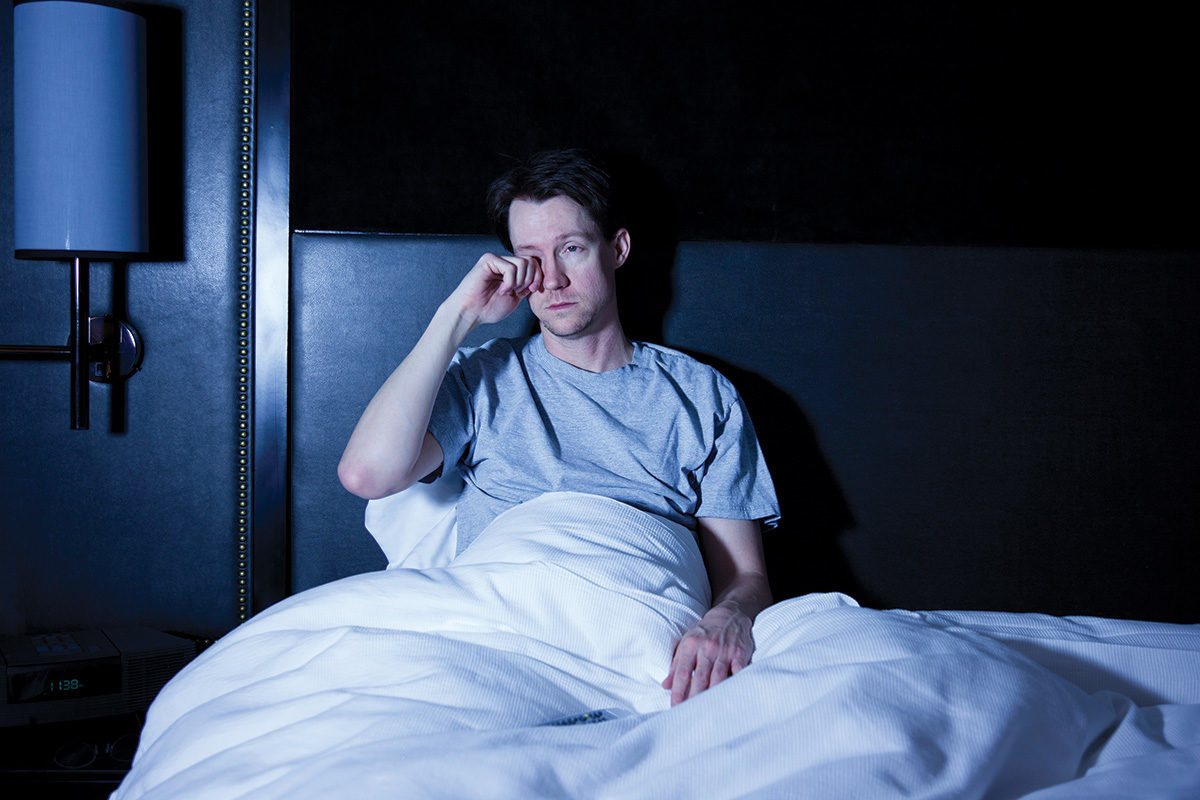
Poor sleep and the link to air pollution

sleep deprivation
© Thanasis Zovoilis/Getty
If you're among the 35 percent of U.S. adults who are not getting the recommended seven hours of sleep each night,1 a silent intruder in your bedroom could be to blame: air pollution. With well-known adverse effects on your heart and lung health, research presented at the American Thoracic Society (ATS) 2017 International Conference suggests poor air quality may also disrupt your sleep.2

The study looked closely at the effects of two widespread pollutants, nitrogen dioxide (NO2), which is traffic-related air pollution, and PM2.5, or fine-particle pollution, which is less than 2.5 micrometers in size and is responsible for reduced visibility. Both of the pollutants had an influence on study participants' sleep efficiency, which is a measure of the time spent actually sleeping as opposed to lying in bed awake.

In fact, the people in the top quarter of NO2 exposure were 60 percent more likely to have low sleep efficiency over a five-year period compared to those in the lowest quarter. Among those exposed to the highest levels of fine-particle pollution, there was a 50 percent increased likelihood of low sleep efficiency.

The researchers suggested high air pollution levels may also lead to acute sleep effects after short-term exposures, but they did not have adequate data to study the potential connection. Lead study author Dr. Martha E. Billings, assistant professor of medicine at the University of Washington, said in a press release:3
"We thought an effect was likely given that air pollution causes upper airway irritation, swelling and congestion, and may also affect the central nervous system and brain areas that control breathing patterns and sleep ... These new findings indicate the possibility that commonly experienced levels of air pollution not only affect heart and lung disease, but also sleep quality. Improving air quality may be one way to enhance sleep health and perhaps reduce health disparities."

Pills

Unprecedented! FDA calls for removal of opioid drug from market after abuse leads to serious outbreak of HIV and hepatitis C

Opana ER, oxymorphone hydrochloride
Abuse of reformulated Opana ER by injection has been linked to a "serious outbreak" of HIV and hepatitis C.
In an unprecedented move, the US Food and Drug Administration has requested a drugmaker withdraw an opioid pain medicine from the market due to its potential for abuse. The agency cited the current "opioid epidemic" as a catalyst for the move.

The FDA has targeted the reformulated version of Opana ER, or oxymorphone hydrochloride, for market removal, calling on its manufacturer, Ireland-based Endo Pharmaceuticals, to take voluntary steps to do so.

If Endo chooses not to withdraw Opana ER ‒ first approved by the FDA in 2006 - the federal agency said it would take steps to rescind its approval of the drug.
"We are facing an opioid epidemic ‒ a public health crisis, and we must take all necessary steps to reduce the scope of opioid misuse and abuse,"said FDA Commissioner Scott Gottlieb.

Comment: The longstanding cozy relationship between the FDA and BigPharma is the reason that the FDA rarely takes action to rescind approval for drugs until millions have died or been seriously injured - profits always take precedence over the health and well-being of the populace.

How the US government's collusion with Big Pharma is driving the opioid epidemic


Health

CBD oil effective in treating symptoms of schizophrenia

cbd oil
As the DEA continues to label marijuana and even the non-psychoactive cannabidiol oil (CBD) as being the same as heroin in terms of its health effects, addictive qualities and side effects, the real world also continues to exist outside of the walls of Washington, D.C. and mindless drug war proponents.

As jackboots continue to march on so does science and public opinion. Nearly every day a new marijuana-related potential cure appears on the scene. Whether its cancer or multiple sclerosis, the humble plant is offering to cure and relieve a plethora of diseases if the police state and bureaucrats would just get the hell out of the way.

The latest in a long line of diseases that could potentially be cured by marijuana is schizophrenia. Although affecting only about 1.1 percent of the American population, that small percentage translate to about 3.5 million people.

The symptoms of schizophrenia range from life-disrupting to completely debilitating. Cognitive symptoms are a major symptom of schizophrenia that involve comprehension, concentration and decision making.

Health

Most home blood pressure monitors give inaccurate readings

blood pressure reading
Seventy per cent of readings from home blood pressure monitors are unacceptably inaccurate, which could cause serious implications for people who rely on them to make informed health decisions, new UAlberta research reveals.
"High blood pressure is the number one cause of death and disability in the world," said medical researcher Jennifer Ringrose, who led the research study. "Monitoring for and treating hypertension can decrease the consequences of this disease. We need to make sure that home blood pressure readings are accurate."
Ringrose and her team tested dozens of home monitors and found they weren't accurate within five mmHg about 70 per cent of the time. The devices were off the mark by 10 mmHg about 30 per cent of the time.

The findings are extremely relevant given millions of patients are asked to monitor their blood pressure through a device at home and report the results back to their doctor.