Health & WellnessS


Heart

Stents and bypasses don't prevent future heart attacks - The medical consensus on them appears to be crumbling

Strophanthus gratus
© Wikimedia CommonsStrophanthus gratus
A recent article in the New York Times about a study published last month in The Lancet, perhaps the most prestigious medical journal in the world, is no doubt creating a stir in the conventional-cardiology world. The headline was "Unbelievable": Heart Stents Fail to Ease Chest Pain. The study was actually the second of two very interesting studies published by The Lancet, both of which seriously challenge core beliefs and practices in modern cardiology. It was conducted in England, where, for the first time, the authors compared the chest pain of patients who had stents placed compared to those who had a dummy procedure, in which catheters were inserted but stents were not placed.

Studies (1) have already shown that stents and bypasses don't prevent future heart attacks or increase longevity. To the shock of many cardiologists who commented on the study, there was no difference in outcome of those who had the stent compared with those who had the dummy procedure. This result means the final claim made by stent proponents - symptom control - also turns out to be untrue. At this point, it is hard to understand the rationale for the use of stents in any condition except, possibly, in the acute treatment of an ongoing heart attack involving the proximal part of the left anterior descending coronary artery, which, cardiologists say, improves the outcome.

While many cardiologists expressed surprise and even dismay at the results, for those of you who have followed my writings on the cause and treatment of angina and heart attacks, this finding will come as no surprise. Many factors other than lesions in the coronary arteries lead people to suffer from heart disease. Until cardiologists learn to look at the imbalance in the autonomic nervous system, the microcirculation and the build-up of lactic acid in the heart cells, no resolution of our heart-disease epidemic will be found. Unfortunately, a safe and effective medicine that addresses these factors, strophanthus/ouabain, is sadly overlooked and forgotten in conventional cardiology circles


Comment: The story of ouabain


SOTT Logo Radio

SOTT Focus: The Health & Wellness Show: Syphilitic Superpower: The rise of STDs

Gonorrhoea
Sexually transmitted diseases are skyrocketing all over the globe. Public health departments report staggering increases in cases of chlamydia, gonorrhea and syphilis with more than 2 million cases recorded in 2016. Gonorrhea is reaching antibiotic-resistant superbug status, chlamydia is evolving into new strains and oral HPV cases among men have surpassed cases of HPV caused cervical cancer.

On this episode of The Health and Wellness Show we'll take a look at the precipitous rise in STDs and its correlation to pornography, dating apps, the hookup culture and the general moral degradation of society. Is the spread of STDs just a symptom of the collapse of civilization?

And stay tuned at the end of the show where Zoya's Pet Health Segment will lighten the mood with interesting facts about octopuses.

Running Time: 01:15:33

Download: MP3


Life Preserver

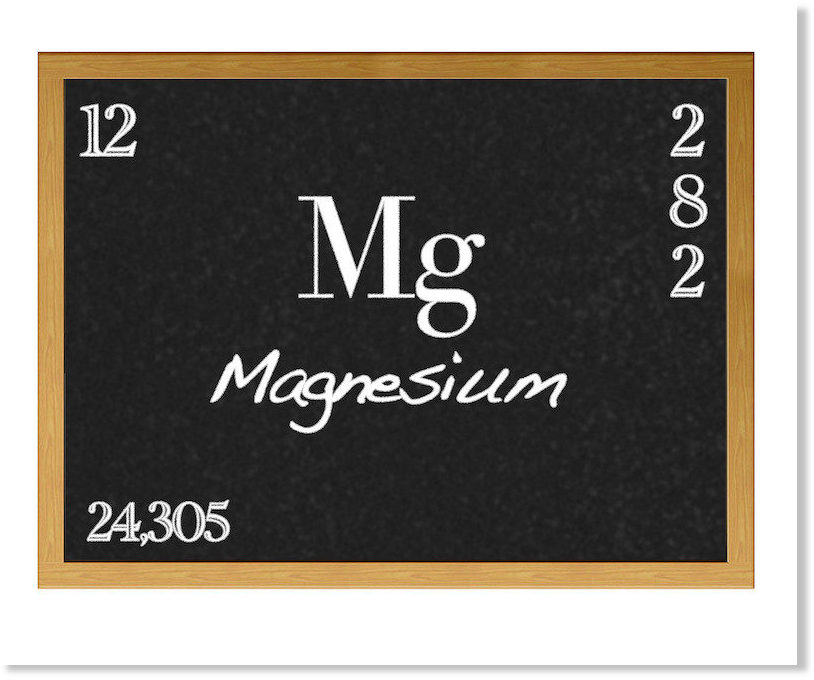
Magnesium facts

magnesium
Even though I've spent the last 20 years focused on one mineral, magnesium, it's made me a generalist, not a specialist, because magnesium does so much for the body. Most people are deficient in magnesium. So I've listed below the top 10 facts and 12 functions associated with magnesium. There are several contraindications to magnesium therapy, but most often withholding it is unwise. Moreover, in magnesium-deficient individuals, high dose vitamin D can cause their magnesium levels to be further depleted. The large number of magnesium deficiency diseases (more than 60) makes it difficult for doctors to diagnose their true cause .[1]

Sixty-five conditions associated with magnesium deficiency

According to the FDA, I am not permitted to say that magnesium can treat diseases. Doing so pushes magnesium into the drug category because the FDA (a non-medical body) says that only drugs can treat disease. However, I contend that magnesium deficiency is constantly being misdiagnosed as many different diseases, so I am merely suggesting that people treat their magnesium deficiency. Using high doses of magnesium (600-1200 mg elemental magnesium per day) for migraines, high blood pressure, angina, diabetes, high cholesterol, muscle cramps and spasms, nerve tingling and burning, is far less invasive than immediately prescribing drugs. I've observed thousands of people using therapeutic doses of a non-laxative form of magnesium with tremendous success.

Comment: See also: Magnesium: The Spark of Life


Health

The Insulin-Illness Connection

dominoes falling
Most discussion of chronically-elevated insulin levels (hyperinsulinemia) and insulin resistance revolves around their relationship to bodyweight. This is unsurprising. Bodyweight's what "sells tickets." It's why most people get interested in diet, health, fitness, and nutrition-to lose weight or avoid gaining it.

But improving insulin sensitivity and reducing fasting insulin levels have major ramifications for your health, longevity, and resistance to disease. And it's not just because "weight gain is unhealthy." Insulin itself, in excess, exerts seriously damaging effects. Today, I want to impress upon you the importance of controlling your insulin response by laying out some of the health problems that stem from not controlling it.

Comment: Learn more:


Health

Heavy metals and foods that can help the body detox them

Heavy Metals
Heavy metal toxicity—from metals such as mercury, aluminum, copper, cadmium, nickel, arsenic, and lead—represents one of the greatest threats to our health and well-being.” ~ Anthony William
Heavy metals such as arsenic, cadmium, chromium, lead, and mercury, can be very toxic. Regardless of this risk, they are commonly used in industrial, agricultural, medical and technology applications. As a result, they have become one of the many substances polluting our environment and threatening human health.

How Heavy Metals Affect the Human Body

Most people are exposed to heavy metals throughout their lives. For many, this exposure happens on a daily basis. Subsequently, these heavy metals bioaccumulate deep inside the body's tissues and pose a significant threat to your health long-term. They put immense stress on the human body, slowly poisoning the body, damaging organs, and weakening the immune system.

Comment: It's important to research, research and research before embarking on a heavy metal detoxification protocol. The release of metals during a detox can be very taxing on the body of those who are particularly sensitive and a healthy strategy of knowing what needs to be done in order to mobilize and chelate toxins out will help ensure as safe a process as possible.


Cell Phone

Back to basics: 'Dumbphones' with simple functions catching on as people ditch evil smartphones

dumbphones
Less is more
"Track my sleep, track my workouts," said David Dahan of Cherry Hill, New Jersey.

"I use it a lot for mobile banking," added Megan Killea of Philadelphia.

"Snapchat," laughed Alicia Dyson of North Philly.

Gone are the days when phones are used to simply talk or text. But, what if we could go back to just that?

"Disconnect for a while, stress-free," said Patrice White.

Comment: That's one way to disconnect, at least a bit.

Just go online when you're stationary at a desktop or laptop. In all other situations, keep your head up and your eyes open.


Dollars

Shattered lives: The business of hysterectomies

broken window
In January 2015, I was referred to a gynecologist, having a small fibroid and an irregular menstrual cycle. A young female doctor entered my room asking how my baby was moving for me. After explaining that I was not here for a pregnancy checkup, she excused herself and returned a short time later. I told her about the fibroid and the irregular periods. She asked if I intended to have more children, I did not. She asked what I was currently using for birth control. I told her that I was in a relationship with someone who'd had a vasectomy and so I did not require hormonal birth control. She asked if I'd ever been on birth control. I had, after the birth of my daughter the military offered Depo Provera. I explained that it caused weight gain and possibly some depression. She then said
"if I were you, I'd choose a hysterectomy, and I'd elect the robot. Less down time, little scarring, and less than a 3% complication rate, and not to mention, no more menstrual cycle".
My appointment was less than 10 minutes, and surgery was scheduled within a couple weeks. I took my doctor's advice. Not until after the hysterectomy, did I understand the ramifications of that decision.

Comment:


Magic Wand

Stem cells heal young boy's potentially fatal skin disease

Stem cells
© Spencer Platt/Getty ImagesStem cells
Complications of the little boy's genetic skin disease grew as he did. Tiny blisters had covered his back as a newborn. Then came the chronic skin wounds that extended from his buttocks down to his legs.

By June 2015, at age 7, the boy had lost nearly two-thirds of his skin due to an infection related to the genetic disorder junctional epidermolysis bullosa, which causes the skin to become extremely fragile. There's no cure for the disease, and it is often fatal for kids. At the burn unit at Children's Hospital in Bochum, Germany, doctors offered him constant morphine and bandaged much of his body, but nothing - not even his father's offer to donate his skin - worked to heal his wounds.

"We were absolutely sure we could do nothing for this kid," Dr. Tobias Rothoeft, a pediatrician with Children's Hospital in Bochum, which is affiliated with Ruhr University. "[We thought] that he would die."

Comment: See also: Stem cell therapy: The innovations and potential to help repair and regenerate your body


Health

San Diego's hepatitis A outbreak continues to grow, but rate of new infections slowing

hepatitis A
Though the case count in San Diego's ongoing hepatitis A outbreak increased again Monday, officials said that the number of new infections continues to slow.

In a presentation to the San Diego County Board of Supervisors, Dr. Wilma Wooten, the county's public health officer, showed a chart that indicated there were 31 cases in October, significantly fewer than the 81 reported in September and 94 in August which saw the largest total of the outbreak so far.

After seeing the chart, board chair Dianne Jacob had a to-the-point question.

"Is it getting better, the same or worse?" Jacob asked.

"We feel it's getting better," Wooten replied.

Comment: Previously:


Life Preserver

Smell may be the future of diagnostics: Groundbreaking breath tests could detect up to 17 diseases

breath test illness, diagnostic testing breath
A little girl in Malawi blows into a bag while a researcher collects her breath. The sample of her breath will be sent back to a lab at the University of Washington in St. Louis, Misouri where it will be tested for scent-compounds of malaria using a new diagnostic technique
Smell may be the key to a future of more accurate, cheaper, non-invasive diagnostics tests for everything from malaria to cancer to Parkinson's disease.

Scientists in Israel are working on a breath test that they say can detect as many as 17 diseases. Meanwhile, a US-based team is testing their device for identifying the breath signature of malaria in Malawi in Africa.

The two developing technologies both use comparisons of chemical compounds found in healthy breath to the compounds found in the breath of someone with a disease.

Though neither version is ready for clinical use, the scientists beyond each hope that smell-testing can soon make diagnostics a painless and far cheaper process for patients.

Comment: See also: Breath analysis can reveal various diseases