Health & WellnessS


Health

Being fed soy formula as a baby can lead to reproductive system issues as an adult

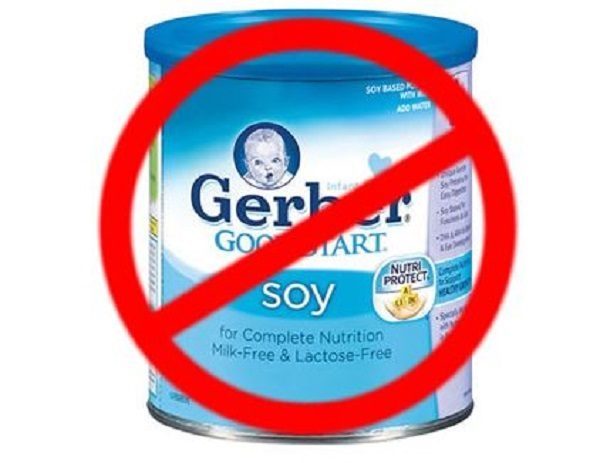
Gerber soy formula
New research suggests that infant girls fed soy formula are more likely to develop severe menstrual pain as young adults. The finding adds to the growing body of literature that suggests exposure to soy formula during early life may have detrimental effects on the reproductive system.

Soy has become a major source of toxicity for human beings. Phytoestrogens in soy-based formulas are known to carry greater risks than benefits for infants. Babies fed soy-based formula had 13,000 to 22,000 times more isoflavones in their blood than babies fed milk-based formula.

True cancer of the prostate, carcinoma, is seldom seen in infants and children, but other forms of malignant tumors may develop and more cases are appearing in developed nations where the link appears to center around soy infant formula.

Soy isoflavones detrimentally affect gene expression of a hormone influencing insulin-resistence and body fat levels.

Comment: See also:


Donut

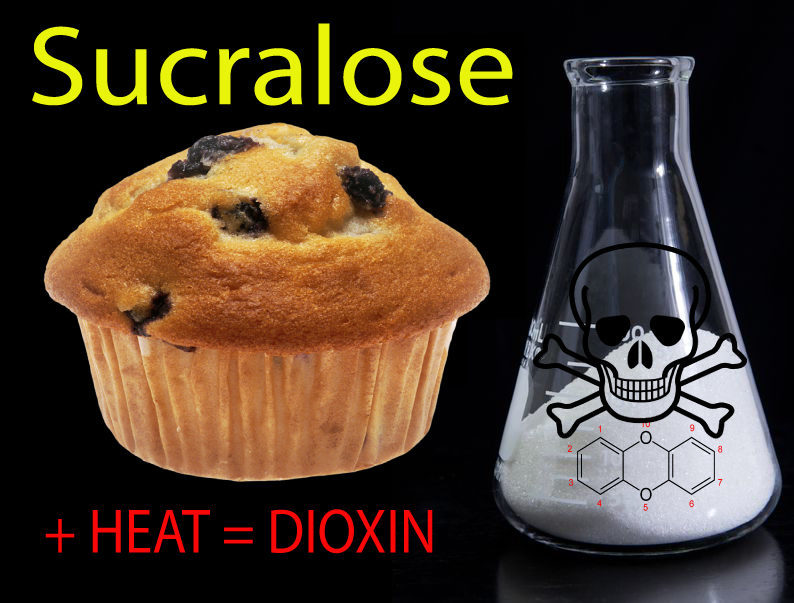
Splenda (sucralose) releases toxic dioxin when heated

sucralose toxicity


A review on the synthetic sweetener sucralose (marketed as Splenda), published in the journal Toxicology and Environmental Health, overturns widely held misconceptions about the purported safety of this ubiquitous artificial sweetener.


Found in tens of thousands of products and used by millions of consumers around the world, sucralose's unique ability to dissolve in alcohol and methanol as well as water, makes it the most versatile and therefore most widely used artificial sweetener in production today. And yet, its popularity is no indication nor guarantee of its safety, as is evidenced by the widespread use of other artificial sweeteners like aspartame, which while being safety approved in 90 nations around the world, has been linked to a wide range of serious health conditions including possible neurotoxicity.

Comment: For more on the serious dangers of dioxin, see:


Marijuana

Medical marijuana and Cannabis research suppressed

Cannabis
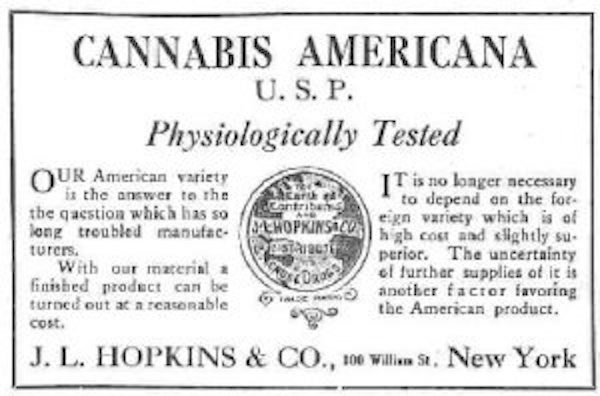
Although cannabis was a medicinal plant for thousands of years, its medical use was suppressed and banned throughout most of the 20th century.

Banned in England, Canada and the US in the 1930's, medical cannabis represents the first casualty in a war against natural medicine waged by the pharmaceutical industry. Even today research efforts are suppressed by our own government. Over the last two decades, there have been major scientific breakthroughs in cannabis research outside the US in Israel, Spain, Italy and Brazil. These breakthroughs have made cannabis "the wonder drug of the 21st century".

Comment: The Endocannabinoid system: Most medical schools don't train students about the second largest neurotransmitter system


Attention

The Mosaic of Autoimmunity: Top doctors reveal vaccines turn our immune system against us

autoimmunity
The research is hard to ignore, vaccines can trigger autoimmunity with a laundry list of diseases to follow. With harmful and toxic metals as some vaccine ingredients, who is susceptible and which individuals are more at risk?

No one would accuse Yehuda Shoenfeld of being a quack. The Israeli clinician has spent more than three decades studying the human immune system and is at the pinnacle of his profession. You might say he is more foundation than fringe in his specialty; he wrote the textbooks. The Mosaic of Autoimmunity, Autoantibodies, Diagnostic Criteria in Autoimmune Diseases, Infection and Autoimmunity, Cancer and Autoimmunity - the list is 25 titles long and some of them are cornerstones of clinical practice. Hardly surprising that Shoenfeld has been called the "Godfather of Autoimmunology" - the study of the immune system turned on itself in a wide array of diseases from type 1 diabetes to ulcerative colitis and multiple sclerosis.

Health

'Distinct whiff of snake oil' - The truth about DNA fitness tests

Fitness and DNA
© liulolo/iStock/Getty Images Plus
The sales pitch is compelling: By revealing the secrets locked inside your DNA, genetic testing can optimize your workout gains while reducing your risk for injury. "Remove the guesswork from training," claims one company. "Take your exercise choices to the next level," says another.

The companies selling these services (often for hundreds of dollars) say they're backed by hard science. But take a close look at the research undergirding these products and you'll catch a distinct whiff of snake oil.

"There are some companies out there who are just making stuff up or exaggerating to the point of fraud, but even the companies that aren't making fraudulent claims are utilizing the scientific aura surrounding DNA to imply that there's more evidence than there really is," says Robert Green, MD, a professor of medicine at Harvard Medical School and director of the Genomes2People Research Program based at Brigham and Women's Hospital.

Green says there are some genetic markers associated with the activity of fast twitch muscle fibers. These genes may play a minor role in a person's response to different types of resistance training. Using this kernel of genetic science as a foundation, companies are constructing whole training programs that are purportedly tailored to a person's unique genetic blueprint.

But Green says the genetic markers these testing companies look at are only single pieces of a very complicated puzzle. How (and how much) they matter remains to be seen and probably depends on hundreds of other variables. "It's very easy for these companies to misrepresent the connection between your DNA and your desired outcome," Green says.

Others agree. When it comes to fitness-focused genetic testing, "These products are going out on a limb in terms of interpretation of the science," says Jason Vassy, MD, a genetic science researcher and assistant professor of medicine at Harvard.

Biohazard

New report reveals US water suppliers cover up spikes in hormone-disrupting herbicide contamination

weed sprayer
© Reuters / Ilya Naymushin
Taking advantage of regulatory loopholes, US water suppliers may be concealing alarmingly high concentrations of toxic herbicides in Americans' drinking water, according to a new report from the Environmental Working Group.

The report found more than 30 million Americans' drinking water is contaminated with atrazine, a known endocrine and reproductive disruptor linked to increased risk of preterm births and fetal deformities. Worse, discrepancies between reported federal and state measurements of the contamination suggest that local water utilities are gaming the regulatory system to avoid reporting "spikes" in contamination from the increase in herbicide usage during the farming season.

EPA regulations permit water utilities to report annual averages for drinking water contaminants, allowing them to mask spikes in runoff during the growing season by averaging them with the low levels found during the winter - or even not to measure during the high season at all.

EWG senior science advisor Olga Naidenko accused the utilities of "playing the dates game," covering up illegal levels of atrazine contamination by cleverly timing their measurements, and the report found 70 percent of utilities had sampled contamination outside of high usage periods or reported lower contamination levels than the EPA.

Comment: Revealed: How Syngenta Investigated the Press and Shaped the News About its Controversial Weed-Killer Atrazine


Muffin

The evidence against carbohydrates gets stronger

breadbasket
© digifoodstock.com / Global Look Press
As anyone who's gone on a diet knows, once you lose some weight, it gets harder to lose more. The "eat less, move more" mantra, as simple as it sounds, doesn't help us deal with our bodies' metabolic reality: As we shed pounds, we get even hungrier and our metabolism slows down.

But findings from a new study I led with my colleague Cara Ebbeling suggest that what we eat - not just how much - has a substantial effect on our metabolism and thus how much weight we gain or lose.

People have a hard time believing that weight control isn't just a matter of calories eaten and calories burned. But there is an alternate hypothesis about obesity, which is what my group studies. The carbohydrate-insulin model argues that overeating isn't the underlying cause of long-term weight gain. Instead, it's the biological process of gaining weight that causes us to overeat.

Comment: Encouraging to see mainstream science catching up to what "fringe" researchers have been saying for years. But how much more proof will be needed to alter its paradigm? And how much pushback will come from powerful lobbies who get rich peddling 'healthy grains' and sugar-rich junk food.

It's a serious question. To adopt the diet changes the research indicates would cause serious dislocation in our current food supply structure. Whole state economies are based on grain-growing. They will not change their practices without a fight.


Marijuana

The Endocannabinoid system: Most medical schools don't train students about the second largest neurotransmitter system

Endocannabinoid system
When will more medical schools include the second largest neurotransmitter system, the endocannabinoid system (ECS), into medical school curriculum? In 2013, Cardiologist Dr. David Allen did a preliminary survey to determine which schools teach the ECS and found that only a total of 13 percent of U.S. medical schools even mentioned it. Now, we're not talking about cannabis here, but a neurotransmitter system that was discovered in the late 1980s, almost 30 years ago. We know that it is critical for homeostasis, yet few medical schools have seen fit to train medical students about it.

If a physician is unaware of the ECS, its constituents such as the neurotransmitters anandamide, 2AG and dopamine and/or the role of dopamine in retrograde inhibition, how will doctors ever understand how and why cannabis treats migraines, seizure disorder, Crohn's Disease, arthritis, and the myriad of other conditions cannabis has been shown to treat?

Comment: Cannabis as Medicine


Syringe

Barbara Loe Fisher: Pediatricians turn Well Baby Checkups into vaccine battlegrounds

well baby checkup
I remember when I took my first-born baby to the pediatrician for his first checkup 40 years ago. Like most young Moms, I looked up to my pediatrician and completely trusted him. I did everything he told me to do, never questioning his expertise or doubting him, believing that he would never recommend or do anything that would put my baby in harm's way.

Much has changed since 1978. Back then infants and children were getting half as many vaccines as they do today.1 Parents had no information at all about vaccine risks and failures. We just followed the doctor's orders.

Today, the subject of vaccination is the most often discussed health topic in America. Not a day goes by without mothers and fathers being reminded that the health of the nation depends upon making sure their children get every one of the 69 doses of 16 CDC recommended vaccines exactly on schedule. 2, 3, 4

SOTT Logo Radio

SOTT Focus: The Health & Wellness Show: The Importance of Vitamin B1: Thiamine

thiamine
Today we interview Health and Wellness Show co-host Elliot about the deep dive he's done recently on the topic of vitamin B1: Thiamine. In the mainstream health paradigm, thiamine deficiency is a thing of the past. The manifestations of vitamin B1 deficiency are termed 'beriberi' and it was widespread in Japan in the 19th century when people had switched to polished rice (white rice) for aesthetic reasons, removing the bran from the rice that contained B vitamins, which lead to deficiency. By fortifying foods with vitamin B1, the problem was thought to be solved.

However, low grade thiamine deficiency may not lead to overt beriberi symptoms, and is a vastly under-recognized problem. According to the work of Dr Derrick Lonsdale and Chandler Marrs, in their book "Thiamine Deficiency Disease, Dysautonomia, and High Calorie Malnutrition", thiamine deficiency is extremely common in a whole host of people who suffer from a wide variety of diseases - so many, in fact, that the deficiency is often referred to as "the great imitator". As a result, thiamine therapy has proven very effective in the authors 40 years of clinical work for a wide variety of conditions including cases of nervous system disorder, dysautonomias, insomnia, depression, schizophrenia, along with cardiovascular disease, excessive vomiting, gut issues, and many more.

Join us for this episode of the Health and Wellness Show, as Elliot tells us all about this important and vastly underrated nutrient.

And stay tuned for Zoya's Pet Health Segment, where she shares important information about anemia in cats.

Running Time: 00:53:32

Download: MP3