Health & WellnessS


Magnify

Questioning Authority: A Rethinking of the Infamous Milgram Experiments

A famous 1970s experiment was recently replicated, revealing our vulnerabilities and what it takes for us to question those in positions of authority.

Milgram
© Unknown
Between 1963 and 1974, Dr. Stanley Milgram conducted a series of experiments that would become one of the most famous social psychology studies of the 20th century. His focus was how average people respond to authority, and what he revealed stunned and disturbed people the world over.

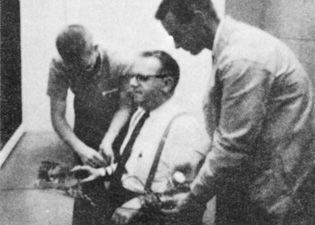
Under the pretense of an experiment on "learning" and "memory," Milgram placed test subjects in a lab rigged with fake gadgetry, where a man in a lab coat instructed them to administer electrical shocks to a fellow test subject (actually an actor) seated in another room in "a kind of miniature electric chair."

Comment: Henry See in Environment of Evil (a must read) analyzes the conclusions drawn from studies of a similar experiment called the Stanford Prison Experiment:
Zimbardo writes that human nature is dualistic: Each of us, given certain uncontrolled circumstances, is capable of sadistic or abusive behavior.

This explanation offered by Zimbardo lies squarely in his conceptualization of humanity and society.

We suggest that this conceptualization is fundamentally wrong [...] because it does not take into account the fact that there are among us on our planet human-looking individuals devoid of conscience and incapable of anything resembling what others would consider as emotion. Their emotions are only related to those associated with the hunt, with predation. They have no ability to register and feel the suffering of other human beings as anything more than a tasty food source. In fact, they thrive on the suffering of other people because it makes them feel important, special, smarter, and better than everyone else. We squirm and suffer while they pump themselves up because they have put another over on us. They know how we can be manipulated through playing on our emotions, and they are extremely successful at it. They are so successful that we don't even know that they exist! We blame ourselves. We even measure ourselves against their standards.


Cookie

Genes remember sugar hit: Australian research

Human genes remember a sugar hit for two weeks, with prolonged poor eating habits capable of permanently altering DNA, Australian research has found.

A team studying the impact of diet on human heart tissue and mice found that cells showed the effects of a one-off sugar hit for a fortnight, by switching off genetic controls designed to protect the body against diabetes and heart disease.

Family

Facing Tests for Genetic Disorders, Parents Avoid Pregnancy

Parents of children with genetic disorders tend to avoid future pregnancies rather than undergoing prenatal testing, a new study indicates.

In the study of U.S. parents with children affected by genetic conditions or impairments, more than two-thirds chose not to have any more children rather than accepting tests to identify or avoid the birth of another affected child, the study found. Of the parents who did have further children, a majority chose not to make use of prenatal screening or testing.

"Prenatal testing procedures (to detect genetic conditions or fetal anomalies) were perceived by many parents as presenting rather than resolving risks," said lead researcher Susan Kelly of the University of Exeter. "Many parents rejected the possibility of being confronted with the choice of termination or continuation of an affected pregnancy."

Wine

Fundamentalist Consumerism and an Insane Society

At a giant Ikea store in Saudi Arabia in 2004, three people were killed by a stampede of shoppers fighting for one of a limited number of $150 credit vouchers. Similarly, in November 2008, a worker at a New York Wal-Mart was trampled to death by shoppers intent on buying one of a limited number of 50-inch plasma HDTVs.

Jdiniytai Damour, a temporary maintenance worker was killed on "Black Friday." In the predawn darkness, approximately 2,000 shoppers waited impatiently outside Wal-Mart, chanting, "Push the doors in." According to Damour's fellow worker Jimmy Overby, "He was bum-rushed by 200 people. They took the doors off the hinges. He was trampled and killed in front of me." Witnesses reported that Damour, 34 years old, gasped for air as shoppers continued to surge over him. When police instructed shoppers to leave the store after Damour's death, many refused, some yelling, "I've been in line since yesterday morning."

The mainstream press covering Damour's death focused on the mob of crazed shoppers and, to a lesser extent, irresponsible Wal-Mart executives who failed to provide security. However, absent in the corporate press was anything about a consumer culture and an insane society in which marketers, advertisers, and media promote the worship of cheap stuff.

Heart

The science of romance: Brains have a love circuit

Washington - Like any young woman in love, Bianca Acevedo has exchanged valentine hearts with her fiance. But the New York neuroscientist knows better. The source of love is in the head, not the heart. She's one of the researchers in a relatively new field focused on explaining the biology of romantic love. And the unpoetic explanation is that love mostly can be understood through brain images, hormones and genetics.

That seems to be the case for the newly in love, the long in love and the brokenhearted.

Bell

Free Antibiotics...in U.S. Food and Water

The FDA has quietly revoked a ban on the routine dosing of farm animals with antibiotics.

The July 3 FDA directive was straightforward.

Routine dosing of farm animals with cephalosporin antibiotics to prevent disease and promote growth would be prohibited effective Oct. 1, 2008.

"We are issuing this order based on evidence that extralabel use of these drugs in food-producing animals will likely cause an adverse event in humans and, as such, presents a risk to the public health."

No kidding. The American Medical Association, American Academy of Pediatrics, Infectious Disease Society of America, Centers for Disease Control and Prevention and Pew Commission have all indicted livestock antibiotics for creeping human antibiotic resistance -- including last-chance antibiotics.

Magnify

Why Sleep is Needed to Form Memories

If you ever argued with your mother when she told you to get some sleep after studying for an exam instead of pulling an all-nighter, you owe her an apology, because it turns out she's right. And now, scientists are beginning to understand why.
Sleep
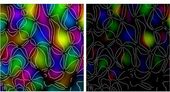
© Marcos Frank, Ph.DThe world as the brain sees it. Optical "polar" maps of the visual cortex are generated by measuring micro-changes in blood oxygenation (left panel). If vision is blocked in an eye (the right eye in this example) during a critical period of development, neurons no longer respond to input from the deprived eye pathway (indicated by a loss of color in the right panel).
In research published this week in Neuron, Marcos Frank, PhD, Assistant Professor of Neuroscience, at the University of Pennsylvania School of Medicine, postdoctoral researcher Sara Aton, PhD, and colleagues describe for the first time how cellular changes in the sleeping brain promote the formation of memories.

"This is the first real direct insight into how the brain, on a cellular level, changes the strength of its connections during sleep," Frank says.

The findings, says Frank, reveal that the brain during sleep is fundamentally different from the brain during wakefulness.

Magnify

"Lazy Eye" Treatments Provide New Insight on Brain Plasticity

Studies show how adult brains can be rewired back to a younger state.

The pirate look is a time-honored way to fix children's "lazy eye": the patch over the good eye forces the weak one to work, thereby preventing its deterioration. Playing video games helps, too. The neural cells corresponding to both eyes then learn to fire in synchrony so that the brain wires itself for the stereo vision required for depth perception. Left untreated past a critical age, lazy eye, or amblyopia, can result in permanently impaired vision. New studies are now showing that this condition, which affects up to 5 percent of the population, could be repaired even past the critical phase.

What is more, amblyopia may provide insights into brain plasticity that could help treat a variety of other disorders related to faulty wiring, including schizophrenia, epilepsy, autism, anxiety and addiction. These ailments "are not neuro­degenerative diseases that destroy part of the neural circuitry," notes Takao Hensch, a Harvard Medical School researcher. So if the defective circuits "could be stimulated in the right way, the brain could develop normally."

Health

US: EPA Sued to Properly Assess Health Risks of Pesticides in the Water Supply

The nonprofit environmental law firm Earthjustice has sued the Environmental Protection Agency (EPA) for failing to properly take into account the health and ecological risks of approved pesticides.

"There are several pesticides on the market that pose extreme risks to human health - through the water, air and food," said Earthjustice attorney Joshua Osborne-Klein. "Our lawsuits say that the EPA has not fully assessed these risks."

Of particular concern is the tendency of pesticides and other agricultural chemicals to end up in the groundwater, via air, soil and surface water contamination. The EPA has warned that groundwater is "highly susceptible to contamination from septic tanks, agricultural runoff, highway de-icing, landfills, and pipe leaks."

Health

Big Brother Health Care Provisions Slipped Into US Economic Stimulus Bill

The new $800 billion economic stimulus bill contains some striking new "Big Brother" health care language that should give pause to all freedom-loving Americans. For starters, the bill requires the electronic tracking of the medical records of all Americans. All your private medical data will be stored in a government database, including your history of disease, pharmaceutical treatments, surgeries and even emergency room visits.

How would you like the government knowing all the details about your drug rehab? Or alcoholism treatments? Abortion? Sexually-transmitted disease diagnosis? Pregnancy status? Blood test results?

But it gets even more interesting than that: Under the new provisions found in the bill, all U.S. doctors will now be stripped of autonomy and forced to follow the medical treatment guidelines dictated by the government.