Health & WellnessS


Sherlock

The China Study, Wheat, and Heart Disease; Oh My!

Image
(Not only is this woefully, frustratingly, absurdly belated, but it's also not yet finished. But I hate being a blog tease, so here's part one!)

If you've been following along with the previous China Study entries (and the wild drama that ensued), you know that I've been promising an entry on wheat for a while now, mostly because this little snippet snagged so many eyes:

Correlation between wheat flour and coronary heart disease: 0.67

That's a value straight from the original China Study data. Could the "Grand Prix of epidemiology" have accidentally uncovered a link between the Western world's leading cause of death and its favorite glutenous grain? Is the "staff of life" really the staff of death? Bwah ha ha.

Damning as it seems, a single unadjusted correlation isn't enough to make that leap. Actually, nothing in this post will be enough to make that leap, because A) it's epidemiological data and not a controlled study, and B) correlation isn't causation anyhow. You know the drill.

Red Flag

Coca-Cola: Pollution in a Bottle?

Image
© unknown
Coca-Cola currently offers more than 400 brands in over 200 countries or territories, and sells 1.6 billion servings each day with estimated global sales for Coca-Cola and all of its bottling partners of $60 billion. (1)

The company has operated a franchised distribution system dating from 1889. They produce a syrup concentrate which is then sold to various bottlers throughout the world who add water and sugar to the secret concentrate and turn it into soda, distributing it in cans and bottles.(2)

The first person to bottle Coke was Joseph Biedenharnin in Vicksburg, Miss., in 1894. In 1912 he bought a bottling franchise in Monroe, Louisiana and moved to Monroe to establish the plant in 1913.

In July, 2010, Coca-Cola Enterprises announced it will cease its bottling production in Monroe in September at the historic Ouachita Coca-Cola plant. A Coca-Cola Enterprises spokesperson said the company will continue to employ 180 at the Monroe facility, which will operate as a distribution and sales center. The facility currently produces 2-liter and 20-ounce plastic bottles of Coke.(3)

Attention

Silent Celiac Disease Causes Premature Death

Image
© unknown
The following article is being cited from Dr. Peterson, author of The Gluten Effect, and Physician at Health Now Medical Center

Research Cites Dramatic Increased Incidence of Celiac Disease

Dr Joseph Murray, a Mayo Clinic specialist in gastroenterology led a study which spanned 5 decades and included over 9,000 participants. It was presented in the journal Gastroenterology July 2009. The study found that subjects who were unaware they had celiac disease were almost four times more likely than non-celiacs to have died during the 45 years of follow-up the study spanned.

Dr Murray reports that celiac has become much more common in the last 50 years. He also remarked that undiagnosed or 'silent' celiac disease may have a significant impact on survival. He felt that putting together the increased prevalence with the impact on mortality made celiac a significant public health issue.

Cow

Avoid Genetically Modified Food: Doctors and Animals Alike Tell Us

Image
© Greenpeace
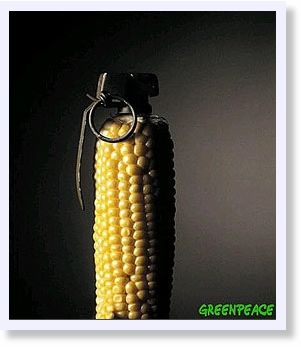
The farmer grinned as he told the visitor, "Watch this!" He called his pigs, which ran frantically towards him to be fed. But when he scooped out corn and threw it on the ground, the pigs sniffed it and then looked up at the farmer with confused expectation. The farmer then scooped corn from another bin and flung it near the pigs, which ran over and quickly devoured it.

The farmer said, "The first corn is genetically engineered. They won't touch it."

It's not just pigs that swear off genetically modified organisms (GMOs). In South Africa, Strilli Oppenheimer's chickens won't eat genetically modified (GM) corn. Most buffalo in Haryana, India, refuse cottonseed cakes if made from GM cotton plants. Geese migrating through Illinois only munched sections of the soybean field that was non-GMO. When given a choice, elk, deer, raccoons, and rats all avoided GMOs. And even during the coldest days of Iowa winter, squirrels, which regularly devour natural corn, refused to touch the GM variety.

One skeptical farmer who read about the squirrels wanted to see for himself if it was true. He bought a bag full of GM corn ears, and another of non-GM, and left them in his garage till winter. But by the time he fetched the bags, mice had done the experiment for him. They broke into the natural corn bag and finished it; the GM cobs were untouched.

Health

HFCS Name Sanitized to Boost Flagging Sales

A rose by any other name?

The Corn Refiners Association (CRA) has been trying for years to make high fructose corn syrup (HFCS), which I prefer to call the 'Corn Refiners Association Product' (CRAP), as acceptable as all other forms of sugar. As more and more studies show that CRAP (HFCS) is a major cause of the recent dramatic increases in obesity, diabetes and other 'metabolic diseases' in the US, UK and other westernised countries, consumers are getting the message and are abandoning CRAP laden foodstuffs in their droves.

Does the CRA give up? No sirree! The CRA think that if they change its name, the gullible public won't notice. According to the Associated Press, CRA is now petitioning the U.S. Food and Drug Administration (FDA) to allow it to change the name of the highly-processed, controversial sweetener to 'Corn Sugar', which they fervently believe will make it more acceptable.

No matter how you look at it, CRAP (HFCS) is a highly-processed, unnatural form of refined sugar that inflicts a heavy burden on the liver. Besides being derived from corn, most of which is genetically-modified (GM), HFCS is linked to metabolic syndrome, heart disease and type-2 diabetes. If that weren't bad enough, a study last year also found that much of the HFCS contains high levels of toxic mercury caused by the chemical refining process necessary to produce the HFCS. Nearly a third of the HFCS-containing breads, cereals, sodas and other consumer foods tested as part of the study showed up positive for mercury.

People

Interview with Dan Olmsted, Mark Blaxill: 'Age of Autism-Mercury, Medicine, and a Manmade Epidemic'

In their new book, The Age of Autism: Mercury, Medicine, and a Manmade Epidemic, Dan Olmsted and Mark Blaxill make a convincing case that the autism epidemic is largely environmental rather than genetic. They argue that mercury from pollution, commercial products, and vaccines has contributed greatly to the rise in autism over the last 70 years.

In doing research for the book, Olmsted and Blaxill investigated the backgrounds of the parents of some of the first children identified with autism by Leo Kanner in the 1930s. Olmsted, a reporter who has devoted his career to writing about autism, and Blaxill, a parent of a girl with autism, found links to mercury in the backgrounds of some of the parents of the children who were the original cases of autism.

Olmsted and Blaxill also state their belief that the rise in autism is related to the use of mercury in childhood vaccines. They point out that they are not anti-vaccine, but are pro-vaccine safety.

Attention

Bisphenol A Used in Dental Sealants

Image
© Getty Images
Bisphenol A - a chemical linked to behavioral, prostate and urinary tract changes -- is found in sealants used in pediatric dentistry, U.S. researchers say.

Researchers at New York City's Mount Sinai School of Medicine reviewed 10 years of toxicology studies.

The review, published in the journal Pediatrics, finds bisphenol A detectable in saliva for up to 3 hours after sealants containing BPA derivatives were used in children's teeth but concluded the overwhelming benefits to oral health outweighed the brief exposure to BPA.

"These dental products are still safe and an effective way to promote good oral health, but dentists should take precautions to reduce potential absorption of this chemical and the negative side effects associated with it," study leader Dr. Philip Landrigan says in a statement.

Precautions suggested include using less risky BPA derivatives -- such as bis-GMA over bis-DMA -- and taking action that lessens exposure, such as rubbing the surface with pumice to remove the top liquefied layer of the sealant and encouraging the patient to rinse for 30 seconds.

Comment: To read more on BPA, see the following articles carried on SOTT:

Bisphenol A Has Not Gone Away

New Study Confirms Bisphenol A Found in Plastic is Linked to Heart Disease

Bisphenol A (BPA) Found In Many Plastics May Cause Heart Disease In Women, Research Shows

Bisphenol A Exposure Dangerous for Human Heart and Reproduction

Bisphenol A, Chemical Used to Make Plastic, Lingers in Body

Bisphenol A Linked to Metabolic Syndrome in Humans


Magnify

Bisphenol A (BPA) May Affect Testosterone Levels

British and other researchers have identified changes in testosterone levels in men exposed to bisphenol A, a chemical used in food and drink containers.

Researchers at the Peninsula College of Medicine and Dentistry and the University of Exeter, both in England, and colleagues linked higher BPA exposure with small increases in levels of testosterone in the blood.

The large population study, published in Environmental Health Perspectives, found the average BPA daily of more 5 micrograms per day exposure in the European study population was slightly higher than recent comparable estimates for the U.S. population.

"This is the first big study of BPA from a European country and confirms that 'routine' exposures in the population are not negligible," David Melzer of Peninsula Medical School said in a statement. "This finding is consistent with the evidence from laboratory experiments. However, this is just the first step in proving that at 'ordinary' exposure levels, BPA might be active in the human body. This new evidence does justify proper human safety studies to clarify the effects of BPA in people."

Comment: To read more on BPA, see the following articles carried on SOTT:

Bisphenol A Has Not Gone Away

New Study Confirms Bisphenol A Found in Plastic is Linked to Heart Disease

Bisphenol A (BPA) Found In Many Plastics May Cause Heart Disease In Women, Research Shows

Bisphenol A Exposure Dangerous for Human Heart and Reproduction

Bisphenol A, Chemical Used to Make Plastic, Lingers in Body

Bisphenol A Linked to Metabolic Syndrome in Humans


Magnify

Yawning: Why is it Contagious?

Image
© Getty ImagesAlthough all vertebrates yawn, contagious yawning only exists only humans, chimpanzees and possibly dogs.
Yawning when others yawn is a sign of empathy and a form of social bonding.

Watch someone yawn, and try not to yawn yourself. It can be impossible to resist. Even reading about yawning can make you do it.

Now, a new study offers insight into why contagious yawning is such a powerful force.

Yawning when others yawn, the study suggests, is a sign of empathy and a form of social bonding. Kids don't develop this deeply rooted behavior until around age four, the study found. Kids with autism are half as likely to catch yawns. In the most severe cases, they never do.

Yawning might eventually help doctors diagnose developmental disorders. The work could also lead to a better understanding of the subtle ways that people communicate and connect.

Magnify

The World Seen Differently By Children And Adults

Unlike adults, children are able to keep information from their senses separate and may therefore perceive the visual world differently, according to research just published.

Scientists at UCL (University College London) and Birkbeck, University of London have found that children younger than 12 do not combine different sensory information to make sense of the world as adults do. This does not only apply to combining different senses, such as vision and sound, but also to the different information the brain receives when looking at a scene with one eye compared to both eyes.

The results, published in the Proceedings of the National Academy of Sciences, imply that children's experience of the visual world is very different to that of adults.

Dr Marko Nardini, UCL Institute of Ophthalmology, and lead author said, "To make sense of the world we rely on many different kinds of information. A benefit of combining information across different senses is that we can determine what is out there more accurately than by using any single sense."