Health & WellnessS


Heart

Stress relief helps cancer patients

Image
Cancer patients who learn to cope with stress can have improvement in stress-related biomarkers after a short time, a new study suggests.

A team of researchers at the University of California tried to study the effect of stress on the length of telomeres, structures on the end of chromosomes in patients' cells. This structure has an important role in preventing mutations by protecting its chromosome from deteriorating, breaking apart or joining with other chromosomes.

During the study, scientists divided 31 women with cervical cancer in to two groups, one getting usual care and the other receiving six counseling sessions by phone in addition.

The findings showed that decreasing chronic stress associated with cancer diagnosis prevented shortening of telomeres.

"Women participating in our clinical study who experienced an improved quality of life and decreased stress response had an increase in telomere length in the circulating white blood cells," said lead author Dr. Edward Nelson.

Ambulance

New data show non-alcoholic fatty liver disease will reach epidemic status in the US

Image
© Unknown

Berlin, Germany - According to new data presented today at the International Liver CongressTM, the United States (U.S.) could soon be faced with an epidemic of Non-Alcoholic Fatty Liver Disease (NAFLD)1, one of the major contributing factors of chronic liver disease (CLD), considered as one of the major causes of morbidity and mortality worldwide. The study highlights that if the current rates of obesity and diabetes continue for another two decades, the prevalence of NAFLD in the US is expected to increase by 50% in 2030.

The study analysed pre-existing clinical survey data over a 10 year period (1988-1994, 1999-2004 and 2005-2008), which included 39,500 adults from three survey cycles. Over the three cycles the prevalence of NAFLD doubled from 5.51% to 11.0% respectively. Furthermore, during the first survey cycle (1988-1994) 46.8% of all CLD's was related to NAFLD but by 2005-2008 this had increased to 75.1%. In addition, the prevalence of obesity and diabetes, the two key risk factors for NAFLD also steadily increased.

Mark Thursz EASL's Vice Secretary commented: "Non-alcoholic fatty liver disease is fast becoming one of the top concerns for clinicians due to the obesity epidemic and it's potential to progress to advanced liver disease which significantly impacts on overall liver-related mortality. This data highlights a serious concern for the future, and the enormous increasing health burden of NAFLD. If the obesity epidemic is anything to go by, the U.S. NAFLD epidemic may have a ripple effect worldwide. It is imperative that health systems continue to drive effective educational programmes to reinforce awareness among the general public to alert them of the risks of obesity and promote the importance of diet and exercise".

Cow

Genetically modified cows produce 'human' milk

genetically modified milk
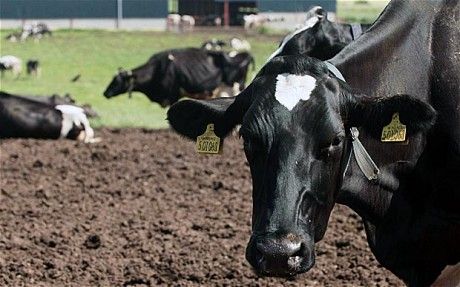
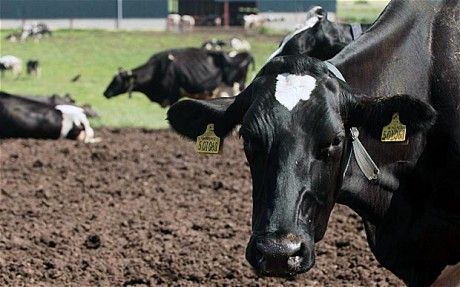
© Press AssociationResearchers say they are able to create cows that produce milk containing a human protein called lysozyme
Scientists have created genetically modified cattle that produce "human" milk in a bid to make cows' milk more nutritious.

The scientists have successfully introduced human genes into 300 dairy cows to produce milk with the same properties as human breast milk.

Human milk contains high quantities of key nutrients that can help to boost the immune system of babies and reduce the risk of infections.

The scientists behind the research believe milk from herds of genetically modified cows could provide an alternative to human breast milk and formula milk for babies, which is often criticised as being an inferior substitute.

They hope genetically modified dairy products from herds of similar cows could be sold in supermarkets. The research has the backing of a major biotechnology company.

The work is likely to inflame opposition to GM foods. Critics of the technology and animal welfare groups reacted angrily to the research, questioning the safety of milk from genetically modified animals and its effect on the cattle's health.

But Professor Ning Li, the scientist who led the research and director of the State Key Laboratories for AgroBiotechnology at the China Agricultural University insisted that the GM milk would be as safe to drink as milk from ordinary dairy cows.

He said: "The milk tastes stronger than normal milk.

"We aim to commercialize some research in this area in coming three years. For the "human-like milk", 10 years or maybe more time will be required to finally pour this enhanced milk into the consumer's cup."

China is now leading the way in research on genetically modified food and the rules on the technology are more relaxed than those in place in Europe.

Comment: "Genetically modified food, if done correctly, can provide huge benefit for consumers in terms of producing better products."

We (and many others) beg to differ:

Who's Afraid of GMOs? Me!
GMO Scandal: The Long Term Effects of Genetically Modified Food in Humans
Lyme & Autism Group Blasts Genetically Modified Foods as Dangerous
GMO: Health Risks
Latest GMO Research: Decreased Fertility, Immunological Alterations and Allergies
The Big GMO Cover-Up

And they want to feed this poison to helpless babies??


Radar

H1N1 Spreads to El Salvador

The Deputy Minister for Health Policy, Eduardo Espinoza, today confirmed a third case of H1N1 flu.

"Indeed, it was reported the third case. Antiguo Cuscatlan and is consulted at the Department of Health Barrios is a female person, 36 years, "explained Evans.

The first reported case this year was a minor (3 years), treated at the Hospital Bloom, while in the second, reported last week, it was a woman of 43 years.

The above translation describes the spread of H1N1 to El Salvador. Like for Mexico and Venezuela, the beginning of April is an unlikely time for an increase in influenza activity. It is late for the northern hemisphere season and early for the southern hemisphere season. Increases in H1N1 in El Salvador are almost certainly linked to the increased activity in Mexico to the north and Venezuela to the south.

Health

Best of the Web: Carbs are bad news for the brain

Image
Alzheimer's disease (a form of dementia) is characterized by the build-up in the brain of a protein known as 'amyloid-beta'. Not surprisingly, amyloid-beta has been 'targeted' by drug companies, including Eli Lilli who produced the drug Semagacestat which did a nice job of retarding amyloid-beta synthesis. However, in trials, Semagacestat accelerated decline in brain function in those who took it.

I learned this fact today reading a review from the European Journal of Internal Medicine entitled "Nutrition and Alzheimer's disease: The detrimental role of a high carbohydrate diet" [1]. The review is dense with information, and I might extract its information over more than one blog. But for starters, I thought I would pull out at least some of the interest insights this paper contains.

One of the major points made in the paper is this: cholesterol and fat is really important to the brain. It points out that although the brain is only about 2 per cent of body weight, it contains about a quarter of the total cholesterol in the body. The authors point out several roles for cholesterol in the brain, including the synapse - the 'gap' where one cell can communicate with another. Communication here is via what are known as 'neurotransmitters', which are released by one nerve cell and float across the synaptic gap to exert the effect on the nerve adjacent to it. The authors summarise the importance of cholesterol in the brain like this:

Cholesterol is required everywhere in the brain as an antioxidant, an electrical insulator (in order to prevent ion leakage), as a structural scaffold for the neural network, and a functional component of all membranes. Cholesterol is also utilized in the wrapping and synaptic delivery of the neurotransmitters. It also plays an important role in the formation and functioning of synapses in the brain.

It's also true that the brain actively takes up cholesterol (in the form of LDL cholesterol). This in itself suggests that cholesterol is desired in the brain and does something useful. Interestingly, a gene defect which leads to impaired cholesterol uptake by the brain is also associated with an enhanced risk of Alzheimer's disease.

Cow

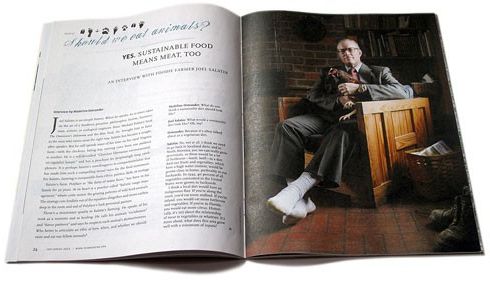
Joel Salatin: How to Eat Animals and Respect Them, Too

Image
© Yes! Magazine
Why this foodie farmer believes sustainable farming includes meat.

Joel Salatin is no simple farmer. When he speaks, he at times takes on the air of a Southern preacher, philosopher, heretic, businessman, activist, or ecological engineer. Since Michael Pollan's book The Omnivore's Dilemma and the film Food, Inc. brought him to fame as the man who raises meat the right way, Salatin has become a sought-after speaker. But he still spends most of his time on his rural Virginia farm - with the chickens, baling hay, moving cows from one paddock to another. He is a self-described "Christian libertarian environmentalist capitalist lunatic" and has a penchant for perplexingly long catchphrases. It is perhaps Salatin's unwillingness to compartmentalize that has made him such a compelling moral voice for the food movement. For Salatin, farming is inseparable from ethics, politics, faith, or ecology.

Salatin's farm, Polyface or "the farm of many faces," has been in his family for 50 years. At its heart is a practice called "holistic range management," where cattle mimic the grazing patterns of wild herd animals. The strategy cuts feedlots out of the equation altogether and stores carbon deep in the roots and soil of Polyface's lush perennial pasture.

There's a missionary quality to Salatin's farming. He speaks of his work as a ministry and as healing. He calls his animals "co-laborers" and "dance partners" and says he respects each animal's distinctiveness. Who better to articulate an ethic of how, when, and whether we should raise and eat our fellow animals?

Target

Medical Profession 'Oblivious' to Role of Chemicals in Diabetes and Obesity

US officials are beginning to take a greater interest in the reported links between the exposure to environmental chemicals, like Bisphenol A, with the development of diabetes and obesity.

The medical profession remains largely 'oblivious' to the reported links between exposure to chemicals in our daily lives and the development of diabetes and obesity, leading health specialists have told the Ecologist.

Obesity and diabetes rates in children and adults are increasing in many countries across the world. In 2008 almost a quarter of UK adults and 16 per cent of children aged 2-15 were classified as obese, while 2.8 million people are being treated for diabetes. Medical costs associated with these conditions are also rising, with the NHS estimated to be spending £9 billion per year treating diabetes and a further £4.1 billion treating obesity.

The increase in these medical conditions over the last decade has led many researchers to look for a connection with various external factors. Although changes in diet and physical activity are predominantly blamed for these increases, recent research has been exploring the possibility that environmental pollution could cause both diabetes and obesity.

People

Highly Contagious AIDS-Like Disease Spreading in China

Image
© UnknownA poster to promote AIDS awareness ahead of World AIDS Day in Beijing. A highly contagious AIDS-like disease is spreading in China, However, HIV tests come up negative.
In a small hotel across from the Beijing Center for Disease Control and Prevention, a reporter from New Express Daily, dressed in an isolation suit, interviewed a dozen "unusual" patients from different areas of China. Their symptoms are painful and debilitating, and AIDS-like, but repeated tests for HIV have come up negative.

Lin Jun, one of the patients interviewed in the March 24 New Express Daily report, said he used to be chubby, but now he is skin and bones, and his joints have become all deformed.

Lin is referred to in the group as "big brother" for his kindness and giving fellow patients hope when they feel hopeless, with some having considered suicide.

In 2008 Lin's mother received a blood transfusion at a hospital. Afterwords, she experienced frequent night sweats, numb limbs, aches all over, creaking joints, rashes on her hands, and weight loss.

Question

California, US: Three Valley sites in mysterious disease cluster report

Kettleman City, two other Valley locations on state list.

Kettleman City and two other Valley communities are among dozens of places nationally where people have died in mysterious disease clusters, environmentalists say in a report being released today.

Nine California locations are discussed in a report being released today by the Natural Resources Defense Council and the National Disease Clusters Alliance.

The groups say federal authorities need to study these clusters quickly and help local officials.

"The faster we can identify such clusters, and the sooner we can figure out the causes, the better we can protect residents living in the affected communities," said Dr. Gina Solomon, NRDC senior scientist and co-author of the paper.

Earlimart and McFarland also are discussed in the study, which will be the subject of testimony Tuesday in Washington, D.C., at a Senate Environment and Public Works Committee oversight hearing. Activist Erin Brockovich is scheduled to testify.

Image
© The Fresno Bee

Ambulance

Rising Reports Of Bad Reactions To Prescription Drugs

Image
© pevetolaw.com
Official reports of negative reactions to prescription drugs have increased dramatically over the last decade, according to a new study.

In a U.S. Food and Drug Administration (FDA) database launched in 1969, researchers found that over half the reports of "adverse events" suspected to be caused by a particular drug or device date from just the past 10 years.

The FDA currently receives about half-a-million such reports of health problems, and even deaths, associated with medical products each year. In 2000, they came in at a rate of nearly five for every 10,000 office visits in which at least one prescription was written. By 2005, that rate had risen to nearly seven per 10,000 visits, according to the new analysis published in the Archives of Internal Medicine.

Comment: To learn more about the Drugging of America and the dangerous and deadly side effects from prescription drugs read the following articles:

Drugging America: The drug industry exposed
100,000 Americans Die Each Year from Prescription Drugs, While Pharma Companies Get Rich
Pharmaceutical Deception - Are Prescriptions Really Safe to Take?
Poisoning by prescription drugs on the rise
Drug Side Effects "Neglected, Restricted, Distorted and Silenced" by Drug Companies
Pfizer: The Drug Giant That Makes Bank from Drugs That Can Kill You
The Over-Prescribing of Psychoactive Drugs to Children: A Scourge of Our Times