Health & WellnessS


Health

Mind-Controlling Parasite May Increase Brain Cancer Risk

Toxoplasma gondii
© Ke Hu and John Murray, PLoSThe mind-altering parasite called Toxoplasma gondii has a unique apparatus that is likely used to invade host cells and for its own replication. Shown here, the parasite is building daughter scaffolds within the mother cell.

Mind-altering parasites already linked to neurosis and schizophrenia might also be linked to brain cancer, scientists now find.

The germ, found worldwide, is known as Toxoplasma gondii. The parasites ultimately want to end up in cats, where they breed, but until then they can live in the cells of many warm-blooded creatures. In fact, it has infected about a third of all humans.

That doesn't mean that a third of humans will get brain cancer, and the scientists caution that they remain unsure of how one might cause the other.

"I do really want to emphasize we haven't definitively shown cause-and-effect, only a correlation," said researcher Kevin Lafferty, an infectious disease ecologist at the U.S. Geological Survey. "We hope our results inspire researchers to look for a link between Toxoplasma and cancer."

Also, "one shouldn't be panicking about owning cats," Lafferty added. "The risk factors for getting Toxoplasma are really hygiene and eating undercooked meat. One should be more concerned about those than pets."

Pills

Interview with Psychiatryland Author Phillip Sinaikin, MD

Image

Phillip Sinaikin, MD, is a Florida psychiatrist who has been in practice for 25 years. Author of Get Smart About Weight Control and co-author of Fat Madness: How to Stop the Diet Cycle and Achieve Permanent Well-Being, his new book focuses on excesses and industry influence in the field of psychiatry.

Rosenberg: Your new book, Psychiatryland, traces how deception, conflicts of interest, medical enabling and direct-to-consumer advertising have resulted in millions being on psychiatric drugs they don't need. One patient you describe has legitimate mourning and grief work to do after his wife leaves him for his own cousin. But his grief is pathologized into "bipolar disorder" by the system, including his own mother.

Sinaikin: By the time I saw this patient, he was on Wellbutrin and another antidepressant, the mood stabilizers Eskaltih and Keppra, the antipyschotic Abilify, the tranquilizer Klonopin and Adderall for ADD. Calling grief a psychiatric disorder deflates and dishonors the spiritual dimension of loss and grief and the sadness which is a marker of the lost love. By the time this patient came under my care (three years after the loss of his wife) his "case" had become such a jumbled, incomprehensible and irrational mess of overdiagnosis and overmedication that the only word I can use to describe it is criminal.

Attention

Pesticides in Your Toothpaste

Most people know by now that the orgy of antibacterial dish, body and laundry soaps that emerged in the 2000s do less to protect people from germs than to build new and better germs via antibiotic resistance. They also know that such bacterial overkill (soap and water work just as well) is at the basis of the "hygiene hypothesis" theory of childhood allergies that says a too clean environment with no exposure to microbes subverts the immune system.

But how many realize the antibiotic germ killers in such products are the same endocrine disrupter pesticides producing frogs with no penises in polluted streams?

One pesticide, triclosan, found in Colgate's Total toothpaste, breaks down into chloroform with tap water and dioxin in the environment, impairs thyroid function and lives in human breast milk, urine and blood, according to studies. When Dr. Sarah Janssen, a staff scientist with the Natural Resources Defense Council, spoke in Chicago about the health risks of triclosan and other endocrine disruptors in consumer products, many went home and filled garbage bags with Ajax and Palmolive antibacterial dish detergents, Colgate's Total toothpaste and other products. Yes, people are brushing their teeth with pesticides.

Cow

Best of the Web: Enjoy Saturated Fats, They're Good for You!

Image

This article is taken from a talk I gave at the 29th Annual Meeting of the Doctors for Disaster Preparedness in Albuquerque last week, on the controversial subject of saturated fats. Some of the slides that I used for this talk are put in here.

The medical establishment and government health authorities say that consumption of saturated animal fats is bad for us and causes heart disease. According to the lipid hypothesis - the label used for the diet-cholesterol theory of heart disease - saturated fats raise serum cholesterol levels, and high blood cholesterol causes obstructive plaques to form in arteries, called atherosclerosis. This pathologic process causes coronary heart disease and the need for coronary artery bypass surgery, which is what I do.

Types and Structure of Fats

Animals and tropical plants contain saturated fats while plants outside the tropics have mostly unsaturated fats. Saturated animal fats are in milk, meat, eggs, butter, and cheese. And tropical coconut and palm oil contain a lot of saturated fat.

The food industry makes trans fats. They do this by shooting hydrogen atoms into polyunsaturated vegetable oils. This straightens out the fatty acid molecules and packs them closer together, giving vegetable oil so treated a solid texture like lard. Trans fats are used to make margarine, with yellow bleach added so it looks like butter. They are also used prolong the shelf life of bakery products, snack chips, imitation cheese, and other processed foods.

Ambulance

Methylmercury in seafood hinders enzyme that protects against heart disease

Ayotte, P, A Carrier, N Ouellet, V Boiteau, B Abdous, EAL Sidi, ML Château-Degat and E Dewailly. 2011. Relation between methylmercury exposure and plasma paraoxonase activity in Inuit adults from Nunavik. Environmental Health Perspectives

A new study finds a reason behind why mercury exposure increases heart disease risk.

High amounts of methylmercury in a person's blood can inhibit an enzyme that helps prevent atherosclerosis, researchers report in the journal Environmental Health Perspectives.

Atherosclerosis is the buildup of plaque deposits along artery walls that can lead to vessel hardening and eventual blockage. This, in turn, can lead to heart attacks and other cardiac problems. The discovery helps explain how eating excessive amounts of mercury-containing seafood can increase the risk of cardiovascular disease.

MIB

FDA Copies the European Union and Slips In One of its Deadliest Weapons

american flag

Are the NDI guidelines the ultimate FDA tool to freeze dietary supplement innovation? A special report by Robert Verkerk, PhD, ANH-USA Scientific Director and ANH-Europe Executive and Scientific Director.

If the US natural products industry values its ability to keep a diverse range of products available for the benefit of the American public, and believes in not exposing the public to unnecessary costs, we strongly suggest that it look very closely at the latest guidelines from the FDA - with eyes wide open. We refer to the FDA guidelines on so-called "new dietary ingredients" (NDIs) that we've been telling you about over the past several weeks. These guidelines preempt a crackdown on ingredients used in natural products, one that appears to be coordinated closely with a similar clampdown happening currently in Europe. The guidelines bear an uncanny likeness to the European Union's Novel Food Regulation.

The justification given for the new guidelines is - as is always the case when facing a tighter regulatory noose around dietary supplements - consumer safety. This of course brings about a predictable response from the natural health sector: "But where are the dead bodies?" It's actually quite a pertinent question, and one that is rarely taken seriously by the FDA or other regulators.

Beaker

U.S. Minnesota: Wafting poison makes fertile ground for suit

Crop Spraying
Crop Spraying
Court rules pesticide drifting onto organic farm constitutes trespass.

Oluf Johnson's 12,000-acre farm in Stearns County is an organic island in a sea of chemically treated corn and soybeans.

Improperly applied pesticides repeatedly drift over from neighboring farms, often with dire consequences for Johnson. But now, thanks to a new court ruling, he and other farmers can sue to recover their losses.

Letting damaging chemicals cross property lines is trespassing, the Minnesota Court of Appeals ruled on Monday. Moreover, since those pesticides made his crop unsalable in the organic market, Johnson is entitled to damages from the company that applied it, the Paynesville Farmers Union Cooperative Oil Co., the court said.

"Whenever this happens it will give people with overspray a legal avenue to pursue," said Doug Spanier, an attorney with the Minnesota Department of Agriculture, which administers pesticide enforcement regulations in the state. And that could go for any farmer whose crop is made inedible by someone else's chemical spray and even homeowners whose property has been damaged by a neighbor's overuse of RoundUp, legal experts said.

Cow

Paleo Diet: Smart Eating or Latest Fad?

Image
© Getty Images
In the quest for optimum health and weight, should humans consider looking back at what their ancestors consumed? That's the theory proposed by the "Paleo Diet" (aka, Caveman Diet), which recommends taking cues from the age of hunters and gatherers and leaving some of our modern food groups behind.

The idea is simple: You eat a diet that's gluten-free, but rich in lean, organic meats, fish, poultry, eggs, vegetables, fruit and nuts. As much as possible should be sourced locally. You exclude grains, legumes, dairy products, salt, refined sugar and processed oils.

All of this measures up to a eating regimen that, according to Loren Cordain, professor of health and exercise at Colorado State University, is a "powerful way to normalize health and well-being.

Comment: What additional evidence is needed?? Humans have been eating a Paleolithic diet for most of our history and it was only with the advent of agriculture that the diseases of civilization began to plague mankind. See: Agriculture: The Worst Mistake In The History Of The Human Race

For more information on ways to improve health through correct nutrition, visit our Diet and Health Forum.


Attention

Low Salt Diet Increases Cardiovascular Mortality

Image
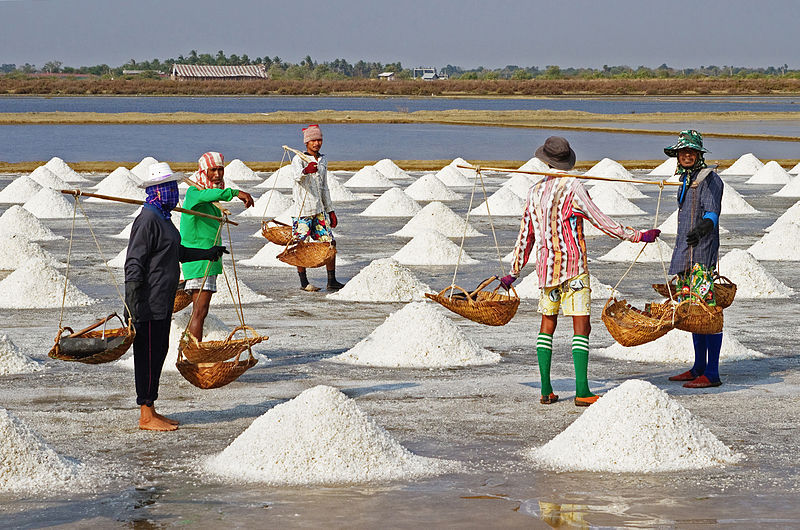
© Wikimedia CommonsHarvesting sea salt
The Low Salt Diet Revisited

A recent study on the effect of a low salt diet made headlines, finding that a low salt diet increases mortality for patients with congestive heart failure.(1-6) The study concluded there was not enough evidence to advise a low-salt diet for the rest of us. They doubted a low salt diet would benefit the population.(6) In this article we will re-examine the low salt diet, clear away the confusion, and make recommendations about salt intake, hypertension, and health.

Health Benefits of Salt

We know from many years of published studies that increasing salt intake increases blood volume and also blood pressure. Salt is essential for maintaining blood volume, blood pressure, and overall health. The salt content of blood is similar to ocean water. Both have sodium chloride, also known as salt.

Importance of Salt

One example of the importance of salt is the common practice of starting an intravenous solution of salt and water as the first line treatment for the trauma patient upon arrival to the hospital Emergency Room.

Family

Brain scans find similarities between children with autism and their siblings

Image

Children with autism and their siblings share similar patterns of reduced activity in brain regions linked to empathy, according to new research carried out at the University of Cambridge, UK. The researchers believe these findings could lead to a greater understanding of the role of genes in autism and the development of techniques for predicting the risk of developing autism in the future.

The study, which was carried out by a team of researchers led by Dr Michael Spencer with the backing of the Medical Research Council's Cognition and Brain Sciences Unit, used functional Magnetic Resonance Imaging (fMRI) to detect active areas of the brain in response to images of different human expressions.

The researchers initially compared the brains of autistic children to children with no family history of autism and found those with autism displayed reduced brain activity in regions involved in responding to other people's emotions. This is not a new finding - a known feature of autism is a difficulty in detecting emotional signals such as body language and facial expressions. However, when the researchers went on to look at the unaffected siblings of the children with autism, they found a very similar pattern of reduced activity in the same brain regions.