Health & WellnessS


Evil Rays

US: Students Suffering from Uncontrollable Tics Test Positive for Infections

A doctor working to determine what is causing more than a dozen teenage girls to experience uncontrollable tics announced all the girls he has seen have tested positive for infections that could mean they are suffering from Pediatric Acute Neuropsychiatric Syndrome (PANS, formerly known as PANDAS.)


Dr. Rosario Trifiletti made his announcement on the Dr. Drew Show on the cable network HLN.

"I can tell you that they are testing positive for, each one is testing positive either for streptococcas or mycoplasma, which are known triggers of the PANDAS/ PANS Syndrome," said Trifiletti.

Trifeletti was called for a second opinion by parents in LeRoy who aren't satisfied with the initial diagnosis, conversion disorder, given by the doctors at DENT Neurological in Amherst.

Attention

Child Abuse Leaves Mark on Brain

Lonely Boy
© Suzanne Tucker | ShutterstockDifferences in the brains of abused or non-abused adults could be the source of abuse-related mental illness.
Childhood abuse and maltreatment can shrink important parts of the brain, a new study of adults suggests.

Reduced brain volume in parts of the hippocampus could help to explain why childhood problems often lead to later psychiatric disorders, such as depression, drug addiction and other mental health problems, the researchers say. This link could help researchers find better ways to treat survivors of childhood abuse.

"These results may provide one explanation for why childhood abuse has been identified with an increased risk for drug abuse or psychosis," study researcher Martin Teicher, of Harvard University, told LiveScience. "Now that one can look at these sub-regions [in the brain], we can get a better idea of what treatments are helping."

Pirates

Eat it up Monsanto!

Image
© greenpeace.org
There's a story doing the rounds again, about how Monsanto, one of the world's largest profiteers of genetically engineered (GE) food, banned GE food from its own corporate canteens!

Monsanto had its pants pulled down by Friends of the Earth in 1999, who revealed that the company was refusing to serve to its own staff the very same GE food that it incessantly foists upon impoverished nations on the premise that it will save populations from starvation. Although it has never been proved, Monsanto constantly claims that GE food is harmless - so why wasn't it serving it in its own office?

In one canteen, run by external provider, Sutcliffe Catering, a notice read that a decision has been taken to remove, as far as practicable, GE soya and maize from all food products served in the canteen. "We have taken the above steps to ensure that you, the customer, can feel confident in the food we serve", the provider said.

Info

Study Shows: Tai Chi Helps Ease Parkinson's Disease Symptoms

Image
© Huffingtonpost
The ancient Chinese exercise of tai chi improved balance and lowered the risk of falls in a study of people with Parkinson's disease.

Symptoms of the brain disorder include tremors and stiff, jerky movements that can affect walking and other activities. Medications and surgery can help, and doctors often recommend exercise or physical therapy.

Tai chi (ty-CHEE'), with its slow, graceful movements, has been shown to improve strength and aid stability in older people, and has been studied for a number of ailments. In the latest study, led by Fuzhong Li of the Oregon Research Institute in Eugene, tai chi was tested in 195 people with mild-to-moderate Parkinson's.

Dollar

Needless Diabetes-Linked Antibiotic Prescriptions Cost NHS $10 Million Per Year

Image
© Activist Post
Antibiotics are not only breeding illness among the population, but are also so vastly over-prescribed that it is costing the United Kingdom's National Health Service (NHS) the equivalent of over 10 and a half million dollars per year. According to new research, doctors are dishing out more than 1.6 million unnecessary antibiotic prescriptions for common ailments such as sinusitis and acute coughs. The result: an unnecessary and massive financial hit.

Conducted by researchers from Cardiff University and led by Professor Chris Butler, the two-year study worked with 68 GP practices in Wales. Finding that antibiotics were needlessly given to patients without effect, doctors were provided data that could limit the massive prescription count. Given data regarding antibiotic prescribing methods and resistance data, the researchers concluded that even a 5.5% reduction in antibiotic prescribing could save over $1,000 per individual practice - and cut over 2 million dollars per year in worthless antibiotic prescriptions.

Widespread Prescriptions, Massive Adverse Reaction

The high volume of antibiotic prescriptions - deemed needless or not - are heavily contributing to the illnesses many individuals are facing on a daily basis. This has to do with how antibiotics impact not only the 'bad' bacteria that could be making you sick, but also the 'good' bacteria that actually prevent illness and maintain gut health. Of course destroying the bad bacteria is good, but the negative effect on your gut health that results from antibiotics is quite serious. Your gut is a central function of the immune system, and when compromised your body's "security system" begins to weaken.

Family

Spanking kids can cause long-term harm-Canada study

Image
© unk
Toronto: Spanking children can cause long-term developmental damage and may even lower a child's IQ, according to a new Canadian analysis that seeks to shift the ethical debate over corporal punishment into the medical sphere.

The study, published this week in the Canadian Medical Association Journal, reached its conclusion after examining 20 years of published research on the issue. The authors say the medical finding have been largely overlooked and overshadowed by concerns that parents should have the right to determine how their children are disciplined.

While spanking is certainly not as widespread as it was 20 years ago, many still cling to the practice and see prohibiting spanking as limiting the rights of parents.

That point of view highlights the difficulty in changing hearts and minds on the issue, despite a mountain of accumulated evidence showing the damage physical punishment can have on a child, says Joan Durant, a professor at University of Manitoba and one of the authors of the study.

"We're really past the point of calling this a controversy. That's a word that's used and I don't know why, because in the research there really is no controversy," she said in an interview.

Health

Men Stressed Most by Work, Women by Life

Stress
© Shutterstock

While personal matters such as family problems and living situations might cause the most stress for women, new research shows it's on-the-job issues that cause men the most anxiety.

A study by Polaris Marketing Research regarding sources of stress revealed that men were more likely to say work issues were causing them angst, while women were significantly more likely to cite financial issues, lack of time, family problems, living situation and relationship issues.

While both men and women cited watching television as their top way to relieve stress, their other unwinding tricks varied.

According to the research, women are more likely to sleep, listen to music, surf the Internet, socialize, pray, read a book, write in a journal or eat their favorite comfort foods, while men were more likely to play video games, exercise and have a drink to help relax.

Info

Is Cancer An Ancient Survival Program Unmasked?

Cell
© GrenMedInfo

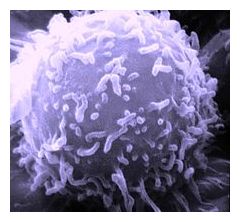
Ever since Richard Nixon declared a war on cancer in 1971 through the signing of the National Cancer Act,[i] over a hundred billion dollars has been spent by our government on research and drug development in an attempt to eradicate the disease, with trillions more spent by the cancer patients themselves, but with disappointing results. Even after four decades of waging full-scale conventional (surgery and chemo) and nuclear (radiotherapy) war against cancer, close to one in every four Americans will be diagnosed with the disease within their lifetimes. Could this colossal failure reflect how profoundly misunderstood the condition is, and misguided are our attempts to prevent and treat it?

The time has come to shift the conceptual framework away from the idea that cancer is something bad that happens to the body, to something the body does in order to survive vis-à-vis an increasingly toxic and nutrient-deprived environment. Only then we will begin to unravel the mystery behind the colossal failure of the conventional medical system and why the 'war against cancer' will only be successful when we embrace our enemy with greater compassion and understanding, instead of blasting it (and ourselves) into oblivion.

For the past half century, the "Mutational Theory" has provided the prevailing explanation for the cause of most cancers, where, as the story goes, accumulated mutations to the DNA within the nucleus of our cells lead some to "go berserk," their "insane" behavior a result of multiple destructive events to the intelligent code within the cell (DNA) that keep them acting in a 'civilized' manner relative to the larger bodily whole. In this view, these rogue cells clone themselves inordinately, spreading outward in a characteristically cancerous manner (cancer = Greek for "crab"), not unlike the characteristics of an infectious process within the host, eventually obstructing vital processes, resulting in morbidity and death. One paper summarizes this view as follows:

Syringe

Almost 800 adverse reactions to swine flu vaccine identified

The Swine flu vaccine has topped the list of drugs responsible for the largest number of suspected adverse reactions, new figures show.

A total of 779 suspected adverse reactions were linked to the vaccine between 2010 and 2011.

Most of these were relatively mild, such as localised swelling, gastrointestinal problems and flu-like symptoms.

However, health authorities have identified up to 30 cases of young people with the sleeping disorder narcolepsy as part of an investigation into a possible link between the condition and the swine flu vaccine, Pandemrix.

Health authorities insist the vaccine is safe and that the risk-benefit balance for the jab remains positive.

Attention

Have Bees Become Canaries In the Coal Mine? Why Massive Bee Dieoffs May Be a Warning About Our Own Health

bee
© n/a
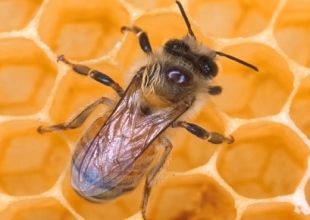
It's often said that we have bees to thank for one out of every three bites we take of food. In addition to producing honey, honeybees literally criss-cross the United States, pollinating almonds, oranges, melons, blueberries, pumpkins, apples, and more. And while carrots are a biennial root crop that are harvested long before they flower, all carrots are planted from seed, and honeybees pollinate the carrot flowers that produce the seeds. Other species of bees, both social and solitary bees, pollinate other crops. And the populations of all these species of bees are in decline.

The decline of bees has been in the headlines for several years, and theories to explain their deaths abound. But perhaps there is not just one single cause. University of California San Diego professor of biology James Nieh studies foraging, communication and health of bees. "I would say it's a combination of four factors; pesticides, disease, parasites, and human mismanagement," says Nieh. Bees might be weakened by having a very low level of exposure to insecticides or fungicides, making them more susceptible if they are attacked by viruses or parasites. "It's kind of like taking a patient who is not doing so well -- very weak, poor diet, exposing them to pathogens, and then throwing more things at them. It's not surprising that honeybees are not very healthy."

One class of pesticides, neonicotinoids in particular has received a lot of attention for harming bees. In late 2010, the EPA came under fire from beekeepers and pesticide watchdog organizations. This happened when Colorado beekeeper Tom Theobald spoke out about how the EPA allowed clothianidin to be used without any proof it was safe and despite the fact that the EPA's own scientists believed it "has the potential for toxic risk to honey bees, as well as other pollinators."