Health & WellnessS


Attention

Monsanto's Roundup is Causing DNA Damage

Image
© prometheanpost.comMonsanto's Roundup is Causing DNA Damage
There is a reason that masks are worn while applying herbicides, and warning signs are erected upon recently sprayed land plots; herbicide exposure is known to cause serious health complications.

New research has recently been released showing that glyphosate, the main active ingredient found in Monsanto's Roundup Ultra Max, is causing both DNA and cellular damage to cells found in the mouth and throat.

Seeing as the inhalation of herbicides and ingredients like glyphosate is very common, this research alone is enough to raise concern over the safety of such substances which are used on a major scale.

The Institute of Science in Society reports:
...Monsanto's formulated version of glyphosate called Roundup Ultra Max caused cellular damage and DNA damage including chromosomal abnormalities and ultimately killed the cells at higher concentrations. Importantly, DNA damage occurred at concentrations below those required to induce cell damage, suggesting that the DNA damage was caused directly by glyphosate instead of being an indirect result of cell toxicity.


Cheeseburger

Junk Food Junkies: Dying For a Fix

Image
© thefrisky.com
Junk food is over-processed and too easy to digest. Junk food requires very little processing by the body because it is mostly sugar, over-processed grains and empty fillers like hydrolyzed starches, cellulose and maltodextrin. The digestive system is like any other system in the body, if you don't use it, you lose it. Your gut becomes lazy.

The more junk food a junky eats, the more flaccid the digestive system becomes. The intestines are a long tube of muscles that contract in a rhythm that pushes food from beginning to end. On a junk food diet there is no significant fiber to exercise the intestines to keep them toned up and they become weak and distended. Digestion slows down, constipation happens and parasites flourish. Pouches of diverticula push through the wall of the weakened intestines causing pain and infection.

Comment: Read the following articles for a deeper understanding about why 'Junk Food Junkies need their fix':

Experts Say: Junk Food Can Hijack Brain Like Drugs Do
Junk Food as 'Addictive as Drugs'
Junk Food-Addicted Rats Chose to Starve Themselves Rather than Eat Healthy Food
Junk Food Found to Deteriorate Pleasure Center of Brain
Why We Mindlessly Eat Junk Food - and How to Stop
How We Became a Society of Gluttonous Junk Food Addicts


Alarm Clock

Are Everyday Plastics Causing Infertility?

Image
© natural-fertility-info.com
No matter where we look there is a piece of plastic vying for our attention. Maybe it is keeping our food wrapped in the refrigerator; or maybe it contains the water we drink all day long or maybe, it is the container we reheat out lunch in at work. Wait! Could all that plastic be affecting your fertility? Maybe, warn some fertility researchers.

In a research study conducted by Dr. David Lindsay, of the Department of Obstetrics and Gynecology at Monash University, Melbourne Australia, it was reported that nearly 40% of all infertility cases have no apparent cause - or at least one that is currently detectable. That alarming statistics has sent researchers on a type of scavenger hunt, looking for previously unknown causes of infertility to help correct this ever-growing problem among the world's child-rearing population.

One theory, leading researchers to more study is the possibility that an increase in plastics use in everyday lifestyles could be a contributing factor, causing an increase of infertility worldwide. After all, most plastics contain toxic chemicals that has been shown to have a negative effect on the body's immune system and even hormone regulation.

Health

Can You Hear Me Now? New Strategy Discovered to Prevent Hearing Loss

Image
© UnknownWhen it comes to preventing hearing loss, keeping the volume down is still the best strategy.
If you're concerned about losing your hearing because of noise exposure (earbud deafness syndrome), a new discovery published online in the FASEB Journal offers some hope. That's because scientists from Germany and Canada show that the protein, AMPK, which protects cells during a lack of energy, also activates a channel protein in the cell membrane that allows potassium to leave the cell. This activity is important because this mechanism helps protect sensory cells in the inner ear from permanent damage following acoustic noise exposure.

This information could lead to new strategies and therapies to prevent and treat trauma resulting from extreme noise, especially in people with AMPK gene variants that may make them more vulnerable to hearing loss.

"Future research on the basis of the present study may lead to the development of novel strategies preventing noise-induced hearing loss or accelerating recovery from acoustic trauma," said Florian Lang, Ph.D., a researcher involved in the work from the Department of Physiology at the University of Tübingen, in Tübingen, Germany.

Fish

Fish Mercury Levels: 1/4 Freshwater Fish Exceed 'Safe' Mercury Levels

Contaminated Fishes
© NaturalSociety
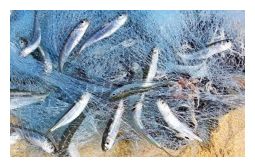
A study completed in 2009 and released by the U.S. government found that every single freshwater fish tested was contaminated with mercury. They tested fish from 291 different streams across the country and didn't find a single mercury-free fish. What's more, fish mercury levels were often alarming.

According to the report, fish mercury levels in more than one-fourth of the fish tested contained mercury levels exceeding those set forth for people by the Environmental Protection Agency (EPA). More than two-thirds exceeded EPA levels for other mammals.

Many people opt for fish over other "meats" to avoid many of the toxins found in modern livestock, but this research sheds light yet again on the toxicity and contamination of fish, and that these creatures are often not healthful alternatives to other animals.

The EPA's website cautions that a little mercury isn't necessarily bad for the average person, that all fish naturally contain mercury. But if 25% of freshwater fish had more mercury than the FDA prescribed back in 2009, how many of them are over that limit now?

Mercury enters the water system through contaminants "spewed" into the atmosphere, according to Reuters. They say these emissions from industrial plants (particularly coal-fired plants) then settles into the water systems.

Health

Why A Protein Meal Tells Your Brain You're Full

Full
© PreventDisease.com
Feeling full involves more than just the uncomfortable sensation that your waistband is getting tight. Investigators reporting online on July 5th in the Cell Press journal Cell have now mapped out the signals that travel between your gut and your brain to generate the feeling of satiety after eating a protein-rich meal. Understanding this back and forth loop between the brain and gut may pave the way for future approaches in the treatment and/or prevention of obesity.

Although levels of fats and sugars have been shown to influence the desire to eat, until now no team had demonstrated how protein molecules regulate appetite.

Food intake can be modulated through mu-opioid receptors (MORs, which also bind morphine) on nerves found in the walls of the portal vein, the major blood vessel that drains blood from the gut. Specifically, stimulating the receptors enhances food intake, while blocking them suppresses intake. Investigators have now found that peptides, the products of digested dietary proteins, block MORs, curbing appetite. The peptides send signals to the brain that are then transmitted back to the gut to stimulate the intestine to release glucose, suppressing the desire to eat. Mice that were genetically engineered to lack MORs did not carry out this release of glucose, nor did they show signs of 'feeling full', after eating high-protein foods. Giving them MOR stimulators or inhibitors did not affect their food intake, unlike normal mice.

Info

13 Animal-to-Human Diseases Kill 2.2 Million People Each Year

Pig
© Martine De Graaf | Dreamstime.comResearchers found many livestock, such as pigs, were infected with zoonoses.
Diseases that can be transmitted between animals and humans, such as bird flu and tuberculosis, can wreak havoc on the health of both organisms. Now researchers have found 13 so-called zoonoses are responsible for 2.2 million human deaths every year.

The study, detailed this week in the report "Mapping of Poverty and Likely Zoonoses Hotspots," shows the vast majority of these illnesses and deaths occur in low- and middle-income countries. For instance, Africa's Ethiopia, Nigeria and Tanzania, along with India, had the highest rates of associated illness and death.

"From cyst-causing tapeworms to avian flu, zoonoses present a major threat to human and animal health," lead study author Delia Grace, a veterinary epidemiologist and food safety expert with the International Livestock Research Institute (ILRI) in Kenya, said in a statement. "Targeting the diseases in the hardest-hit countries is crucial to protecting global health as well as to reducing severe levels of poverty and illness among the world's 1 billion poor livestock keepers."

The new global zoonosis map, an update of one published in the journal Nature in 2008, also revealed the northeastern United States, Western Europe (particularly the United Kingdom), Brazil and parts of Southeast Asia may be hotspots of "emerging zoonoses."

An emerging zoonosis is a disease that is newly infecting humans, has just become virulent, or has just become drug-resistant.

Pills

FDA: Dr. Drew was paid $275,000 to promote antidepressant

Image
© Kevin Winter/Getty ImagesDr. Drew Pinsky
Dr. Drew Pinsky has come under fire for helping to market an antidepressant for uses not approved by the Food and Drug Administration.

A Boston judge on Thursday approved a record $3 billion guilty plea by British drugmaker GlaxoSmithKline, which paid the "Celebrity Rehab" doctor -- known as Dr. Drew -- $275,000 to tout Wellbutrin, approved by the FDA to treat depression, as a drug to treat other conditions including obesity, addictions and sexual dysfunction.

At one point, Pinsky, then hosting sex and romance radio program "Loveline," told a woman that ingredients in the drug explained her having 60 orgasms in one night, a by-the-books talking point from Glaxo in what the federal government called its "nationwide scheme" to market the drug for alternative uses.

In a statement to Forbes, Pinsky defended his comments about the drug, claiming they were in line with his clinical observations of its side effects.

"In the late 90s I was hired to participate in a 2 year initiative discussing intimacy and depression which was funded by an educational grant by Glaxo Wellcome," he wrote in the e-mailed statement. "Services for the non branded campaign included town hall meetings, writings and multimedia activities in conjunction with the patient advocacy group the National Depressive and Manic Depressive Association. My comments were consistent with my clinical experience."

But the Justice Department's complaint against Glaxo alleged that Pinsky highlighted the drug's libido-enhancing effects without revealing that he was a paid spokesman.

It is unclear whether Pinsky will face any legal issues.

Neither Pinsky nor Glaxo responded to emails and calls from TheWrap for comment.

Cow

Diseases from animals hit 2 billion people a year

Image
© UnknownCompanies more concerned with their bottom line than human health.
A global study mapping human diseases that come from animals like tuberculosis, AIDS, bird flu or Rift Valley fever has found that just 13 such diseases are responsible for 2.4 billion cases of human illness and 2.2 million deaths a year.

The vast majority of infections and deaths from so-called zoonotic diseases are in poor or middle-income countries, but "hotspots" are also cropping up in the United States and Europe where diseases are newly infecting humans, becoming particularly virulent, or are developing drug resistance.

And exploding global demand for livestock products means the problem is likely to get worse, researchers said.

"From cyst-causing tapeworms to avian flu, zoonoses present a major threat to human and animal health," said Delia Grace, a veterinary epidemiologist and food safety expert with the International Livestock Research Institute (ILRI) in Kenya and lead author of the study.

She said targeting these diseases in the hardest hit countries is crucial to protecting global health, and failing to tackle them would allow demand for meat products to "fuel the spread of a wide range of human-animal infectious diseases."

Comment: The idea that (corn and other, often GM based) food might be the cause of these health risks to animals and humans is never brought to the fore in this article. No reference to Genetically Modified Foods. No reference to the various antibiotics or growth hormones given to animals. No mention of the use of said items actually increasing the risk to human populations.Our food and water, the means of our continued survival are at risk due to over breeding, stagnant air, water and cramped spaces. Some animals haven't the space to turn their heads to scratch their own behinds. Of course you will get super bugs (diseases) in such areas as you feed the animals growth hormones and antibiotics. Should we expect a different outcome? Can you imagine growing up standing in your own urine and feces? Nearly all of our store purchased meats live just that way.

Farmers - real, live, human people, are our last defense at the kitchen table so far as what goes into our mouths. Do you think Industrial Farmers care as much about their product (your food!) as they do about profits?

Do you ever wonder why some foods, after eating them, make you feel like you lost energy? Do you realize that many of the non-meat & dairy products today, in your supermarket, contain Genetically Modified food ingredients? It's a cycle. One food is weakening your immune system and the other is loading you with toxins that cause sickness, disease, cancer..

Have a listen: Toxic World, Toxic Bodies
GMO Frankenfoods and What You Can Do to Improve Your Health

Or watch:


Stop

Juicing Can Wreck your looks: Ugly Side-effects Include Flaking skin, Hair Loss and Rotting Teeth

Image
Failing the taste test: Celebs like Jennifer Aniston, left, favour juice detoxes but Janice Dickinson looks unimpressed by her green smoothie
Last month's news that Jennifer Aniston has become a veg juice devotee, regularly slugging back a concoction of cucumbers, beetroot, spinach, kale, garlic, ginger, carrots and celery, will only fuel the juicing fad.

Because look around any high-end gym or yoga studio these days and you'll see women swigging something that looks like it's been scooped from a pond. This is the juice cleanse, or the juice detox - don't ever refer to it as a diet, that would sound like you're doing it to lose weight, whereas, of course, this is all about purifying your body.

Popular among A-listers including Salma Hayek, Gwyneth Paltrow and Sarah Jessica Parker, juice detoxes have gone mainstream, with legions of women pulping Tesco's entire fruit and veg aisle themselves, or paying up to £40 a day - yes, really - to have supplies delivered to their door.

It sounds terribly good for you - just masses of fruit and vegetables all juiced together, filling you full of vitamins, minerals and anti-oxidants. But while if you're doing it Aniston-style and eating normally for most of the week, it probably won't do you any serious harm, the truth is that a juice regime that lasts several weeks - or even just several days - could actually be wreaking all sorts of havoc on your health.

Comment: A better way to lose weight and regain health is a gluten and casein free paleo diet which is low in carbohydrates: