Health & WellnessS


Bacon

Last Diet You Will Ever Need - Try Eating REAL Food!

Image
© modernalternativemama.com
Why is it that we believe we can feed our bodies industrial nutrient depleted food-like substances empty of life and be healthy? How did we come to believe that food industry chemicals and processing could replace nature made foods?

A hundred years ago all food was organic, local, seasonal, fresh or naturally preserved by ancient methods. All food was food. Now less than 3% of our agricultural land is used to grow fruits and vegetables, which should make up 80% of our diet.

Today there are not even enough fruits and vegetables in this country to allow all Americans to follow the government guidelines to eat 5 to 9 servings a day.

What most of us are left with is industrial food. And who knows what lurks in the average boxed, packaged, or canned factory made science project.

When a French fry has more than 20 ingredients and almost all of them are not potato, or when a fast food hamburger contains very little meat, or when the average teenager consumes 34 teaspoons of sugar a day, we are living in a food nightmare, a sci-fi horror show.

Cookie

Hidden Food Sensitivities Make You Fat and Impair Immune System

Image
Think food allergy and you might conjure the worst-case scenario, like a child going into anaphylactic shock after exposure to peanuts. No doubt, a severe food allergy is scary. But it's also relatively rare. A much more common scenario is an adult with a low-grade food allergy to, say, gluten who never pinpoints the cause of his misery. His symptoms are vague (bloating, constipation, weight gain) and his exposure is frequent (breakfast, lunch, and dinner), so the connection is murky. And, over years, the hidden allergy takes a toll on the immune system. The result of an overworked immune system is everything from weight gain to irritable bowel syndrome (IBS) to arthritis.

Question

Rare Disorder Drives Woman to Document Industrial Canaries

Thilde Jensen
© Wired.com
Back in 2003, photographer Thilde Jensen started getting sick. She had problems with her sinuses, flu-like symptoms, a weird tingling in parts of her body and at times felt drunk and foggy.

"I felt like my blood was running backwards," she said.

The weirdest part was what set if off. First she noticed that the symptoms would appear whenever she was around a lot of car exhaust. Then she experienced similar symptoms whenever she was around books. Then it was cigarette smoke and perfume.

"It just kept getting worse and worse," says Jensen, 40, who at the time was living in New York City. "It actually became kind of surreal. It was like being in a Hitchcock movie, like everything was out to get me."

Finally, Jensen says, it got the point where there were so many triggers that she became totally disoriented and completely non-functional. By that point certain foods were also making her sick, as were electronics that emitted radiation, like phones and computers.

Faced with constant irritation, Jensen made the difficult decision to permanently move to upstate New York and live outside in a tent, away from almost all the amenities of modern life. It was the only thing, she realized, that would make her feel normal again.

She was married at the time, but about a year into her stay near Syracuse the marriage ended - in part because she couldn't move back to NYC and her husband couldn't move out to the country. Jensen says she's doesn't hold the breakup against her former husband.

"Most people would probably do what he did because it was such an extreme life change, I wasn't the same person anymore," she says. "I used to be this fun-loving person and suddenly I couldn't do anything, and in certain ways I really needed to do it by myself."

Cheeseburger

Portion Sizes in Restaurants Quadruple Since 1950s

InfoGraph
© NaturalSociety
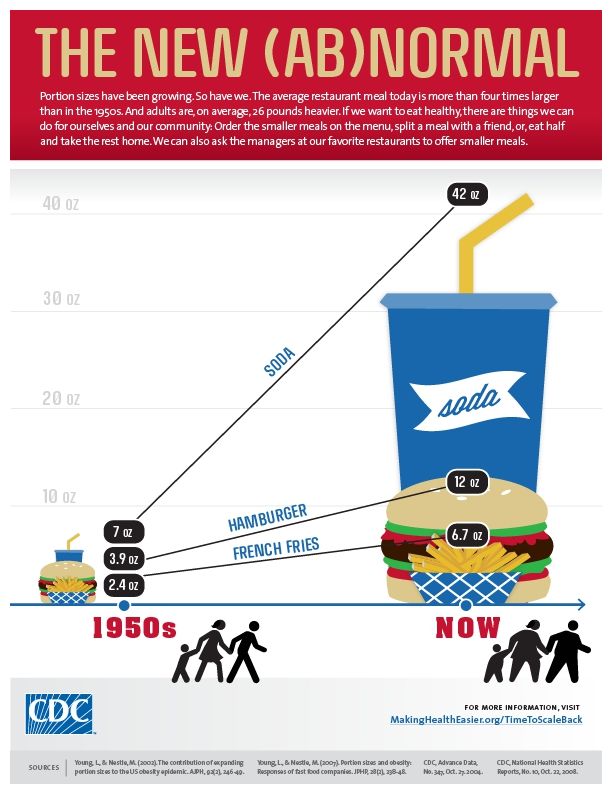
It seems that while obesity rates have risen over the decades, so have portion sizes - not a particularly surprising connection. In fact, an incredibly alarming infographic helps to show that not only have meal sizes increased in size over the decades, but restaurant portion sizes have quadrupled since the 1950′s.

Could this be the reason for the ballooning obesity epidemic? The infographic created by the Center for Disease Control and Prevention shows that hamburgers and french fry meals have tripled in size over the decades, while a cup of fountain soda is a whopping 6 times larger today than it used to be. A 2.4oz portion of french fries has grown to 6.7oz; hamburgers from 3.9oz to 12oz; and soda from 7oz to 42oz.

What may be even worse is that accompanied by this massive increase in portion sizes is the heavy use of harmful and toxic ingredients. While the ingredients used in food used to be minimal, you can find a plethora of toxic substances in the majority of food today, including MSG, aspartame, high-fructose corn syrup, artificial coloring, neotame, caramel coloring, and much more.

McDonald's chicken McNuggets, which would be expected to have nearly 0 ingredients, contains autolyzed yeast extract, dimethylpolysiloxane, sodium phosphate, to name a few ingredients. Even something as simple as 'strawberry flavor' consists of nearly 50 different chemicals. These ingredients along with many more can be found throughout the mainstream food supply.

Cheeseburger

Child Diabetes And Obesity Rates Higher In China Than The US

MacDonald in China
© TonyV3112 / Shutterstock.com
These days, a McDonald's Big Mac Hamburger is known internationally. While the fast food market has become more global, health issues like obesity and diabetes have had far reaching impacts in other countries around the world. In particular, researchers at the University of North Carolina, Chapel Hill (UNC) recently discovered that Chinese teenagers have a diabetes rate that is four times higher than teenagers in the United States. The increase in the number of diabetes cases reported corresponds to the rise in the amount of cardiovascular risk. The investigators believe that the findings are related to a Chinese population that is become increasingly overweight.

The study was led by Barry Popkin, the W.R. Kenan Jr. Distinguished professor of nutrition at UNC's Gillings School of Global Public Health, and conducted with Chinese researchers. The team utilized data from the China Health and Nutrition Survey (CNH) that was completed between 1989 and 2011. In the survey, the scientists tracked the data of over 29,000 people who lived in 300 different communities throughout China. The scientists were made up of members from UNC and the Chinese Center for Disease Control (CDC) National Institute of Nutrition and Food Safety.

"What is unprecedented is the changes in diet, weight and cardiovascular risk for children age 7 and older," commented Popkin in a prepared statement. "These estimates highlight the huge burden that China's health care system is expected to face if nothing changes."

While China has experienced economic growth in the last twenty years, it also has had significant changes in terms of people's weight, diets, and physical activity. The team of researchers tracked a randomly selected sample that represented 56 percent of the Chinese population in 2009. During the study, they saw that there were huge increases in cardiometabolic risk factors and the number of people who were obese.

Question

Afghan schoolgirls mystery sickness: Poison or mass hysteria?

Image
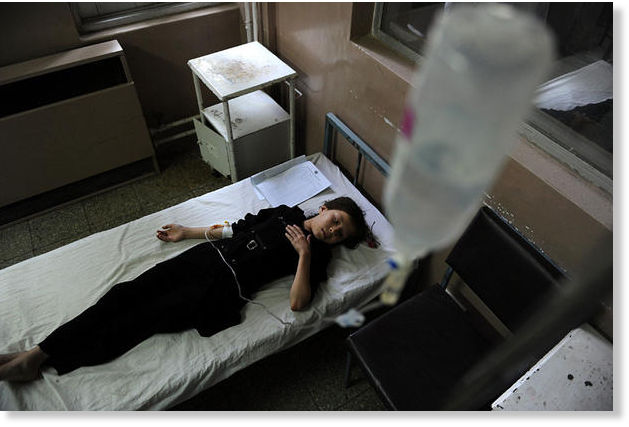
© Shah Marai/AFP/Getty ImagesAn Afghan schoolgirl receives treatment at a hospital in Kabul in August 2010. Cases of alleged poisoning of Afghan schoolgirls by Taliban insurgents regularly make headlines, but there are signs that a phenomenon known as "mass hysteria" could be responsible.
Hundreds of schoolgirls have been wailing, vomiting and fainting in northern Afghanistan over the past few months.

No one has died from the mysterious illness and most recover within a day or two. This is the fourth straight year the illness has afflicted Afghan girls in the northern provinces although there has been a dramatic spike in 2012 - 858 cases reported in the first five months alone compared to 119 last year.

The provincial governments and Kabul say the girls are being poisoned by the Taliban, or Pakistani spies, because they are attending school - something that was forbidden during the Taliban rule in the 1990s. The radical group has denied any involvement.

But the World Health Organization believes it has found the cause: mass hysteria, or, in medical parlance, mass psychogenic illness (MPI).

"In the last four years over 1,634 cases from 22 schools have been treated for mass psychogenic illness in Afghanistan," says a report from the WHO in late May.

Locals and the government vehemently disagree.

Stop

Mystery Illness is Killing Cambodian Kids

Image
© Unknown
The World Health Organization and Cambodian health officials are investigating why at least 61 children in the country have died mysteriously after suffering severe neurological and respiratory complications.

Dr. Beat Richner of the Kantha Bopha Children's Hospitals, who first alerted Cambodia's health authorities about the unknown disease, said that as of Friday he knew of 64 cases in which only two children have survived.

The Cambodian Ministry of Health said that 56 of the deaths were preceded by a common syndrome of fever and respiratory and neurological problems.

Seventy-four cases of the disease have been identified, the ministry said.

Countries surrounding Cambodia were informed of a deadly disease that killed dozens of children this week through the International Health Regulations event information system, which provides public health communications.

Health

New DNA Test Could Point to a Healthier Diet

DNA Test
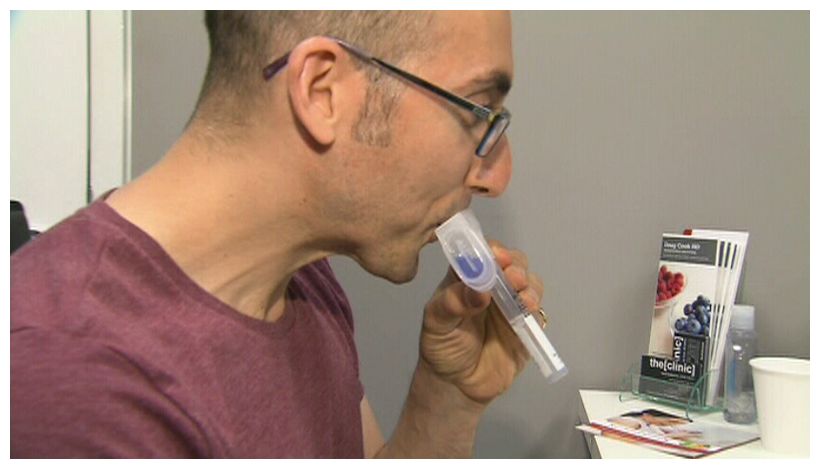
© CTV News, CanadaMark Gleberzon is seen taking a DNA test to measure how his genes react to nutrients in foods.
Canadian researchers are exploring whether diseases and other health problems can be prevented by taking a peek at DNA and setting out a diet for people in an emerging field known as nutrigenomics.

The science of measuring how genes in the body react to nutrients in foods is gaining popularity and a test designed for dieticians, called Nutrigenomix, has been developed at the University of Toronto.

That means you may be able to learn if you need more or less vitamin C or folic acid and whether too much salt or caffeine will negatively affect your genes, leaving you vulnerable to disease.

Dietician Doug Cook used the test on himself and learned his DNA doesn't agree with salt, possibly increasing his risk for high-blood pressure later in life.

"Based on the results, I am cutting back more on sodium that I did before," he said.

The Nutrigenomix test requires only a saliva sample and reveals how a person's unique genetic code determines their body's response to seven components of their diet.

The test kits were developed exclusively for the use of registered dietitians, since they are the most knowledgeable practitioners to deliver reliable nutrition advice.

Info

Pfizer Yanks Breast, Colon Claims for Centrum Vitamins

Pfizer
© Reuters
Pfizer Inc, bowing to allegations of deceptive advertising lodged by a consumer watchdog group, has agreed to drop "breast health" and "colon health" claims from the labels of its widely used Centrum multivitamin supplements.

Although Pfizer said it disagreed with complaints lodged by the nonprofit Center for Science in the Public Interest (CSPI), it agreed to remove the claims from some Centrum product labels over the next six months and to withdraw them from websites and advertising within 30 days.

Watchdog groups such as CSPI have taken the lead in recent years in policing the accuracy of supplements' health claims amid widespread criticism that the U.S. Food and Drug Administration is not doing enough to help consumers navigate conflicting information. The Government Accountability Office has also said the FDA needs more power to regulate supplements.

The center sent a lengthy letter to Pfizer Chief Executive Ian Read in April alleging that separate Centrum products carried deceptive claims on their labels - that they support "energy and immunity," "heart health", "eye health," "breast health, "bone health" and "colon health."

The group threatened to sue Pfizer, which acquired the Centrum franchise through its purchase of rival U.S. drugmaker Wyeth three years ago, unless the claims were stripped from labels of the products.

Pfizer agreed to remove the claims related to breast health and colon health, and to modify language relating to heart health and energy.

Health

Heat Wave Especially Dangerous for Kids

Image
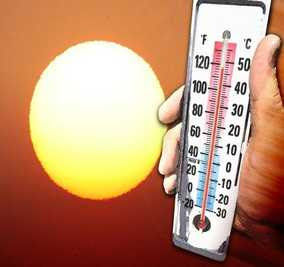
© UnknownThough everyone needs to take precautions when it comes to dangerous heat, it's especially important to watch your kids.
Extreme heat continues to plague the nation with many areas seeing record temperatures. Though everyone needs to take precautions when it comes to dangerous heat, it's especially important to watch your kids. Children are at a greater risk than adults of sustaining a heat injury.

"Kids bodies don't acclimate to the heat as well adults. They don't sweat as effectively. They absorb more heat since they have smaller bodies and a higher ratio of surface area to body mass," said Jerold Stirling, chair of the department of pediatrics at Loyola University Chicago Stritch School of Medicine and pediatrician at Loyola University Health System.

According to Stirling one of the greatest dangers is leaving a child in a car unattended on a hot day.

"No matter the child's age this can be dangerous or even deadly. Even if it's for a short period of time and you leave the car windows down it's dangerous. Inside the car can be several degrees hotter than outside and places a child at greater risk for heat stroke or heat exhaustion," said Stirling.