Health & WellnessS


Health

Flashback Cure for Diabetes Discovered? - No

Apple
© Unknown
Recently, I attended a convention of the American Diabetes Association in New York City where the main booth heralded a breakthrough "cure" for diabetes. Excited to think I might learn something new, I hustled right over. Imagine my dismay when all the information at the booth was about weight-loss surgery!

Do we need a cure? Absolutely!

Is surgery a one-size-fits-all solution for diabetes? No way.

I understand the desire to find a solution. After all, Type 2 diabetes is looming as the biggest epidemic and public health issue in human history. Close to 300 million people are affected worldwide and another 150 million forecast to be diagnosed by 2030. The reason? Obesity.

Yes, obesity is a tenacious problem but surgery is only a Band-Aid solution, albeit one that is growing in popularity. In the last decade alone, the rate of weight-loss surgeries performed each year in the United States has increased from 10,000 to 230,000. But how many of the 1.7 billion overweight citizens of the world can afford gastric bypass? And how many of those will regain the weight?

I have seen many patients go under the knife for these procedures only to gain back the weight they lost, plus some. Weight-loss surgery may seem like a panacea, but it won't solve the underlying hormonal and metabolic imbalances that are driving the diabetes and obesity.

My patient Alan is a prime example. Alan has been overweight since he was 6 years old and has never experienced a day without ravenous hunger. At age 40, he had gastric-bypass surgery and shrunk from 450 to 250 pounds. The size of his stomach changed, but his overall lifestyle did not. Eventually, he gained back 100 pounds. Even with a stomach the size of a walnut, he managed to gain weight one tiny, fattening bite at a time. By the time he landed in my office, he was 60 years old and tired of juggling all the complications of weight-loss surgery.

Health

Flashback Skinny fat people: Why being skinny doesn't protect us against diabetes and death

skinny fat
© Unknown
In a shocking new study published online in Pediatrics this week, researchers found that from 2000 to 2008, the number of teenagers aged 12 to 19 with pre-diabetes or diabetes increased from 9% to 23%.

Yikes, one in four kids have either pre-diabetes or diabetes - what I like to call diabesity. How did this happen? Just 15 years ago, less than 3% of new cases of childhood diabetes were Type 2 (or what we used to call adult onset), now it is nearly 50% of all new cases of diabetes in kids.

In this study of 3,383 children, the most shocking finding was not just the exploding rates of pre-diabetes and Type 2 diabetes in children, which alone should make us all stop whatever we are doing and become health activists, it was the fact that 13% of kids of normal weight were either pre-diabetic or diabetic.

We need to stand up in our homes, communities and schools and create healthy environments for kids. We need to take back our kid's taste buds, our kitchens and our homes, which have been hijacked by the food industry and ban anything except real food.

We need to lobby to change food marketing to kids, tax soda, limit access to junk food in our schools and neighborhoods, and protect our children, their future, our global economic competitiveness, and our national security.

Sick kids have been shown to have an achievement gap doing less well in school and throughout their lives. And a full 75% of military recruits are not fit to serve.

Info

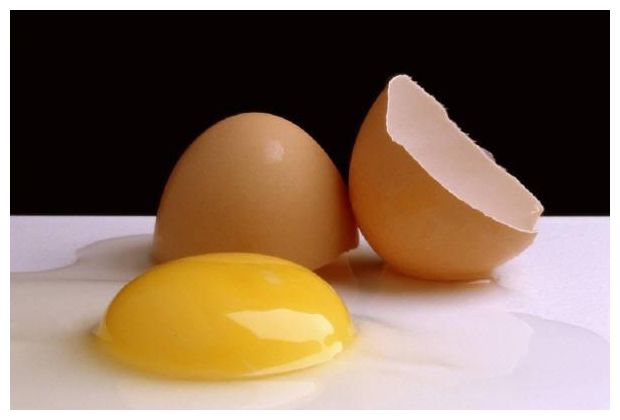
Cracking Up: Debunking the "Eggs as Bad as Cigarettes" Myth

Cracked Eggs
© Science Kukuchew.com
Remember the '70s when doctors equated eggs with cholesterol and heart disease? A recent Canadian study involving over 1,200 adults published in the peer-reviewed journal Atherosclerosis says that eating eggs yolks is about as bad as smoking cigarettes when it comes to advancing coronary heart disease. We're already seeing cracks in the theory.

In the study, researchers recorded the number of eggs eaten and packs of cigarettes smoked as recalled by each adult (average age 62). Everyone in the study had been referred to a vascular prevention clinic at a Canadian hospital, meaning their heart health (and the habits that led them there) was already in question. The researchers found that, as expected, plaque build-up in their subjects' carotid artery thickened with age, and even correlated with smoking and egg-eating habits.

Publications like The Daily Mail and Fox News have reported blindly on the matter, but thankfully there are others out there suspiciously raising eyebrows.

The UK's National Health Service points out some of the study's limitations, including:
  • The accuracy of the participants' recollections of egg yolk consumption.
  • A lack of details regarding how the eggs were cooked (or not).
  • Disregard for other factors of heart disease advancement, including but not limited to exercise, alcohol consumption, antidepressant use (antidepressants have been shown to cause arteries to thicken 400% faster than aging,) and other important dietary factors.

Health

Fluoroquinolone Antibiotics Linked To Severe Liver Damage

Antibiotics
© GreenMedInfo
In a nine-year population study, Canadian researchers have determined that at least two fluoroquinolone-based antibiotics - commonly given to patients with respiratory infections, diarrhea, conjunctivitis and other infections - cause acute liver damage.

The research comes from Toronto's Institute for Clinical Evaluative Sciences, the University of Toronto, and the Ontario Departments of Medicine and Healthy Policy, Management and Evaluation. The research team was led by David N. Juurlink, M.D., Ph.D., a professor of clinical pharmacology at the University of Toronto and a leading liver disease researcher.

The researchers analyzed liver injury cases for different antibiotics over nine years in a hospital population from Ontario. The antibiotics studied included moxifloxacin, levofloxacin, cefuroxime axetil and ciprofloxacin. They studied cases where patients were prescribed antibiotics at some point between 2002 and 2011. They matched the patients with other patients of the same age and sex that were given other antibiotics. Liver damage cases were compared to patients prescribed the antibiotic clarithromycin. None of the study population had a history of liver injury or disease prior to the study.

The researchers found that those patients given the moxifloxacin antibiotic had more than double the risk of acute liver injury, while those given levofloxacin had almost twice the risk of liver damage when compared to those taking clarithromycin. Moxifloxacin and levofloxacin are both fluoroquinolones.

The study population yielded 144 patients who suffered from severe liver injury inside of 30 days from the time they began taking one of these antibiotics. Of those 144 patients, over 60% of them - 88 patients - died of liver complications as a result of their use of these antibiotics.

Bacon

Debunking The Myth That Eating Egg Yolks Increases Arterial Plaque

Dr. J. David Spence of Ontario's Stroke Prevention and Atherosclerosis Research Center and two of his colleagues have just published a study in the journal Atherosclerosis purportedly showing that eating egg yolks is almost as bad for our arteries as smoking cigarettes.

This paper is more like an aggregation of clinical notes than what we would expect from something we'd call a "study." In 1995, they began measuring total plaque in the carotid arteries of patients who were referred to their vascular prevention clinics. Prior to the year 2000, they gave the patients a particular lifestyle questionnaire that they tell us very little about. In 2000, their clientele changed. After this point, patients came to them on an "urgent" basis because they had just suffered a stroke or a transient ischemic attack. They gave these patients "a more limited set of lifestyle questions," which they also tell us very little about.

Bacon

Why Animal Fats Are Good for You

The video of my 2012 Low-Carb Course Lecture, "Why Animal Fats Are Good for You," is now up on YouTube! And that, of course, is thanks to Terry and Pam Young of "Make it Fun and it Will Get Done." Since a considerable portion of my talk involves the development of a "common sense" approach to animal fat based on the work of Weston Price, I thought this would be a good place to post the link to the videos.

Heart

Olive Oil Turns Off Heart Disease Genes

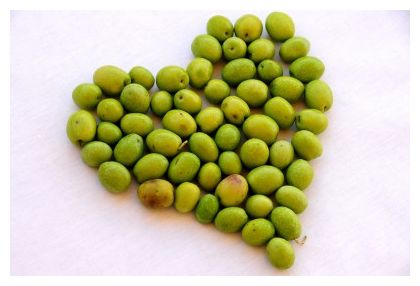
Olives
© GreenMedInfo
Long touted as a "heart healthy" fat, olive oil has now been shown to work its magic at the genetic level by turning off genes that are associated with heart disease and inflammation.

Researchers in Spain have shown that just because you inherited some "bad genes" from your parents and grandparents, you are not doomed to suffer the diseases to which you are predisposed. A healthy diet, they say, can modulate the effect of these genes.

At the Institut Municipal d'Investigacio Medica in Barcelona, scientists worked with three groups of healthy volunteers. One group followed a traditional Mediterranean diet with virgin olive oil which is rich in polyphenols, while the second group followed the same diet with a lower grade of olive oil low in polyphenols, and the third group followed their regular diet. Phenols are micronutrients in olive oil; the extra virgin oils have particularly high levels of them.

After just three months, the virgin olive oil group showed improvement in genes related to atherosclerosis or hardening of the arteries, as well as coronary heart disease.

Earlier researchers at the University of Cordoba in Spain concluded that eating a diet rich in virgin olive oil like the Mediterranean diet also represses pro-inflammatory genes through the action of olive oil's polyphenols. They suggested that this anti-inflammatory action explains in part the reduced risk of cardiovascular disease seen in people who eat a Mediterranean diet.

2 + 2 = 4

Study: Sleeping With the Laptop on Can Cause Depression

Do you sleep with the TV on or your laptop screen lit up? Turn it off, pronto. According to a new study in Molecular Psychology, nighttime brightness could lead to depression.

In the study, researchers separated hamsters into two groups: one group experienced a standard light/dark cycle, while the other group was exposed to a dim light at night--on par with city lights outside your window or the glow of a TV screen. After four weeks, hamsters who slept with some light showed signs of depression. (Depressed hamsters? Yup. Researchers tell by observing the rodents' interest in sugar water.)

Magnify

Danger in the Blood: How Antibiotic-Resisting Bacterial Infections Form

Image
© Younger lab, University of MichiganA computer model of how bacteria traveling through the bloodstream clump together, which may explain how bloodstream infections resist antibiotics.
New research may help explain why hundreds of thousands of Americans a year get sick -- and tens of thousands die -- after bacteria get into their blood. It also suggests why some of those bloodstream infections resist treatment with even the most powerful antibiotics.

In a new paper in the Journal of Infectious Diseases, a team of University of Michigan researchers demonstrate that bacteria can form antibiotic-resistant clumps in a short time, even in a flowing liquid such as the blood.

The researchers made the discovery by building a special device that closely simulates the turbulence and forces of blood flow, and adding a strain of bacteria that's a common cause of bloodstream infections.

Tiny aggregates, or clumps, of 10 to 20 bacteria formed in the flowing liquid in just two hours -- about the same time it takes human patients to develop infections.

The researchers also showed that these clumps only formed when certain sticky carbohydrate molecules were present on the surface of the bacteria. The clumps persisted even when two different types of antibiotics were added -- suggesting that sticking together protects the floating bacteria from the drugs' effects.

When the researchers injected the clumps into mice, they stayed intact even after making many trips through the bloodstream. The clumps -- about the size of a red blood cell -- appeared to survive the filtering that normally takes place in the smallest blood vessels and defends the body against invaders.

Health

Even Minor Physical Activity May Benefit Bone Health in Premenopausal Women

A study to be published in the Endocrine Society's Journal of Clinical Endocrinology and Metabolism (JCEM) suggests that physical activity for premenopausal women is very effective in reducing sclerostin -- a known inhibitor of bone formation. In addition, physical training enhances IGF-1levels, which have a very positive effect on bone formation.

Bone is a tissue that is always changing due to hormonal changes and physical activity, or lack thereof. Sclerostin is a glycoprotein produced almost exclusively by osteocytes, the most abundant cells found in human bone. Upon release, sclerostin travels to the surface of the bone where it inhibits the creation of cells that help bones develop.

"Physical activity is good for bone health and results in lowering sclerostin, a known inhibitor of bone formation and enhancing IGF-1 levels, a positive effector on bone health" said Mohammed-Salleh M. Ardawi, PhD, FRCPath, professor at the Center of Excellence for Osteoporosis Research and Faculty of Medicine at King Abdulaziz University in Saudi Arabia and lead researcher for this study. "We also found physical activity training that enhances mechanical loading in combination with anabolic therapeutic agents will have added positive effect on bone health, particularly bone formation."