Health & WellnessS


Bacon

Does the Flintstone Diet Measure Up to the Paleo Diet?

Image
© Shayne
The Paleo - prehistoric, or early human - diet seems to create more questions than answers. This is because its premise is based on a theory that eating like primitive humans is the closest diet to perfect. But the biggest problem comes in an attempt to identify what early bipeds really ate without considering a host of other important factors ranging from stomping grounds to food availability and everything in between.

Health

Vitamin D Supplementation Can Decrease Risk of Respiratory Infections in Children

A study conducted in Mongolian schoolchildren supports the possibility that daily vitamin D supplementation can reduce the risk of respiratory infections in winter. In a report that will appear in the journal Pediatrics and has received early online release, an international research team found that vitamin D supplementation decreased the risk of respiratory infections among children who had low blood levels of vitamin D at the start of the study.

"Our randomized controlled trial shows that vitamin D has important effects on infection risk," says Carlos Camargo, MD, of Massachusetts General Hospital (MGH), the study's corresponding author. "In almost 250 children with low blood levels of vitamin D during winter, we found that taking a daily vitamin D supplement cut in half the risk of a respiratory infection."

Several recent investigations have suggested that vitamin D -- best known for its role in the development and maintenance of strong bones -- has additional important roles, including in immune function. Studies led by Camargo and other researchers have associated higher vitamin D levels with reduced risk of respiratory infections such as colds or flu, but such observational studies cannot prove that the vitamin actually protects against infection. That kind of evidence must come from randomized controlled trials comparing two similar populations that either do or do not receive an intervention such as vitamin D supplementation. The first such trial, in Japanese schoolchildren, had equivocal results, showing a reduction in the risk of one type of influenza but no effect on another type, so many organizations have called for further randomized trials to settle the issue.

Health

Brain Enzyme Is Double Whammy for Alzheimer's Disease

Image
© Sanford-Burnham Medical Research InstituteThis shows beta-amyloid plaques (red) in the brain of an Alzheimer's disease patient.
The underlying causes of Alzheimer's disease are not fully understood, but a good deal of evidence points to the accumulation of β-amyloid, a protein that's toxic to nerve cells. β-amyloid is formed by the activity of several enzymes, including one called BACE1.

Most Alzheimer's disease patients have elevated levels of BACE1, which in turn leads to more brain-damaging β-amyloid protein. In a paper published August 15 in The Journal of Neuroscience, researchers at Sanford-Burnham Medical Research Institute (Sanford-Burnham) found that BACE1 does more than just help produce β-amyloid -- it also regulates another cellular process that contributes to memory loss. This means that just inhibiting BACE1's enzymatic activity as a means to prevent or treat Alzheimer's disease isn't enough -- researchers will have to prevent cells from making it at all.

"Memory loss is a big problem -- not just in Alzheimer's disease, but also in the normal aging population," said Huaxi Xu, Ph.D., professor in Sanford-Burnham's Del E. Webb Neuroscience, Aging, and Stem Cell Research Center and senior author of the study. "In this study, we wanted to better understand how BACE1 plays a role in memory loss, apart from β-amyloid production."

To do this, Xu and his team used a mouse model that produces human BACE1. Mice produce a different type of β-amyloid, one that's far less toxic than the human version. So, in this system, they could look solely at how BACE1 functions independent from β-amyloid formation. If BACE1 only acted to produce β-amyloid, the researchers would expect to see no effect when mice produce human BACE1 -- since mouse β-amyloid isn't very toxic, extra BACE1 would be no big deal. Instead, they saw that the enzyme still impaired learning and memory, indicating a secondary function at work.

Chalkboard

Molecular Code Cracked: Code Determines Recognition of RNA Molecules

Image
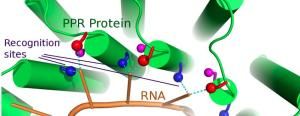
© University of Western AustraliaA molecular model of a PPR protein recognizing a specific RNA molecule. The identity of specific amino acid residues in the protein (colored sticks) determines the sequence of the RNA molecule it can bind.
Scientists have cracked a molecular code that may open the way to destroying or correcting defective gene products, such as those that cause genetic disorders in humans.

The code determines the recognition of RNA molecules by a super-family of RNA-binding proteins called pentatricopeptide repeat (PPR) proteins.

When a gene is switched on, it is copied into RNA. This RNA is then used to make proteins that are required by the organism for all of its vital functions. If a gene is defective, its RNA copy and the proteins made from this will also be defective. This forms the basis of many terrible genetic disorders in humans.

RNA-binding PPR proteins could revolutionize the way we treat disease. Their secret is their versatility -- they can find and bind a specific RNA molecule, and have the capacity to correct it if it is defective, or destroy it if it is detrimental. They can also help ramp up production of proteins required for growth and development.

Health

Scientists Report Promising New Direction for Cognitive Rehabilitation in the Elderly

Research has found that declines in temporal information processing (TIP), the rate at which auditory information is processed, underlies the progressive loss of function across multiple cognitive systems in the elderly, including new learning, memory, perception, attention, thinking, motor control, problem solving, and concept formation. In a new study, scientists have found that elderly subjects who underwent temporal training improved not only the rate at which they processed auditory information, but also in other cognitive areas. The study is published in the current issue of Restorative Neurology and Neuroscience.

"Our study showed for the first time significant benefits of temporal training on broad aspects of cognitive function in the elderly. The results were long-lasting, with effects confirmed 18 months after the training," says lead investigator Elzbieta Szelag, Professor, Head of Laboratory of Neuropsychology, Nencki Institute of Experimental Biology, and Warsaw School of Social Sciences and Humanities (www.swps.pl), Warsaw, Poland.

Thirty subjects between 65 and 75 years of age were randomly assigned to three groups. One group received temporal training using Fast ForWord Language® (FFW), a program composed of several computer games designed to improve memory, attention, and sequencing abilities. The program was developed to help children who have trouble reading, writing, and learning. The second group participated in non-temporal training by playing common computer games. The third group, the control, underwent no training.

Health

Making Sense out of the Biological Matrix of Bipolar Disorder

The more that we understand the brain, the more complex it becomes. The same can be said about the genetics and neurobiology of psychiatric disorders. For "Mendelian" disorders, like Huntington disease, mutation of a single gene predictably produces a single clinical disorder, following relatively simple genetic principals. Compared to Mendelian disorders, understanding bipolar disorder has been extremely challenging. Its biology is not well understood and its genetics are complex.

In a new paper, Dr. Inti Pedroso and colleagues utilize an integrative approach to probe the biology of bipolar disorder. They combined the results of three genome-wide association studies, which examined the association of common gene variants with bipolar disorder throughout the genome, and a study of gene expression patterns in post-mortem brain tissue from people who had been diagnosed with bipolar disorder. The findings were analyzed within the context of how brain proteins relate to each other based on the Human Protein Reference Database protein-protein interaction network.

"None of our research approaches provides us with sufficient information, by itself, to understand the neurobiology of psychiatric disorders. This innovative paper wrestles with this challenge in a creative way that helps us to move forward in thinking about the neurobiology of bipolar disorder," commented Dr. John Krystal, Editor of Biological Psychiatry.

Heart

Renowned Heart Surgeon Renounces Conventional Heart Health Practice

Heart
© NaturalSociety
It is very encouraging to see a mainstream medicine insider with impressive credentials come out and confirm what some of us outsiders have known for a while. Dr. Dwight Lundell has been a heart specialist MD and surgeon for 25 years, having performed 5,000 open heart surgeries. He was Chief Surgeon at the Banner Heart Hospital in Mesa, AZ, and he ran a successful private practice.

This is how he begins his personal testimony: "We physicians with all our training, knowledge and authority often acquire a rather large ego that tends to make it difficult to admit we are wrong. So, here it is. I freely admit to being wrong."

Dr. Dwight Lundell and his Current Perspective on Heart Health

Dr. Lundell has seen through the cholesterol myth and hoax, the low fat diet scam recommended by medical authorities, and the high adverse risks without benefits of statin drugs. From his experience as a heart specialist, he realizes that statin drugs are much more dangerous than high cholesterol.

He maintains that lowering cholesterol unnaturally invites other health issues. Our bodies need cholesterol for cell walls, nervous system sheathing, and brain matter. Cholesterol is part of our necessary physiology. Cholesterol is also converted into various hormones by the endocrine system.

Recent research also points to statin drugs leading to Alzheimer's disease; but this is not necessarily a side effect. This is the result of statin drugs' working as they should, lowering cholesterol, which the brain and nervous system need to build and maintain healthy tissues.

Dr. Dwight Lundell points to low fat diet recommendations as a major factor for raising cardiac and diabetes issues statistics nationally. He points out that healthy fats do exist and they're important. Medical dietary recommendations have expanded an already toxic food industry by promoting unhealthy fats.

Info

Can Ginger Beat Out The Multi-Billion Dollar Acid Blockers?

Ginger
© GreenMedInfo
Did you know that the multi-billion drug category known as "acid blockers," despite being used by millions around the world daily, may not work as well as the humble ginger plant in relieving symptoms of indigestion and heartburn?

Ginger is a spice, a food, and has been used as a medicine safely for millennia by a wide range of world cultures. Research on the health benefits of ginger is simply staggering in its depth and breadth. In fact, the health benefits of ginger have been studied extensively for over 100 health conditions or symptoms, making it one of the world's most versatile, evidence-based remedies.

The biomedical literature on acid blockers, on the other hand, is rife with examples of the many adverse health effects that come with blocking stomach acid production with xenobiotic, patented drugs, i.e. proton pump inhibitors and H2 antagonists.

What started out as "heartburn" - which in its chronic form is now called "acid reflux" or "gastroesophageal reflux disorder" - soon becomes stomach acid barrier dysfunction, when these drugs remove the acid which protects us from infection, helps to break down food, and facilitate the absorption of minerals and nutrients.

The list of 30+ harms is extensive, but here are a few of the most well-established adverse effects you may not be aware of:
  • Clostridium Infections
  • Diarrhea
  • Pneumonia
  • Bone Fractures
  • Gastric Lesions and Cancer
Back to our friend - our "plant ally" - ginger. What happens when Pharma meets Farm in a biomedical face-off? When acid-blocking drugs are compared in efficacy to our little spicy ginger root? Well, this is what the journal Molecular Research and Food Nutrition found back in 2007 ...

Black Cat

Cat parasite that worms into humans' brains can drive victims to suicide

A parasite found in cats is tampering with people's brains and driving them to suicide, research suggests.

Scientists have shown that men and women infected with a bug that breeds in cats' stomachs and worms into people's brains are seven times more likely to attempt suicide than others.

They say that Toxoplasma gondii may tinker with the delicate chemistry of the brain and screening people for it could help identify those at risk of taking their own lives.
Image
© AlamyA parasite found in cats is tampering with people's brains and driving them to suicide, research suggests
The parasite, which is carried by many Britons, has a complicated life cycle but can only breed inside cats. The microscopic eggs are passed on in cat faeces, spreading the infection.

Health

Flashback Diabetes Cure?: Why the New Surgical Cure for Diabetes Will Fail!

Asian Vegetables
© Unknown
Two seemingly groundbreaking studies, published this week in the New England Journal of Medicine found that type 2 diabetes, or "diabesity", could be cured with gastric bypass surgery. The flurry of media attention and medical commentary hail this as a great advance in the fight against diabetes. The cure was finally discovered for what was always thought to be a progressive incurable disease. But is this really a step backwards? Yes, and here's why.

No one is asking the most obvious question. How did the surgery cure the diabetes? Did the surgeons simply cut out the diabetes like a cancerous tumor?

No. The patients in the studies changed their diet. They changed what they put in their stomach and that's something that doesn't require surgery to change. If they had surgery and they didn't stop binging on donuts and soda they would get violently ill and vomit and have diarrhea. That's enough to scare anyone skinny. If I designed a study that gave someone an electric shock every time they ate too much or the wrong thing, I could reverse diabetes in a few weeks. But you can get the benefits of a gastric bypass without the pain of surgery, vomiting, and malnutrition.

Most don't realize that after gastric bypass diabetes can disappear within a week or two while people are still morbidly obese. How does this happen? It is because food is the most powerful drug on the planet and real whole fresh food and can turn on thousands of healing genes and hundreds of healing hormones and molecules that create health within days or weeks. In fact, what you put on your fork is more powerful than anything you can find in a prescription bottle.

The researchers asked the wrong question. It should not have been does surgery work better than medication, but does surgery work better than intensive lifestyle and diet change.

Astonishingly, the researchers just compared surgery to medication, which has been proven over and over not to reverse diabetes, and often promotes progressive worsening of the diabetes. Patients who get on insulin gain weight and their blood pressure and cholesterol go up. And in recent studies, those who had the most aggressive medical therapy to lower blood sugar had higher rates of heart attack and death.

These two new studies on gastric bypass should have included a treatment group that had intensive lifestyle therapy as well as medical therapy or surgery.

Lifestyle change and changes in diet work faster, better, and cheaper than any medication and are as effective or more effective than gastric bypass without any side effects or long term complications. These changes are not easy, but then neither is gastric bypass.