Health & WellnessS


Magic Wand

New insights into salt transport in the kidney

Image
© Tilman Breiderhoff/ Copyright: MDC The photo shows sections of a kidney from a claudin-10-deficient mouse and from a control mouse. Black staining (right) shows calcium deposits in the renal medulla, which are characteristic for nephrocalcinosis, a serious disease characterized by calcium deposits in the kidney.
Sodium chloride, better known as salt, is vital for the organism, and the kidneys play a crucial role in the regulation of sodium balance. However, the underlying mechanisms of sodium balance are not yet completely understood. Researchers of the Max Delbrück Center for Molecular Medicine (MDC) Berlin-Buch, Charité - Universitätsmedizin Berlin and the University of Kiel have now deciphered the function of a gene in the kidney and have thus gained new insights into this complex regulation process (PNAS Early Edition, doi/10.1073/pnas.1203834109)*.

In humans, the kidneys filter around 1700 liters of blood every day, of which 180 liters are collected as primary urine and ultimately one to two liters of urine are excreted. The kidneys thus wash toxic waste products out of the body, but retain some useful substances and reintroduce them into the body, thus simultaneously regulating the salt and water balance.

Molecular velcro

In the study just published by Dr. Tilman Breiderhoff, Prof. Thomas Willnow (both MDC), as well as Dr. Nina Himmerkus and Prof. Markus Bleich (both of the University of Kiel) and Dr. Dominik Müller (Charité) the focus is on the claudin-10 gene, which is expressed in a specific segment of the kidney, in Henle's loop. In the thick ascending limb of this loop, , a large part of the filtered sodium chloride, as well as calcium and magnesium are reabsorbed. The gene product under investigation, the claudin 10 protein, belongs to a family of proteins that connect the epithelial cells which cover the inner and outer surfaces of the body and stick them together like velcro. Claudins, however, also form pores, through which ions and substances are transported between the cells.

Magic Wand

For mitochondria, bigger may not be better

Image
© Unknown
Researchers find that optimal length of mitochondria in neurons is essential to preventing onset of Alzheimer's and other tau-related diseases.

Goldilocks was on to something when she preferred everything "just right." Harvard Medical School researchers have found that when it comes to the length of mitochondria, the power-producing organelles, applying the fairy tale's mantra is crucial to the health of a cell. More specifically, abnormalities in mitochondrial length promote the development of neurodegenerative diseases such as Alzheimer's.

"There had been a fair amount of interest in mitochondria in Alzheimer's and tau-related diseases, but causality was unknown," said Brian DuBoff, first author of the study and a post-doctoral research fellow at Massachusetts General Hospital.

"Ultimately, a deeper understanding of the relationship between mitochondrial function and Alzheimer's may guide us to develop more targeted therapies in the future," said Mel Feany, HMS professor of pathology at Brigham and Women's Hospital and senior author of the paper.

The findings will be published online in the August 23 issue of Neuron.

Tau-related diseases are caused when tau, a protein most commonly found in neurons, malfunctions. Tau binds to microtubules in cells, a process known as stabilization. This binding is necessary so the microtubules can help maintain cell structure and aid in intracellular processes such as transporting molecules. When tau is defective, most often due to changes introduced during protein synthesis, it can accumulate in neurofibrillary tangles, one of the primary markers of Alzheimer's.

Attention

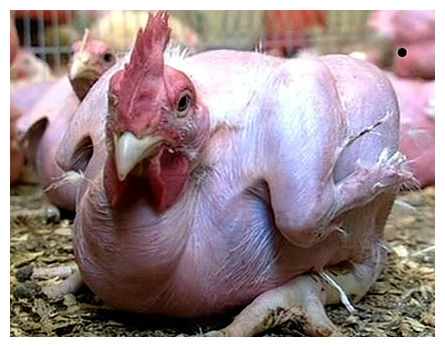
Scientists Promote Featherless Cross Bred Chickens For Mass Poultry Farming

Featherless Chicken
© PreventDisease.com
Chickens have feathers for a reason, or at least that's how nature intended it. Nine years after the first information on featherless chickens became known, the attention of the public and world media has once again focused on this experiment designed for one purpose--to create a commercial chicken under the assumption of economic and environmental advantages.

The Israeli scientist, Professor Avigdor Cahaner of the Hebrew University of Jerusalem's Faculty of Agriculture, Rehovot, listed expected benefits of the featherless broilers, especially recognised for hot climate countries.

Now, after genetic modifications and many trials, Cahaner says that all the expected benefits had been proved. He is convinced that there is a clear economic advantage of growing featherless birds in hot and humid regions.

Cahaner claims the chickens are more efficient, faster growing, heat resistant which will ultimately benefit the poultry industry. It's necessary to understand how scientists such Cahaner think to better understand their motives in genetic experimentation.

Cahaner explains that in hot conditions the feathers of standard chickens prevent efficient dissipation of excess or internally-produced heat. Consequently reducing their actual growth rate, meat yield and meat quality. Also, many die before marketing. "Currently, these negative consequences can be countered only by expensive energy-dependent cooling and ventilation systems that increase costs and reduce competitiveness of broiler production in hot climates."

Indeed, featherless chickens do not need any artificial cooling or ventilation, and may improved marketability, however when did scientists stop questioning whether they should instead of persisting with whether they could.

Health

The Hidden Risks of Getting a Tattoo

Tattoo Artist
© Tatiana Morozova | DreamstimeEven in otherwise hygienic tattoo parlors, the ink could harbor infectious bacteria.
When a cluster of skin infections in upstate New York last fall led back to one tattoo artist, local public health officials took the usual step of investigating the artist's hygiene practices. They found that all of his equipment and methods were sanitary, but the nationally distributed ink he had been using, even in unopened bottles, wasn't.

Soon, similar investigations in Colorado, Washington and Iowa turned up harmful strains of bacteria in three other brands of ink. At least 22 skin infections across the four states were linked to contaminated ink, according to research reported Wednesday (Aug. 22) in the New England Journal of Medicine.

The offending pathogen in the New York outbreak was identified as Mycobacterium chelonae, a relative of the bacteria behind tuberculosis and leprosy that is commonly found in tap water. Though M. chelonae is usually harmless to people with normal immune systems, when it's escorted beneath the skin by a tattoo needle, it can cause a painful rash that can last for months, requiring strong antibiotic regimens and sometimes surgery to eradicate.

Health

Sleep Improves Memory in People With Parkinson's Disease

People with Parkinson's disease performed markedly better on a test of working memory after a night's sleep, and sleep disorders can interfere with that benefit, researchers have shown.

While the classic symptoms of Parkinson's disease include tremors and slow movements, Parkinson's can also affect someone's memory, including "working memory." Working memory is defined as the ability to temporarily store and manipulate information, rather than simply repeat it. The use of working memory is important in planning, problem solving and independent living.

The findings underline the importance of addressing sleep disorders in the care of patients with Parkinson's, and indicate that working memory capacity in patients with Parkinson's potentially can be improved with training. The results also have implications for the biology of sleep and memory.

The results were published this week in the journal Brain.

"It was known already that sleep is beneficial for memory, but here, we've been able to analyze what aspects of sleep are required for the improvements in working memory performance," says postdoctoral fellow Michael Scullin, who is the first author of the paper. The senior author is Donald Bliwise, professor of neurology at Emory University School of Medicine.

Health

Spouses of People Suffering a Heart Attack Need Care for Increased Risk of Depression and Suicide

Spouses of people who suffer a sudden heart attack (an acute myocardial infarction) have an increased risk of depression, anxiety, or suicide after the event, even if their partner survives, according to new research published online in the European Heart Journal. They suffer more than spouses of people who die from, or survive, other conditions.

The study, which is the first to investigate this and to compare it with people whose spouse died or survived from something other than a heart attack, also found that men were more susceptible to depression and suicide after their wife's survival or death from an acute myocardial infarction (AMI), than women.

Using Danish registries, including the National Civil Status Registry that shows whether people are married or not, researchers in the USA and Denmark compared 16,506 spouses of people who died from an AMI between 1997 and 2008 with 49,518 spouses of people who died from causes unrelated to AMI. They also matched 44,566 spouses of patients who suffered a non-fatal AMI with 131,563 spouses of people admitted to hospital for a non-fatal condition unrelated to AMI. They looked at the use of antidepressants and benzodiazepines (used for treating anxiety) before and up to a year after the event, records of contact with the health system for depression, and suicide.

Question

Mysterious Disease Discovered in Asia, US, Has AIDS-Like Symptoms

Medicine
© KLTV.com
Researchers have identified a mysterious new disease that has left scores of people in Asia and some in the United States with AIDS-like symptoms even though they are not infected with HIV.

The patients' immune systems become damaged, leaving them unable to fend off germs as healthy people do. What triggers this isn't known, but the disease does not seem to be contagious.

This is another kind of acquired immune deficiency that is not inherited and occurs in adults, but doesn't spread the way AIDS does through a virus, said Dr. Sarah Browne, a scientist at the National Institute of Allergy and Infectious Diseases.

She helped lead the study with researchers in Thailand and Taiwan where most of the cases have been found since 2004. Their report is in Thursday's New England Journal of Medicine.

"This is absolutely fascinating. I've seen probably at least three patients in the last 10 years or so" who might have had this, said Dr. Dennis Maki, an infectious disease specialist at the University of Wisconsin in Madison.

It's still possible that an infection of some sort could trigger the disease, even though the disease itself doesn't seem to spread person-to-person, he said.

The disease develops around age 50 on average but does not run in families, which makes it unlikely that a single gene is responsible, Browne said. Some patients have died of overwhelming infections, including some Asians now living in the U.S., although Browne could not estimate how many.

Health

Green Tea Compound Shows Promise for Tackling Cancer

A compound found in green tea could be a weapon in treatments for tackling cancer, according to newly published research at the University of Strathclyde.

The extract, known as epigallocatechin gallate, has been known to have preventative anti-cancer properties but fails to reach tumours when delivered by conventional intravenous administration.

However, in initial laboratory tests at the Universities of Strathclyde and Glasgow, researchers used an approach which allowed the treatment to be delivered specifically to the tumours after intravenous administration. Nearly two-thirds of the tumours it was delivered to either shrank or disappeared within one month and the treatment displayed no side effects to normal tissues.

The tests are thought to be the first time that this type of treatment has made cancerous tumours shrink or vanish.

In the tests, on two different types of skin cancer, 40% of both types of tumour vanished, while 30% of one and 20% of another shrank. A further 10% of one of the types were stabilised.

Health

Why Muscles Go Wrong in Duchenne Muscular Dystrophy

University of Maryland (UM) researchers and collaborators report in the journal Science Signaling that skeletal muscle degeneration in Duchenne muscular dystrophy (DMD) is worsened by stiffening of the microtubule cytoskeleton that provides structure inside muscle cells.

Duchenne muscular dystrophy occurs in about 1 out of every 3,600 male infants and "worsens quickly," according to the U.S. National Library of Medicine. It is caused by a defective gene for a protein (dystrophin) in the muscles and there is no known cure.

The unique interdisciplinary study identifies new potential therapeutic targets for intervening in this devastating disease, says Christopher Ward, PhD, associate professor at the UM School of Nursing and senior author of the study.

"We show that an enhancement in the microtubule network structure, a stiffening, underlies dysfunction in Duchenne muscular dystrophy," says Ward.

Health

With a Little Training, Signs of Schizophrenia Are Averted

Animals that literally have holes in their brains can go on to behave as normal adults if they've had the benefit of a little cognitive training in adolescence. That's according to new work in the August 23 Neuron, a Cell Press publication, featuring an animal model of schizophrenia, where rats with particular neonatal brain injuries develop schizophrenia-like symptoms.

"The brain can be loaded with all sorts of problems," said André Fenton of New York University. "What this work shows is that experience can overcome those disabilities."

Fenton's team made the discovery completely by accident. His team was interested in what Fenton considers a core problem in schizophrenia: the inability to sift through confusing or conflicting information and focus on what's relevant.

"As you walk through the world, you might be focused on a phone conversation, but there are also kids in the park and cars and other distractions," he explained. "These information streams are all competing for our brain to process them. That's a really challenging situation for someone with schizophrenia."