Health & WellnessS


Bulb

Placebo Response Influenced by Mind's Nonconscious Anticipation of Outcomes

Image
© iStockphotoResearchers have identified a novel mechanism that helps explain the power of placebos and nocebos.

With the discovery that the unconscious mind plays a key role in the placebo effect, researchers have identified a novel mechanism that helps explain the power of placebos and nocebos.

Described in the Sept. 10 on-line issue of the Proceedings of the National Academy of Sciences (PNAS), the new findings demonstrate that the placebo effect can be activated outside of conscious awareness, and provide an explanation for how patients can show clinical improvement even when they receive treatments devoid of active ingredients or of known therapeutic efficacy.

Info

Asthma Cause Discovery Could Help In Prevention, Treatment Of The Lung Disease

Asthma
© Photos.com
A team of American researchers has discovered a major cause of asthma that could lead to effective prevention and treatment of the disease.

According to their recent report in the journal Nature Medicine, the team of immunologists and pediatricians found that a viral infection in newborns leads to the impairment of regulatory aspects of the immune system, increasing the risk of asthma later in life.

In their experiment, researchers repeatedly exposed infant mice to respiratory syncytial virus (RSV) through their mother's milk. The disease eventually stripped the immune cells of their regulatory ability to stop inflammation in its lung's passages after being exposed to a pathogen or irritant.

When an irritant enters the airways of a person with asthma, the immune system reacts to it as if it were a pathogen, causing the airways to become inflamed and produce mucus that makes breathing difficult. This study illustrates that early exposure to RSV makes it hard for the body to tolerate the response of its own immune system, making it susceptible to asthma.

Previous research has shown a connection between repeated lung exposures to RSV and developing asthma later in life. A 2010 study by Swedish scientists showed that 39 percent of infants taken to hospital with RSV had asthma when they were 18. They also noted that 9 percent of their control group developed asthma without contracting RSV.

The latest study, which was led by researchers at the University of Pittsburgh's School of Medicine, expands on that research by providing evidence for a mechanism that drives the drop in immune tolerance.

Info

Acupuncture Relieves Pain in Largest Study of Treatment

Acupuncture
© Shelby Ross/Getty Images
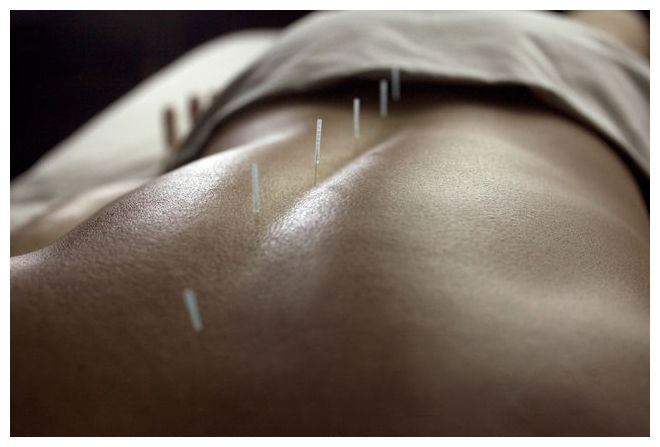
Acupuncture, an ancient Chinese therapy that inserts needles into the body, reduced back and neck pain, arthritis and headaches, according to the largest analysis of the treatment.

Data compiled from 29 studies of almost 18,000 people found that acupuncture was better at relieving pain than not having the treatment at all or undergoing a sham procedure, according to research reported in the Archives of Internal Medicine today.

About 3 million U.S. adults get acupuncture each year, mostly for chronic pain, the authors wrote. Doctors don't know why the ancient Chinese therapy can help relieve pain and more studies are needed to determine how the treatment fits with remedies such as drugs, surgery and physical and behavioral therapy, said Andrew Vickers, the lead author of the analysis.

"We thought for a long time that the reason why acupuncture worked was just because people believed it work," Vickers, a researcher at Memorial Sloan-Kettering Cancer Center in New York, said in a Sept. 7 telephone interview. "We now know that the effect of acupuncture goes above and beyond the placebo effect. Acupuncture is a reasonable option for chronic pain."

Traditional Chinese medicine explains acupuncture as a technique for balancing the flow of energy in a person's body, according to the Mayo Clinic. Inserting needles into specific points along pathways in the body changes the flow.

Syringe

Flu shot increased risk of infection, made recipients sicker, study determines

Vaccination
© PreventDisease.com
A strange vaccine-related phenomenon spotted at the start of the 2009 flu pandemic may well have been real, a new study suggests.

Canadian researchers noticed in the early weeks of the pandemic that people who got a flu shot for the 2008-2009 winter seemed to be more likely to get infected with the pandemic virus than people who hadn't received a flu shot.

Syringe

Vancouver Researcher Finds Flu Shot is Linked to H1N1 Illness

Image
© Jason Payne/PNG/The Canadian PressDr. Danuta Skowronski
A strange vaccine-related phenomenon spotted in Canada at the start of the 2009 flu pandemic may well have been real, a new study suggests.

Researchers, led by Vancouver's Dr. Danuta Skowronski, an influenza expert at the B.C. Centre for Disease Control, noticed in the early weeks of the pandemic that people who got a flu shot for the 2008-09 winter seemed to be more likely to get infected with the pandemic virus than people who hadn't received a flu shot.

Five studies done in several provinces showed the same unsettling results. But initially research outside Canada did not, and the effect was dismissed as a "Canadian problem," a problem with the flu vaccine used in Canada.

But a new study suggests the findings were real.

Syringe

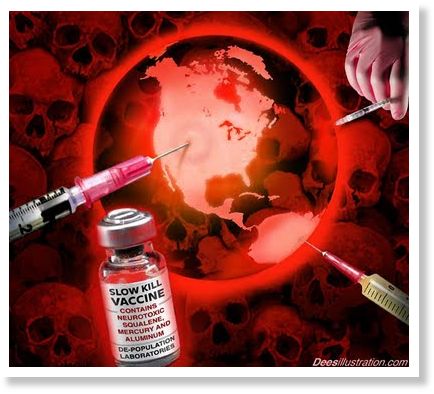
Private School Vaccine Opt-Outs Rise

Image
© Unknown
Sacramento, California -- Parents who send their children to private schools in California are much more likely to opt out of immunizations than their public school counterparts, an Associated Press analysis has found, and not even the recent re-emergence of whooping cough has halted the downward trajectory of vaccinations among these students.

The state surveys all schools with at least 10 kindergartners to determine how many have all the recommended immunizations. The AP analyzed that data and found the percentage of children in private schools who forego some or all vaccinations is more than two times greater than in public schools.

More troubling to public health officials is that the number of children entering private schools without all of their shots jumped by 10 percent last year, while the opt-out rate held steady in public schools for the first time since 2004.

Public health officials believe that an immunization rate of at least 90 percent in all communities, including schools, is critical to minimizing the potential for a disease outbreak. About 15 percent of the 1,650 private schools surveyed by the state failed to reach that threshold, compared with 5 percent of public schools.

There were 110 private schools statewide where more than half the kindergartners skipped some or all of their shots, according to AP's analysis, with Highland Hall Waldorf School in Northridge - where 84 percent opted out - topping the list.

Parents cite a variety of reasons for not immunizing their children, among them: religious values, concerns the shots themselves could cause illness and a belief that allowing children to get sick helps them to build a stronger immune system. Likewise, there's no single explanation that accounts for why so many more parents who send their children to private schools apparently share a suspicion of immunizations.

Monkey Wrench

Vagus Nerve Stimulator by Cyberonics: A Telling Anecdote about Regulatory Capture and Medical Device Safety

VNS
Vagus Nerve Stimulator
Thanks to an exchange of e-mails on a list that includes journalists Jeanne Lenzer and Shannon Brownlee (whose great work I've previously blogged about), I was directed to an article (subscription required) that I failed to make note of when it came out nearly two years ago. It provides useful background to an issue that has become even more heated this last year, the medical device safety oversight problem (see for example here).

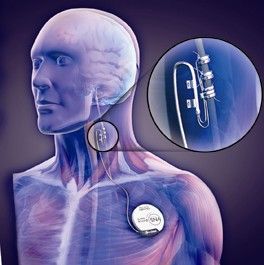
Lenzer and Brownlee looked in depth at the vagus nerve stimulator manufactured by Cyberonics, a device in which a pacemaker-type pack is surgically inserted near the collarbone, and electrodes are wrapped around the vagus nerve in the neck. The device was intended at first for a select population of patients with a particular type of epilepsy that's resistant to all drug treatment. Like many devices and drugs (and in keeping with the Inverse Benefit Law), once having gotten the camel's nose into the tent, Cyberonics is now claiming that the stimulator can be used for a large number of other conditions, notably depression, and perhaps obesity and traumatic brain injury (stay tuned for hair loss and bad breath). All such uses rely on the purported safety of the device, which is what Lenzer and Brownlee zeroed in on.

Comment: There's no need for anyone to use invasive, and potentially fatal, devices in order to enjoy the benefits of vagus nerve stimulation. Try instead the Éiriú Eolas program, which is designed to stimulate the vagus nerve through simple and natural breathing techniques.


Health

Protecting genes: One molecule at a time

An international team of scientists have shown at an unprecedented level of detail how cells prioritize the repair of genes containing potentially dangerous damage. The research, published in the journal Nature and involving academics from the University of Bristol, the Institut Jacques-Monod in France and Rockefeller University in the US, studied the action of individual molecules in order to understand how cellular repair pathways are triggered.

The genetic information that forms the "instruction booklet" for cells is encoded in the molecular building blocks of DNA, and can be damaged by mutagens such as ultraviolet light or tobacco smoke, as well as by normal "wear and tear" as the cells age. If left unrepaired, such damage can kill the cells or cause them to change their behaviour and perhaps cause disease.

Cells protect themselves by producing proteins that detect the damaged building blocks, cut them out and replace them with a patch of new DNA. Most cells, including bacteria and humans, contain mechanisms that ensure that the genes that are currently in use are repaired most quickly.

Info

Hidden Danger in Our Taps - Soft Water Linked to Liver Disease

Soft Water
© Express, UKThe study found softer water increases the risk of alcoholic liver disease (ALD), a major killer.
Scotland's drinking water may be partly to blame for the nation's high rates of liver disease, new research suggests. A link has been discovered between water hardness and the risk of damage to the organ by drinking too much alcohol.

The study found softer water, which is plentiful in Scotland and the north of England, increases the risk of alcoholic liver disease (ALD), a major killer.

Experts believe those living in soft-water areas may be more at risk because of lower levels of magnesium. The mineral can help to protect the liver from alcohol.

It is the first time a link between water softness and the disease has been established.

In the UK, hard water is found in the south and east of the country, where the principal rock is limestone. Soft water is found in the north where the rock is millstone grit and ALD rates are consistently higher.

The research may explain why rates of the disease in Scotland are almost double those in England, despite average alcohol consumption being approximately the same.

Last night there were calls for ministers to ditch their alcohol minimum-pricing strategy.

John Duffy, a public health lecturer at Birmingham University and former Scotland Office adviser, said: "I have my doubts over the efficacy and legality of the policy of minimum-pricing of alcohol so if it were proved that there are problems relating to the water supply then we could see liver disease dealt with a different way."

Info

New Study Suggests 50% Of Women Have Sleep Apnea

Sleep Apnea
© Brian Chase / Shutterstock
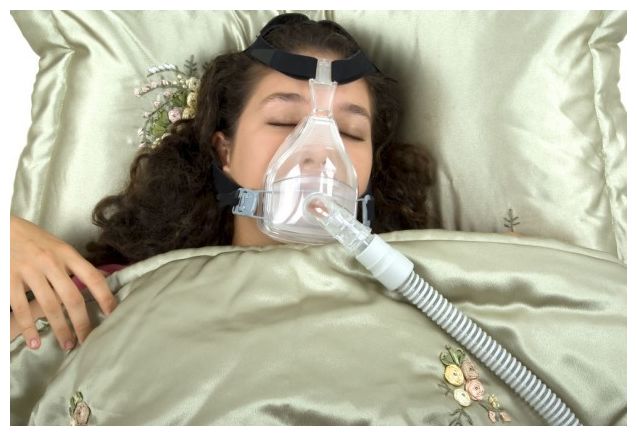
As many as half of all women could be suffering from sleep apnea, if a study published in an August edition of the European Respiratory Journal is any indication.

As part of the research, experts from Umeå University and Uppsala University, both in Sweden, recruited a random population sample of 400 women, had them complete a questionnaire and monitored them while they were sleeping, Reuters reporter Kerry Grens said on Friday.

Of those women, "half experienced at least five episodes an hour when they stopped breathing for longer than 10 seconds, the minimum definition of sleep apnea," Grens noted.

"Among women with hypertension or who were obese - two risk factors for sleep apnea - the numbers were even higher, reaching 80 to 84%of women."

According to Anthony Bond of the Daily Mail, lead author Dr. Karl Franklin, a professor at Umea University, and colleagues selected 400 female subjects, ages 20 to 70, from a population sample of 10,000 people. Each of them were fitted with sensors that measured their heart rate, eye movement, leg movement, blood oxygen levels, brain waves, and air flow.