
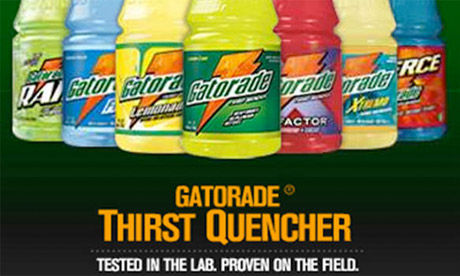
© Photograph: PRGatorade advert: the popular sports drink has sparked an online petition over its use of the brominated vegetable oil (BVO) additive.
Nobody pretends that sodas are a health food. But until recently, there was little talk about how seriously bad it can be to chug the 57 gallons (217 litres) of soft drinks that the average American consumes each year.
What sparked this discussion was New York Mayor Michael Bloomberg's controversial ban on the sale of super-sized (larger than 16oz, or half-litre) sodas in movie theaters and fast food restaurants. The ban was approved by the city's board of health in September and will take effect in March 2013. It has generally been applauded by public health activists who blame the sugary drinks for a nationwide spike in obesity and diabetes, especially among teens for whom it is the number one source of calories, according to a study by the National Cancer Institute (pdf).
Many school districts around the country have taken soda cans out of their vending machines, and legislation seeking to restrict federal food stamps from being used to purchase soda and other "junk foods" was introduced during the past year in California, Oregon, Illinois, Vermont, Florida and Texas. None of these bills has yet passed.
While the high sugar content of America's favorite beverage has gotten most of the bad press, there are other additives that may be putting consumers at risk. For example, phosphorous (a leading cause of osteoporosis), phosphoric acid (which corrodes teeth and damages kidneys) and sodium (which is implicated in high blood pressure) all show up in super-sized doses in America's soft drinks. Recently, Coke and Pepsi decided to reduce the amount of synthetic caramel color 4-methylimidazole (4-MEI) in some of their sodas - rather than label these drinks with cancer warnings in accord with California health guidelines.














Comment: Read more about the 'creation' of Genetically Engineered Pigs: