Health & WellnessS


Health

ER visits tied to energy drinks double since 2007

Image
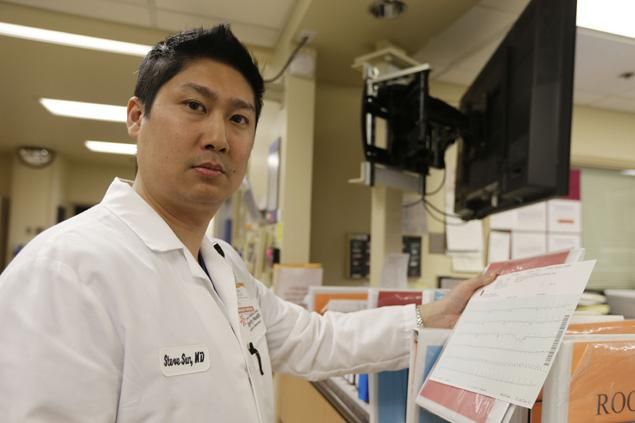
© ERIC RISBERG/APDr. Steve Sun, in the emergency room at St. Mary's Medical Center in San Francisco, says he has seen an increase in energy-drink related cases.
A new government survey suggests the number of people seeking emergency treatment after consuming energy drinks has doubled nationwide during the past four years, the same period in which the supercharged drink industry has surged in popularity in convenience stores, bars and on college campuses.

From 2007 to 2011, the government estimates the number of emergency room visits involving the neon-labeled beverages shot up from about 10,000 to more than 20,000. Most of those cases involved teens or young adults, according to a survey of the nation's hospitals released late last week by the Substance Abuse and Mental Health Services Administration.

The report doesn't specify which symptoms brought people to the emergency room but calls energy drink consumption a "rising public health problem" that can cause insomnia, nervousness, headache, fast heartbeat and seizures that are severe enough to require emergency care.

Several emergency physicians said they had seen a clear uptick in the number of patients suffering from irregular heartbeats, anxiety and heart attacks who said they had recently downed an energy drink.

Health

Second cholera outbreak affects 51 in Cuba

Image
A new cholera outbreak has sickened 51 people in Havana, Cuba's second in four months after a 130-year stretch without the disease, the Health Ministry said Tuesday. One man has died, his family said.

The latest outbreak was from the same cholera strain found to have been introduced in Haiti by Nepalese UN peacekeepers, unleashing an epidemic in 2010 that has killed some 7,900 people.

Miriam Rodríguez, who lives in the Havana neighborhood most affected by the outbreak, said her son, Ubaldo Pino, a 46-year-old barber, succumbed to the disease on January 6.

"He died of cholera and that is what is on his death certificate," she told AFP. Authorities have not officially confirmed the cause of his death.

The Health Ministry said the outbreak was detected in the Cuban capital, a city of 2.2 million people, on January 6 after a surge in cases of acute diarrhea.

It said 51 cholera cases had been confirmed.

Info

Diet soda, aspartame shown to destroy kidney function

Artificial Sweetners
© NaturalSociety
In an 11-year study by scientists at the Brigham and Women's Hospital in Boston, there was a strong positive correlation found between degeneration of kidney function and consumption of aspartame-containing diet soda.

Published in the Clinical Journal of the American Society of Nephrology, the study followed 3,318 women for a number of years as they consumed diet soda containing artificial sweeteners like Aspartame. Scientists took into account each participant's age, blood pressure, smoking habits (when applicable), and pre-existing conditions like heart disease or diabetes, and administered food frequency questionnaires in 1984, 1986, 1990, 1994, and 1998. Two or more diet drinks daily, it was found, led to a doubled risk in fast-paced kidney decline.

A separate study published in the American Journal of Clinical Nutrition showed that, contrary to safety claims made by the manufacturers of aspartame, health-related concerns including non-Hodgkin lymphoma and leukemia still abound. While study authors at Brigham and Women's Hospital and Harvard Medical School admitted that there were other variables to consider, such as the sex of the consumer in that particular case, they remained troubled by the risks associated with diet soda.

It's worth noting that diet soda is also high in sodium - and in greater amounts than found in sodas sweetened with sugar or corn starch (which were not examined in either study).

Sun

5 amazing properties of sunlight you've never heard about

Image
© greenmedinfo.com
Sunlight is well-known to provide us vitamin D, but did you know that it kills pain, keeps us alert at night, burns fat and more...

Our biological connection and dependence to the sun is so profound, that the very variation in human skin color from African, melanin-saturated dark skin, to the relatively melanin de-pigmented, Caucasian lighter-skin, is a byproduct of the offspring of our last common ancestor from Africa (as determined by mitochondrial DNA) migrating towards sunlight-impoverished higher latitudes, which began approximately 60,000 years ago. In order to compensate for the lower availability of sunlight, the body rapidly adjusted, essentially requiring the removal of the natural "sunscreen" melanin from the skin, which interferes with vitamin D production; vitamin D, of course, is involved in the regulation of over 2,000 genes, and therefore is more like a hormone, without which our entire genetic infrastructure becomes destabilized.

While the health benefits of vitamin D are well-documented (GreenMedInfo.com has identified over 200 health conditions that may benefit from optimizing vitamin D levels: Vitamin D Health Benefits page, and Henry Lahore's Vitamin D Wiki has far more), the therapeutic properties of sunlight are only now being explored in greater depth by the research community.

Smoking

Does cigarette smoking really cause heart disease?

Smoking movies 2
© Getty ImagesGlamourising: Audrey Hepburn in Breakfast at Tiffany's made cigarette holders stylish.
Introduction

I was looking YouTube and noticed in one of the comments that I was accused of advocating smoking as a "healthy food". It was nonsense, of course, but it set me wondering where the writer of the comment had got the idea from.

It turned out that it was from an article I have on this website about diesel smoke being worse than cigarette smoke, written by the late Dr Kitty Little in 1999.

Anyway, it got me looking at the evidence for and against smoking and heart disease again. And caused my to write the following article - because the issue is not as clear as it might appear.

The smoking debate


Smoking, particularly cigarette smoking, was first indicted as a cause of lung cancer in the 1950s. Subsequently, it was blamed for many other diseases including cardiovascular disease. But, while there are certainly many papers in the medical literature which attest to smoking as a causal factor in these diseases, there are also a worrying number which refute them.

In the history of heart disease, stopping smoking has been recommended consistently for over half a century, along with lowering cholesterol, dietary changes and exercise to prevent the disease; the four have gone together. Falling incidences of CHD in various countries during the middle of the last century are regarded as a result of national policies on reduction in smoking as well as dietare changes. However, graphs of the rise of heart disease in various age groups in the USA and its subsequent fall from 1900 to 1978, together with trends in smoking over the period, plotted by Stallones in 1980, showed a complete lack of evidence that they are linked.1

Health

Patients rarely told about medication errors

Pills
© Dreamstime
In what is likely to come as little surprise, a U.S. study has found that patients and their families are rarely told when hospitals make mistakes with their medicines.

Most medication mistakes did not harm patients, the researchers said in a report published in Critical Care Medicine, but those that did were more likely to happen in intensive care units (ICUs) - with ICU patients and their families less likely to be told about errors.

"For the most part, our findings were in keeping with what the existing literature tells us about the where and how of medication errors in a hospital," said Asad Latif, the study's lead author, in an email to Reuters Health.

"The most surprising finding was what we do about them, at least in the immediate time around when they occur," added Latif, from the Johns Hopkins University School of Medicine in Baltimore.

Using a database of about 840,000 voluntarily reported medication errors from 537 U.S. hospitals between 1999 and 2005, the researchers found that ICUs accounted for about 56,000, or 6.6 percent, of the errors. The rest happened in other units of the hospitals.

The vast majority of the mistakes - about 98 percent - didn't lead to a patient being harmed.

Pills

Breast cancer drugs proposed for 'high-risk' women

Image
Women with a family history of breast cancer who are thought to be at greater risk of developing the disease could be offered drugs aimed at preventing it under draft guidelines published Tuesday.

The National Institute of Health and Clinical Excellence (NICE) has launched a consultation on proposals to recommend the drugs tamoxifen or raloxifene for "high-risk" post-menopausal women.

Under the draft guidelines for England, Wales and Northern Ireland, women would be offered the hormone therapy drug for a five-year period in what the charity Breakthrough Breast Cancer called an "historic step".

Around 50,000 women in Britain are diagnosed with breast cancer each year and about one in five of those has a family history of the disease. Around 12,000 people a year die of breast cancer in Britain.

Cheeseburger

Fast food and takeaways linked to surge in child asthma and allergies

Image
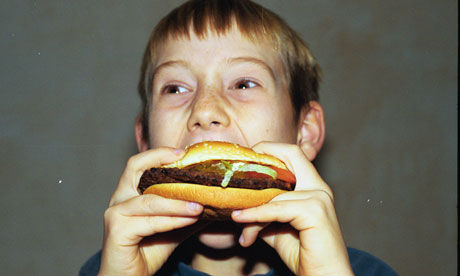
© Photograph: Martin Godwin for the GuardianFast food was the only type of food associated with asthma and allergies across all ranges and countries, the study shows.
Teenagers more likely to have severe asthma and eczema if they eat fast food more than three times a week, study shows.

A diet of fast food and takeaways may be behind the steady surge in children's asthma and allergies affecting the UK and other developed countries, according to a study.

An international collaboration of scientists has found that young teenagers in particular are nearly 40% more likely to have severe asthma if they eat burgers and other types of fast food more than three times a week. For children aged six to seven the risk increased by 27%. Children eating fast food were also more likely to get severe eczema and rhinitis - a condition where the nose blocks or runs and the eyes are itchy and water.

The scientists, from New Zealand, Spain, Australia and Germany as well as Nottingham in the UK, say their study could have "major public health significance owing to the rising consumption of fast foods globally" if the link they have found turns out not to be coincidence but causal.

The good news was that eating fruit appeared to protect young people from asthma and allergies. Eating three or more portions a week reduced the severity of the symptoms by 11% among teenagers and 14% among younger children.

Health

Is the worst over? Officials hope flu outbreak has peaked as fewer states are reporting 'high' levels of the virus

Image
Getting better: High levels of flu activity has dropped in the past week, giving hope that the virus has slowed down
Twenty-four states and New York City were at the worst levels for the week ending Jan. 5, according to the Centers for Disease Control.

That's five fewer states than the previous week, lending a bit of hope that the epidemic has begun to wane since those states with decreased activity, such as Florida and South Carolina, were also where the flu first started growing at a terrifying pace.

"It may be decreasing in some areas, but that's hard to predict," CDC Director Dr. Thomas Frieden said. "Trends only in the next week or two will show whether we have in fact crossed the peak."

But the positive news was tempered by the startling figure that 47 states now report widespread flu activity.

The only states not on that list are Hawaii, California and Mississippi.

The death toll continues to rise with 21 children nationally having passed away from the flu, which has hit harder and earlier than previous years, USA Today said.

Officials in New York City are warning that the 'severe' strain has reached epidemic proportions across the city.

Question

Did Liposomal Vitamin C cure cancer?

Allan Smith was near death in a coma and about to be taken off life support, with swine flu, non-functioning "white" lungs and leukemia when he was given high-dose intravenous vitamin C, followed by a new oral "nano-sized" vitamin C product that anyone can buy or make in our kitchens. (See instructions later in this report.)
Vitamin C
© The Urban Clinic
He started to revive from the coma when he was given daily doses of intravenous vitamin C ranging from 25 grams to 100 grams a day.

Then a new hospital doctor didn't believe that vitamin C caused the improvement in his condition so he lowered the dose to 2 grams a day, wherebye Mr. Smith continued to improve, but far more slowly.

That's when his family started giving him 6 grams of liposomal "nano" vitamin C a day, orally. He continued to improve and today he is healthy and his leukemia is gone.

Click here to watch a New Zealand television news report video about him.

The video is 17 minutes long. Towards the end you'll see him being given a 1 gram packet of LivOn Brand Lypo-Spheric Vitamin C, which is a very high quality commercially available version of liposomal "nano" vitamin C that costs about a dollar per gram (1,000 mg) of vitamin C.

Or go here to read, in detail, what happened. This includes details of studies that show that IV vitamin C can effectively fight cancer because it can deliver high enough vitamin C blood levels, where oral tablets or capsules cannot create high enough blood levels.