Emily Mertz Global News Mon, 27 Dec 2021 20:12 UTC
The City of Edmonton announced Monday that, due to the extreme cold temperatures, it would be pausing "non-essential snow and ice-clearing work, including Phase 2 residential areas."
In a news release, the city said: "the current temperatures present a significant risk to employees, equipment and contracted equipment.
"Temperatures will be monitored and operations will resume when it is safe to do so."
The city said crews would continue to respond to "safety-sensitive notifications" and address "emergent and priority issues."
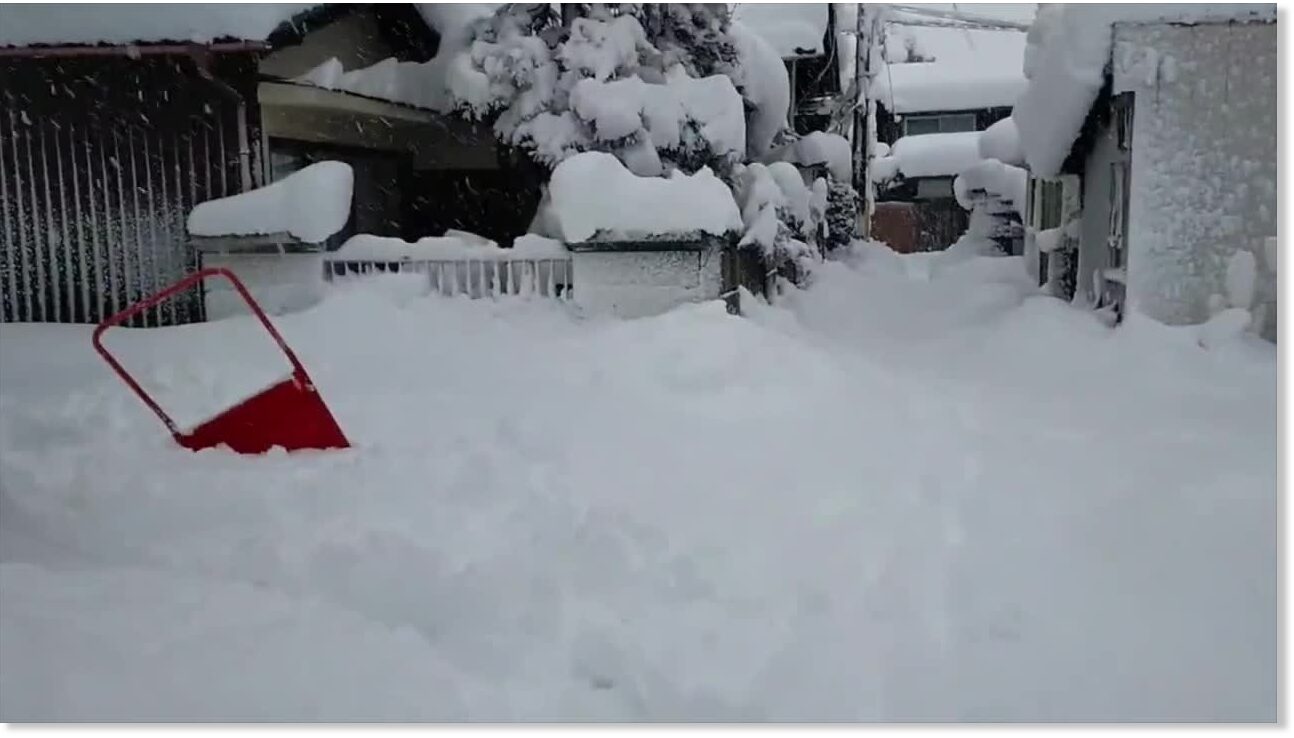
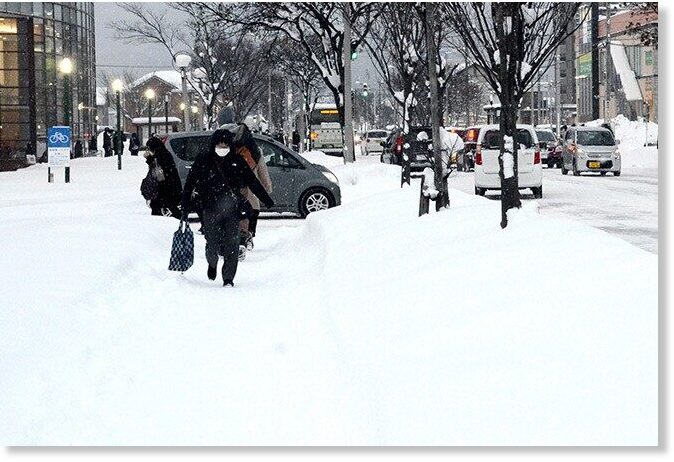
A powerful cold air mass has brought heavy snow on the Sea of Japan coast from the country's north to west, with some cities in northern parts of western Japan's Kansai region logging record snowfalls and transportation systems disrupted, local media reported on Monday.
According to the Japan Meteorological Agency, 68 centimeters of snow fell in Hikone city, Shiga Prefecture and 71 centimeters (cm) accumulated in Asago City, Hyogo Prefecture in a 24-hour period through early Monday, both hitting record highs.
Due to the heavy snow, a car accident caused a traffic jam of about 20 vehicles at around 6:30 a.m. local time on the Maizuru-Wakasa Expressway in Kyoto Prefecture, western Japan.
The road operator, West Nippon Expressway Co., closed both outbound and inbound lanes of the expressway until the snow was removed. The expressway was fully reopened past noon.
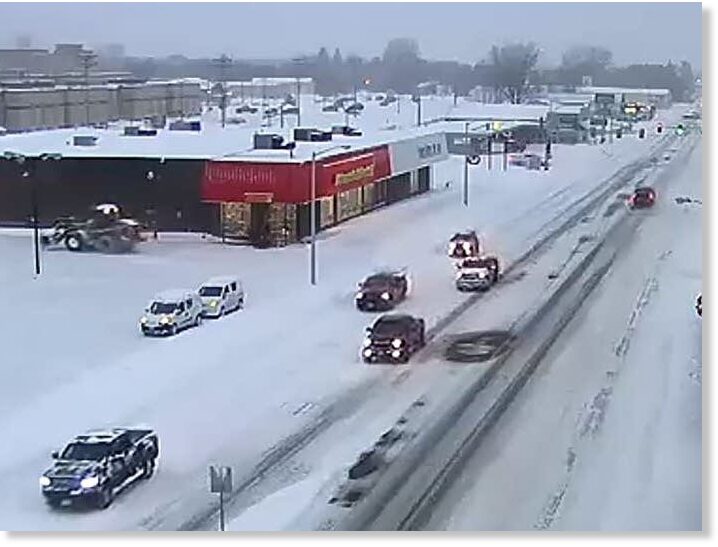
Snow totals reached 18 inches in parts of Minnesota on Monday morning, as a winter storm continued to drop snow and freezing rain on the region.
The National Weather Service received a report of 18 inches of snow from a spotter near St. Mathias, south of Brainerd, as of 7 a.m. A spotter near Baxter reported 16 inches of snow.
The Minnesota Department of Transportation reported snow-covered roads across most of the state as of 10:45 a.m. Monday.
The Minnesota State Patrol reported it had responded to 189 crashes on state highways between noon Sunday and 8 a.m. Monday, along with 200 vehicles that slid off roadways and eight jackknifed semis.
Severe weather brings record low temperatures in Seattle and huge snowfalls in California and Nevada
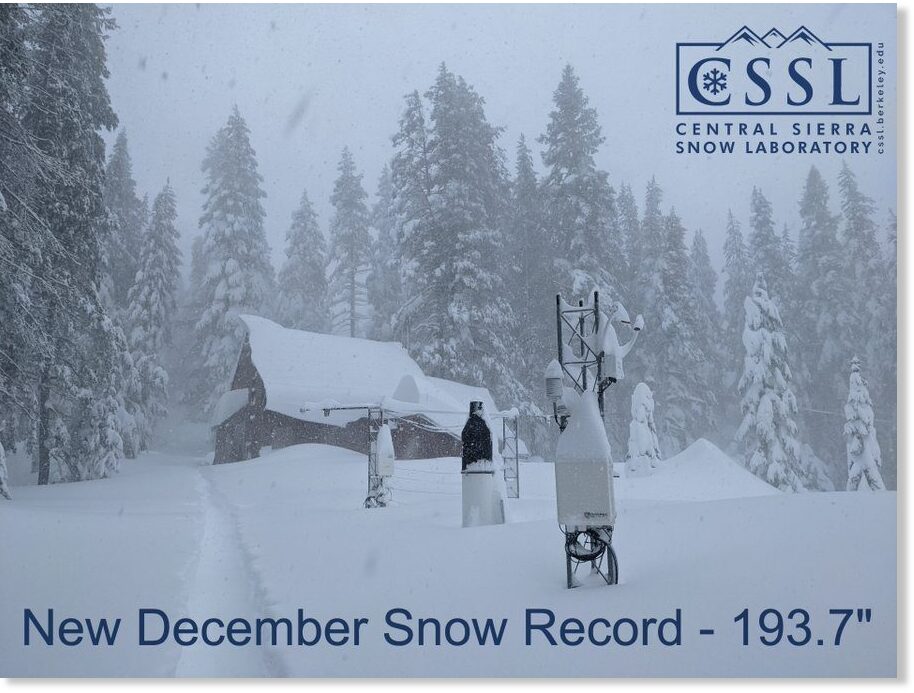
Severe weather sweeping parts of the US continues to bring record-breaking cold temperatures to the Pacific north-west and heavy snow to mountains in northern California and Nevada.
Emergency warming shelters were opened throughout Oregon and western Washington as temperatures plunged into the teens (below zero in centigrade) and forecasters said an Arctic blast would last for several days.
Sunday's snow showers blew into the Pacific north-west from the Gulf of Alaska, dumping up to six in (15 cm) across the Seattle area.
The National Weather Service said Seattle's low on Sunday was -6.7C (20F), breaking a mark set in 1948. Bellingham was -12.8C, which was three degrees colder than the previous record set in 1971.
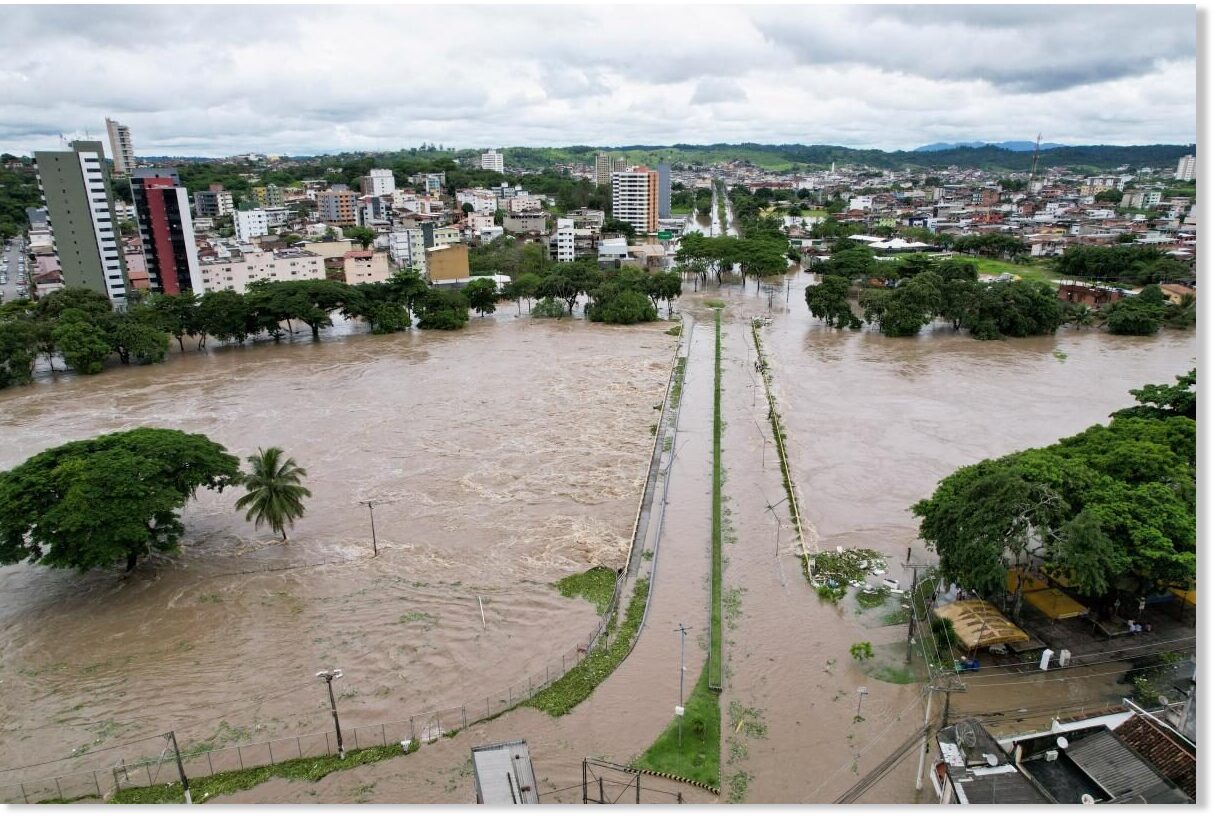
The death toll from floods hammering northeast Brazil rose to 20 on Monday, as the governor of Bahia state declared it the worst disaster in the state's history and rescuers braced for more rain in the coming days.
Much of Bahia, home to about 15 million people, has suffered from intermittent flooding for weeks, after a long drought gave way to record rains. Flooding in some areas intensified late on Christmas Eve and early on Christmas Day after a pair of dams gave way, sending residents scrambling for higher ground.
Rescue workers patrolled in small dinghies around the city of Itabuna, in southern Bahia, plucking residents from their homes, including some who escaped through second-floor windows.
A bird flu outbreak in northern Israel has killed at least 5,200 migratory cranes and forced farmers to slaughter hundreds of thousands of chickens as authorities try to contain what they say is the deadliest wildlife disaster in the nation's history.
Uri Naveh, a senior scientist at the Israel Parks and Nature Authority, said the situation was not yet under control. "Many of the birds are dead in the middle of the water body so it's difficult for them to be taken out," he said on Monday.
Environmental protection minister Tamar Zandberg called the crisis "the most serious damage to wildlife in the history of the country". "The extent of the damage is still unclear," she tweeted.
Yaron Michaeli, a spokesperson for the Hula Lake park, where the crane population is mainly based, said workers were removing the carcasses as quickly as possible, fearing they could infect other wildlife.
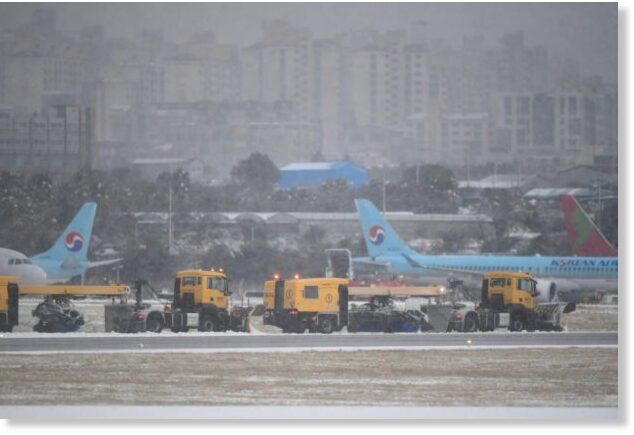
Over the Christmas weekend, extreme cold with heavy snowfall hit large parts of Korea, with temperatures dropping to as low as minus 25.4 degrees Celsius in some regions and heavy snow leading to flight cancellations.
With the mercury beginning to fall from Saturday afternoon, the capital city's Sunday morning low reached minus 16 C, the coldest temperature in December in nearly 41 years. The lowest temperature ever recorded in Seoul in December was minus 16.2 C on Dec. 29, 1980.
The cold continued throughout the afternoon, with temperatures remaining under minus 7 C in the afternoon.
According to the Korea Meteorological Administration, cold wave alerts were issued in most regions in Korea over the weekend.
Heavy snow was forecast over northern and western parts of the country facing the Sea of Japan on Dec. 26 and warnings were issued urging residents to be vigilant against snow storms, surging waves and the deep chill.
The bad weather is expected to continue until Dec. 28, according to the Japan Meteorological Agency, citing a winter pressure pattern with a severe cold air mass spreading above the archipelago.
The agency also warned that low-lying areas on the Pacific side of Japan could experience heavy snow.
Over the 24-hour period through 2 p.m. on Dec. 26, Myoko in Niigata Prefecture recorded the largest single-day snowfall of 82 centimeters, followed by 72 cm in Daisen, Tottori Prefecture, and 69 cm in Minakami, Gunma Prefecture.











Comment: In addition just a day earlier: Heavy snow falls across wide areas facing Sea of Japan - up to 32 inches in 24 hours