Earth ChangesS


Stop

Haryana, India: Mysterious buffaloes deaths in Kaithal district

Image
© unknown
A mysterious disease in Khanpur village of Kaithal district led to sudden death of nearly 25 buffalos in past 24 hours, plunging the villagers into mourning.

A team of doctors rushed to the village after reports of the disease, which is killing one cattle almost every hour, since Friday evening, but have so far failed to identify the disease or the cause of so many deaths.

The disease was noticed on Friday evening after when buffaloes started falling to the ground following which villagers consulted a veterinary assistant in the village. But even after treatment there was no improvement and buffalos started dying by late night on Friday. Villagers informed that the buffalos stopped taking fodder or hay initially and then laid on the floor. Ram Pal Singh, a farmer, informed that he had brought his buffalo home from the village pond along with many other villagers. The symptoms started soon after returning home.

Question

Most of The Netherlands left without radio after two large radio towers catch fire and collapse in space of two days

Two broadcast masts in different parts of the Netherlands have caught fire, one has collapsed.

On July 15 a fire caused a broadcast tower 303.5 metres high to collapse in Hoogersmilde NE Netherlands. On the night of July 14 a fire occurred at a similar 366.8 metre high tower in Lopik central Netherlands resulting in that tower being shut down.

It has been reported that terrestrial FM and Digital TV signals to 80% of the Netherlands were lost.

Watch the YouTube video of the Smilde collapse:


Comment: Two towers going down in the space of two days has obviously got people in The Netherlands wondering 'who done it'. Far from it being a conspiracy of 'terrorists' or anyone else, we rather suspect that a build-up of electrical energy is the culprit. Ryan X noted the surge in exploding transformers earlier this summer:

Exploding Transformers - More than meets the eye?


Umbrella

US: Minnesota: Heavy rains flood neighborhoods, metro roads


Heavy rains flooded metro neighborhoods and roads, including a half-mile stretch of Interstate 35W near Interstate 694.

Crews closed that section of the well-traveled freeway early Saturday morning, after receiving reports of stalled vehicles. Both directions of I-35W were reopened by around 9:30 p.m.

"With the intense rains we had overnight, the overflow ponds have overflown onto the freeway," said Trooper Kyle Klawiter of the Minnesota State Patrol.

Cloud Lightning

North Carolina, US: Flash flood slams Cherokee hatchery

Thousands of fish were killed when a wall of water swept through the Cherokee Fish Hatchery.

The flash flood washed many of the young trout out of the raceways where they were being raised as well as taking down about 75 feet of fence surrounding the facility, hatchery supervisor Doug Reed said.

The hatchery has about 800,000 fish at any one time. Reed said Saturday he and other workers were still trying to determine how many had been killed as they cleaned up the mess. He estimated the damage at about $30,000-$50,000.

"It overflowed the raceways and poured the fish out onto the ground," he said. "It washed leaves and sticks into the raceways."

Igloo

More Harsh Winter Weather In Store for Ireland and UK

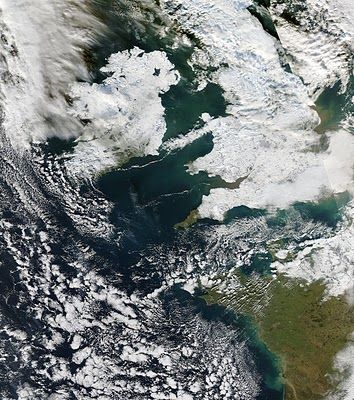
UK Ireland winter
© Image MODISView of Ireland and UK from space on Christmas Day 2010.
The trend of severe winter weather could be set to continue according to new research.

A number of senior UK-based academics have published their findings in the journal Environmental Research Letters. The basis for the wintry outlook is that relatively cold winters in the United Kingdom and Ireland are more common when solar activity is low.

The findings follow on from one of the coldest winters experienced in Ireland and Britain in more than 45 years.

Using the Central England Temperature (CET) record, which dates back to mid-17th century, the research team said that average temperatures during recent winters had been markedly lower than the longer-term average.

According to the authors of the new report: "The mean CET for December, January and February for the recent relatively cold winters of 2008/09 and 2009/10 were 3.50C and 2.53C respectively. Whereas the mean value for the previous 20 winters had been 5.04C. The cluster of lower winter temperatures in the UK during the last three years had raised questions about the probability of more similar, or even colder, winters occurring in the future".

Bizarro Earth

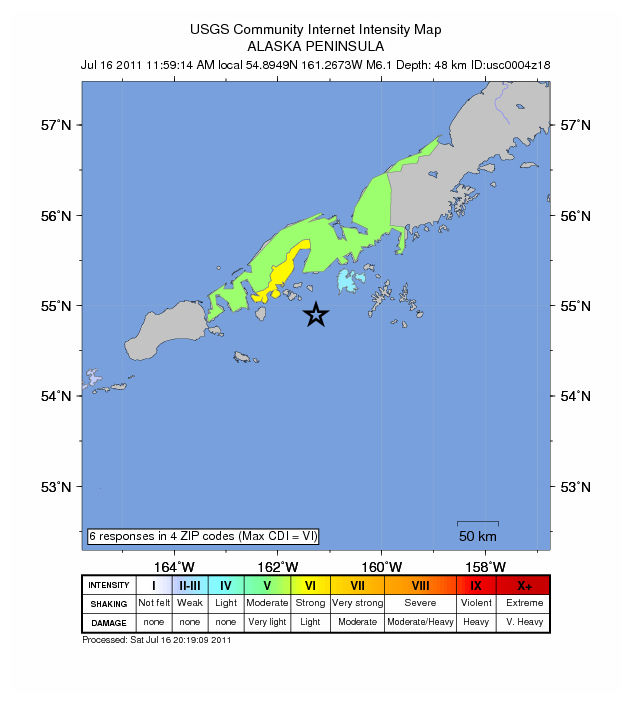
US: Alaska Peninsula - Earthquake Magnitude 6.1

Alaska Quake_160711
© USGSEarthquake Location
Date-Time
Saturday, July 16, 2011 at 19:59:14 UTC

Saturday, July 16, 2011 at 11:59:14 AM at epicenter

Time of Earthquake in other Time Zones

Location
54.895°N, 161.267°W

Depth
48.2 km (30.0 miles)

Region
ALASKA PENINSULA

Distances
70 km (43 miles) SW of Sand Point, Alaska

98 km (60 miles) ESE of Cold Bay, Alaska

971 km (603 miles) SW of Anchorage, Alaska

1674 km (1040 miles) W of WHITEHORSE, Yukon Territory, Canada

Bizarro Earth

Southern Lights As Seen From the ISS

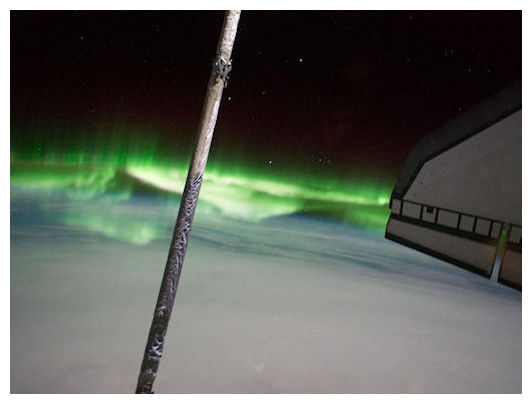
Earth orbit is a great place to watch geomagnetic storms. On July 14th, astronauts onboard the International Space Station witnessed a broad curtain of green auroras over the southern hemisphere. This is what aurora australis looks like from space:

Aurora Australis
© SpaceWeather
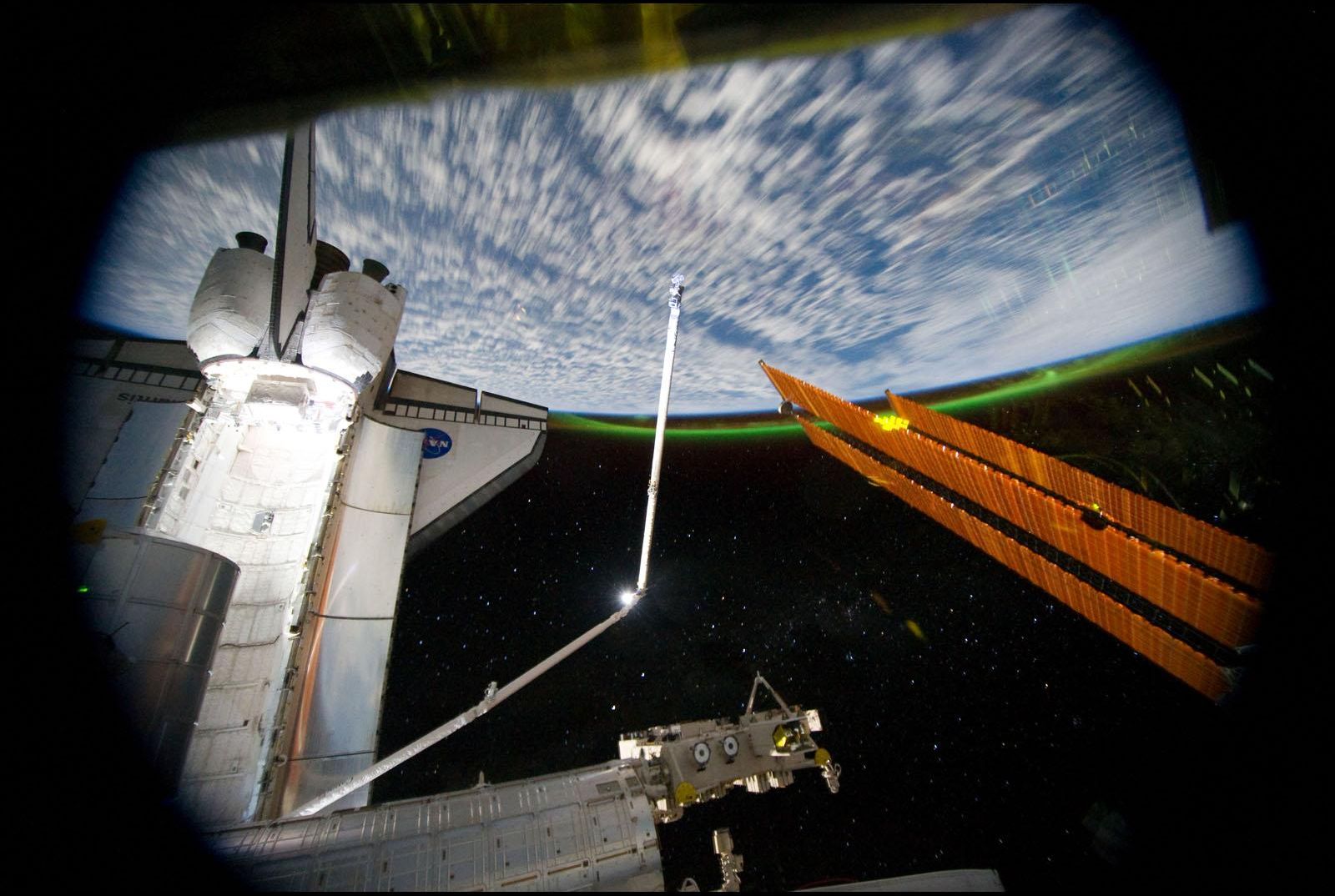
The picture was taken by one of the crew of space shuttle Atlantis, now docked to the ISS for the last resupply mission of NASA's 30-year shuttle program. In addition to Southern Lights, the picture also frames Atlantis's port side wing and a segment of the boom sensor system attached to the shuttle's robotic arm.
Image

The display was caused by a solar wind stream which hit Earth's magnetic field on July 12th. Note to astronauts: Another solar wind stream is heading for Earth, due to arrive on July 19th. The crew of Atlantis should remain alert for auroras.

Sun

Balkans Wilt Under Heat Wave

Image
© Janeen
Balkan countries are roasting under a heat wave, with temperatures over 30 degrees for a third day in a row, causing deaths and increasing the risk of wildfires.

Croatia

The heat on the Croatian coast has caused eight deaths so far. Five people died on Thursday and Friday, while on Saturday another three people died in the town of Zadar and on the islands of Vis and Pag.

In addition, hundreds of tourists sought medical attention over the weekend. According to local rescue and medical services, the number of casualties are likely to grow if the heat continues.

Cloud Lightning

US: Father and Son Both Victims of Lightning, 48 Years Apart


A New Jersey man followed the tragic fate of his own father 48 years ago when he was struck dead by lightning during a weekend barbecue with his family.

On Thursday, family members said 500 people from the tight-knit Hammonton, N.J. community attended the funeral to mourn the death of Stephen Rooney, 54, who was "well-known" and a "real nice guy," according to the town's Chief of Police Robert Jones.

On July 3, Rooney, and 25 members of his extended family took part in the "normal Fourth of July kind of antics," at a weekend barbecue--a 30-year family tradition at Rooney's residence at 59 Plymouth Road.

Cloud Lightning

US: Severe Thunderstorms Cause Delays at Minneapolis Airport

Severe thunderstorms with heavy rain and frequent lightning is causing delays for air travelers Friday in the Twin Cities.


As of 2 p.m. the FAA website said travelers were experiencing delays of up to 78 minutes at Minneapolis-St. Paul International Airport. Officials expect flights to be affected throughout the day Friday due to backups on the grid and urge travelers to check with their airline for flight status.

Airport spokeswoman Melissa Scovronski says the lightning also temporarily caused air traffic controllers to ground flights Friday morning.

Thunderstorms will continue to move through the Twin Cities with heavy downpours of rain and frequent lightning into the early afternoon. Some of the storms may contain hail and gusty winds at times.

The storms will mainly be north and east of the metro by 3 p.m. but additional storms could redevelop at anytime. The most likely time for dry weather today will be from 3 p.m. to 11 p.m. then more storms likely after midnight.