Earth ChangesS


Bizarro Earth

Rare Caterpillar-like Horizontal Earthquake Discovered

Himalayas
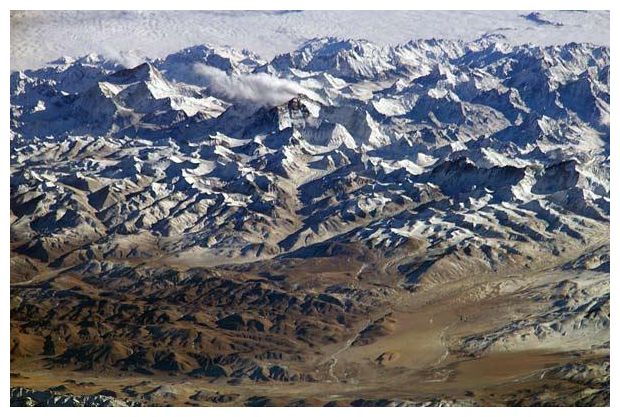
© NASA Earth Observatory.Mount Everest in the Himalayas.
Imagine that, as you sit at your desk or in your living room reading this story, your entire city suddenly snaps a foot to the south.

That's what happened to the city of Kohat, Pakistan, in 1992. A magnitude-6.0 earthquake moved a 30-square-mile (80-square-kilometer) swath of land one foot (30 centimeters) horizontally in a split second, leveling buildings and killing more than 200 people.

The area hadn't experienced many temblors before, making the earthquake an unusual occurrence. Now, 20 years later, geologists have used satellite and seismic data to track down the cause of that rare quake - an equally rare type of fault.

"The pattern we saw was absolutely a dead ringer for a horizontal fault," said Roger Bilham, a geophysicist at the University of Colorado at Boulder. "But here's the problem: How do you get a horizontal earthquake?"

Nuke

Canada: Radioactive Iodine in Rainwater: Public Was in the Dark

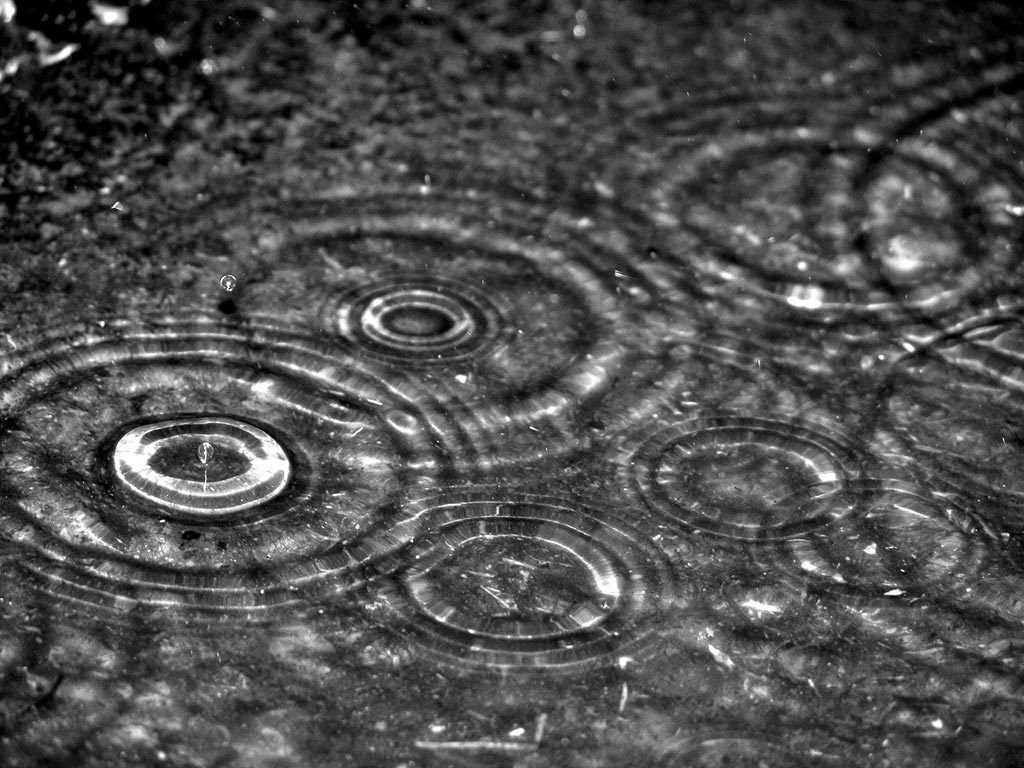
rain on water
© n/a
After the Fukushima nuclear accident, Canadian health officials assured a nervous public that virtually no radioactive fallout had drifted to Canada.

But last March, a Health Canada monitoring station in Calgary detected an average of 8.18 becquerels per litre of radioactive iodine (an isotope released by the nuclear accident) in rainwater, the data shows.

The level easily exceeded the Canadian guideline of six becquerels of iodine per litre for drinking water, acknowledged Eric Pellerin, chief of Health Canada's radiation-surveillance division.

"It's above the recommended level (for drinking water)," he said in an interview. "At any time you sample it, it should not exceed the guideline."

Canadian authorities didn't disclose the high radiation reading at the time.

Bizarro Earth

25 volcanoes in Indonesia now showing signs of abnormal activity

Image
© ReutersAnak Krakatau
Twenty-five volcanoes in Indonesia are now showing abnormal activity or have been put on alert or watch status, presidential special aide Andi Arief said here on Saturday. "According to official data, 25 volcanoes are now under alert or watch status and they must be given priority with regard to disaster mitigation planning at district or city levels," he said at a workshop on journalists' role in disaster management. He said in West Sumatra there were two volcanoes that need to be closely watched, namely Mount Marapi and Mount Talang, as they are still under alert status.

Mount Marapi is located in Agam and Tanahdatar districts and rises 2891 meters above sea level, and Mount Talang (2597 meters above sea level) in Solok district was located around 40 kilometers from the provincial capital Padang. Apart from the two volcanoes, the government and regional disaster management agencies were also giving priority attention to Mount Papandayan in West Java, Mount Karangetan and Lokon in North Sulawesi, Mount Ijen in East Java, Mount Gamalama in North Maluku, Mount Krakatau in Banten and Lampung and Mount Lewoloto in East Nusa Tenggara.

Bizarro Earth

Large-scale seismic activity rising along planet's southern pole

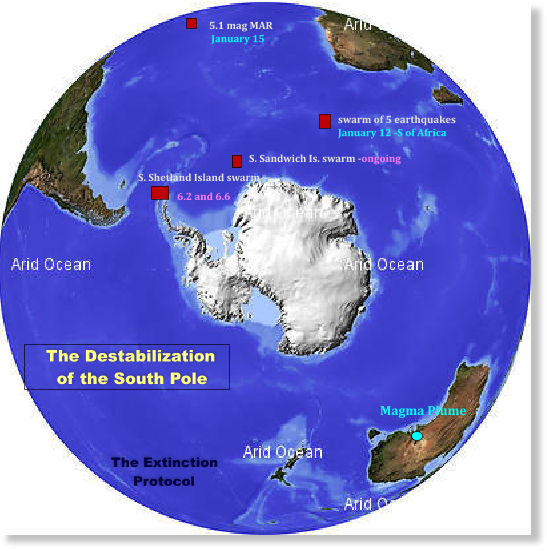
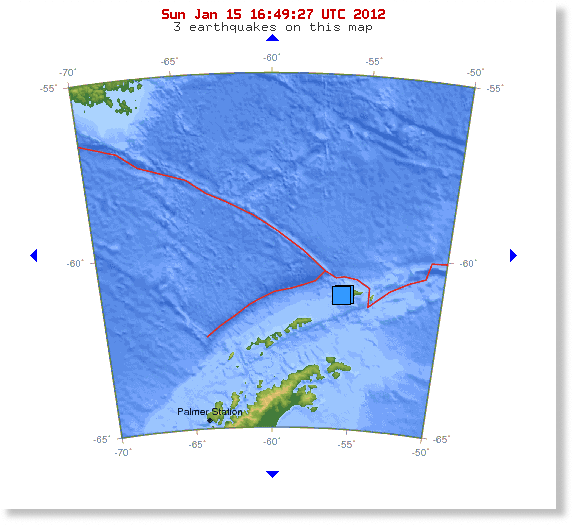
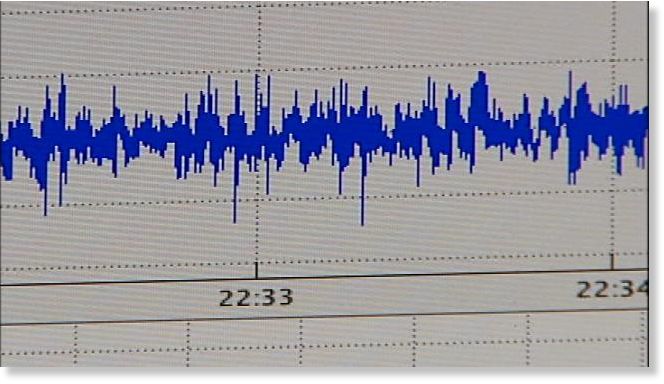
A strong and shallow series of earthquakes have erupted near the remote South Shetland Islands region of Antarctica on Sunday, experts from the U.S. Geological Survey said. The earthquakes in the intense tectonically-activated series measured a 6.6 magnitude, followed by a 6.2 magnitude earthquake and a 5.1 aftershock. The epicenter of the earthquakes was at various depths of from one kilometer (0.62 miles) to 14 km (9.2 miles) below the earth's surface and some 464 kilometers west of Coronation Island in distance. No destructive tsunami was created, according to the U.S. NOAA warning center.
Image
© The Extinction Protocol
The earthquake series is worrisome because it's further evidence of what I have been warning about for over the past 6 months, that the Southern hemisphere, particularly around the periphery of Antarctic, is shows increasing signs of seismic destabilization. On January 12, there was a swarm of five moderate earthquakes which erupted south of Africa- the strongest of which was a 5.3 and a 5.5. On January 13, the South Sandwich Islands, north of Antarctica, was hit with a 5.1, and 5.2. On January 14 the region was struck again with a 5.0 earthquake and another 4.9 on January 15th. Not only are earthquakes increasing along the southern polar region but in November of 2011, the Tasmania's Antarctic Climate and Ecosystem centre found that the South Ocean was storing more heat than any other ocean on the planet.

Bizarro Earth

Antarctica - South Shetland Islands: Earthquake Magnitude 6.6 and 6.2 aftershock

Image
© USGS
Date-Time:
Sunday, January 15, 2012 at 13:40:18 UTC

Sunday, January 15, 2012 at 09:40:18 AM at epicenter

Time of Earthquake in other Time Zones

Location:
60.765°S, 55.858°W

Depth:
10 km (6.2 miles)

Region:
SOUTH SHETLAND ISLANDS

Distances:
539 km (334 miles) W of Coronation Island, South Orkney Islands

625 km (388 miles) NE of Palmer Station, Antarctica

1019 km (633 miles) S of STANLEY, Falkland Islands

2919 km (1813 miles) S of BUENOS AIRES, D.F., Argentina

Bizarro Earth

What's Causing all the Record Dry Weather and Mild Winter Temperatures in America?

The frozen far north
© Getty ImagesThe frozen far north: Only parts of Alaska have seen heavy snowfall so far this winter
The first week in January was the driest in U.S. history with more than 95 per cent of the U.S. reporting below-average snow.

About half of the U.S. had temperatures at least 5 degrees Fahrenheit above average during December.

Now meteorologists believe the atmospheric pressure pattern called the Arctic Oscillation is controlling the jet stream and causing records to be broken on a near daily basis.

The jet stream flows from west to east across the northern latitudes of America and Europe, changing temperatures and precipitation as it meanders north and south, digg.com reports.

This season we've been experiencing a strong straight jet stream which has been preventing the cold arctic air from drifting south.

Meteorologist Jeffrey Masters said: 'The cause of this warm first half of winter is the most extreme configuration of the jet stream ever recorded.'

Attention

5.0 Magnitude Earthquake Hits New Zealand's Christchurch

earthquake
© unknown
A 5.0 magnitude earthquake ratted New Zealand's South Island city of Christchurch on Sunday, followed by more aftershocks.

The quake occurred at 2.47 a.m. Sunday (13:47 GMT Saturday). It was centered 10 km east of Christchurch and 10 km north-east of Lyttelton, at a depth of 9 km, New Zealand government geological agency GNS Sciences reported.

The quake was followed by magnitude 3.0 and 3.7 aftershocks at 4.11 a.m. and 5.10 a.m. and magnitude 3.3 and 3.5 at 7.05 a.m. and 7.48 a.m.

The ambulance service says there are no reports of damage or injury.

GNS Sciences said early this month that aftershocks might continue in Canterbury for the next 30 years.

Source: Xinhua

Radar

5.7-magnitude earthquake hits Babuyan Islands region in northern Philippines

Earthquake
© redOrbit
A moderate earthquake roused people from sleep but caused no injuries or damage in the northern Philippines early Sunday, officials said.

The U.S. Geological Survey reported that the magnitude-5.7 earthquake hit the Babuyan Islands region off the country's mountainous north. Philippine officials placed its magnitude at 5.5.

The quake's center, at a depth of 13.9 miles (22.4 kilometers), was about 317 miles (511 kilometers) north of Manila, USGS said.

Benito Ramos, who heads the government's Office of Civil Defense, said the quake woke some people up but did not cause any injuries or damage in at least three provinces where it was felt.

The Pacific Tsunami Warning Center did not issue any warnings or advisories.

The Philippines is located on the so-called Pacific "Ring of Fire" where earthquakes and volcanic activity are common.

Source: The Associated Press

Bizarro Earth

Polar Stratospheric Clouds

An apparition of polar stratospheric clouds is underway around the Arctic Circle. "It is almost as good as the aurora borealis," says Göran Strand, who took this picture last night from Östersund, Sweden:

Nacreous Clouds
© Göran StrandImage Taken: Jan. 13, 2012
Location: Östersund, Sweden
Eric Schandall of Oslo, Norway, adds this report: "We have seen them for three evenings over Oslo, with the ones on Jan. 13th being the most dramatic and beautiful so far."

Also known as "nacreous" or "mother of pearl" clouds, these icy clouds form in the lower stratosphere when temperatures drop to around minus 85ºC. Sunlight shining through tiny ice particles ~10µm across produce the characteristic bright iridescent colors by diffraction and interference.

"Nacreous clouds far outshine and have much more vivid colours than ordinary iridescent clouds, which are very much poor relations and seen frequently all over the world," writes atmospheric optics expert Les Cowley. "Once seen they are never forgotten."

Igloo

Best of the Web: Prominent Scientist Doubts Global Warming

Don Easterbrook
© Rachel HowlandProfessor emeritus Don Easterbrook is a specialist in glacial geology. “I’ve been on them, in them, under them and over them,” Easterbrook said.
Easterbrook has studied climate change from the ice ages to the present day. His focus is in studying the movements of glaciers from climate change, as well as doing isotopic analysis of the elements found in ice cores.

He believes the Earth is currently in a cooling period. He continues to research climate change with an international team of over 50 members, including solar physicists, atmospheric physicists and glacial geologists. He is the author of eight books and more than 150 journal publications, including Evidence-Based Climate, which was published in September 2011.

How long have you been working or researching specifically climate change, and what is your background in the field?

I've been working on climate change 50 years. The way I approached it is by first studying the fluctuations of glaciers, both modern ones and ancient ones, which allow you to reconstruct what the climate was like when the glaciers were advancing and retreating. They're like very old paleo-thermometers. They allow you to determine what the climate was doing.

When the climate is cold and snowy the glaciers advance, and when it is warm and dry they retreat. They leave a footprint of where they have been. So you follow those footprints, and you can tell what the glaciers have been doing, which tells you what the climate was doing. I also work with isotopes. They too carry a signature footprint of old climates.